Full Article
about Mirandilla
A municipality near Mérida and the Cornalvo Natural Park; great for nature tourism and hiking.
Hide article Read full article
A village in Mérida’s orbit
Mirandilla sits just a few kilometres from Mérida, in the comarca of Tierra de Mérida - Vegas Bajas. That proximity explains much of its character. For centuries it has been linked to one of the most important cities in Extremadura, while keeping a clearly rural scale and identity of its own.
Today the population is around a thousand. The village remains closely tied to the surrounding land, a landscape shaped by crops, olive groves and patches of dehesa, the traditional mix of pasture and scattered trees that defines much of western Spain. This agricultural setting occupies almost the entire municipal area and continues to shape daily life.
Mirandilla is not a place of major landmarks. Its appeal lies elsewhere, in understanding how an ауыл community in this part of the province of Badajoz functions. It sits close to a historic regional capital, yet follows its own rhythm, quieter and more rooted in the land.
The church and the village centre
The clearest point of reference in the village is the parish church of Nuestra Señora de la Asunción. Its origins date back to the 16th century, with later alterations. Many churches in this region were modified during the 18th century, and Mirandilla’s is no exception. The tower is visible from the roads leading in, rising above the surrounding fields and helping visitors find their bearings as they approach.
Inside, the church contains modest Baroque altarpieces, typical of rural Extremadura. Its importance is less about size or decoration and more about its role in local life. For generations, this has been the main gathering place, where much of the village’s public life has unfolded.
Around it, the oldest part of Mirandilla takes shape. The streets are lined with one- and two-storey houses. Some have stone doorways, others are simply whitewashed, sometimes with a dark base along the bottom of the façade. Traditional construction details still appear here and there, although many buildings have been altered over time.
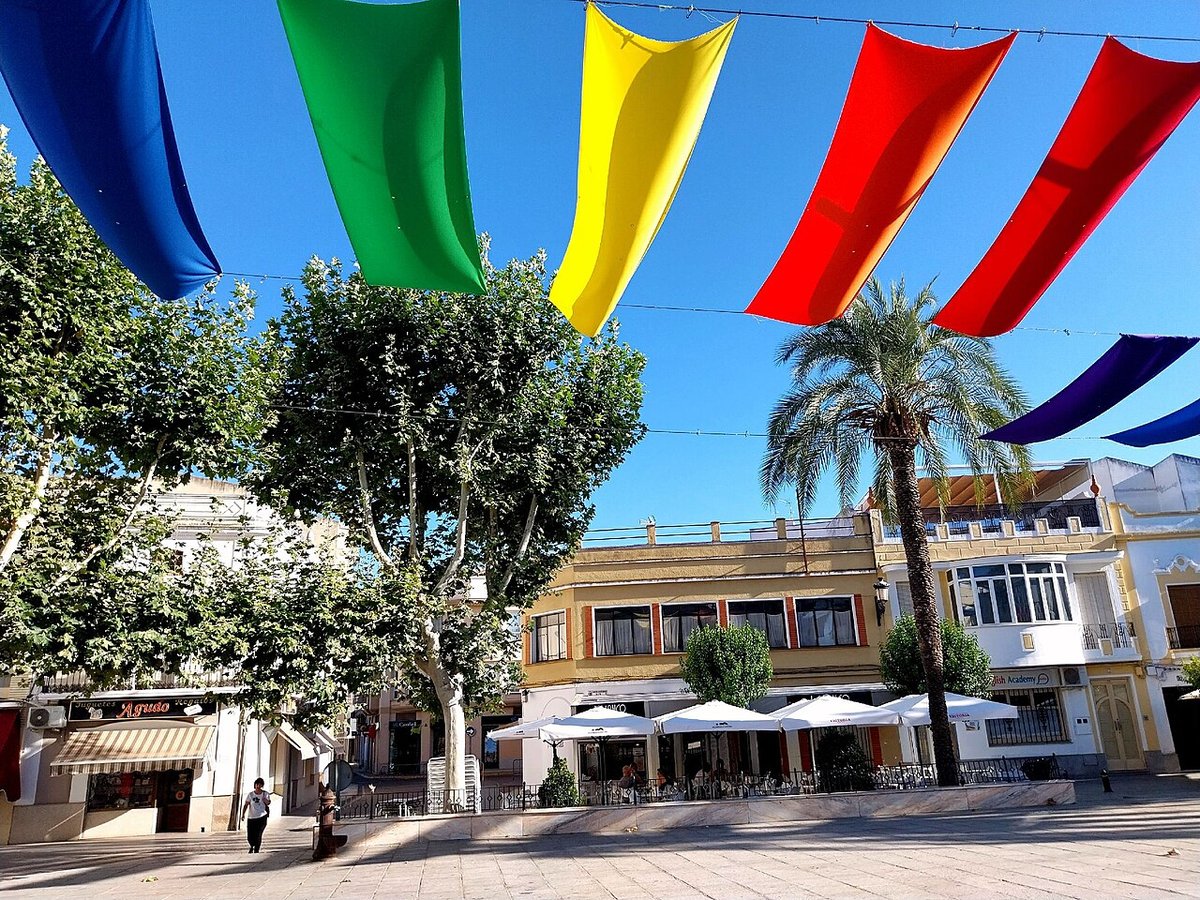
The main square acts as the everyday centre. At certain times of day, especially towards evening, it is common to see neighbours sitting on benches or chatting outside their homes. This is a familiar scene in villages across the area, where social life often moves outdoors as the heat of the day fades.
Fields and paths in the Vegas Bajas
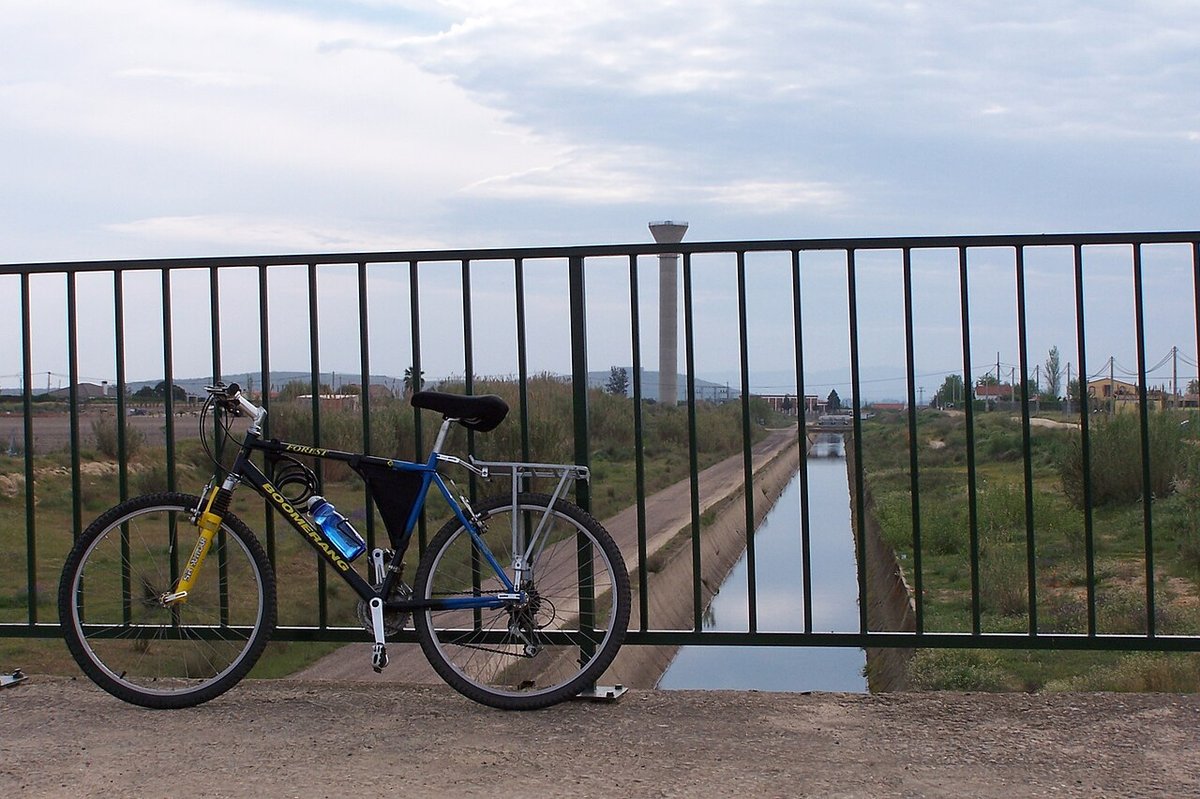
The landscape around Mirandilla helps explain the local economy. The Vegas Bajas of the Guadiana have long been a fertile area, and much of the land is used for dry farming and olive cultivation. The terrain opens out into broad plots, connected by agricultural tracks that link one holding to another.
Walking along these paths reveals small details of the countryside. There are stone walls marking boundaries, seasonal ponds that fill at certain times of year, and scattered holm oaks that punctuate the fields. In winter and during migration periods, it is not unusual to see large birds in these open areas. Storks are common, and sometimes cranes can be spotted making use of the wetter ground.
These are not marked walking routes in a formal sense. They are working paths, used by farmers, but also by local residents for walking or cycling. Moving through them gives a clearer sense of how closely the village is tied to its surroundings.
Festivities and local traditions
The main annual celebrations in Mirandilla are dedicated to Nuestra Señora de la Asunción and usually take place around mid-August. This is one of the busiest moments of the year, as many people who live elsewhere return to the village for these days.
Holy Week is also observed, with simple processions passing through the main streets. As in many villages in the comarca, spring brings romerías, traditional gatherings in the countryside that combine religious elements with social ones.
These events reflect a calendar shaped as much by tradition and community ties as by the seasons themselves.
Walking through Mirandilla
The village centre is compact and easy to explore on foot. A gentle walk is enough to take in the church, the square and several surrounding streets where the structure of the traditional settlement is still recognisable.
With a little more time, it is worth heading out along one of the agricultural paths that begin at the edges of the village. Within minutes, the setting shifts to open countryside, and the relationship between Mirandilla and its land becomes much clearer.
Visiting in context
Mirandilla does not have a large group of monuments or museums. It works best as a short stop within a wider route through the comarca, or as a detour from nearby Mérida.
The visit is best approached as a quiet walk through the village and its immediate surroundings, without expecting major tourist attractions. Its interest lies in everyday life and in the continuity of a rural landscape that has changed slowly over time.
When to go
Spring and autumn are usually the most pleasant times to walk around the area. The countryside is greener, and temperatures are more comfortable for spending time outdoors.
In summer, temperatures in this part of Extremadura rise easily. It is common to move around early in the morning or later in the afternoon, when the heat eases and the village becomes more active again.