Full Article
about Pueblonuevo del Guadiana
A planned settlement with rationalist architecture, focused on irrigated farming and fruit growing.
Hide article Read full article
A village that explains itself
Some places make sense almost immediately. Step into them and the clues are already laid out, much like walking into a kitchen where freshly picked vegetables cover the table and tell you exactly what kind of household it is. Pueblonuevo del Guadiana works in much the same way.
This small municipality in the Vegas Bajas area, home to just under two thousand residents, is closely tied to irrigated farming. That connection is not subtle. Fields, irrigation channels, and agricultural tracks appear in every direction. The Guadiana river is nearby, even when it is not directly visible. Its presence feels constant, like a hidden engine quietly keeping everything moving.
Anyone arriving in search of a medieval old quarter may feel slightly out of place. This is a different kind of settlement. Pueblonuevo is relatively young compared to many towns in Extremadura, built when irrigation began to transform these fertile plains. That origin still shapes how the village looks and how daily life unfolds.
The layout of a planned village
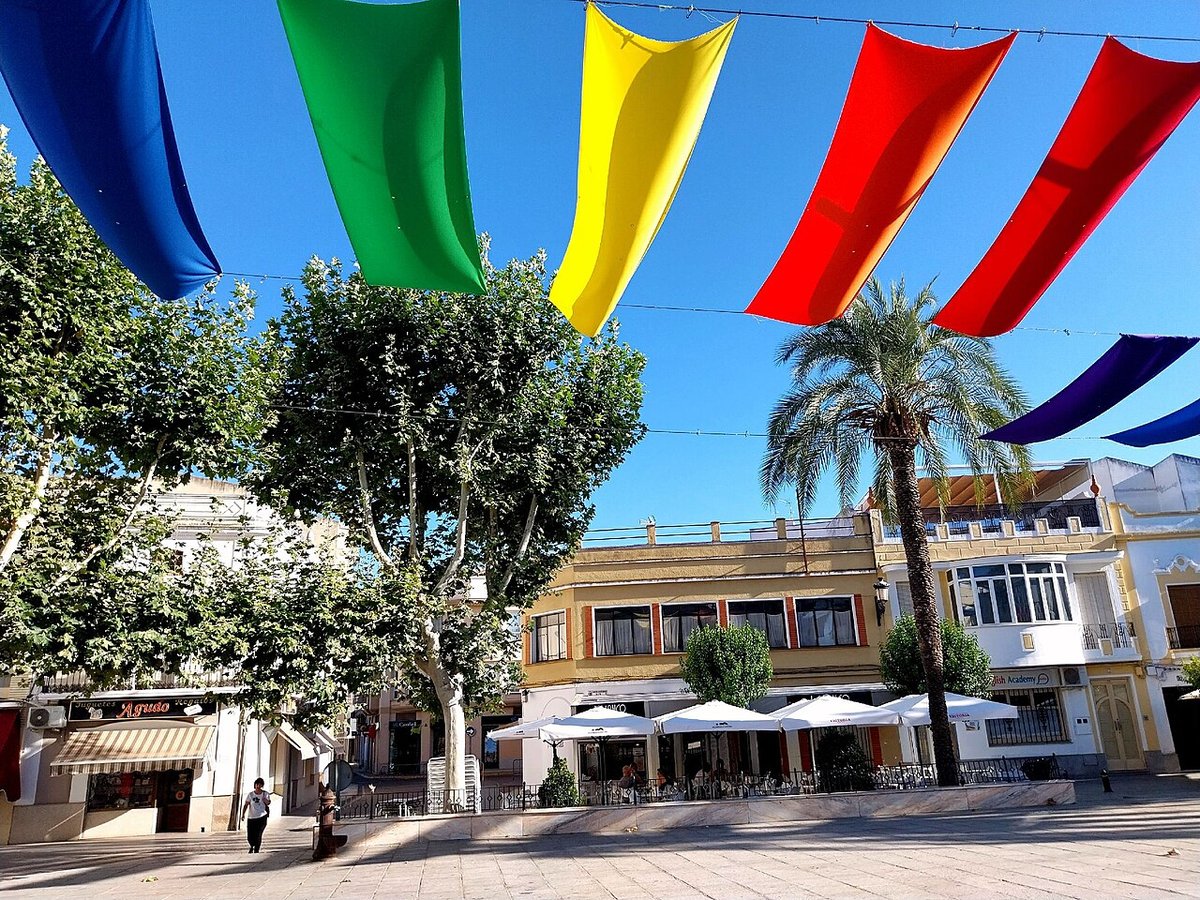
The natural reference point is Plaza de la Constitución. As in many Spanish towns, asking for the centre leads straight there. The church of the Inmaculada Concepción stands prominently over the square. It is not an ancient building, dating from the 20th century, yet it offers a clear sense of how the town developed.
From there, the layout becomes easy to read. Streets run straight, and the avenues are wider than expected for a village of this size. Everything feels ordered, almost as if it had been drawn up on paper before construction began. The houses are modest, often one or two storeys high, with back patios and garages. It is common to spot agricultural tools or trailers tucked away in these spaces, reinforcing the link between home life and fieldwork.
A walk through the village does not take long. Within half an hour, the main impression is formed. The more interesting part begins when the streets give way to the surrounding agricultural paths.
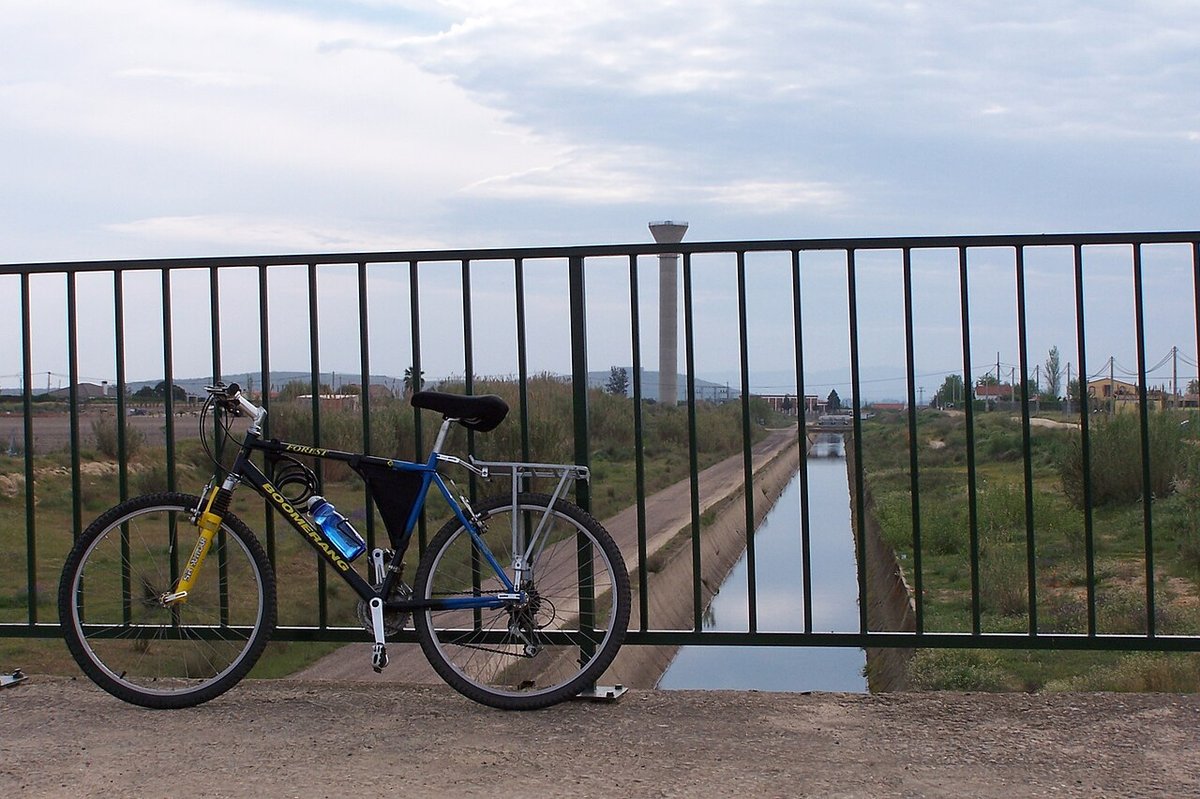
Out there, the scenery shifts. Cultivated plots stretch alongside irrigation ditches, while strips of vegetation appear near the water. Poplars, willows, and the occasional elm create pockets of shade. The change can feel abrupt, like stepping from a straight road into a green corridor with barely any transition.
Exploring the surrounding landscape
Moving around the tracks that surround Pueblonuevo is straightforward. The terrain is remarkably flat, almost table-like in its evenness. For cycling, this makes things easy, with long stretches that require little effort. The downside becomes clear when the sun is strong, as shade is limited and the heat is felt quickly.
For those interested in birdwatching, there is constant activity. Herons gather near the water, while storks walk through the fields as if inspecting them. With a bit of luck, a kingfisher might flash past in a quick streak of blue. Binoculars make a noticeable difference here, revealing details that are easy to miss otherwise.
Food in the area follows the same straightforward logic as the landscape. Dishes are simple and filling. Migas appear at the right time of year, alongside stews made with locally grown vegetables. When colder weather arrives, products from the traditional matanza, the seasonal pig slaughter, become more common. This is food designed to sustain rather than impress, the kind that fills the plate and prepares people for the next stretch of work.
Traditions shaped by the agricultural cycle
The rhythm of life in Pueblonuevo del Guadiana remains closely tied to the agricultural calendar. The feast of the Inmaculada Concepción, celebrated at the beginning of December, marks one of the key moments of the year. In spring, romerías, traditional countryside pilgrimages, appear in the area and reflect the seasonal flow of farming activity.
Other customs are quieter and more domestic. The matanza takes place when the cold sets in. During summer, work crews head out early to the fields. There are also afternoons when the village feels particularly calm, simply because many residents are still out working the land.
Spending a while sitting on a bench in the main square makes this rhythm clear. This is not a place defined by a constant flow of visitors. Instead, it operates at its own pace, like a workshop where everyone knows their task and gets on with it without unnecessary noise.
When the landscape changes colour
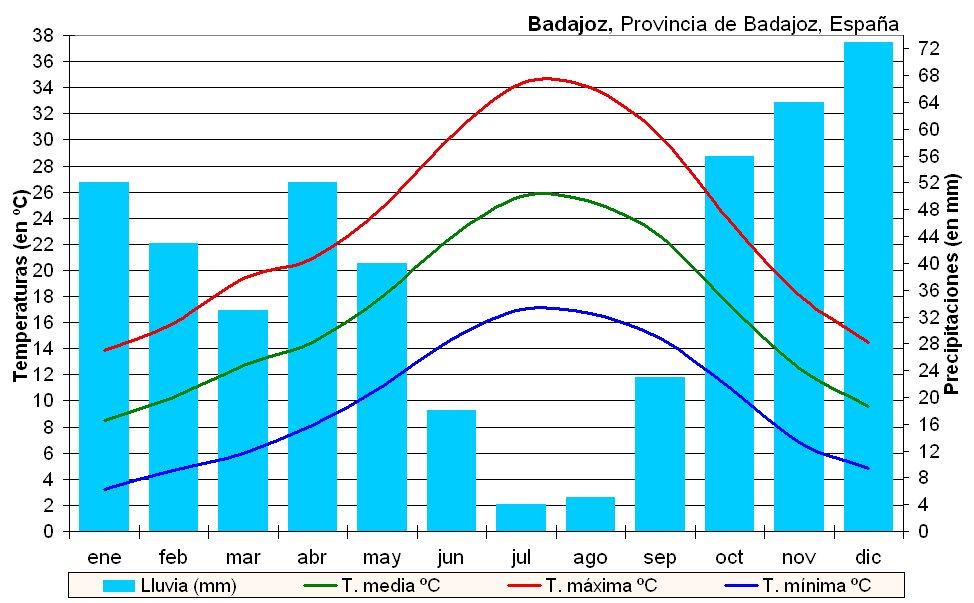
Spring and autumn are often the most pleasant times to visit. Temperatures are milder, and the surrounding fields shift in colour. The same landscape can move from deep green to golden tones within a matter of weeks, creating a sense of quiet transformation.
Summer brings more extreme conditions. The heat does not hold back, and it shapes how the area is experienced. Early mornings and late afternoons become the most practical moments to be outdoors.
Winter introduces a different atmosphere. On some mornings, fog settles near the river and spreads across the fields. The view can appear partially hidden, as though a veil has been drawn over the landscape.
Understanding what really matters here
Pueblonuevo del Guadiana can be explored quickly. The urban area alone does not fill a full day. The real interest lies in seeing how everything connects.
Irrigation channels, long खेत-like plots, and agricultural tracks form a large grid across the land. From above, it resembles a chessboard made from soil, water, and crops. There are no monumental ruins or historic buildings to explain its story in a traditional way. Instead, the landscape itself does the talking.
What emerges is the result of decades of work organising water and land so that this part of the Guadiana plain can produce. It is a practical kind of history, visible in patterns rather than landmarks.
Getting there and making the most of it
From Badajoz, الوصول by car is straightforward, heading towards Mérida and then turning into the Vegas Bajas area. Roads in the surroundings are usually quiet outside peak agricultural working hours.
With limited time, a simple approach works best. A short walk through the centre, followed by time spent on the surrounding paths, offers a clear sense of what defines Pueblonuevo del Guadiana. The village itself introduces the setting, but the wider landscape completes the picture.