Full Article
about Trujillanos
A municipality very close to Mérida and the Cornalvo Natural Park; an ideal base for exploring the area.
Hide article Read full article
A village shaped by the plain
Some places come with a checklist of sights. Others work better when the plan is simply to look around. Tourism in Trujillanos leans firmly towards the second. It sits a short hop from Mérida and, on arrival, everything seems to revolve around the farmland that surrounds it. There are no grand monuments competing for attention, no maze of streets to decode. The plain sets the tone.
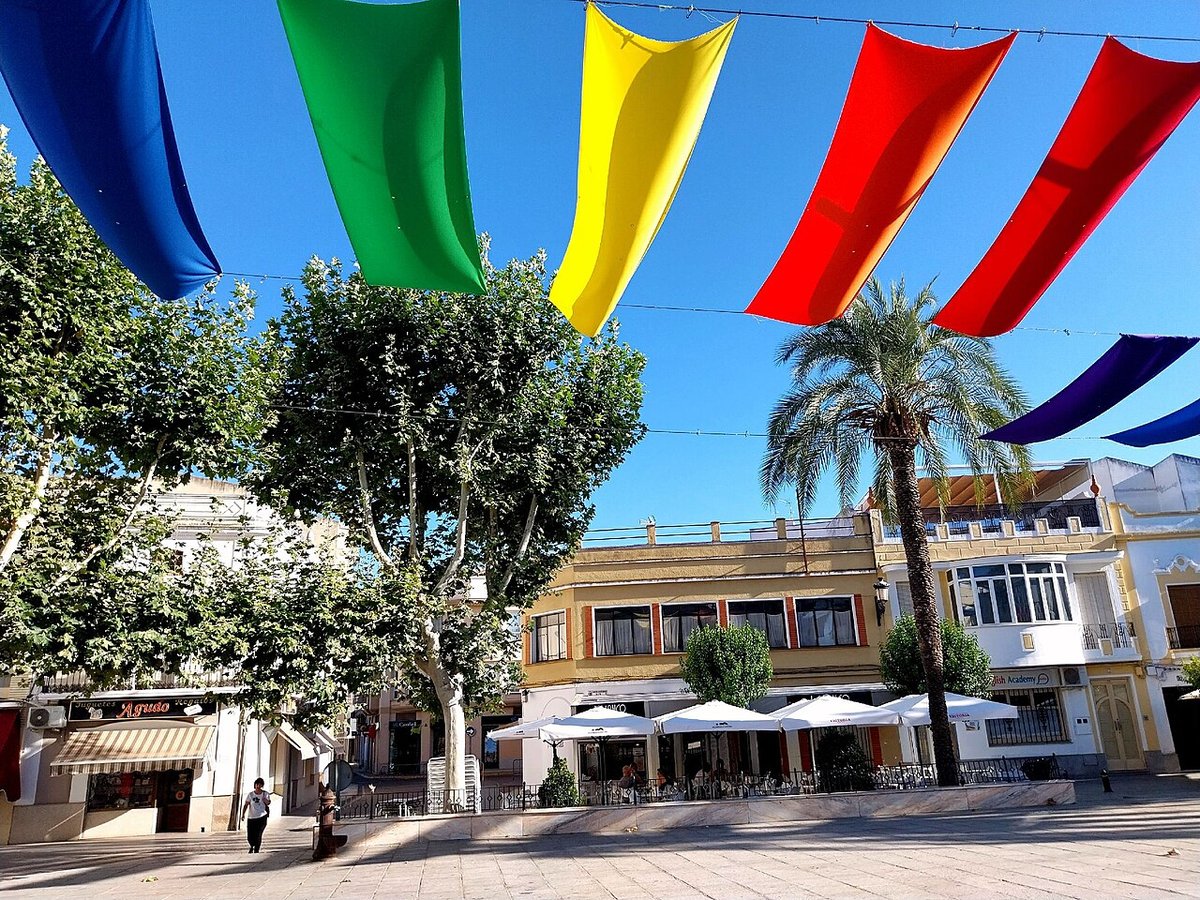
With just under 1,400 inhabitants, the most natural way to spend time here is to walk at an easy pace. Whitewashed houses line the streets, iron bars cover windows, and the occasional courtyard is glimpsed through an open doorway. Look up and the horizon opens out into vegas, fertile lowland fields typical of this part of Extremadura. The colours shift with the seasons, green for a while, then gold, but always wide and open.
Its proximity to Mérida means many people arrive almost by accident, a brief detour from the road. That approach suits Trujillanos. It works well as a quiet pause, a chance to see what daily life looks like in an agricultural village in this corner of Extremadura.
The church at the centre
Getting your bearings in Trujillanos is straightforward because most streets seem to lead back to the parish church of the Santísima Trinidad. It is the building that stands out, the point of reference once you begin to move around the village.
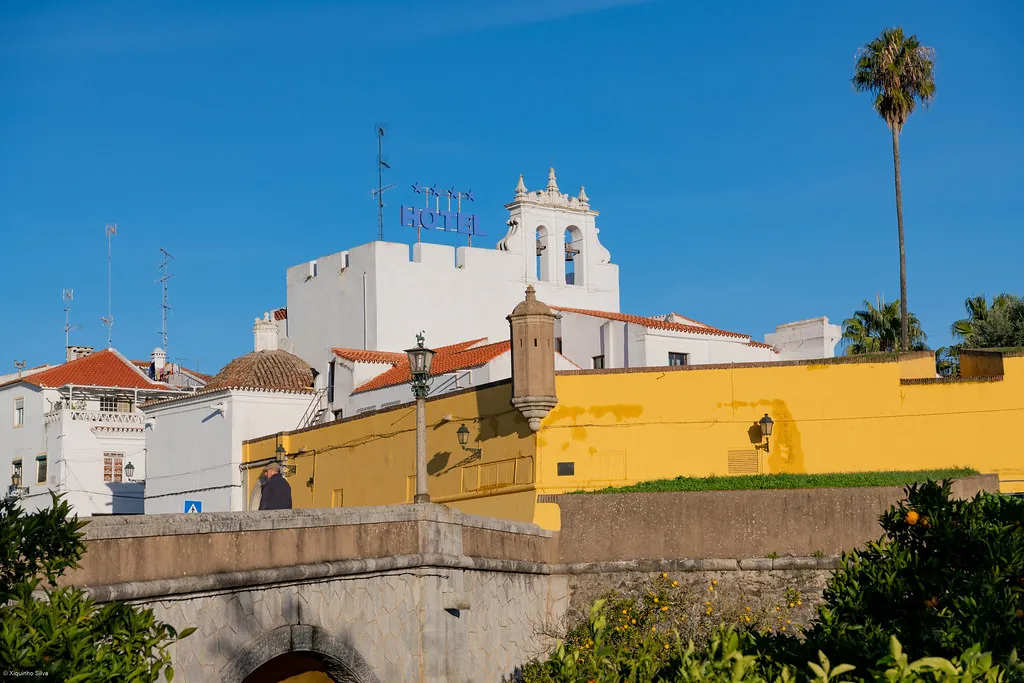
The structure is sober, in keeping with many churches in the area. Solid walls, a façade with little decoration, and a bell tower rising above the surrounding houses. Around it are short streets lined with one or two-storey homes, reddish roofs and iron balconies. The architecture is practical, built to cope with harsh summers: thick walls, patches of shade wherever possible.
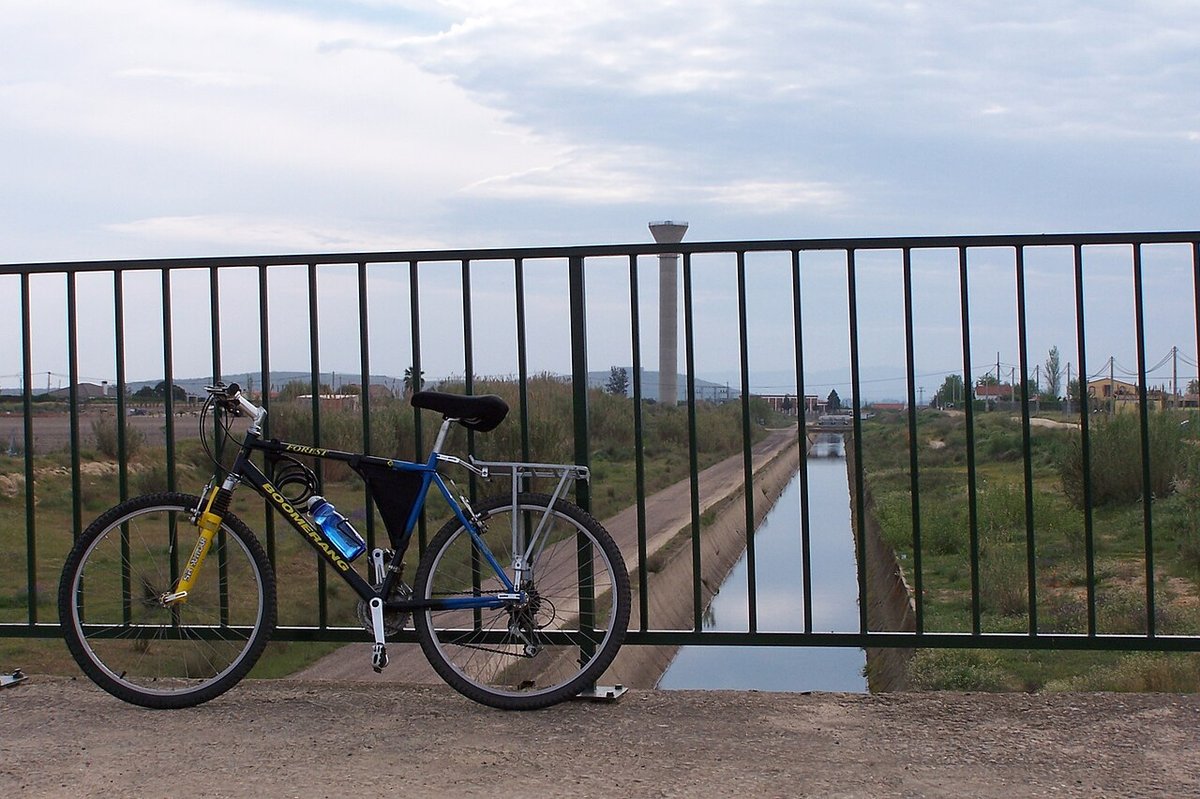
Step just beyond the built-up area and the landscape changes quickly. Rural tracks appear between plots of land, broad agricultural vegas stretch out, and here and there are patches of dehesa, the traditional pastureland dotted with trees found across Extremadura. It is a setting that suits anyone who enjoys watching birds or walking with little more than the sound of the wind. The appeal shifts with the seasons, when the fields are active and the colours change.
Walking without a plan
There is no need for a map or a marked route here. A simple way to explore is to start near the church, wander through the nearby streets, then gradually drift out towards the paths that edge the village.
The contrast is striking. Within a few minutes, the quiet cluster of streets gives way to a completely open landscape. That quick transition says a lot about how villages in this comarca function: a small urban core, surrounded by land that is actively worked.
For photography, early morning or the end of the day often brings the best results. The skies are wide in this part of Extremadura and the light shifts noticeably. Sometimes the scene is very simple: a line of trees, an agricultural building in the distance, and soil that changes colour with the season. It is not the classic postcard view, but it reflects the place as it is.
At the table, the food follows the same straightforward logic. Traditional cooking dominates. Migas, a rustic dish based on breadcrumbs, appears when something filling is needed. Gazpacho, the cold soup familiar across southern Spain, is typical in the hotter months. When the occasion calls for something more substantial, there are hearty stews with lamb.
A short visit that still makes sense
Trujillanos does not demand much time. In a couple of hours it is easy to walk through the centre, reach the church, and move along the nearby streets to get a feel for the everyday rhythm.
After that, it is worth heading out along the surrounding paths. There is no need to go far before the vegas come into view, along with the flat landscape that defines much of this part of Badajoz province. The walk is short, but it helps make sense of the place.
This kind of visit fits naturally into a wider day that includes Mérida, which lies just minutes away by car. The contrast between the two places is part of the experience: one shaped by major historical remains, the other by agriculture and open land.
What you will find, and what you will not
It helps to be clear about expectations. Trujillanos is not a village packed with major monuments or striking historic buildings. Anyone looking for that will find it more readily in nearby Mérida.
The interest here lies elsewhere. It is in seeing a place that remains closely tied to the land around it. In observing fields, plots, and the way colours shift with the seasons. It offers a view of rural daily life rather than a series of landmarks to tick off.
There is something to that simplicity. The landscape is broad and fairly austere, but it reflects this part of Extremadura with honesty.
When to go
Spring and autumn tend to be the most comfortable times to walk through the village and its surroundings. Temperatures are milder and the fields usually show greater contrast in colour.
Summer requires a slower pace. The heat can be intense, and there is little shade once you leave the centre. It makes more sense to head out early or wait until later in the day.
Weather can also affect the experience in quieter ways. After heavy rain or on windy days, the rural paths may become less pleasant to walk. At those times, it may be better to postpone the stroll and spend the day in Mérida instead, which is only a short drive away.