Full Article
about Valverde de Mérida
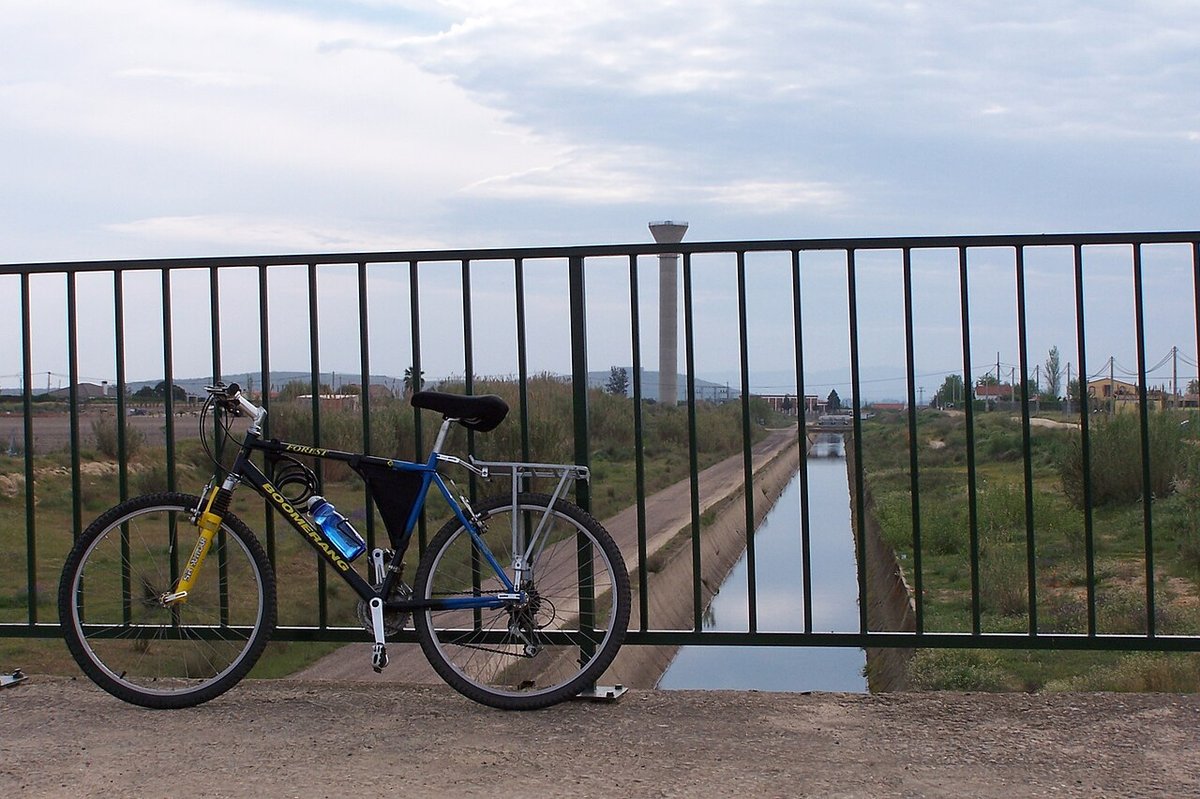
Set beside the Guadiana near Mérida; riverside setting and irrigated farmland.
Hide article Read full article
Early in the morning, when the air still holds a trace of night-time damp, the bell of the church of Santa Marina carries over the white rooftops. Around it, the countryside stretches out in long lines of crops and pale dirt tracks. This is how the day begins in Valverde de Mérida, with the quiet typical of small villages where hardly any cars pass and the loudest sounds are a distant dog or the wind brushing through the holm oaks.
This municipality belongs to the Tierra de Mérida - Vegas Bajas area, a part of Extremadura shaped by agriculture. Open land surrounds the village on all sides. Fields extend almost as far as the eye can see, broken up by scattered holm oaks that cast rounded patches of shade on the ground. In spring, the green feels fresh, almost delicate. By autumn, the land turns drier and more ochre, with fine dust settling on the tracks.
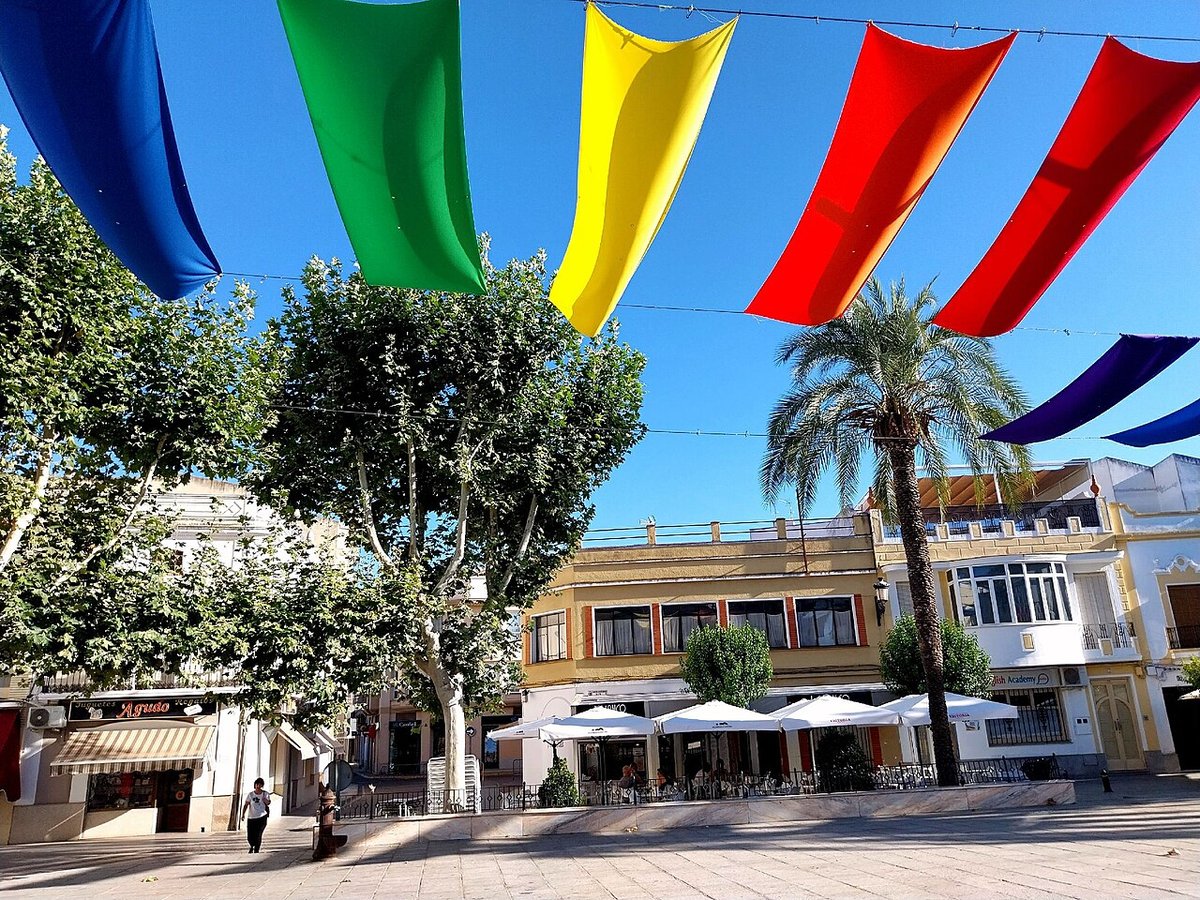
The proximity of Mérida, about fifteen kilometres away, is noticeable. Many people travel back and forth each day for work or errands. Yet walking through the streets of Valverde shifts the pace. Whitewashed façades, wooden gates darkened by time, the occasional plant pot set on a low window. At certain hours, especially after lunch in summer, the village falls almost completely silent.
A village seen up close
The church of Santa Marina acts as a natural point of reference. Its tower rises above the rooftops and can be seen from several streets, with much of daily life unfolding around it.
The best way to take in Valverde is simply to walk without a fixed plan. The streets are short and the entire centre can be covered in under an hour, but it is worth slowing down. There is texture in the uneven whitewash, glimpses of small interior patios behind closed doors, and in winter the faint smell of firewood when some chimneys are in use.
Step just beyond the last houses and the setting changes almost immediately. Agricultural tracks open out towards the fertile plains, known locally as vegas, and if the sky is clear the afternoon light falls low across the crops. Birds are often visible moving over the fields, especially in the more open areas.
Walking out into the fields
A simple walk can begin near the church and continue through the surrounding streets. There is no need for careful planning. The village is small, and it does not take long to reach the edges and find a path leading into the countryside.
From there, it is enough to follow one of the rural tracks that start where the last houses end. Many of these are dirt routes used by farmers, so it is sensible to avoid blocking access or crossing gates. In return, there is a wide, open horizon that defines this part of Extremadura.
The landscape here does not change dramatically from one turn to the next, but that is part of its character. The sense of space, the steady lines of cultivation, and the occasional tree breaking the pattern all come together in a way that rewards unhurried walking.
Seasons and light
Spring is usually the most pleasant time to explore the surroundings. The fields are active, and temperatures still allow movement at almost any hour of the day.
Summer is more intense. At midday the sun is strong and the streets empty out, so if visiting during these months it makes more sense to go out early or wait for the last light of the afternoon. At those times, both the heat and the rhythm of the village feel more manageable.
Autumn brings a quieter atmosphere. The land becomes drier, colours shift towards browns and ochres, and the pace slows further. In winter, after several days of rain, some paths can turn muddy, which changes how easily the countryside can be explored.
Beyond the usual guides
Valverde de Mérida is not organised around tourism. It is an agricultural village that continues to function as such. Tractors move in and out, conversations happen briefly in the street, and shutters are lowered during the siesta hours.
Most people who arrive do so either in passing or as a short escape from Mérida. The contrast is clear. Within half an hour, it is possible to move from Roman theatres and temples to the stillness of open farmland.
There are no grand landmarks or carefully staged attractions here. What defines the place is its everyday rhythm and its relationship with the land around it.
Getting there, simply
The clearest reference point is Mérida. From there, regional roads connect the towns and villages of the Vegas Bajas area, including Valverde de Mérida.
The journey is short and mostly flat. In summer, setting out early or returning at the end of the day makes a noticeable difference. The light over the fields shifts completely at those hours, and the heat is far less intense, changing the experience of the landscape as a whole.