Full Article
about Ahigal
A market town known for its large Sunday market and olive-growing tradition; a meeting point for the region.
Hide article Read full article
A place without a script
Ahigal is the kind of place you end up in because you took a wrong turn, or maybe because the main road looked too boring. It’s not on the way to anywhere famous. You have to want to come here, or at least be okay with getting a bit lost. That’s the first thing you should know about this village in the Trasierra - Tierras de Granadilla comarca.
It has 1,340 people, a number that feels about right once you’re there. This isn't a sightseeing checklist kind of town. It's more like pausing your journey for a couple of hours to stretch your legs somewhere real. The rhythm here is set by the sun and the farming day, not by opening hours for tourists.
The dehesa, just as it is
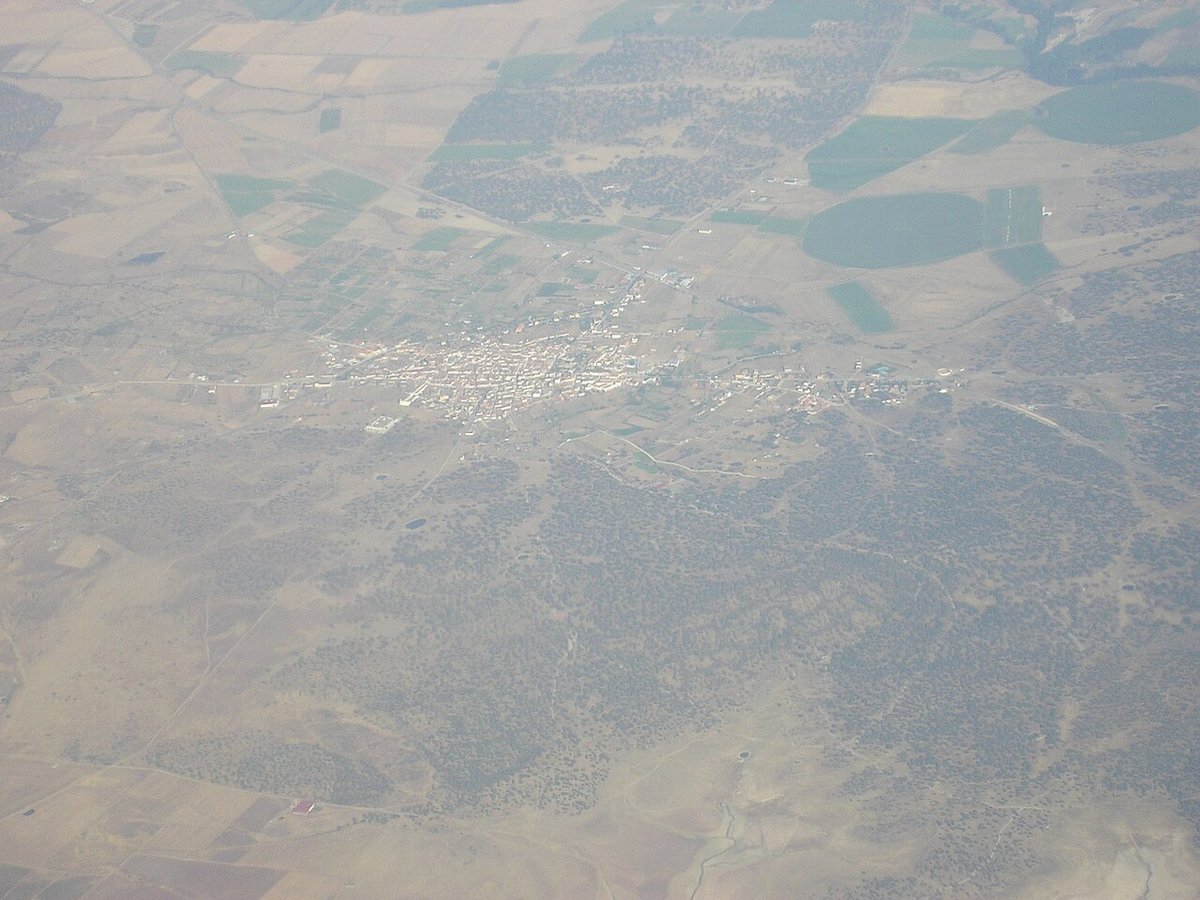
The world around Ahigal is dehesa. Not the postcard version, but the working one. Think endless holm oaks, dry grass, and dirt tracks chewed up by tractor tires. It’s a landscape that doesn't try to impress you. It just is.
You know you're in northern Cáceres when the most exciting thing for twenty minutes is watching a flock of sheep cross the road. The light here does something special in the late afternoon, turning everything gold and long-shadowed. Look up and you’ll often see vultures circling—not because there’s a viewpoint sign, but because they live here.
Walking through Ahigal
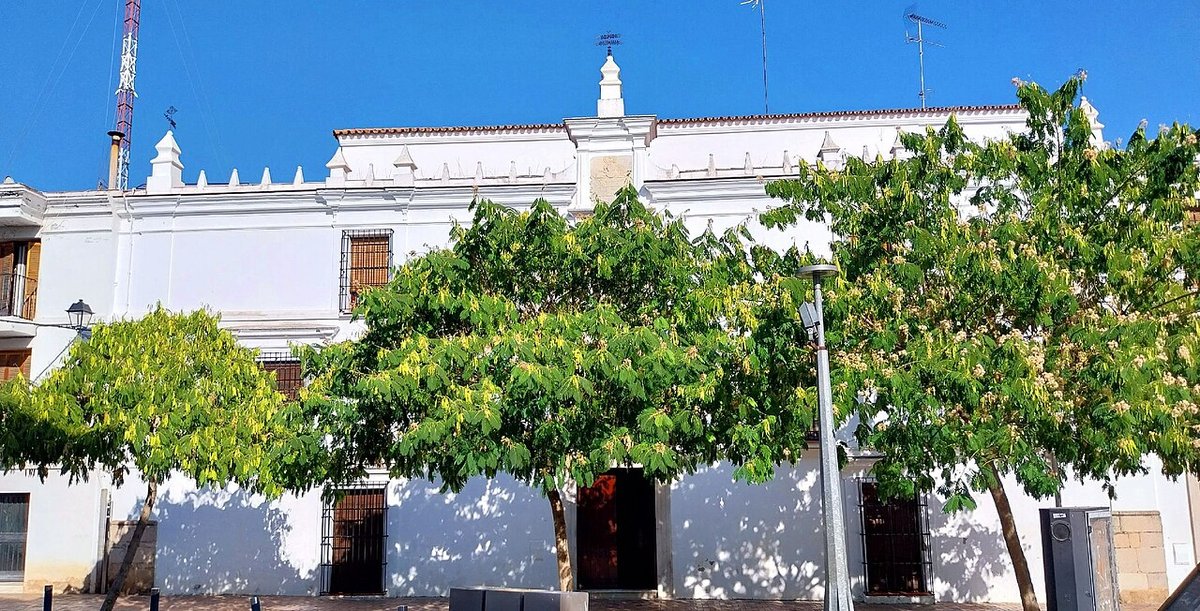
The village centre is small. You can walk every street in under an hour. What you notice is the granite: in doorways, walls, and window frames. It gives everything a solid, no-nonsense look.
The church of Nuestra Señora de los Remedios acts as the anchor. Its tower is your landmark from almost anywhere nearby. Inside, it’s quiet and cool, with an altarpiece that feels more for the locals than for show.
The real history isn’t in plaques, but in details you can still see: massive wooden gates on houses that were clearly built for animals and carts to pass through, courtyards with old wells, pens attached to homes. It’s architecture that explains how people here lived—with their livestock close by.
Walking out into the open
The best thing to do here? Put on some boots and walk out of town on any of the dirt paths that head into the dehesa. These aren't marked trails; they're old farm tracks.
You won't find signposts or maps. You might find a farmer on a tractor who nods as you pass. The point isn't to reach a summit or a waterfall; it's just to be out in that open space. Go early or go late—that's when it feels most alive, even in its quietness.
Food shaped by the land
You eat what comes from here. That means menus built around migas, frite de cordero, local cheeses, and cured meats from Iberian pigs that probably roamed not far away.
This is food for people who work outside all day—hearty, simple, and deeply satisfying if that's what you're after. Don't expect tiny artistic plates; expect a full plate that tastes like the countryside smells after rain. The honey from around here is serious stuff too; they put it on everything from cheese to desserts.
Celebrations that belong to the village
If you happen to be here for the fiesta of Nuestra Señora de los Remedios, you'll see how it works: processions where everyone knows everyone, music spilling from side streets, kids playing while their parents chat.
In winter, they light communal bonfires—hogueras. Neighbours bring out old woodpile scraps and gather round with drinks and rosquillas. It feels exactly like what it is: an excuse for locals to stand together outside on a cold night.
These aren't spectacles; they're village life happening in public.
Getting there & getting it
Ahigal sits up north in Cáceres province. You drive through rolling dehesa on regional roads until you see its church tower.
Is it worth a special trip? Probably not unless you're deeply into Extremaduran rural life or need absolute quiet. Does it work perfectly as a genuine pause on a drive through this region? Absolutely. Come for lunch after a morning walk. See how they've used granite. Feel the pace change. Then get back in your car. You'll have seen a place that isn't playing at being anything else