Full Article
about Cerezo
Quiet little village near the Gabriel y Galán reservoir; perfect for unwinding.
Ocultar artículo Leer artículo completo
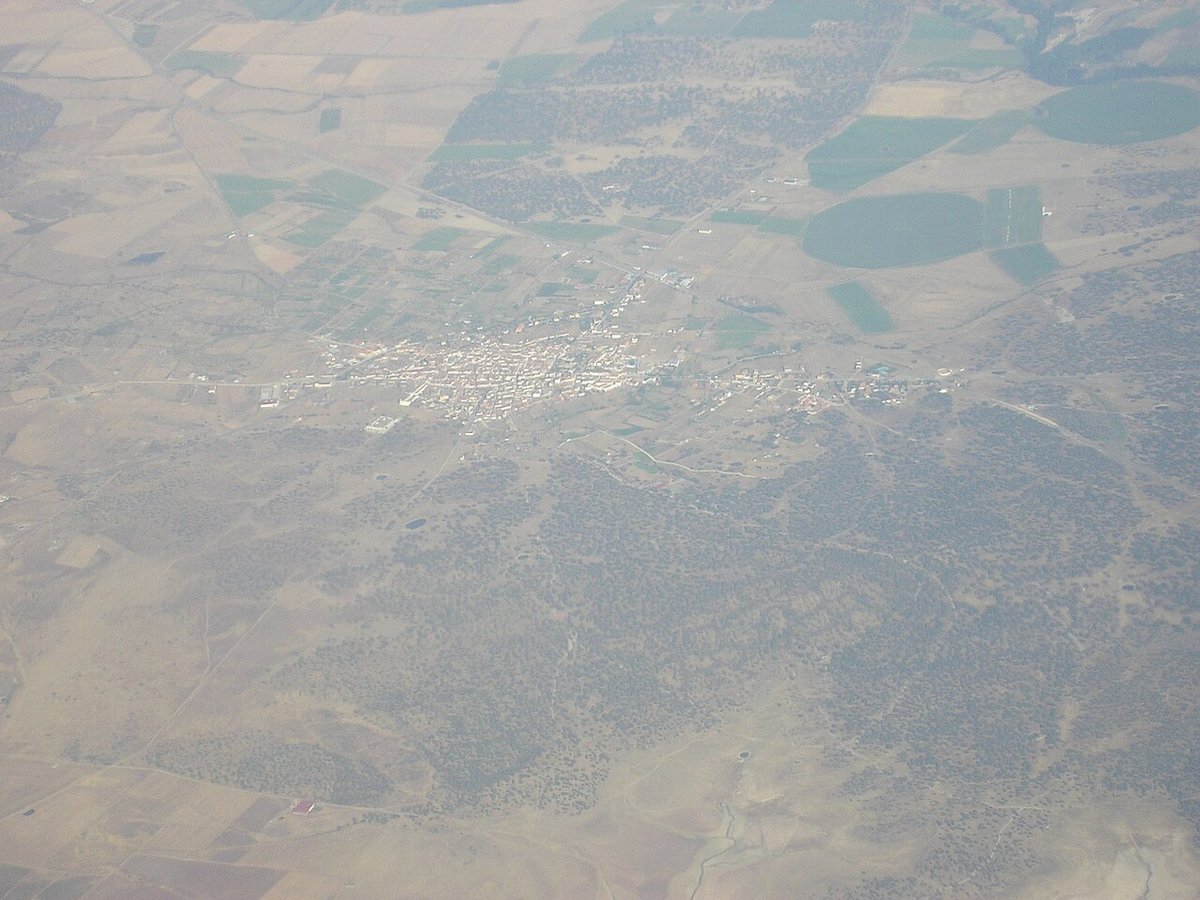
The granite tower appears first, a blunt finger of stone poking above holm oaks. From the EX-118 it looks like a waymarker for yet another depopulated Spanish hamlet, yet Cerezo still breathes—barely 150 souls clinging to 378 m of Trasierra hillside, forty minutes west of Plasencia. No souvenir stalls, no bus tours, just the smell of oak smoke and the low hum of a tractor that hasn’t changed model since the mid-90s.
A village that never learned to shout
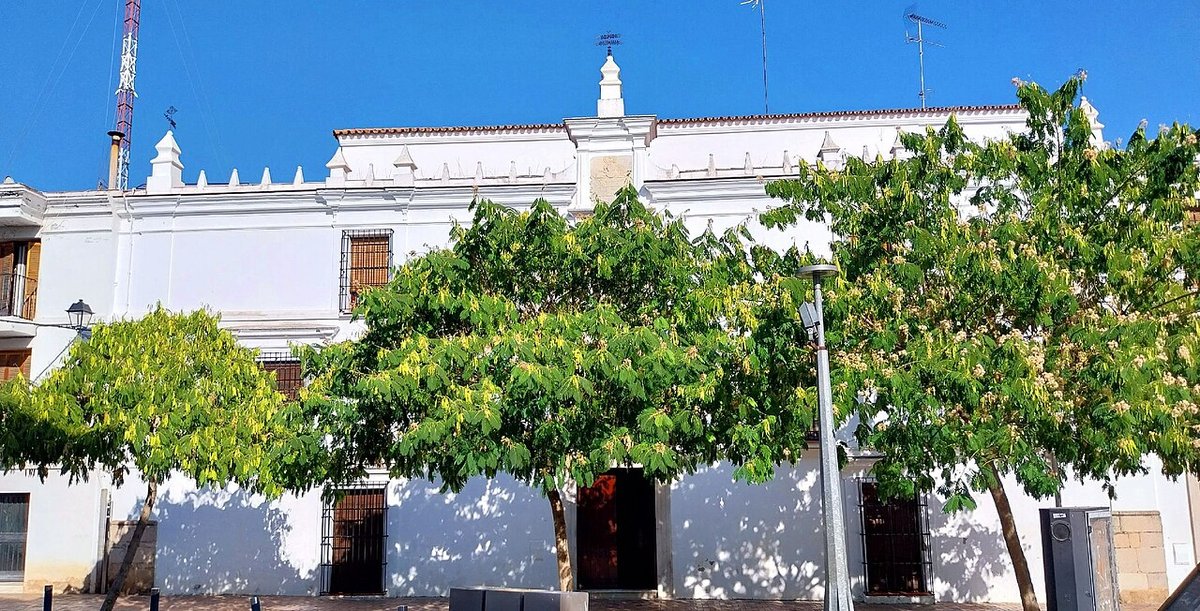
Extremadura’s tourist brochures prefer the Jurassic cliffs of Los Barruecos or the Roman theatre at Mérida. Cerezo, by contrast, offers a single paved lane wide enough for one lorry and a cluster of houses built from the very rock they stand on. Granite lintels carry the date 1892, 1904, 1921—each generation recycling the same stone. The effect is less “chocolate-box” and more “stubborn survival”: walls half a metre thick, tiny windows punched deep, roofs of curved Arab tile weighted against the winter wind that barrels up from the Alagón valley.
Walk the ten minutes from end to end and you’ll pass more barns than bars. A elderly man in a beret will nod without breaking stride; two women chatting across a doorway will pause long enough to ascertain you are not the social worker from Cáceres, then resume their discussion of pig-feed prices. Outsiders are noticed, not mobbed—useful if you’re carrying binoculars or a camera, less so if you hoped for instant tapas and a fridge magnet.
What the dehesa actually does before breakfast
Beyond the last streetlamp the dehesa takes over: 400,000 hectares of managed oak savanna that looks wild but isn’t. Every tree is owned, every hoof accounted for. From October to February the montanera sends Iberian pigs wandering, hoovering acorns under the watch of a solitary herdsman on a Honda 125. At dawn the hoar-frost glitters on thistles; by midday thermals lift griffon vultures so low you can hear the creak of their primary feathers. There are no way-marked trails—just the traditional web of livestock paths that link Cerezo to Guijo de Granadilla (7 km) and later to the stone bridge at Aldeanueva del Camino on the old silver route. Print an OSM track before you leave; phone signal dies in the first hollow.
Spring brings the best walking: daytime 18 °C, nights cool enough for a jumper, wild marjoram underfoot and enough wildflowers to keep the average botanist twitchy. Summer is harsher—35 °C by 11 a.m., shade only where an oak has been allowed to reach full width. August fiestas do liven the place up: one evening mass, one brass band, one portable bar dispensing warm lager and migas (fried breadcrumbs laden with garlic and pancetta) at €3 a plate. Expect every second surname to return from Madrid or Barcelona; expect the village population to quadruple for exactly 72 hours, then collapse again.
Eating what the woods and sheds provide
There is no restaurant. The nearest proper sit-down meal is in Casar de Palomero (12 km), where Casa Paco will serve you a plate of Torta del Casar so runny it has to be spooned, plus a glass of local pitarra wine for €14. In Cerezo you eat by invitation or self-catering. The butcher’s van arrives Tuesday and Friday at 10:30; the bakery van, horn blaring, follows at 11:00. Both park under the elm opposite the church—queue in ascending order of age and don’t expect chip-and-pin. If you rent one of the two village houses equipped for visitors (€60 a night, minimum two nights, keys collected from Conchi at number 24) you’ll find a welcome pack of chorizo, morcilla and a fistful of potatoes still coated with earth. The chorizo was probably hanging in someone’s attic until yesterday; the smoke is acorn-fed oak, not supermarket liquid.
When darkness still means dark
Light pollution maps colour Cerezo pitch black. On moonless nights the Milky Way is a living ribbon; shooting stars leave after-images like faulty LEDs. Bring a red-filter torch and a flask of something hot—nights at 378 m in March can dip to 3 °C. The village’s single streetlamp switches off at midnight with an audible clunk, after which the only glow comes from the LED on the mobile mast blinking like a nervous heartbeat.
Winter access needs thought: the EX-395 from Guijo is treated after snow, but not immediately. A 4×4 is reassuring in January; in July any hire car will do. There is no petrol station closer than 25 km (Plasencia or Hervás), so top up before you turn off the N-630.
The honest verdict
Cerezo will not change your life. It offers no epiphany, no Instagram jackpot—just the slow creak of agricultural time and a reminder that Spain still contains places that refuse to perform for tourists. Come if you want to walk dehesa tracks without meeting another rucksack, if you’re content to eat what a local family eats, and if you can entertain yourself after 9 p.m. with a book rather than a cocktail list. Leave if you need room service, souvenir shops, or someone to explain the difference between jamón ibérico and serrano. The granite will still be here when you’ve gone, and the village will still be counting pigs, not visitors.