Full Article
about Granja de Granadilla
Near the Roman city of Cáparra and the ghost village of Granadilla
Hide article Read full article
Morning Light in the Village Centre
At eight in the morning, light filters through the high openings of the Iglesia de la Inmaculada Concepción, right in the centre of Granja de Granadilla. The village is still half quiet. A door opens somewhere, a shutter rolls up, and the brief scrape of a broom moves across the pavement. The church bells mark the hour with a short echo that bounces between the façades. At this time of day, the main street invites an unhurried walk, almost without deciding where to go.
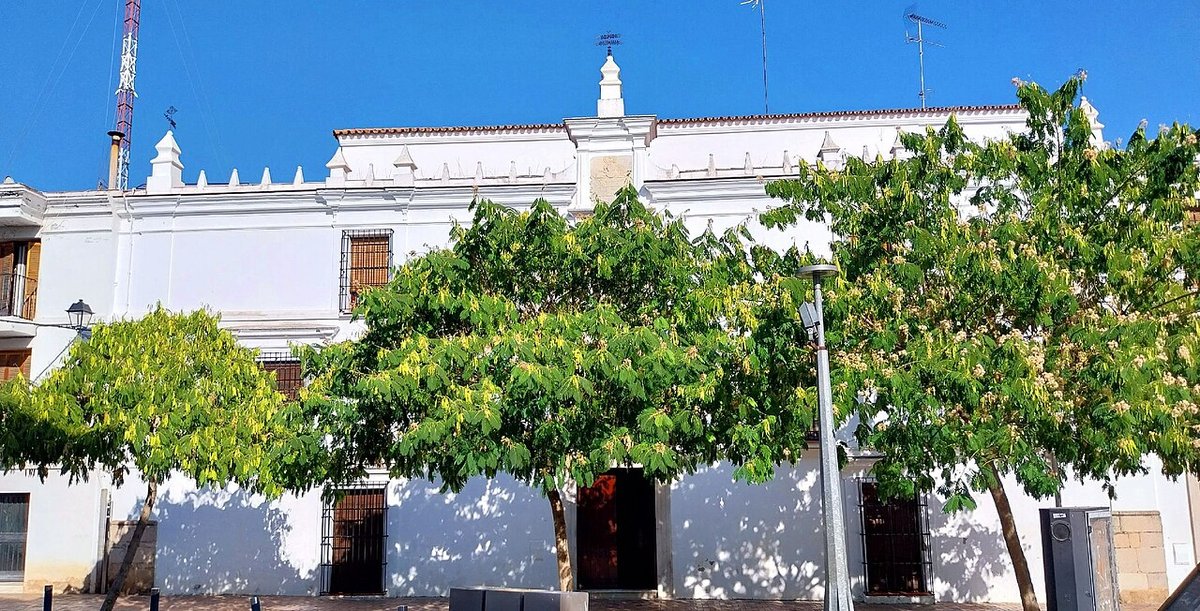
The houses are built from masonry, with red tiled roofs and walls that have shifted in colour over the years. Some lean towards grey, others towards ochre, and here and there a lighter patch shows where repairs were made. Balconies hold pots of herbs and flowers such as mint, geraniums or rosemary. The square, centred around a stone fountain, becomes the meeting point when there is activity in the village. On many days it remains calm, with perhaps a neighbour sitting for a while in the sun.
Walking Out Beyond the Houses
From the centre, any path heading west quickly leaves the built-up area behind. The tracks run between holm oaks and the occasional almond tree. They are not usually signposted. These are working paths, shaped by tractor wheels or by the steady passage of livestock.
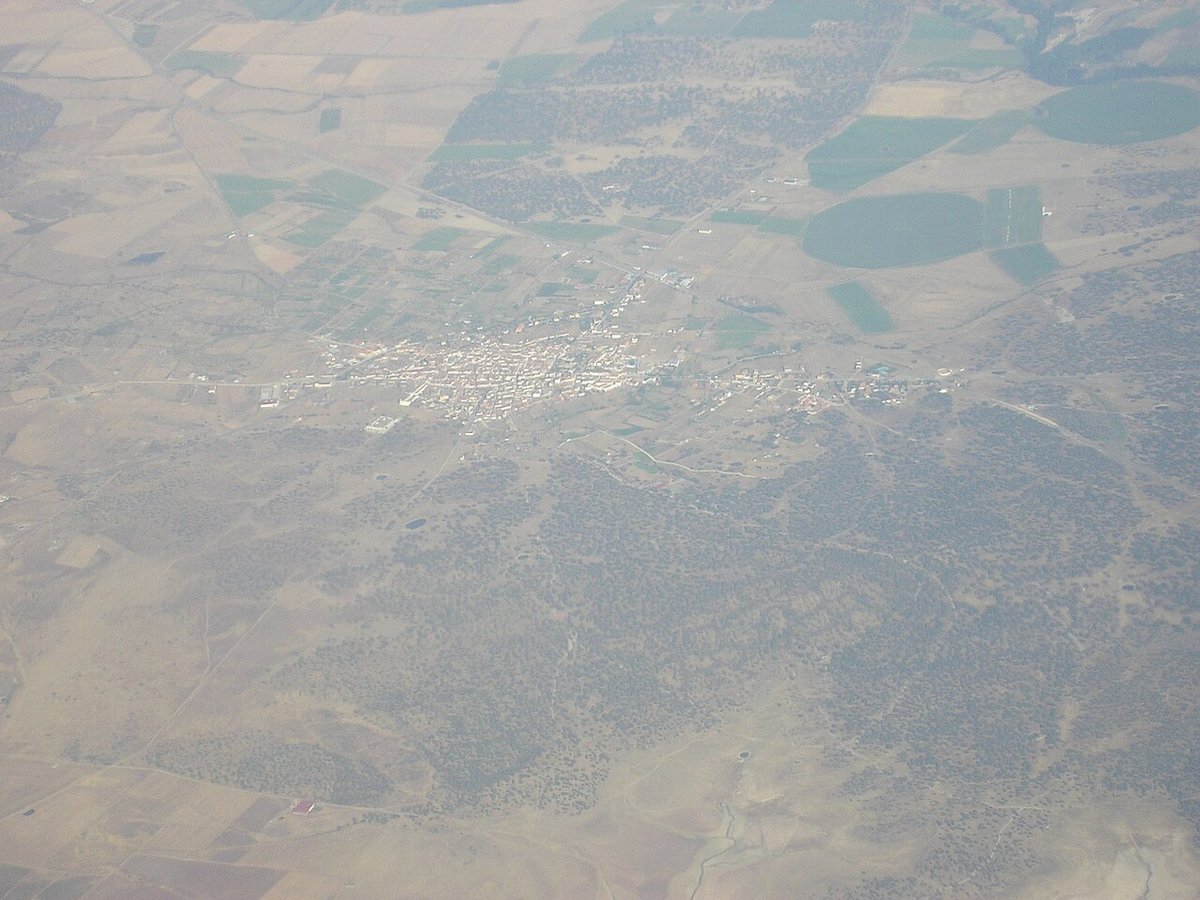
The landscape stays open and dry for much of the year. There are no large viewpoints or railings, just the low line of the dehesas and stone walls that appear and disappear through the grass. Sometimes the sound of sheep carries across before they come into view. At other moments, what stands out is the damp smell of soil if it has rained during the night.
It is worth bringing water for any longer walk, especially in summer. The sun falls hard on the ground, and stretches of shade do not always arrive when needed.
Southwards into the Dehesa
To the south, the terrain opens further and the dehesa becomes more apparent. This traditional landscape of scattered holm oaks, low grass and wide pale earth tracks defines much of the surrounding area. In the warmer months, the air carries the dry scent of yellowed grass mixed with dust lifted by passing vehicles.
Small details shape the experience here. Birds move through the branches, or a quick rustle reveals an animal slipping out of sight. A tree trunk may be covered in lichen. A stone might show old marks left by tools. In spring, bees gather around flowers, forming a low, constant hum.
Towards the end of the day, the light alters the scene noticeably. The holm oaks stretch long shadows across the ground, and for a few minutes the earth takes on an almost orange tone.
What Tends to Appear on the Table
Food in the area is closely tied to what is available nearby. Cheeses made from sheep’s or cow’s milk are produced in the surrounding comarca. There is also dark heather honey from local hives, along with cured meats prepared slowly over time.
In many homes, simple stews are still part of everyday cooking. These are based on legumes, potatoes and seasonal vegetables, dishes designed more to nourish than to draw attention. The approach reflects the pace of life in the village, where practicality and continuity matter more than presentation.
Festivities and the Pace of the Year
The main celebrations tend to gather in the summer months, when many residents who live elsewhere return for a few days. During this period, the square becomes livelier and the streets fill more than usual.
December brings another moment of activity with events linked to the Inmaculada Concepción. These centre around the church and include gatherings that bring families together. Outside these occasions, the rhythm of Granja de Granadilla remains steady and quiet, closely connected to agricultural work and the routines of those who live here throughout the year.
A Place Understood at Walking Pace
Granja de Granadilla is not a place to rush through. In one or two hours, it is possible to walk across the village, follow one of the nearby paths, and return to the square as the light begins to fade.
In summer, the most comfortable times are early in the day or later in the afternoon. Around midday, the heat settles against the walls and the streets empty out. Spring and early autumn offer easier conditions for walking, without the same dryness in the air.
The village lies about 65 kilometres from Cáceres, reached by secondary roads. The journey usually takes around an hour by car when taken at a relaxed pace. Comfortable footwear is a good idea. The urban centre is small, yet the paths leading out into the landscape tend to encourage a slightly longer walk than first planned, especially among the holm oaks that frame the surroundings.