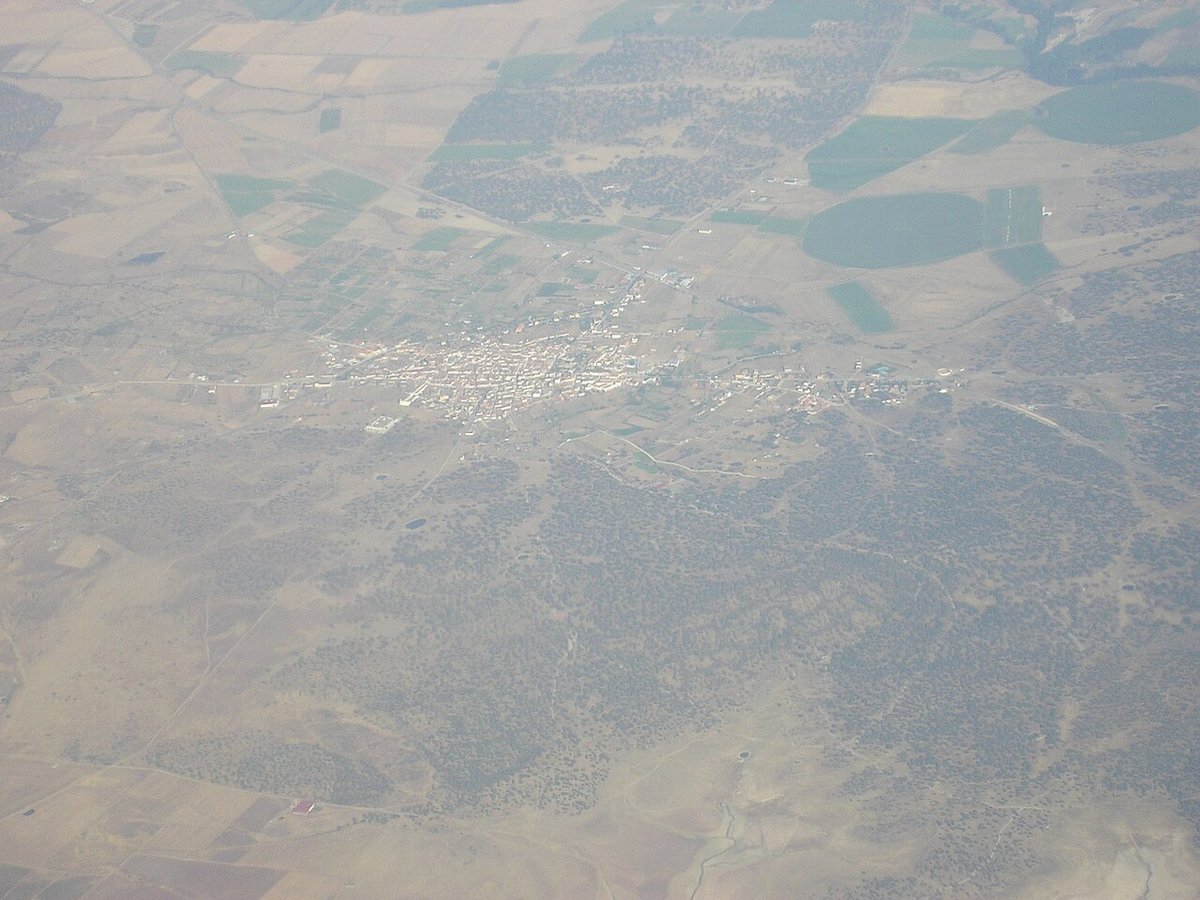
Vista aérea de Guijo de Granadilla
Instituto Geográfico Nacional · CC-BY 4.0 scne.es
Extremadura · Meadows & Conquerors

Guijo de Granadilla

The church bell strikes two and the only sound left in Guijo de Granadilla is a loose shutter knocking against stone. By half past, even the dogs h...

497 inhabitants · INE 2025
390m Altitude

Why Visit

Gabriel y Galán House-Museum Literary route

Best Time to Visit

spring

Santa Ana Festival (July) julio

Things to See & Do
in Guijo de Granadilla

Heritage

  • Gabriel y Galán House-Museum
  • Roman bridge of Cáparra

Activities

  • Literary route
  • Archaeological visit

Festivals
& & Traditions

Fecha julio

Fiestas de Santa Ana (julio)

Las fiestas locales son el momento perfecto para vivir la autenticidad de Guijo de Granadilla.

Full Article
about Guijo de Granadilla

Home of the poet Gabriel y Galán; near the Roman ruins of Cáparra

Ocultar artículo Leer artículo completo

The church bell strikes two and the only sound left in Guijo de Granadilla is a loose shutter knocking against stone. By half past, even the dogs have retreated to shade. This is not performance tourism—it's simply how weekdays work at 390 m in northern Extremadura when the temperature nudges 35 °C and the village totals 535 souls.

Visitors arrive expecting a “pretty hamlet” and find instead a working parish that happens to have excellent stone walls. Granite houses, most only two storeys high, line three short streets that meet at the Plaza de la Constitución. There are no souvenir shops, no boutique hotels, and the nearest cash machine is a 15-minute drive away in Montehermoso. What you do get is an hour’s wandering in which every door seems open, every geranium pot watered, and every grandmother already knows you’re not from round here.

Stone, tile and the smell of thyme

Start at the church—nobody remembers its official name, they just call it “la iglesia”. Built between the sixteenth and eighteenth centuries, it squats on the highest bit of ground, so the bell tower doubles as the village lookout. Walk round the outside first: the south wall still carries grooves where sharpening stones were dragged across the masonry before harvest time. Inside, the nave is refreshingly bare; no gilded excess, just thick whitewash and a cedar altar piece blackened by centuries of candle smoke. Drop a euro in the box and the sacristan will switch on the lights—he lives opposite and notices strangers immediately.

From the church door, any lane downhill leads to the same place: the old livestock trough, now planted with bedding flowers. Along the way, look for the house with a Roman tombstone embedded sideways into its façade—nobody knows how it got there, but it’s been used as a windowsill since at least 1930. Most roofs still carry traditional Arab tiles, curved like upside-down canoes and mossy from winter rains. The effect is uneven, almost wavy, as though the street has slipped gently into middle age.

Reservoir air and dehesa calm

Guijo sits on the edge of the great dehesa belt, the cork-oak pasture that covers much of south-west Spain. Five minutes’ walk south and the tarmac gives way to a sandy track that smells of wild thyme and grazing sheep. Follow it for twenty minutes and you reach the Embalse de Gabriel y Galán, a vast reservoir built in the 1960s to irrigate tobacco fields downstream. British bird-watchers arrive in spring for hoopoes, black-winged kites and the shy Spanish imperial eagle; bring binoculars and a picnic because there are no cafés on the shore. The water looks tempting, but the edge is stony—pack water-shoes if you plan to paddle.

A circular route of about 7 km hugs the inlet known as Cachón del Pescador and returns via the abandoned railway that once carried olives to Plasencia. The gradient is gentle, the surface mostly firm, so trainers suffice. Mid-October adds a carpet of fallen saffron milkcaps; locals collect them, but check with the village pharmacist before eating anything you pick—he’s the self-appointed mycology expert and enjoys showing off his English medical leaflets.

When night falls, the sky turns foreign

Extremadura’s low population density makes it one of Europe’s darkest regions. The small Tourist Astronomical Observatory sits on a ridge 3 km above the village (sign-posted “O.A.T.”—inevitably pronounced “oat” by visiting Brits). Tuesday and Friday evenings from March to November, the municipality unlocks a 40 cm reflecting telescope and two staff explain, in rapid Spanish sprinkled with star names, why the Milky Way looks thicker here than back home. Reservations are essential; email [email protected] and expect replies after 20:00 when the mobile signal improves. Bring a jacket—altitude plus wind can drop the temperature ten degrees within an hour.

What to eat and when to eat it

The only restaurant, Lidenex, opens 13:30–16:00 and 20:30–22:00. That’s it—no bar menu at odd hours. Lamb is the local currency: cordero a la estaca, whole hindquarters roasted on stakes in front of oak embers, served only at weekends because it needs four hours’ notice. Mid-week, ask for patatas meneás—mashed potatoes folded with fried chorizo and sweet pimentón, the Spanish answer to Cumberland sausages. Vegetarians get creative combinations of local cheese: Torta del Casar, a runny sheep-milk cheese so pungent it arrives in its own wooden dish. Dessert choices are flan, rice pudding, or flan; nobody complains because the custard is made with village eggs the colour of marigolds.

Drink wisely. The house red comes from nearby Cañamero and costs €7 a bottle; it travels badly, so enjoy it here rather than lugging a souvenir back on the plane. Coffee is proper espresso—request “café con leche” if you want the milky version, or the waiter will assume you’re Spanish and serve it black.

Timing your visit (and your exit)

Spring brings green wheat and nesting storks, but also the “Poets’ Week” in late May when readings and folk concerts double the population. Beds disappear early; book a casa rural at least a month ahead. Summer is reliable for stargazing yet brutal for walking—temperatures regularly top 40 °C. If you must come in July, shift excursions to dawn; the village bakery opens at 06:30 and will sell you a still-warm loaf for €1. Autumn smells of pressed olives and wood smoke, while winter is mild by British standards—daytime 12–15 °C—but nights drop below freezing and most rural houses rely on plug-in heaters. Snow is rare; when it arrives, the province panics and the A-66 slows to 40 km/h.

Getting there, getting away

Public transport is folklore rather than fact. One school bus leaves for Coria at 07:00 and returns at 14:00; it carries pupils only and the driver checks ID. Everyone else drives. From Madrid Barajas, take the A-5 west, switch to the A-66 at Mérida, then peel off at the Navalmoral exit onto the EX-204. The final 25 km twist through dehesa where black Iberian pigs wander behind rustic fences—slow down, they have right of way and cost more than your hire-car excess. Allow two hours plus a coffee stop; the road is toll-free and generally empty except on Friday evenings when Salamanca students head home.

The honest verdict

Guijo de Granadilla will never tick the “must-see” box because its appeal is precisely what it lacks: queues, gift shops, Instagram props. Come if you want to practise Spanish with people who have time to talk, if you’re happy to walk five kilometres without meeting anyone, and if you can entertain yourself after 22:00 with a bottle of local red and more stars than you realised existed. Treat it as a breather between Extremadura’s bigger sights—Cáceres, Plasencia, the Roman ruins at Mérida—and you’ll leave wondering why villages anywhere else bother with souvenir fridge magnets.

Leave before lunch, though. The shutter will still be knocking, the dogs will still be asleep, and nobody will notice you’ve gone—until the sacristan locks the church and realises the foreign coins in the donation box give the game away.

Key Facts

Region
Extremadura
District
Trasierra - Tierras de Granadilla
INE Code
10090
Coast
No
Mountain
No
Season
spring

Livability & Services

Key data for living or remote work

2024
Connectivity5G available
HealthcareHealth center
EducationElementary school
Housing~5€/m² rent · Affordable
CoastBeach nearby
Sources: INE, CNMC, Ministry of Health, AEMET

Planning Your Visit?

Discover more villages in the Trasierra - Tierras de Granadilla.

View full region →

More villages in Trasierra - Tierras de Granadilla

Traveler Reviews