Full Article
about La Granja
Quiet village in the Ambroz valley known for its sunsets and orchards
Hide article Read full article
A village that asks you to slow down
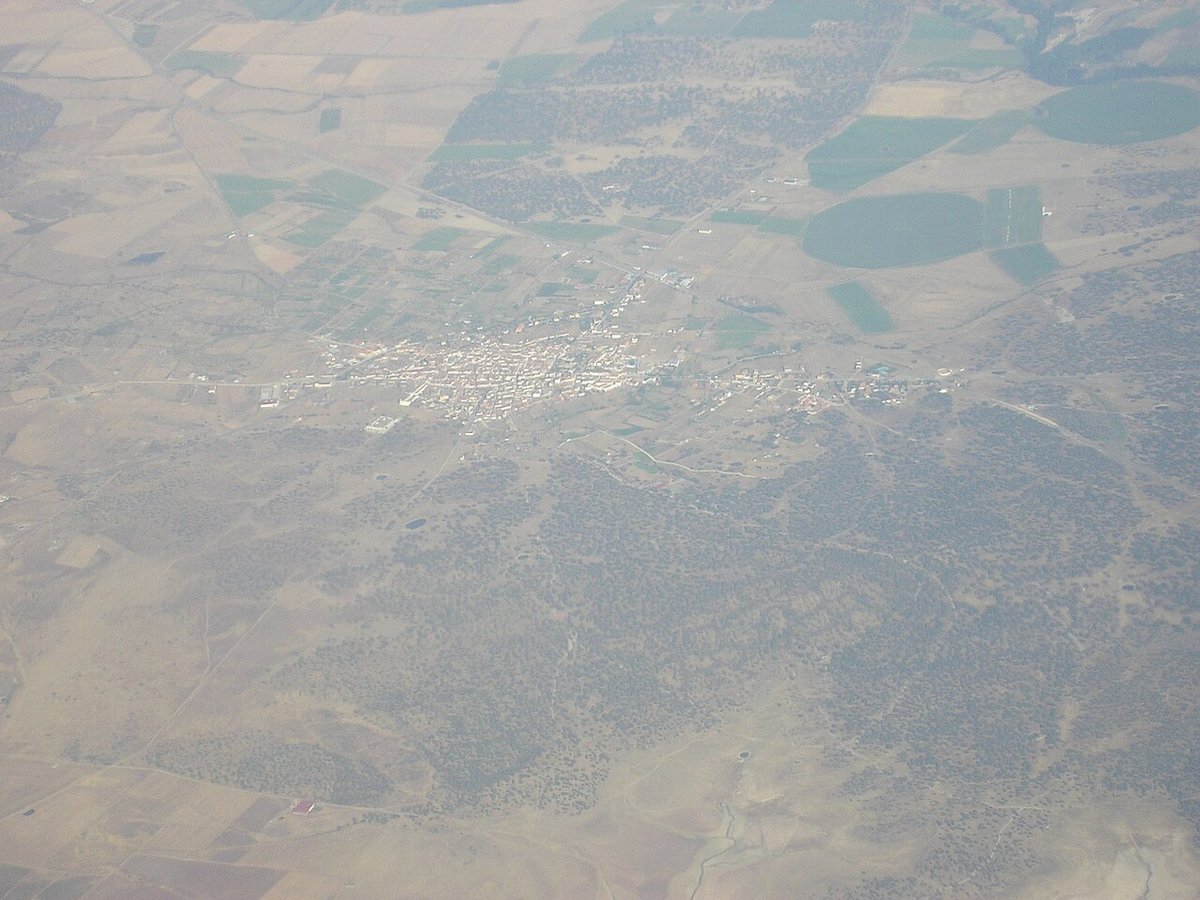
Some places work like viewpoints: you arrive, take a few photos and move on. La Granja, in the comarca of Trasierra - Tierras de Granadilla, leans in the opposite direction. It is the kind of place where you step out of the car and, without anything dramatic happening, you start to slow down almost without noticing.
With just over 300 residents, daily life follows a simple rhythm. Church bells mark the hours, storks settle on rooftops, and the occasional tractor passes on its way to the dehesa, the traditional pastureland typical of this part of Spain. Stand still for a moment and you may catch conversations drifting from doorway to doorway, a reminder that in villages like this the street still works as a shared living room.
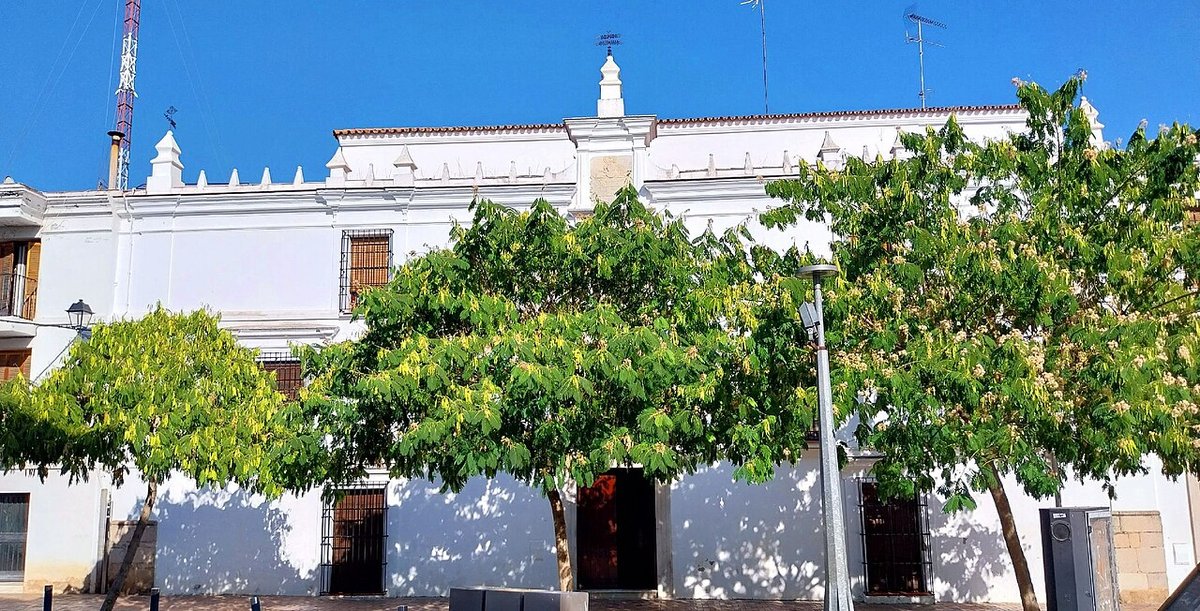
The centre is compact and easy to walk. Stone and masonry houses line the streets, many with granite doorways that have seen generations come and go. The church of San Juan Bautista rises slightly above the rest, acting as a natural reference point when wandering without a plan. Around it, iron balconies and carefully crafted entrances hint at a time when livestock and agriculture shaped nearly all local life.
Where the landscape begins
One of the appealing things about this corner of Cáceres is how quickly the landscape takes over. In La Granja, it begins almost as soon as the last house is behind you.
Take any dirt track and within minutes you are among holm oaks and cork oaks. The dehesa defines everything here. It is not dramatic in the sense of high peaks or cliffs, yet it holds a quiet balance built over centuries: grazing animals, scattered trees and winding paths that seem in no hurry to reach anywhere in particular.
For those who enjoy watching the sky, there is often movement overhead. Birds of prey glide in wide circles, storks search for food in the open ground, and every so often there is that deep rural silence broken only by wind passing through branches. It is a landscape that does not demand attention but rewards it if given time.
What tends to be on the table
In this part of northern Extremadura, cooking revolves largely around pork and hearty, spoon-based dishes. Migas, a traditional preparation made from breadcrumbs, and various embutidos, or cured meats, appear regularly. These are the kind of meals that feel especially right when the air turns cooler.
In smaller villages, it helps to stay flexible. What ends up on the table often depends on the season, what has been prepared that day, or whether there has been recent hunting in the area. Asking what is being cooked is usually the best approach, rather than arriving with a fixed idea of what should be available.
Food here reflects the same rhythm as the village itself. It is shaped by availability and habit rather than trends, and that gives it a certain honesty that is easy to recognise.
A few hours well spent
La Granja is not a place that requires a long itinerary. In a relaxed morning, it is enough to walk the main streets, stop by the church and notice the older doorways that appear here and there.
Afterwards, it is worth heading out along one of the tracks that leave the village. There is no need to plan a specific route. Within a short walk, you are already in the dehesa, and it becomes clear how this landscape defines the entire comarca.
It is the sort of walk where the clock matters less. The interest lies in the gradual shift from built space to open land, and in how seamlessly the two connect.
When to come
Spring and autumn are usually the most comfortable times to explore the surroundings on foot. The dehesa changes colour noticeably, and temperatures are easier to manage.
Summer can bring intense heat, as in much of inland Extremadura. During those months, it makes sense to move early in the day or later in the evening, when the light softens and the countryside becomes more bearable again. Winter, on the other hand, can feel cold and at times windy, so it is worth arriving prepared for that.
Each season shows a slightly different side of the same place, though none alters its essential character.
What often goes unsaid
La Granja is not somewhere to visit in search of major monuments or a long checklist of sights. The village itself can be seen quickly.
Its appeal lies more in the whole: a small settlement, the surrounding dehesa, and the sense of a place continuing much as it always has. There is something valuable in spending time somewhere like this, where the most interesting aspect is not what there is to see, but how it feels to simply be there for a while.