Full Article
about La Pesga
Riverside village on the Gabriel y Galán reservoir; ideal for fishing and water sports.
Hide article Read full article
A place that doesn’t put on a show
Some places feel like shop windows. Others are closer to an open workshop. La Pesga belongs firmly in the second group. Anyone arriving in search of grand landmarks may come away underwhelmed. Yet for anyone curious about how a small village in the Trasierra area actually works, the appeal shifts quickly.
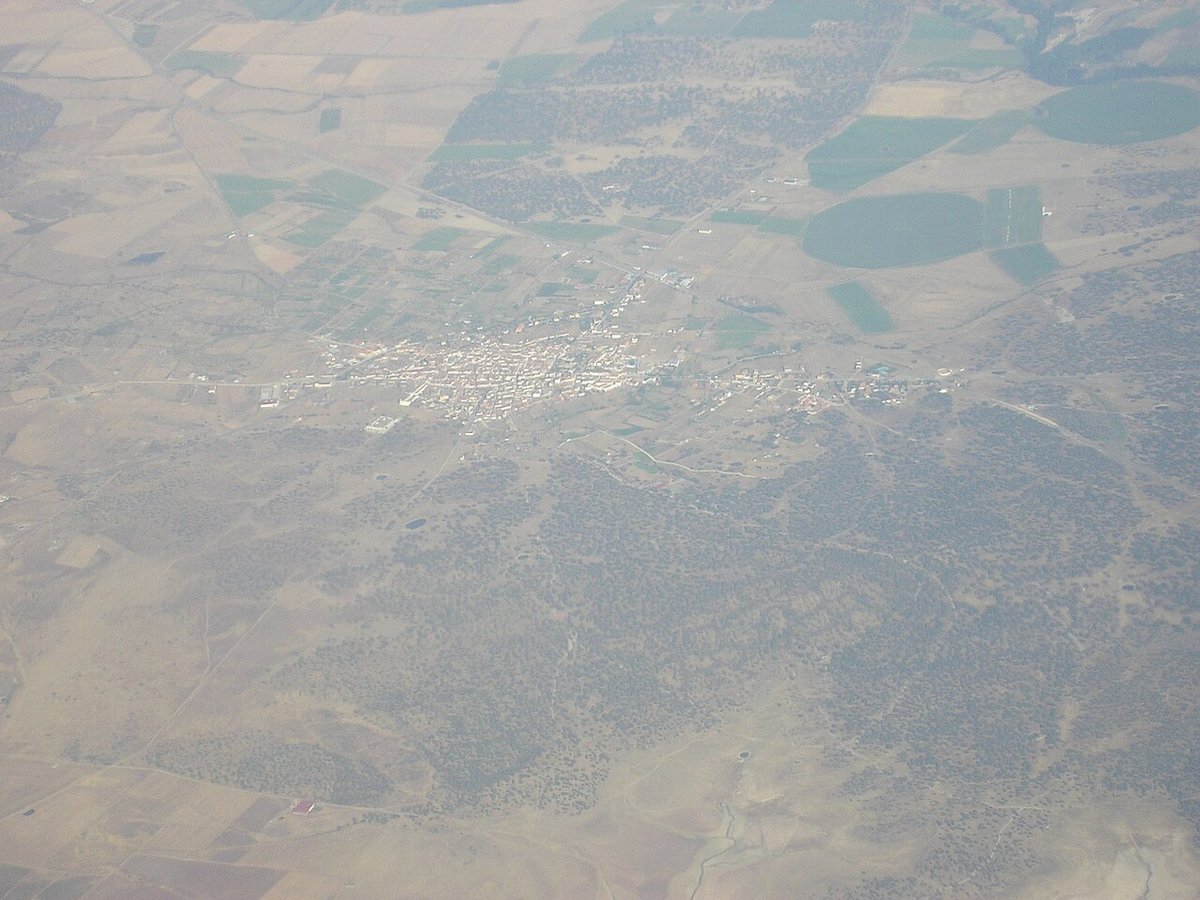
Life here is straightforward. Whitewashed houses, short streets, and plenty of talk about the land. The river Alagón runs nearby, and the dehesa, the traditional landscape of pasture and scattered trees, begins almost as soon as the built-up area ends. Nothing tries to impress. Instead, it becomes clear quite quickly how people live and organise their days.
This is not a place arranged for visitors. It is a place that continues as it always has, with its own rhythm and habits.
The steady presence of San Pedro Apóstol
The main reference point in La Pesga is the church of San Pedro Apóstol. It does not dominate through size or decoration. Its character is more restrained, shaped by a mix of stone and brick that reflects changes and repairs carried out over time.
The tower is visible from several parts of the village, which makes it a useful point of orientation when moving through the streets near the square. It quietly anchors the layout of the centre.
Inside, there are no dramatic features waiting to surprise. The interest lies in smaller details. Worked քարstone, wooden benches that have clearly been in place for decades, and the sense that different periods have left their mark in layers. It rewards a slower look rather than a quick glance.
Short streets, everyday life
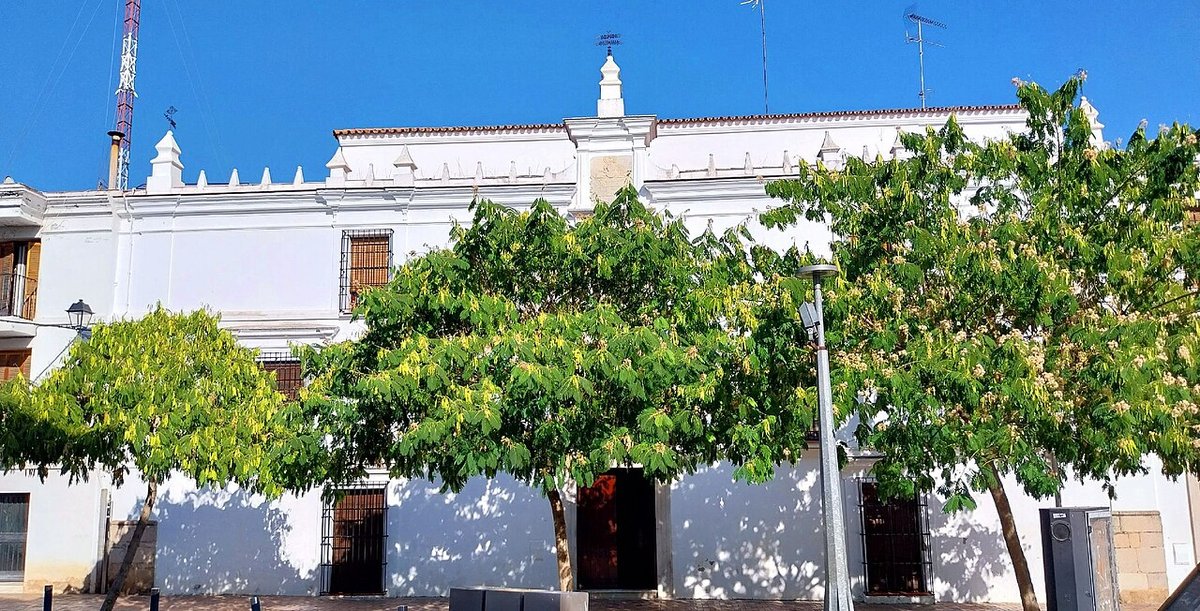
The centre of La Pesga can be covered quickly. Streets lead out from the main square, and within a few minutes the basic layout becomes clear. Whitewashed façades, iron balconies, and the occasional large doorway from an earlier time define the look.
This is not a historic quarter designed for browsing shopfronts. The focus is on daily routines. People come and go from their houses. Cars are parked wherever space allows. Conversations travel easily from one doorway to another.
The river Alagón passes relatively close by, although it is not always visible from within the village itself. Rather than forming a promenade or a landscaped feature, it belongs to the surrounding agricultural setting. It is part of the working landscape rather than something staged for visitors.
Dehesa, tracks and what the land produces
Beyond the last houses, dirt tracks begin almost immediately. These are not walking routes laid out for leisure. They are practical paths used for daily work, linking fields and farms. Livestock moves along them. Tractors come and go as part of routine activity.
Some locals do head out along these tracks for a walk, though there is no expectation of signposted routes at regular intervals. The sense is of entering a working environment rather than a managed space.
The dehesa defines much of the surrounding area. Holm oaks spread across open ground, with grazing animals moving between them. This landscape is directly tied to what is produced and eaten locally. Cured meats, pork from animals raised in open pasture, cheeses made from sheep or goat’s milk, and honey from hives placed on the slopes all come from this setting.
There is nothing elaborate about these products. They are closely linked to the land and to long-standing ways of working it. When done well, the quality is evident without needing explanation.
Festivities that remain part of the routine
The main celebrations in La Pesga revolve around San Pedro Apóstol. These are local festivals in the fullest sense. A procession forms part of the programme, along with gatherings among neighbours and the return of people who now live elsewhere but come back for a few days.
During the summer, it is also common for there to be a romería, a traditional outing or gathering in the countryside, or other informal meetings outdoors. These occasions bring people together beyond the village streets, often in the surrounding landscape.
Another custom still present, although less widespread than before, is the traditional pig slaughter carried out by some families. In the past, this was a central part of the winter calendar, structuring both work and food preparation for months ahead. Today it continues in a more limited way, but it remains a recognisable part of local life.
Getting there and how long to stay
La Pesga is located in the north of the province of Cáceres, within the Trasierra‑Tierras de Granadilla area. The usual way to reach it is by car, either from Plasencia or from the main motorway that crosses the western part of Extremadura.
The final stretch tends to follow quiet regional roads. The drive is not complicated, though it benefits from taking things slowly. The route passes through open countryside with gentle bends, and the occasional tractor appears without much warning.
Time in La Pesga is easy to measure. In a couple of hours, it is possible to walk through the centre, visit the church, and head out briefly along the nearby tracks. It is not a place that demands a full day.
It works better as a pause along the way. A short stop that gives a clear sense of how things function locally, without decoration or performance. With that expectation, the village makes more sense. It may even hold attention a little longer than planned.