Full Article
about Santa Cruz de Paniagua
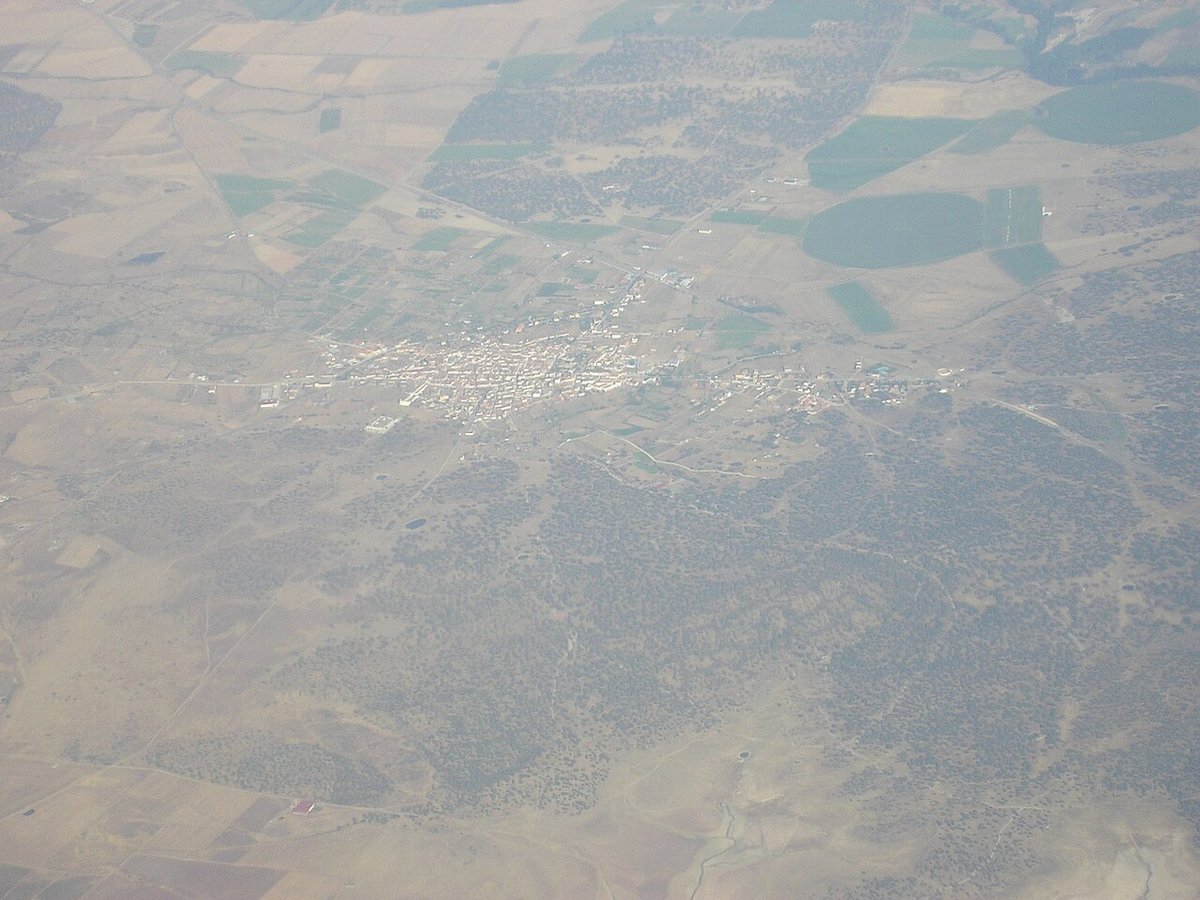
Quiet village with a hamlet (El Bronco) and pastureland surroundings.
Hide article Read full article
A place where time follows its own pace
Some places come with a mental checklist of sights. Others begin the moment you step out of the car and start walking without much direction. Tourism in Santa Cruz de Paniagua leans firmly towards the second.
This small municipality in the comarca of Trasierra – Tierras de Granadilla, in the north of Cáceres, has fewer than 300 residents, and that shapes everything. There is no set rhythm imposed by attractions or schedules. Life moves according to whatever happens to unfold in the street.
Stand still for a moment and familiar sounds emerge, the kind you only notice in villages that are still lived in: a conversation drifting from a doorway, a tractor passing slowly, an animal somewhere in the background. It may seem uneventful, but it defines the place more clearly than any landmark could.
A village centre made for wandering
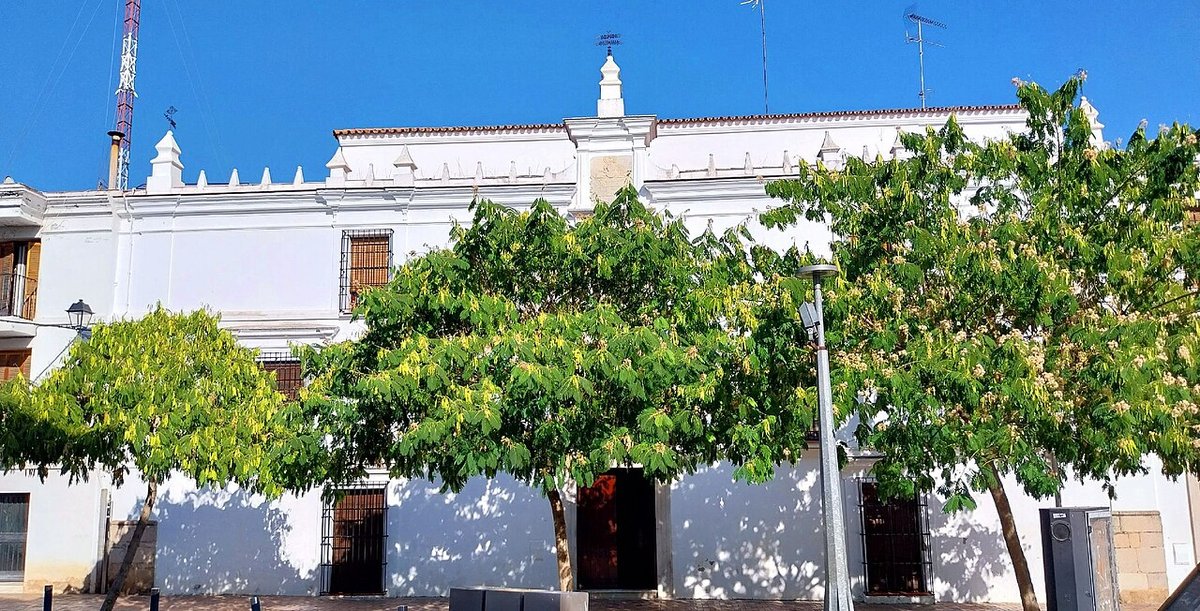
Santa Cruz de Paniagua is not a monumental town, and that is part of its appeal. The streets are short and easy to follow, lined with stone and masonry houses that reflect its agricultural and livestock past. Some still have iron window grilles and interior courtyards that remain mostly hidden from view.
This is the kind of place best explored without a map. Turn into one street, then another, and within ten or fifteen minutes you already have a clear sense of how everything fits together.
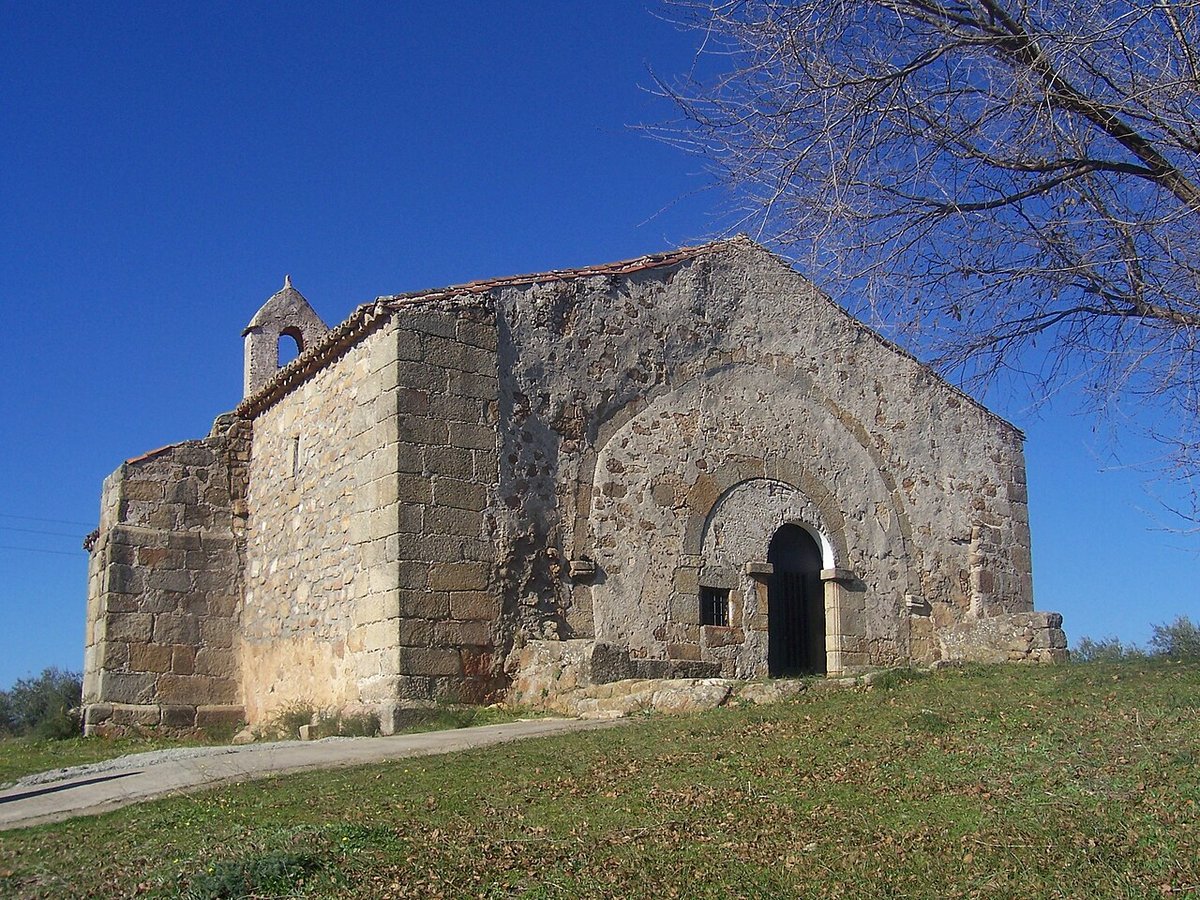
At the centre sits the parish church of the Santa Cruz. It does not aim to impress with elaborate decoration or grand altarpieces. Instead, it is a restrained, functional building that blends naturally into the rest of the village. The overall feel is straightforward, without layers of ornament or distraction, and the church reflects that same approach.
Beyond the last houses, the dehesa begins
Leave the final row of houses behind and the landscape shifts quickly into what is typical of this part of northern Extremadura: dehesa dotted with holm oaks, open spaces for grazing livestock, and rural tracks crossing gently rolling ground.
These paths are generally easy to walk, with few steep sections. The main thing to keep in mind is the climate. In summer, the sun can be intense and shade is not always where you would like it to be. After rainy periods, some stretches can become muddy.
Even so, walking here has a simple, steady appeal. Holm oaks stand scattered across the land, cattle graze quietly, and when the heat rises, the sound of insects fills the air. It is a landscape that repeats itself in broad strokes, yet never feels exactly the same from one moment to the next.
Walking, wildlife and small discoveries
A few hours in Santa Cruz de Paniagua naturally fall into an easy rhythm: a walk through the village followed by a short wander along the surrounding paths.
There is no need to plan anything elaborate. Often, the best option is simply to follow one of the agricultural tracks leading out from the village centre. In these open areas, it is fairly common to spot birds of prey circling above or smaller species moving between the holm oaks and low scrub.
In autumn, some people head out to look for mushrooms in the surrounding countryside. It is not something to approach casually, though. Knowing what to pick matters here, as in any rural area where foraging is part of local habits.
Food shaped by the countryside
The food associated with this area is exactly what you would expect from a rural part of Extremadura. It is based on what the land provides rather than presentation: cured meats, small-scale cheeses and hearty stews.
At certain times of the year, small game hunting becomes part of local life, something common across dehesa landscapes. There are also occasional small fairs or rural gatherings where residents showcase local products such as honey and cheese. These do not follow a fixed calendar and can vary from one year to the next.
When to come
Spring is often the most comfortable time to walk in the area. Temperatures are milder and the countryside shows more colour.
Autumn also works well, especially if there has been enough rain for the dehesa to regain some green after the dry summer months.
Summer requires some adjustment. The heat makes midday walks impractical, so it is better to head out early in the morning or later in the afternoon. Winter can bring fog and overcast days, something quite typical in this part of Cáceres.
If you are just passing through
Santa Cruz de Paniagua does not take long to see, and that is perfectly fine.
A simple visit might begin by parking near the centre, walking to the church, taking a couple of turns through the main streets, and then heading out along one of the paths that start at the edge of the village. In one or two hours, you can form a clear picture of both the settlement and the surrounding landscape.
It is the kind of stop that does not fill an entire day, yet fits naturally into a wider route through the comarca. Small places often work this way: you arrive, spend a little time walking, and leave with a quiet sense of how the place moves. For Santa Cruz de Paniagua, that is more than enough.