Full Article
about Santibáñez el Bajo
A farming village with the curious Christ chapel and natural surroundings.
Hide article Read full article
Santibáñez el Bajo: Geografía y Vida en la Trasierra
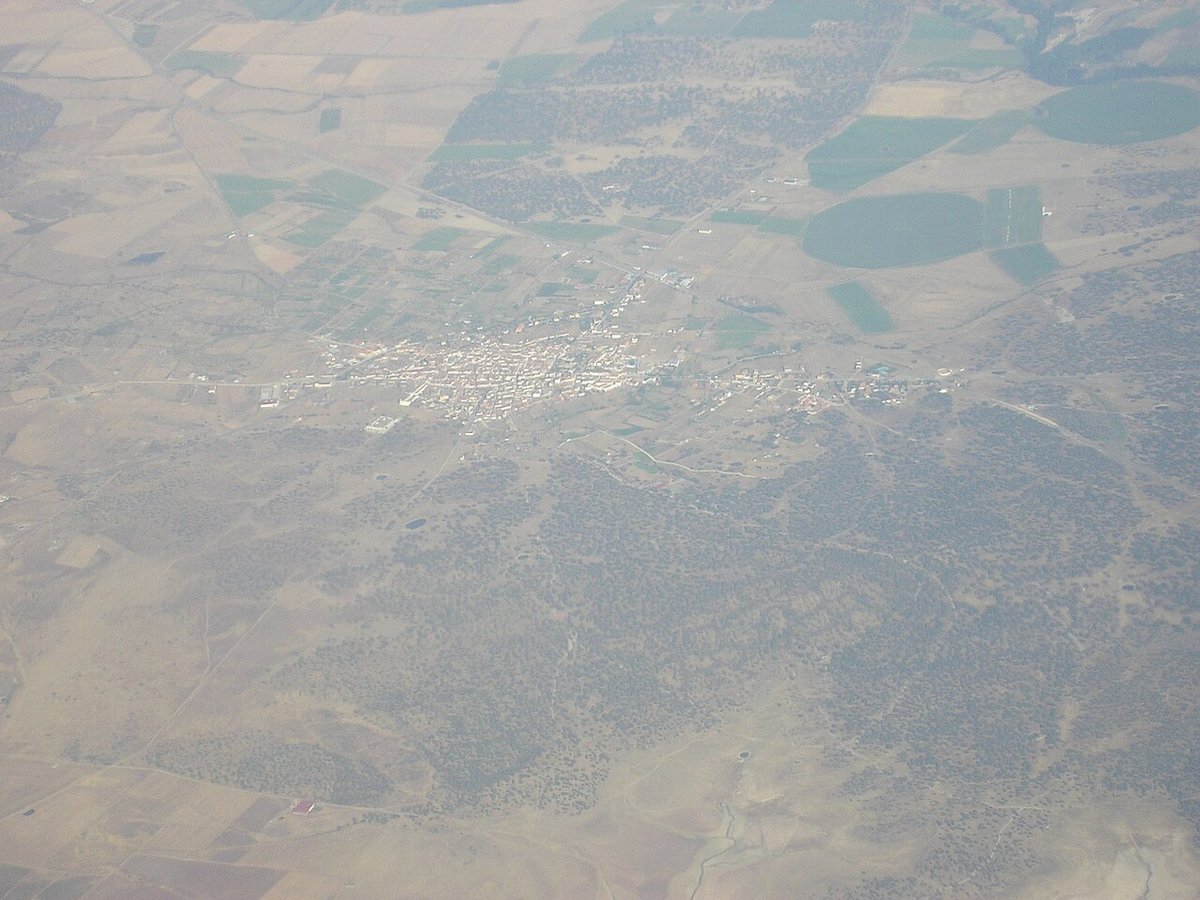
Santibáñez el Bajo se asienta en la comarca de Trasierra-Tierras de Granadilla, al norte de Cáceres. Su posición es clave: está en la transición entre el valle del río Alagón y las primeras estribaciones que suben hacia Las Hurdes. Este es un terreno de dehesa abierta y pequeñas vegas de cultivo, una geografía que durante siglos ha marcado los ritmos locales.
La vida aquí se ha sostenido históricamente de la ganadería extensiva y una agricultura de secano adaptada al terreno. Lo que se ve no es un paisaje natural, sino uno modelado por un uso continuo. El pueblo tiene unos setecientos habitantes y una estructura clara: calles cortas, casas de mampostería y una plaza central. A primera hora, el sonido de tractores mezclado con el de los rebaños en los corrales periféricos define la mañana.
La Arquitectura del Uso Cotidiano
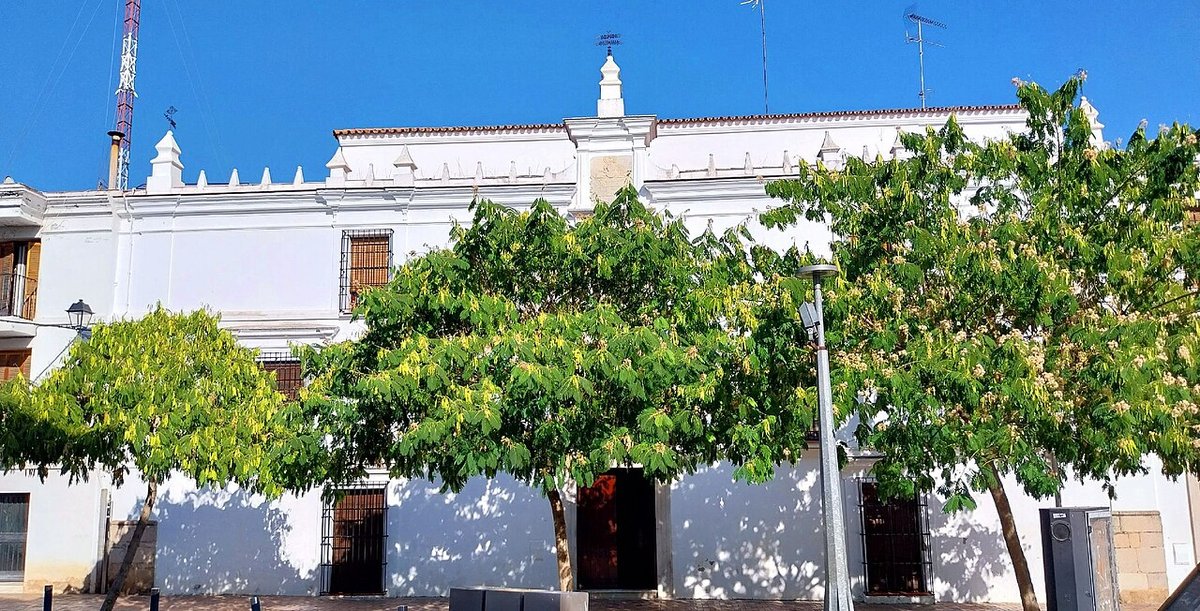
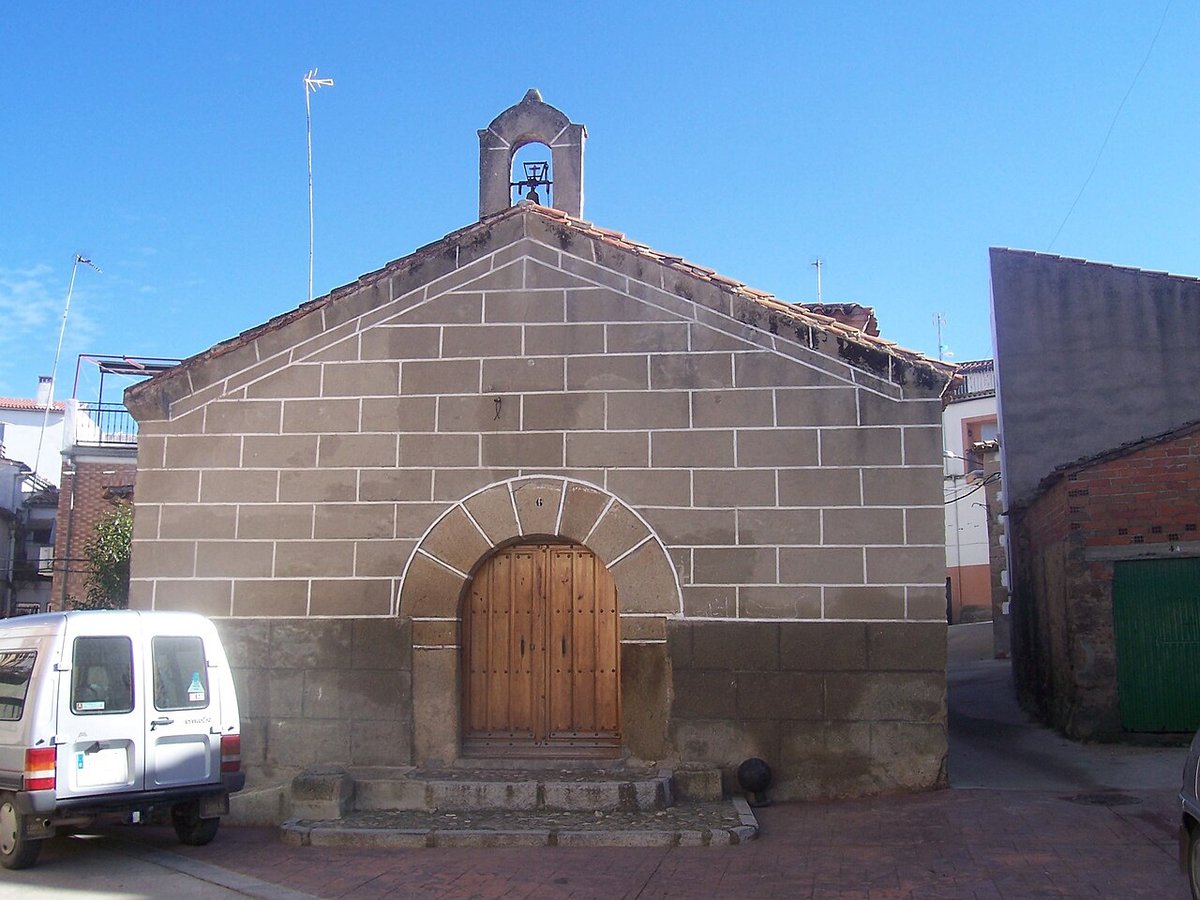
La iglesia parroquial, de origen medieval con reformas posteriores, funciona como el punto a partir del cual se organiza el caserío. La arquitectura es sobria. Predominan las fachadas de mampostería, con algunos dinteles de granito trabajado y balcones de hierro. En muchas de ellas se leen las huellas de ampliaciones o reparaciones antiguas, pequeñas marcas que explican cómo se ha construido este pueblo, capa a capa.
En las afueras, la trama se abre y aparecen las construcciones ligadas directamente al trabajo: naves, corrales y pequeños cercados de piedra o alambre. No hay separación neta entre el espacio doméstico y el productivo; es una lógica rural que aún se mantiene.
El paisaje inmediato es dehesa. Encinas y algunos robles se distribuyen con amplio espacio entre ellas, creando ese bosque aclarado donde pasta el ganado. Es un sistema tradicional de explotación, no un parque. Si se camina por los senderos, es frecuente toparse con piaras de cerdo ibérico, sobre todo en otoño durante la montanera, o con rebaños de ovino. Conviene llevar prismáticos para observar la avifauna –rapaces y aves propias de zonas agrarias– y recordar cerrar siempre las portillas que se encuentren en el camino.
A pocos kilómetros, la presa de Gabriel y Galán almacena las aguas del Alagón. Desde algunos puntos del término municipal se ve la lámina de agua, cuyo nivel varía notablemente con las estaciones.
Caminar por la Dehesa
Varios caminos rurales salen del pueblo hacia las fincas y las localidades vecinas. Son recorridos con poco desnivel, aunque las distancias suelen ser mayores de lo que parece en el mapa. El valor de estos paseos no está en un mirador concreto, sino en comprender la estructura del territorio: la distancia calculada entre los árboles, el suelo relativamente despejado bajo ellos, la gestión constante que hay detrás de una apariencia silvestre.
Una Cocina de Subsistencia
La comida aquí responde a lo que da la tierra. El cerdo ibérico, criado en la dehesa, ocupa un lugar central. En muchas casas se siguen preparando platos como las migas o el gazpacho de campo, concebidos para aguantar jornadas largas de trabajo al aire libre. También son habituales los quesos artesanales de la zona y otros productos de las pequeñas explotaciones ganaderas.
Es una cocina práctica, sin elaboraciones complejas. En temporada, algunos vecinos mantienen la costumbre de salir a recoger espárragos trigueros o setas por el campo circundante, aunque buena parte del terreno es privado.
El Calendario Local
Las fiestas patronales del verano concentran la vida social en la plaza durante varios días, con música y encuentros que reúnen a los residentes y a quienes regresan al pueblo para la ocasión.
Otra tradición, ahora menos frecuente pero aún viva en la memoria colectiva, es la matanza del cerdo. En algunas casas se sigue practicando como método para obtener los embutidos y conservas que se consumirán durante el año.
Santibáñez el Bajo se define por esta continuidad. Sus calles, sus campos y sus rutinas hablan de una forma de vida ligada a la dehesa y mantenida a lo largo de generaciones.