Full Article
about Zarza de Granadilla
Near the Gabriel y Galán reservoir; a lively farming town
Hide article Read full article
A village shaped by its setting
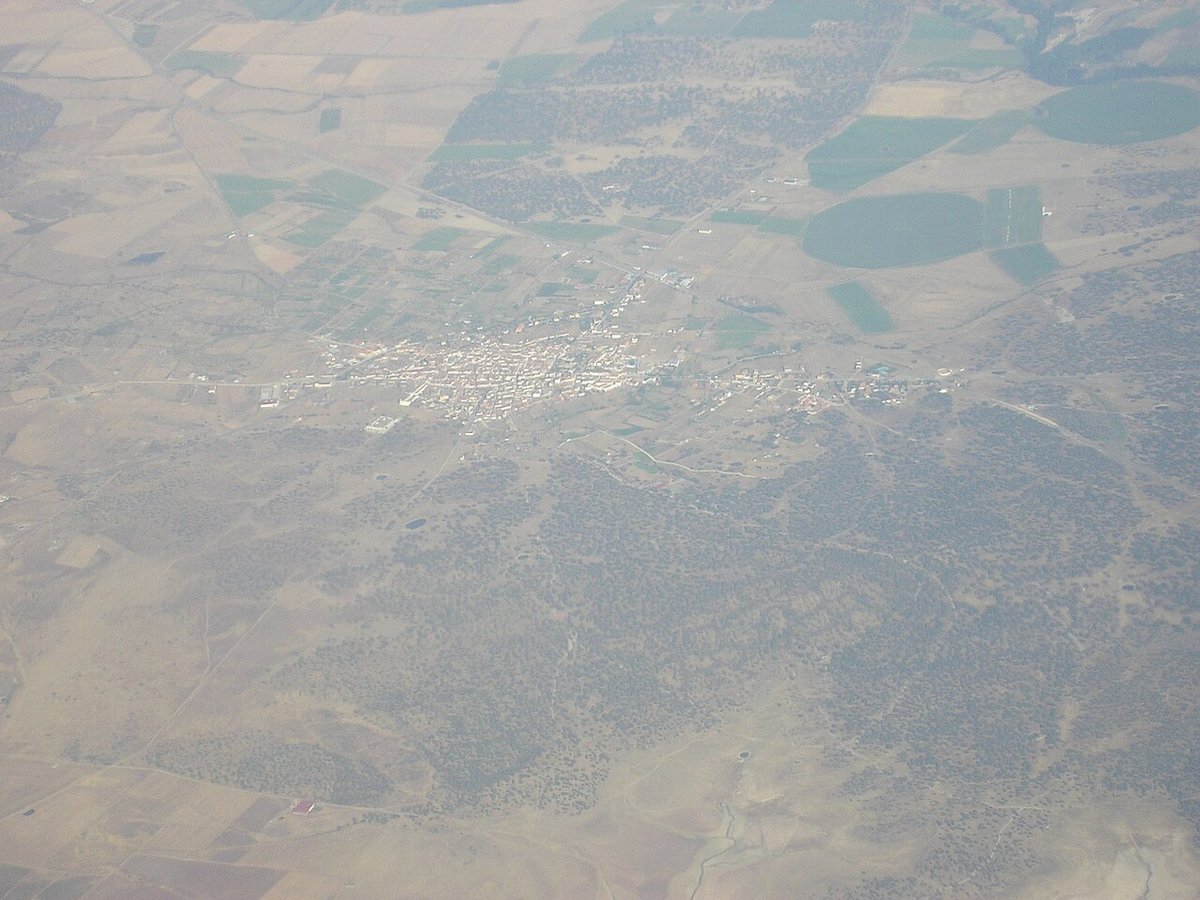
Zarza de Granadilla sits in the comarca of Trasierra‑Tierras de Granadilla, in the north of Cáceres. This is a transition zone, where the flat inland dehesas begin to wrinkle into the first hills that lead towards the Sistema Central. The village’s character comes from this meeting of environments.
With around 1,800 inhabitants, its layout is straightforward. Life organizes itself around the main square and the parish church, with streets fanning out towards the farmland. The boundary between town and countryside is porous here; you see it in the boots by the doorsteps and the tractors parked on the edge of the pavement.
The parish church as an anchor
The most prominent building is the parish church of the Asunción de Nuestra Señora. Its construction began in the 16th century, though the bell tower and parts of the interior show the clearer, more geometric lines of 18th-century reforms.
It holds several baroque altarpieces and devotional statues that remain in use. Its architectural interest is modest, but its role is not: for centuries, it was the fixed point around which housing clustered. The older quarters still radiate from its walls, a pattern you can trace by following the narrowest streets.
Streets and the marks of use
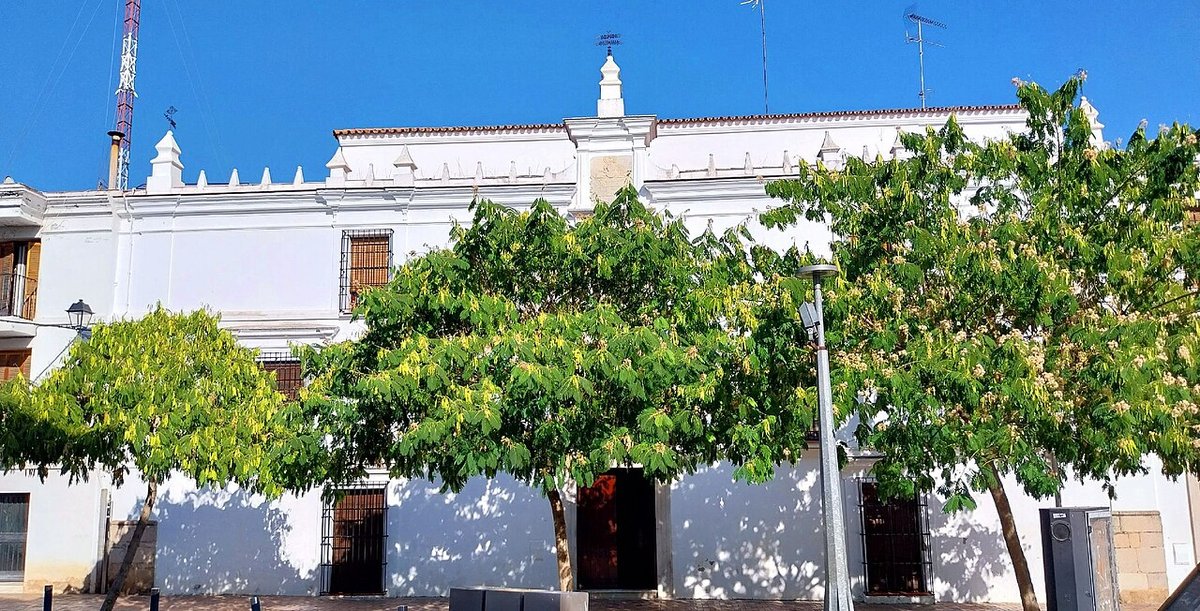
The building fabric is a mix of traditional forms and necessary updates. You’ll see one- and two-storey houses with whitewashed walls and curved terracotta roof tiles. Some older homes still have interior courtyards—practical spaces that catch the summer breeze and fill with potted plants.
On the outskirts, the architecture becomes openly functional. Stone corrals, tool sheds, and dry-stone walls mark property lines and support farming work. These aren’t scenic features; they’re tools. They also explain, quite directly, how the local economy has functioned.
The working landscape: dehesa and olive groves
The land around Zarza is classic northern Extremadura terrain. Open dehesa, with holm oaks spaced for pasture and acorn harvest, alternates with plots of olive groves. Livestock ponds and stone enclosures dot the area. Every element has a purpose, forming a system of land use that has evolved over generations.
The rural tracks that crisscross this landscape are its real infrastructure. They were made for moving livestock, reaching olive groves, and connecting farms. Walking them gives you a clearer sense of the local rhythm than any stroll through the village alone could.
On foot or by bicycle
A network of wide, unpaved tracks surrounds the village, suitable for walking or cycling. The terrain rolls gently; some stretches have a steady incline that feels more pronounced under the sun.
In summer, you plan around the heat. Start early or go late, and carry water—long sections offer no shade. Spring and autumn are different; the light is softer, and you can take your time.
These routes aren’t scenic circuits in a conventional sense. They are passages through a working landscape. The value is in the context they provide: seeing the olive harvest or the cattle in the dehesa connects what happens in the fields to the quiet pace of the village streets.
The rhythm of the year
Local traditions follow an annual calendar that still structures community life. The patron saint festivities in August, honouring the Asunción, change the village’s atmosphere. People return from elsewhere, and the streets fill with organized activities.
Semana Santa here is observed quietly, with processions moving slowly through the centre. Carnival in February relies on local participation; it’s a community event rather than a spectacle designed for outsiders.
A practical approach
You can walk the streets of Zarza de Granadilla in under an hour. To understand it, you need to leave them. Follow any track leading out of town into the dehesa or alongside the olive groves. That’s where you see the foundation of daily life.
Come in spring for the green and the wildflowers, or in autumn for the light and the olive harvest activity. In summer, respect the midday heat. The landscape isn’t just a backdrop here; it’s the main text.