Full Article
about Abertura
A farming municipality on the Trujillo plain, ringed by oak pastureland and rural quiet; its parish church stands out.
Hide article Read full article
Stone and Silence in the Dehesa
At seven in the morning, the granite of the church of San Juan Bautista holds the cold of the night. Sunlight finds the holm oaks first, out in the open fields, before it slowly warms the square bell tower. In that hour, Abertura is a study in stillness. The only sounds are the scrape of dry leaves across the road and the call of a blackbird from a rooftop. With 362 inhabitants, this village in the Trujillo region feels less like a destination and more like a pause.
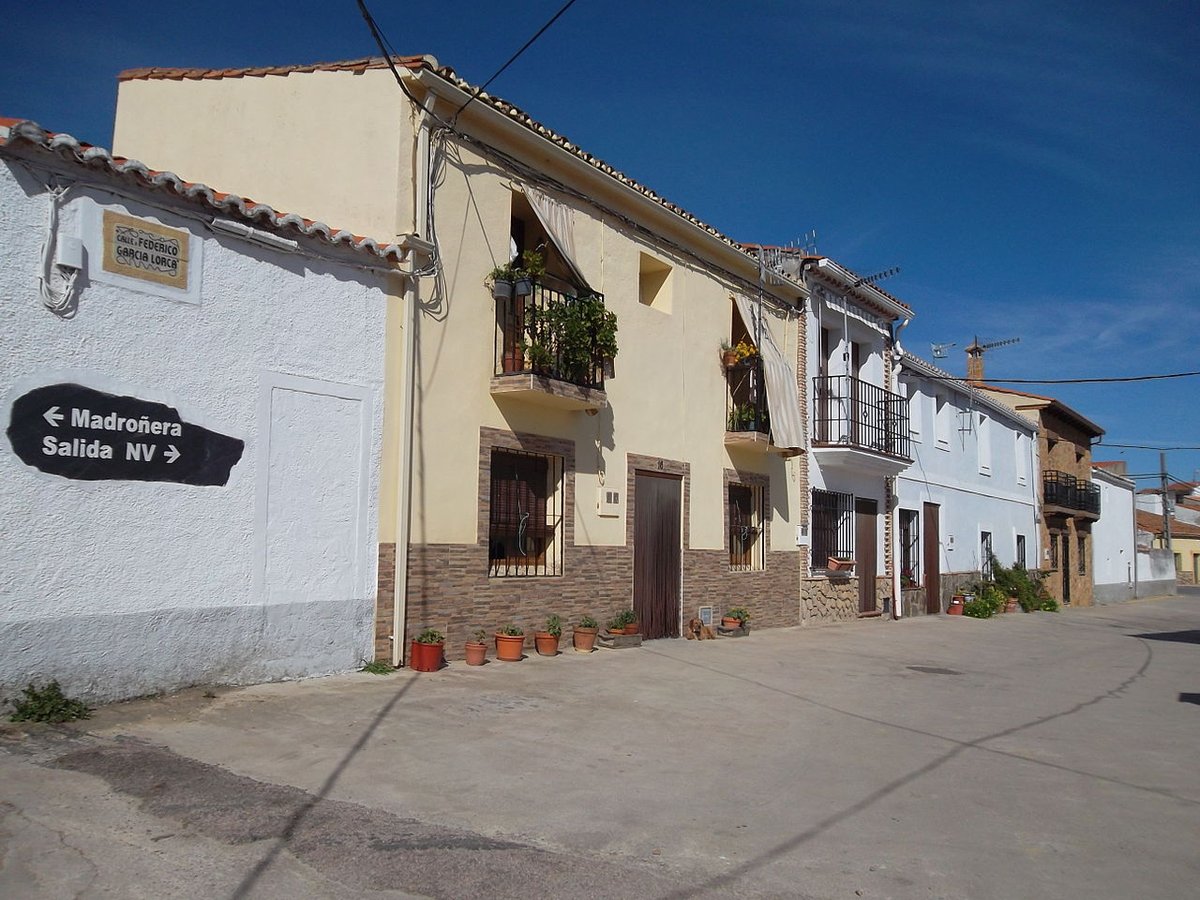
The streets slope gently toward the main square. You notice the doorways first, cut from local stone and worn smooth at the edges by generations. The whitewash on the houses reflects a soft, chalky light. Some windows still have their original iron grilles, a pattern of bars against the bright wall.
The Weight of Granite
San Juan Bautista is a 16th-century church built for endurance, not grandeur. Its thick walls are made from the same granite that appears in the dry-stone walls crisscrossing the countryside. The main doorway is simple, with clean lines and little ornament.
Inside, the air is cool and still. Baroque altarpieces stand against walls of exposed stone, and heavy wooden beams span the ceiling. The overall feeling is austere, a functional space that has gathered centuries of quiet parish life.
Where the Pavement Ends
A five-minute walk from the square takes you into the dehesa. This is the expansive, managed woodland of holm and cork oak that defines so much of Extremadura. The trees are widely spaced, creating a landscape of light and shadow. On a windy day, you hear the creak of branches and, in the distance, the dull clank of sheep bells.
Several unsignposted dirt tracks begin where the last houses end. They are easy to follow if you keep the village at your back. Walk slowly here. The movement is in the fields: a kestrel hanging in the air, sparrows darting through scrub. In more open areas, with patience, you might see the distant, heavy flight of a great bustard.
Remember this land is working land, mostly private. If a gate is closed, leave it closed.
A Measure of Time
You can walk from one end of Abertura to the other in twenty minutes without hurrying. That pace lets you see the details: a wooden door studded with hand-forged nails, a stone bench set into a wall where someone might have sat to watch the evening come.
The light dictates everything here. In summer, the midday heat is fierce and heavy. Come early or wait until late afternoon, when long oak shadows cool the earth. Spring brings a brief green softness to the fields. Autumn air is clearer, sharpening every outline.
The roads connecting to Trujillo and Miajadas are quiet. You can park without trouble along the main street. Overnight stays in the village itself are scarce; plan ahead if you want to base yourself here, particularly on weekends or during hunting season.
Many people drive through Abertura on their way elsewhere. To stop is to feel the shift in scale. The world becomes a line of stones sinking into grass, the grey-green of an ancient olive tree, and the vast, open quiet that settles over it all.