Full Article
about Aldeacentenera
Gateway to the Villuercas Geopark, with nearby Visigothic and Celtic hillfort remains.
Ocultar artículo Leer artículo completo
The place where the map runs out of ink
Aldeacentenera sits 570 m above sea level, 25 km south of the Trujillo–Madrid axis, at the point where the road atlas shrugs. Five hundred and seventy-nine souls, one functioning bar, zero traffic lights. A British cyclist who paused here last spring wrote that the village “looks like any other town south of Madrid” before admitting that the only liquid on offer was “basic coffee—no snobbish sparkling water”. The bar is called El Desguace, literally “The Scrapyard”, and it does not open in the afternoon. If you need an espresso after 14:30, you are out of luck.
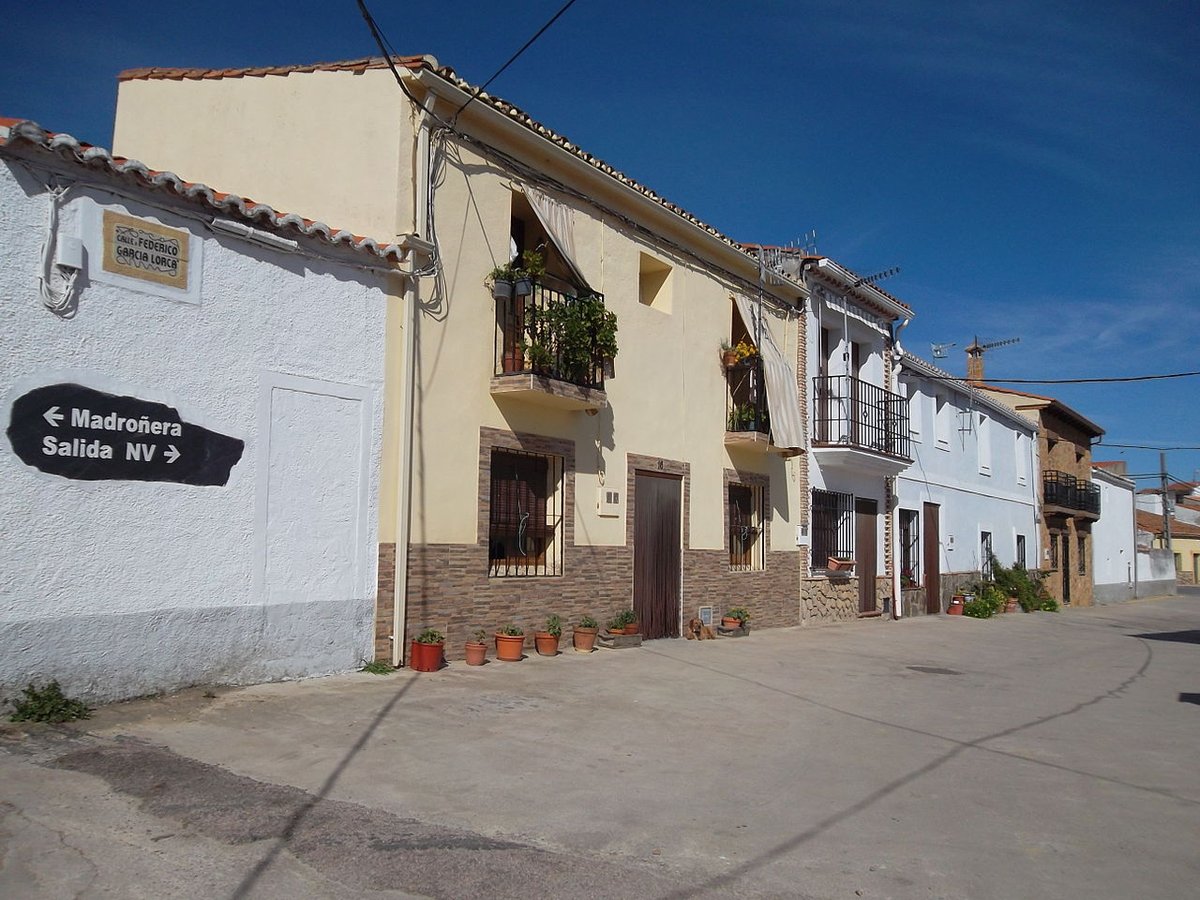
The name itself is a puzzle. “Aldea” means hamlet; “centenera” hints at hundred-fold divisions of medieval land. Whatever the etymology, modern Aldeacentenera feels like a place that lost the memo about 21st-century tourism. There is no boutique olive-oil shop, no English menu, no flamenco night laid on for coach parties. What you get instead is granite houses the colour of weathered sheep’s wool, balconies rusting in the shape of 19th-century ironwork, and a silence so complete that birds scatter when your boots crunch the gravel.
Granite, goats and the Extremadura sky
Start in the Plaza Mayor, a rectangle of cracked concrete shaded by a single palm. The parish church closes its doors at noon; the key-keeper lives three houses down but will only surface if you knock with conviction. The building is 16th-century, stone on stone, no frills. Step inside and the temperature drops ten degrees; the smell is of wax and old timber. There is no explanatory panel, no gift rack of postcards. You are left alone with the echo of your own footsteps.
From the church portico you can map the village in under four minutes. Calle de la Cruz climbs past cottages whose lower walls are granite blocks the size of televisions; higher up, the masonry thins to fist-sized stones mortared in a hurry. Every so often a wooden gate stands ajar, revealing an interior patio and a lemon tree in a tin bath. The lanes taper into goat tracks that dissolve into the dehesa—the cork-oak grassland that carpets much of south-west Extremadura. Walk ten minutes and you will meet a fence post topped with a weather-bleached goat skull, the local version of a memento mori.
The surrounding landscape is the real monument. Holm oaks have been pollarded for centuries so that their branches spread like candelabra; between them the grass is kept toothbrush-short by black Iberian pigs. In October these animals gorge on acorns—the montanera—fattening up for the ham that will sell in London for £180 a leg. From the ridge above the village you can see 30 km of emptiness: no farmhouses, no roads, just ochre earth and a sky that feels twice the normal height. Sunset turns the whole scene the colour of burnt sugar; by dusk the only artificial light is a single street-lamp outside El Desguace.
What passes for action
If you arrive hoping for craft markets or wine tastings, keep driving. Aldeacentenera’s calendar contains three events only: Holy Week, the summer fiestas (date drifts between 15 July and 6 August depending on the priest’s diary), and the day the mobile slaughterhouse parks on the football pitch. The fiesta involves a brass band that tours the streets at 07:00, a foam disco for teenagers, and one evening of corridos where half the village squeezes into the makeshift bullring. Tickets cost €10 and are bought from a man who also sells propane bottles.
The rest of the year entertainment is self-generated. Bird-watchers bring scopes and sit by the cattle trough: buzzards, booted eagles, the occasional black vulture. Hikers download GPX files from the Extremadura tourist board and follow sheep paths to Berzocana, 12 km west; phone signal vanishes after the first ridge, so offline maps are essential. Mountain-bikers like the gradient—1,200 m of climb in 25 km if you loop via Garciaz—but carry two inner tubes; thorns from the retama shrub slice sidewalls like razor blades.
Food is uncomplicated. El Desguace serves coffee, caña beer and a tortilla the size of a tractor wheel. If you want jamón ibérico you must ring a farmer the day before; he will slice it in his garage and charge €45 a kilo, cash only. The nearest supermarket is in Trujillo, 35 minutes by car. Vegetarians should shop before arrival: the village understanding of “sin carne” is simply “with slightly less chorizo”.
Getting there, staying there, leaving again
Fly to Madrid, pick up a hire car, head west on the A-5. After 180 km peel off at Trujillo, follow the EX-118 through almond groves to Berzocana, then climb the CC-21 for 19 km. The tarmac narrows, the verges sprout oleander, and finally Aldeacentenera appears round a bend like a mirage that thought better of it. There is no petrol station; fill up in Trujillo where unleaded is currently €1.58 a litre.
Public transport is theoretical. A weekday bus links Trujillo to Berzocana; from there you could walk the remaining 19 km, but you would arrive after closing time. Cycling is popular with Britons on spring training camps: the road from Berzocana averages 4 %, peaks at 11 %, and in March the temperature hovers at 18 °C—perfect in the morning, furnace by noon. Carry two bidons; the only public fountain is a cattle trough whose water the locals won’t drink.
Accommodation is limited to Casa Rural El Portón, three bedrooms, thick stone walls, no pool. Weekend rate is €90 for the house; mid-week you can haggle down to €65. The owner lives in Madrid and leaves the key under a flowerpot—she will text you the Wi-Fi password, though download speeds barely stretch to iPlayer. There is also a municipal albergue with bunk beds at €12 a night, open only when the fiestas drag former residents back from Barcelona. Bring a sleeping bag; the heating is a single plug-in radiator that trips the fuse if you also boil a kettle.
The honest verdict
Aldeacentenera will not change your life. It offers no Insta-moment plaza, no Michelin-listed tapas crawl, no boutique cave hotel. What it does give you is a yardstick for how quiet rural Europe can still be. Sit on the bench outside El Desguace long enough and you will hear your own heartbeat bounce off the granite. That sensation is increasingly rare, and—like the village—unlikely to survive the arrival of fast coaches and craft-beer menus. Visit now, while the only soundtrack is a distant chainsaw and the clink of a farmer feeding scrap metal into a trailer. Bring cash, bring patience, and bring your own sparkling water if you are that sort of person. After 17:00 the bar shuts, the sky turns velvet, and the village belongs once again to the pigs, the goats and the darkness.