Full Article
about Escurial
Farming village on the rolling plain, noted for its church and rural atmosphere.
Hide article Read full article
A village that quietly resets your pace
There is a familiar travel moment: a quick stop to stretch your legs turns into a longer pause without quite knowing why. Tourism in Escurial has a bit of that feel. You arrive without high expectations and the village slows everything down on its own terms. It sits in the comarca of Trujillo and has around eight hundred residents, so the scale is small. The kind of place where ten minutes is enough to understand the layout, and half an hour later you begin to recognise faces.
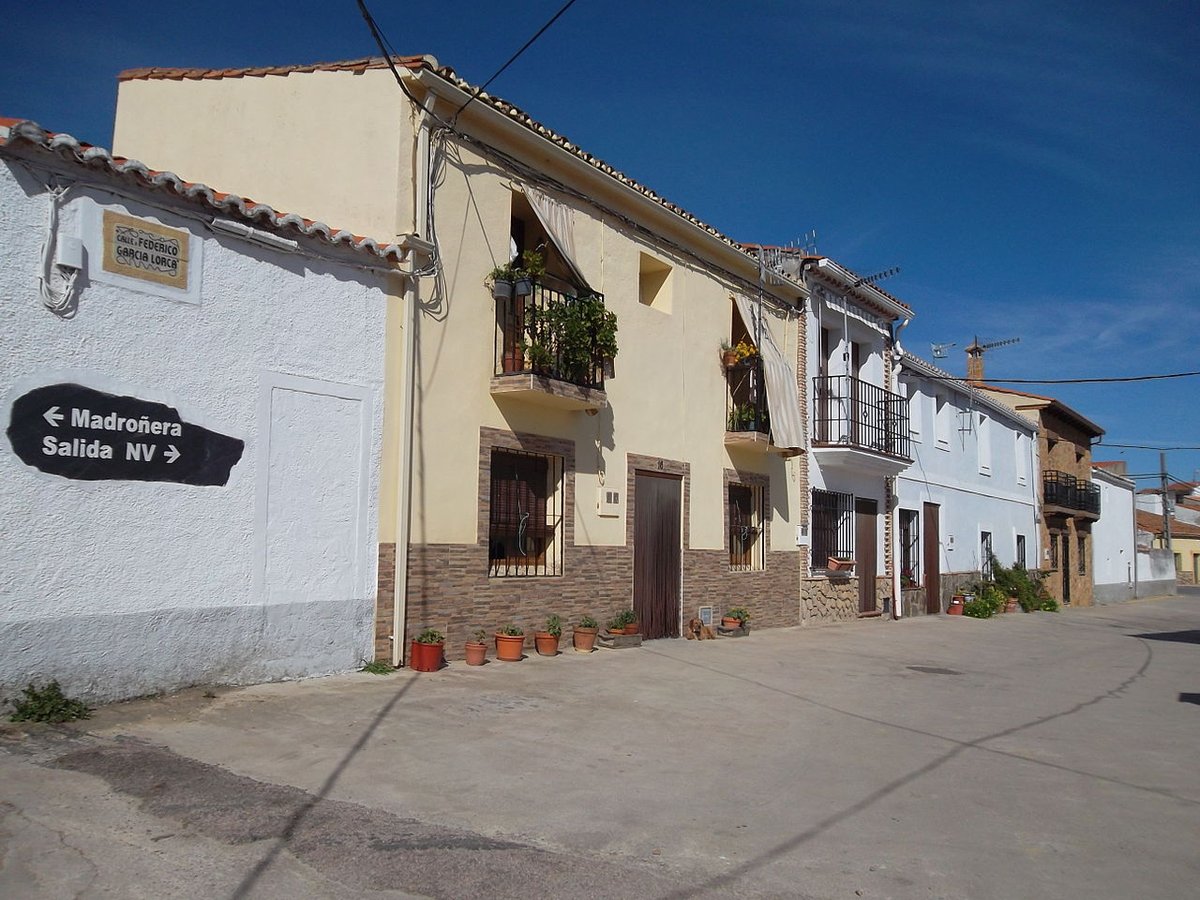
Escurial does not try to impress. It works more like a country house where everything is simple but solid. Streets are narrow, some unpaved, and the houses look designed to cope with harsh summers rather than to look good in photographs. The layout slopes gently down towards the parish church of the Asunción, the point where everything comes together.
The church is restrained. Stone walls, a wooden door, clean lines. It does not demand long minutes of looking upwards, yet it fits the place as naturally as work clothes fit a day in the fields. From the nearby square, views open to the north, towards the slopes of the river Almonte. Scattered holm oaks, low scrub and a wide sky define the scene. The landscape feels spare, but deliberate.
A walk through the centre is quick. Streets such as Calle Real or Callejón del Caracol wind between houses with open courtyards and stone walls. Cars pass slowly and people carry on walking without moving aside too much. In many villages like this, the street still acts as both living room and thoroughfare.
The countryside around Escurial
Step outside the built-up area and the setting shifts to meadows and low hills. Holm oaks, stone enclosures and agricultural tracks cross the farmland. This is very much Extremadura countryside. It stays dry for much of the year, yet it is far from empty if you pay attention.
Livestock continues to shape daily life here. Sheep and goats appear regularly, along with farms where Iberian pigs are raised. The atmosphere reflects steady, ongoing work that needs no explanation, like a workshop where tools are always left out ready for use.
Rural paths are generally easy to follow. Nothing technical. These are the kind of tracks suited to a long walk after lunch rather than a demanding hike. Summer, however, is intense. Walking in the mid-afternoon can feel like opening a hot oven. Early starts make a clear difference.
Small moments stand out along these routes. A crow crossing the sky, a black stork perched on wires, the sound of cicadas when the heat builds. In a city, these details would slip by unnoticed. Here, they come through clearly once everything else quietens down.
Food and local traditions
Local cooking follows the same logic as the landscape: direct and practical. Migas made with stale bread and chorizo appear regularly, alongside stews where pork takes centre stage. These are dishes designed to fill you up after time spent outdoors. There is little interest in experimentation. The food does its job, much like a sturdy pair of field boots.
In November, the matanza remains an important tradition. This is the annual pig slaughter, a custom that still brings entire families together. It works a bit like a large festive meal elsewhere, though here it revolves around shared work and the preparation of pork products for the months ahead.
San Antón, at the beginning of February, also draws activity. Animals are blessed and the atmosphere stays close-knit, without elaborate ceremony. August brings the fiestas of the Asunción. Music, neighbours out on the streets and simple processions set the tone. It is very much village life: the main purpose is to meet and spend time together.
A short walk if time is limited
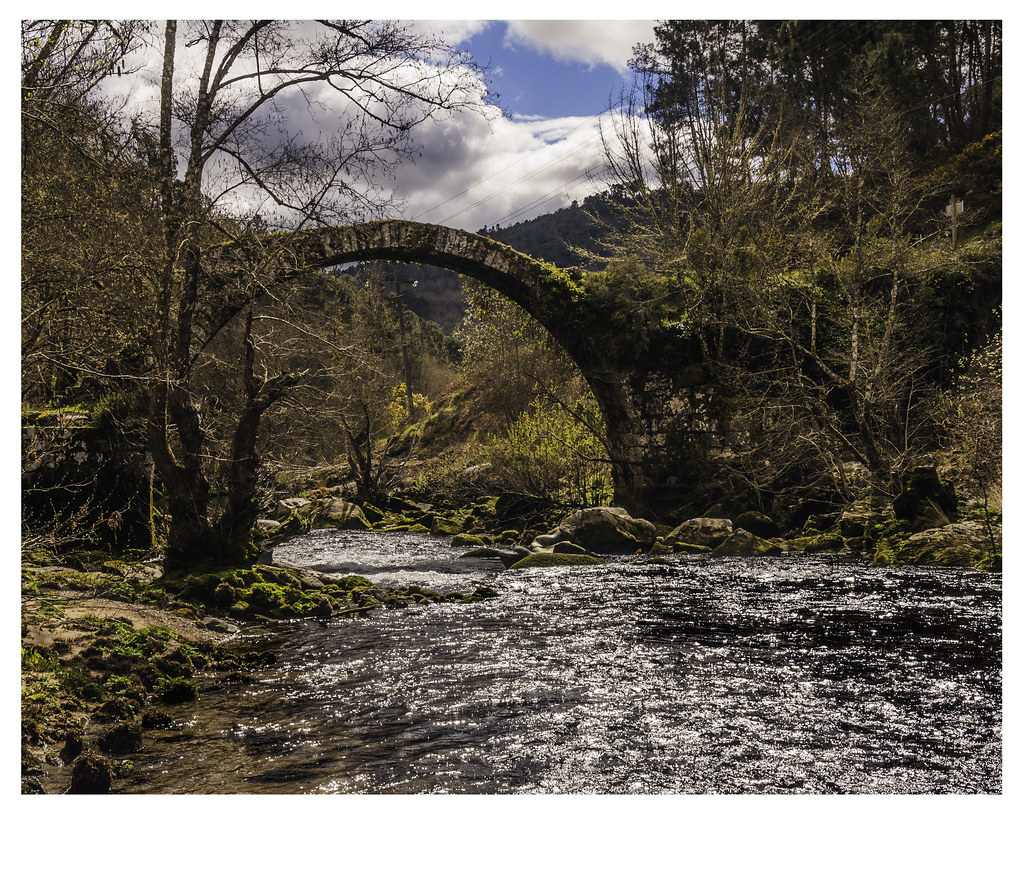
A few hours are enough to get a feel for Escurial. The usual starting point is the centre. From there, head down Calle Mayor towards the church, then continue on to a small bridge over a stream that runs along nearby meadows. The walk is short and easy.
Rural paths extend from that point, offering the option to carry on a little further. At times, sitting on a stone wall is enough. The colour of the fields shifts as evening approaches, and the change happens gradually and without fuss.
What Escurial is, and what it is not
Escurial does not revolve around major monuments. The interest lies in understanding a rural rhythm that still supports the village. Livestock, farmland and long-standing relationships between neighbours shape daily life.
Put simply, anyone searching for grand architecture may find it underwhelming. The village is small and understated. Those who enjoy observing how quieter inland places function will find that Escurial has its own way of holding attention.
When to visit and what to keep in mind
Spring and autumn tend to be the most comfortable times to visit. The countryside shifts in colour and the weather allows for walking without constant heat. Summer calls for adjusting your routine, either heading out early or waiting until later in the day. The heat here is not mild.
The road from Cáceres is straightforward, though it narrows in places. Within the village, some streets are uneven, so comfortable footwear is a sensible choice.