Full Article
about Jaraicejo
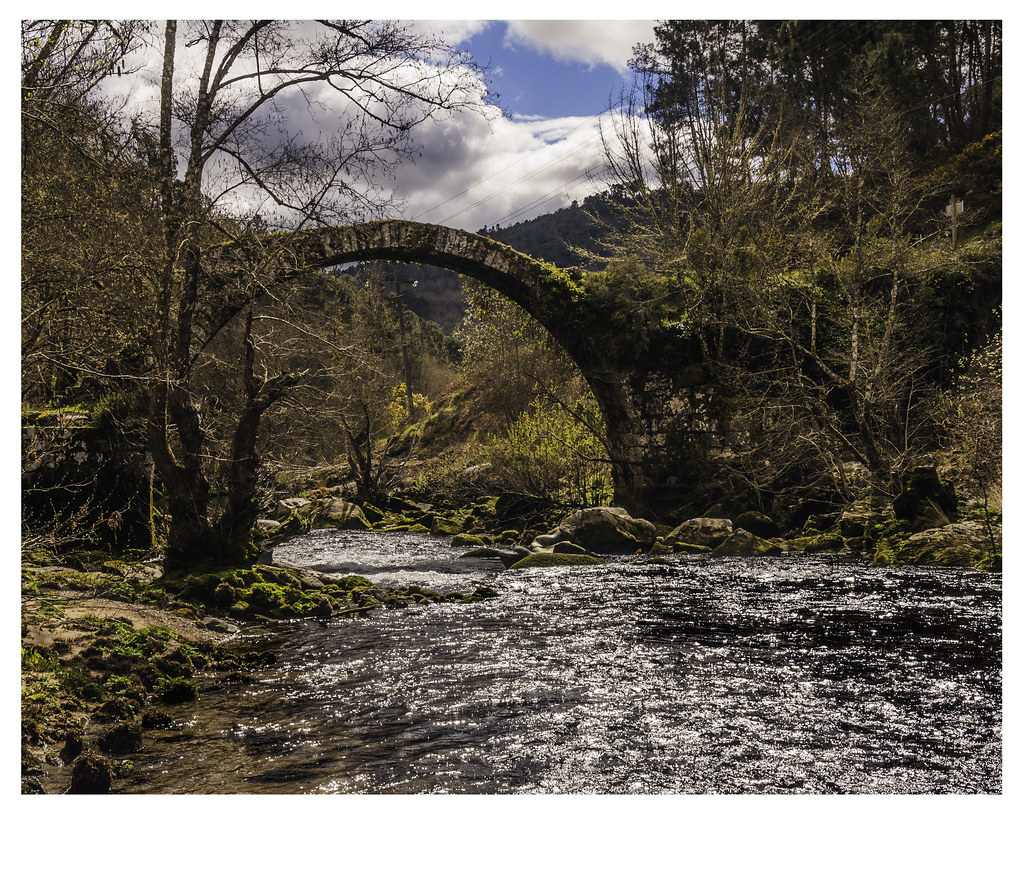
A must-stop on the national highway with a spectacular bridge over the Almonte.
Hide article Read full article
A small village in the dehesa
Jaraicejo sits in the middle of the dehesa trujillana, a landscape of holm oaks, cork oaks and grazing land that stretches across this part of Extremadura. It lies roughly between Cáceres and Trujillo, in an area where the surroundings have changed very little over the centuries. With just over four hundred residents, the village remains compact: a handful of streets, low houses and a pace shaped by agricultural life.
Storks are a constant presence. They nest on bell towers and rooftops for much of the year, a familiar sight in this region. Their large silhouettes form part of the everyday skyline, alongside tiled roofs and the soft outlines of the surrounding countryside.
The Church of the Asunción
The most prominent building is the parish church of the Asunción. Its construction took place over different periods. The tower, visible from a distance when approaching by road, is usually dated to the 16th century and was later modified in the 18th.
Inside, the space is restrained. Simple vaults define the structure, and a number of altarpieces reflect the Baroque style that spread through the region at the time. It is not a grand interior, but it carries the visual language of its era.
The importance of the church comes less from its size than from its position. It stands at the centre of the village and has long acted as both a visual landmark and a social reference point for local residents.
Houses, streets and the surrounding landscape
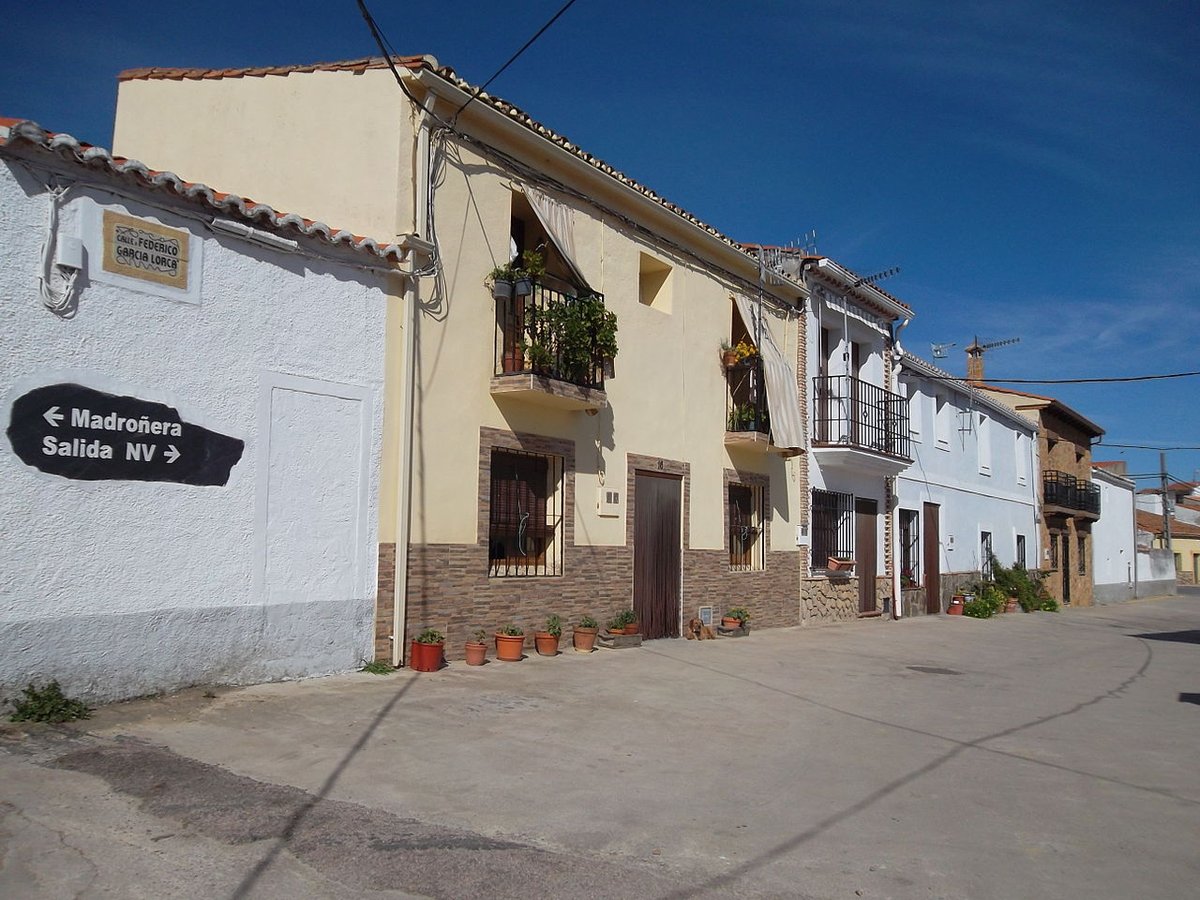
The buildings in the historic centre follow the traditional rural style of Extremadura. Most have one or two storeys, with whitewashed stone walls and roofs of curved terracotta tiles. Many include interior courtyards, where plants and pots appear during the warmer months.
Some façades still display stone coats of arms, traces of families who once owned land in the surrounding area. There are no large civic buildings or monumental squares. The appeal lies in the overall setting: a small settlement that still reflects the structure and logic of an agricultural community.
Just beyond the edge of the village, the dehesa begins. This landscape, defined by scattered trees and open pasture, shapes the entire region. Livestock grazing is a common sight, and at quieter times of day there may be movement among the oaks that hints at local wildlife. White storks are the most visible birds, though they are far from the only species present.
Paths and everyday routes through the dehesa
A network of agricultural tracks leads out from Jaraicejo into the surrounding land. These routes are primarily used by farmers and working vehicles. They tend to be relatively flat, without steep gradients, making them accessible for walking.
Conditions change with the weather. After rain, the ground can become heavy and more difficult to cross, something to bear in mind when planning a walk.
In the wider area there are also reservoirs and water zones where aquatic birds gather. These places remain quiet and largely without visible tourist infrastructure. Fishing is practised in certain spots, although this depends on the season and current regulations.
Local food follows the broader patterns of the region. Dishes include products made from Iberian pork, migas (a traditional preparation based on breadcrumbs), and simple stews. Ingredients often come from livestock farming and beekeeping. In a village of this size, availability varies depending on the day or time of year, and services are not always open.
A short visit to understand the place
The village centre can be explored quickly. In one or two hours it is possible to walk through the main streets, reach the church and continue out along one of the surrounding tracks.
Even a brief visit gives a clear sense of what defines Jaraicejo: a small agricultural settlement, low-rise buildings, and a direct relationship with the land that surrounds it. The layout and the pace of life remain closely tied to the dehesa.
Practical notes for a visit
Jaraicejo is quiet and small in scale. Its interest lies more in the surrounding landscape than in a wide range of monuments. Anyone arriving in search of constant activity or extensive services may find it limited. Those drawn to observing rural life and the dehesa will encounter a place that is straightforward and unembellished.
Spring and autumn are usually the most comfortable seasons for walking in the area. Summer brings strong heat around midday, while winter days are shorter, although skies are often clear.
From Cáceres, the route follows the A-58 towards Trujillo and then the EX-208. The journey takes around an hour by car, and the road is in good condition.
Parking is generally uncomplicated within the village. For a wider range of services such as shopping, accommodation or restaurants, it is common to travel to Trujillo or other larger nearby towns.