Full Article
about La Cumbre
Municipality set on a high plateau with a Renaissance palace-house and cattle-raising tradition
Hide article Read full article
The road that lifts you above the plain
There is a moment, just after leaving Trujillo, when the road begins to climb and the view opens out across Extremadura. To the left, the dehesa stretches like a green carpet dotted with holm oaks and the occasional stray olive tree. To the right, a slightly faded sign reads “La Cumbre”. It is easy to miss if attention drifts. That would be a shame.
Tourism in La Cumbre works a bit like that colleague who barely speaks in meetings and then turns out to play in a blues band. It does not try to stand out. It does not make noise. Yet if you stop for a while, it becomes clear there is something here.
A village set on higher ground
The first thing that stands out on arrival is the quiet. Not the awkward silence of a lift, but the real thing: birds, a door closing somewhere, a distant conversation in the square.
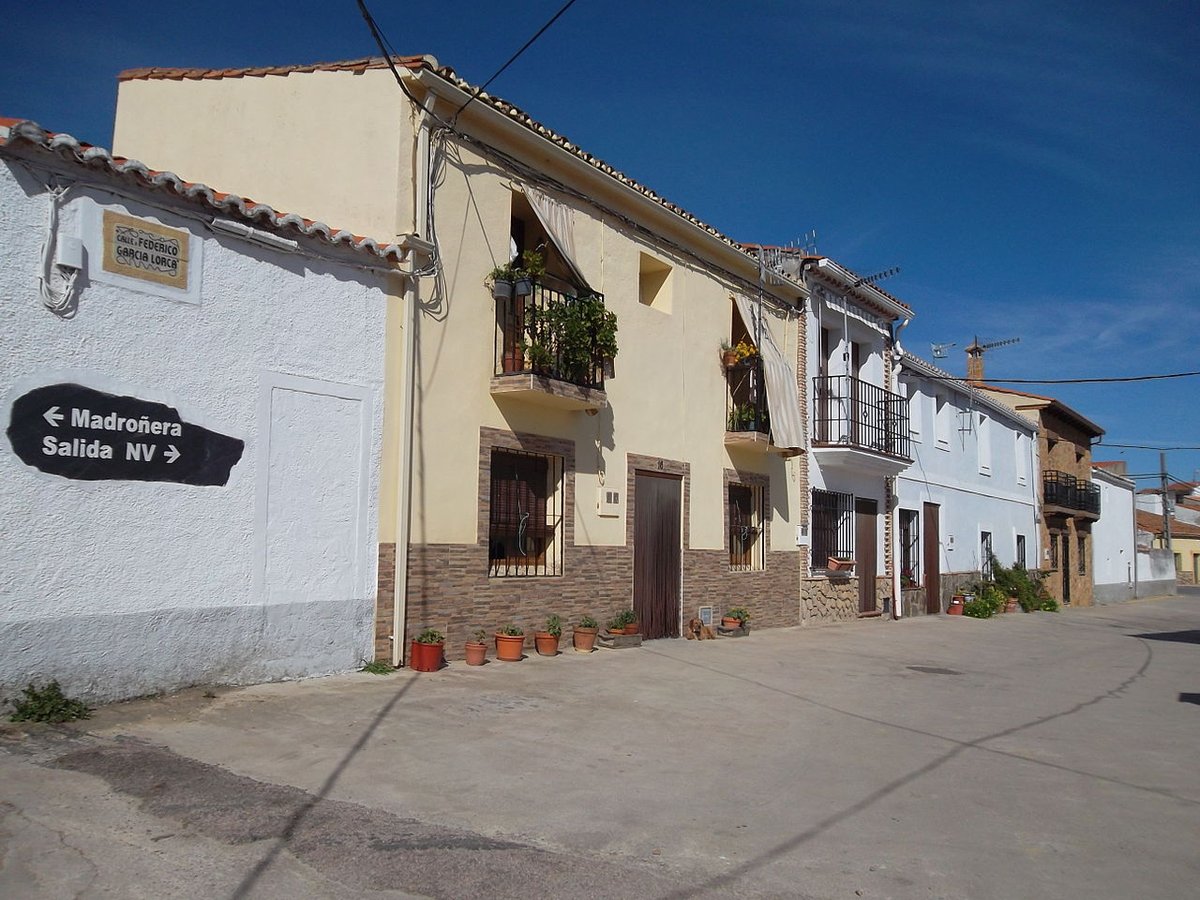
La Cumbre sits at around 480 metres above sea level. On paper that does not sound especially high, but once out of the car the difference is noticeable. The air moves differently here than down on the plain. The village rests on a gentle rise, with streets that climb and dip without much apparent order. Like many old places, it seems life came first and planning later.
Granite appears everywhere, in thick walls built to cope with the Extremadura summer. Walking through the centre, the tones of the houses blend with the colours of the surrounding countryside. It can feel as though the village has grown out of the same stone beneath it.
A practical note: the old centre is made up of narrow streets. If arriving by car, it is usually easier to leave it in a more open area near the centre or by the square and continue on foot. The village is small enough that it takes about ten minutes to get your bearings.
The stone pillar in the square
In the main square stands a reminder that La Cumbre has been here a long time: the rollo de justicia. This granite column once symbolised the village’s legal authority. In earlier centuries, it also had a more severe purpose, linked to public punishment.
Today it stands quietly, with none of that past tension. It is easy to walk past without noticing, yet it has witnessed generations come and go.
From the higher part of the village rises the church of San Pedro, built in the 16th century. Its square tower is visible from several points and works as a useful reference when moving around. Inside, the atmosphere is typical of a small-town church: the scent of wax, cool stone, and a respectful stillness, even if stepping in out of simple curiosity.
Dehesa, ham and everyday life
Everything around La Cumbre is shaped by the dehesa, a traditional landscape of scattered oak trees and pasture. At certain times of year, Iberian pigs can be seen moving slowly through the fields.
Here, jamón ibérico is not presented as a luxury item behind glass. It is part of daily life. In many homes it is still normal to have cured pieces stored and used throughout the year. There is little ceremony around it. It simply belongs in the kitchen, as it always has.
For visitors from a city, what stands out is how quickly the countryside takes over. A short walk beyond the edge of the village leads straight into fenced plots, dirt tracks and open land beneath the oaks.
When the village fills again
Like many places in the region, the calendar becomes livelier when local celebrations arrive.
Around San Isidro in mid-May, a romería takes place. This is a traditional countryside gathering with strong links to agricultural life. It is one of those occasions when people who now live elsewhere return to spend the day with family and friends.
In August, the main village festivities are held. Over several days, the square becomes the centre of everything. There are open-air dances, long evenings outside, and the familiar atmosphere of reunion as those who moved away for work come back, even if only briefly.
An old road hidden in the fields
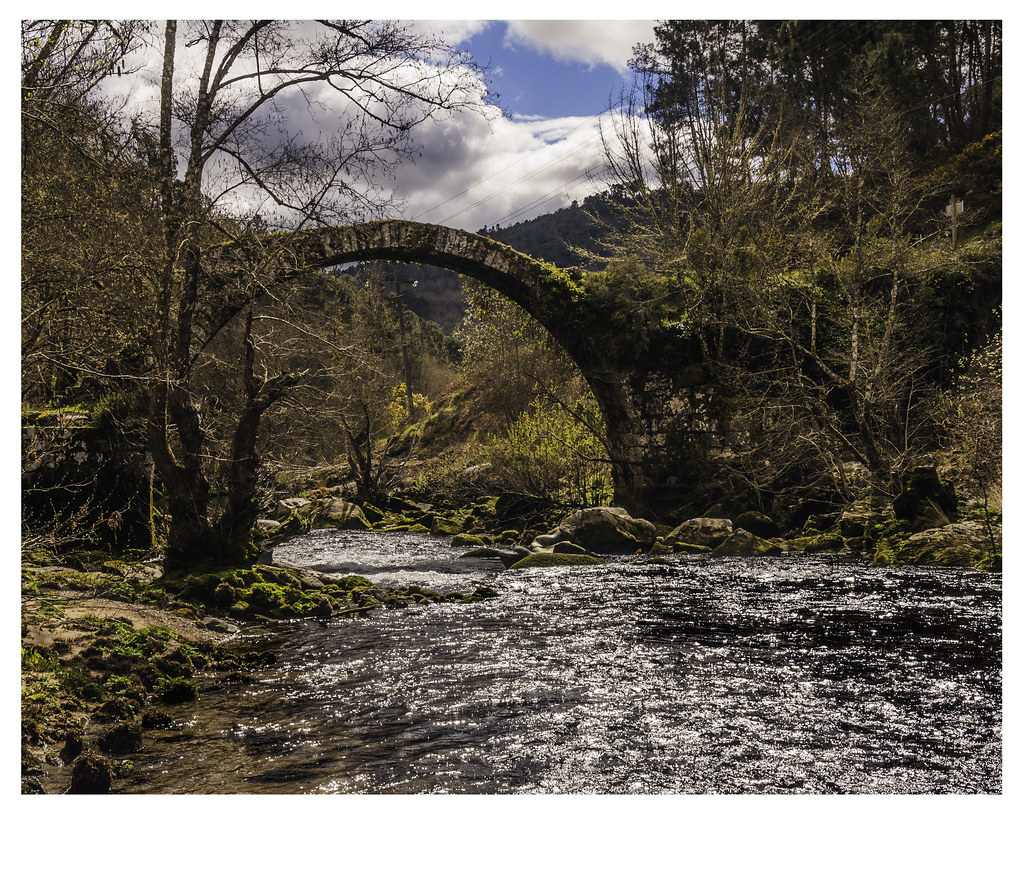
A few kilometres from the village, in an area known as La Puente, there are remains of an old road often attributed to Roman times. It is not a grand monument or a developed attraction. Quite the opposite.
Parts of the route appear among vegetation and rural paths, and it is not always clearly signposted. The usual approach is to ask in the village which way to go. If found, it is likely there will be no one else around.
There is something quietly striking about walking over stones that have been in place for centuries, with nothing but open countryside nearby.
A place to pause, not to rush
La Cumbre is not a destination built around a checklist of things to do. It works better as a pause. A walk through the centre, a stop in the square, a slow look at how the morning unfolds.
It is the kind of place where the rhythm becomes clear within half an hour.
For those coming from Trujillo, a short visit fits naturally into the journey. A stroll, the square, the church, a turn through the streets, and that is enough. Then the road descends again, and one last glance back leaves the village where it has always been, quietly overlooking the plain.