Full Article
about Madroñera
Town near Trujillo with pastureland and a strong food tradition
Hide article Read full article
Madroñera and the Magasca valley
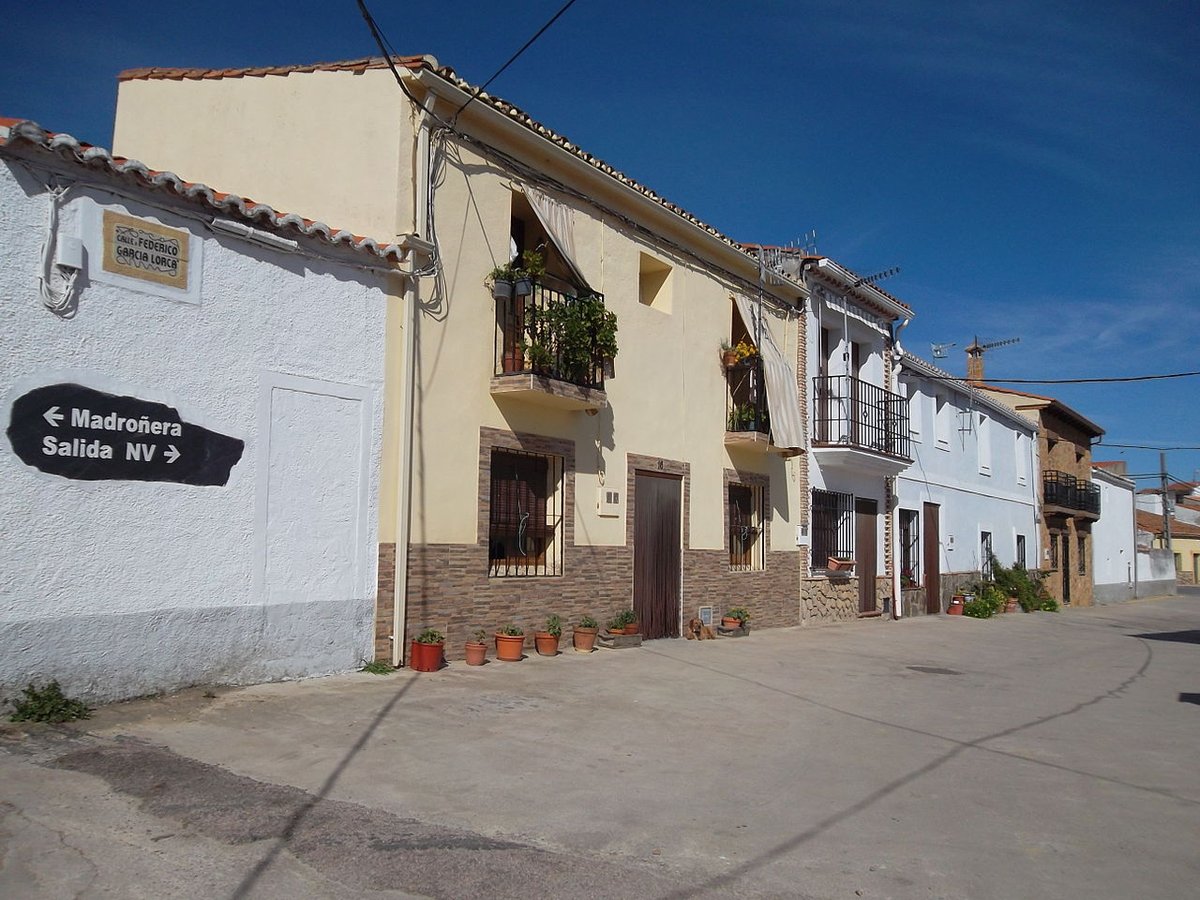
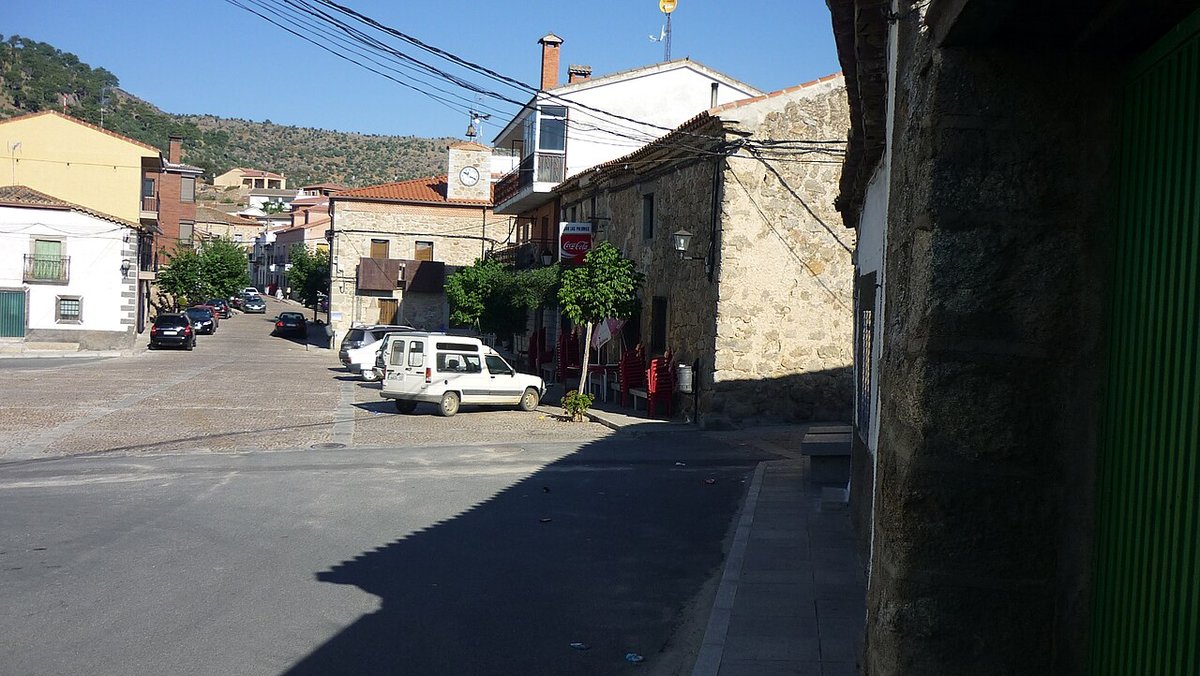
Madroñera sits at 589 metres on a rise above the Magasca river. The road from Trujillo crosses dehesa and slate soils before the village appears, its white houses gathered tightly on the slope.
Its layout tells its history. This was an agricultural settlement that grew where the terrain allowed, not from any formal plan. Streets follow the contour lines, and houses cluster where the ground was stable enough to build. The result is a village that feels integrated into the land, not placed upon it.
A bishop’s acquisition
In the 16th century, Madroñera changed from a hamlet to a villa. This shift was administrative, tied to Gutierre Vargas Carvajal, the Bishop of Plasencia, who purchased the settlement from the Crown. For the Church, such acquisitions were economic: they secured income from farmland, grazing rights, and local dues.
The parish church of the Inmaculada Concepción dates from this period. Its architecture is straightforward: a single wide nave, masonry walls, a tower that functions more as a watchtower than a grand bell tower. It was built for utility, not statement.
Inside, a 16th-century altarpiece occupies the main chapel. Some local accounts suggest the central panel of the Annunciation may be connected to the circle of Alonso Berruguete. While documentary proof is absent, the stylistic treatment of the figures is consistent with Castilian workshops of that era. The attribution persists in local conversation, part of the village’s own narrative about its past.
The hermitage on the scrubland
A short walk from the village, among low scrub and chestnut trees, stands the hermitage of the Virgen de Soterraña. Tradition holds that the image was found in a small cave on a nearby hill. The details of the story vary with the teller, as is often the case with oral histories.
The figure, referred to locally as “la Morenica”, remains central to community life. Each year it is processed to the parish church. For the event, streets are prepared with coloured sawdust and rosemary branches, a task that still involves many residents.
A physical custom is attached to the site. People place a small piece of slate onto the hermitage’s roof, a gesture asking for protection, particularly against storms or hardship. The practice likely has roots in a pastoral past, when weather dictated security and livelihood.
Stone presses on the south slope
The south-facing slope below the village holds several old lagares. These are simple stone and tile structures built for pressing grapes. Some retain their stone basins and the channels that once guided the must into jars.
No marked path connects them, but they can be found by following the agricultural tracks leading out from the streets. Older residents recall when these presses were still in use. Small-scale, family wine production continued here until late in the 20th century, before activity consolidated into larger cooperatives elsewhere.
They are quiet markers of a former rhythm of work, tied to family labour and the seasonal cycle of the vine.
The rollo de justicia
At a village entrance stands a rollo de justicia, a stone column erected when Madroñera gained jurisdiction as a villa. In early modern Spain, such pillars signified a place’s right to administer local justice.
This one is not large. Its capital is carved with a female figure, locally called “la Mona”. There is no definitive explanation for her presence. The stories about her origin belong to local speculation, not documented history.
Practicalities and perspective
Madroñera is a short drive from Trujillo and within reach of Cáceres. The village itself is walked easily; the main square, church, and old centre are close together.
To see its context, walk out along any of the tracks into the surrounding dehesa. The landscape is one of holm oaks, olive groves, and slate underfoot. It feels open but worked, shaped by long use.
In spring, the scrub flowers and the scent of rosemary carries on the air. In winter, fog often fills the Magasca valley below, leaving the village above it, clear and separate. This relationship with the land and weather is consistent, a quiet feature of being here.