Full Article
about Miajadas
European capital of tomatoes; a dynamic industrial and farming town
Hide article Read full article
A town that wakes with the fields
At six in the morning, the air in Miajadas carries the scent of green tomato and freshly turned soil. It is still dark when the first lorries begin to pass along the road that cuts through the town on their way to the warehouses. From a window in the centre, the sunrise slowly scrapes across the surrounding irrigated fields. Some look like sheets of water, broken reflections of the sky. Workers gather near the machinery with the unhurried pace of people who know the day will be long.
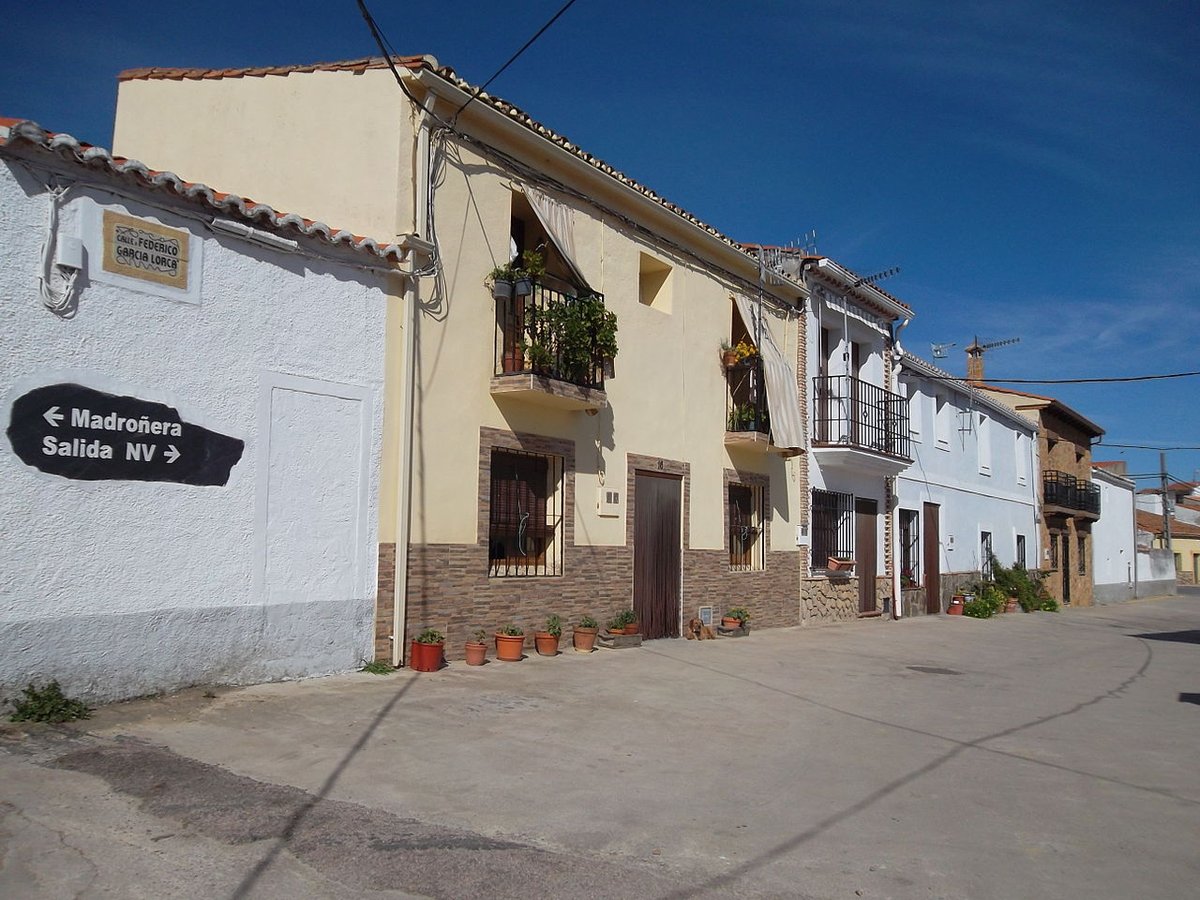
Miajadas does not bother with introductions. It is an agricultural town of just under ten thousand people, tied closely to the rhythm of farming seasons. Tomato is the main crop, later turned into sauce or concentrate in nearby processing plants. There are no dramatic façades or streets arranged for photographs. Instead, there is a wide Plaza Mayor paved with worn granite slabs, shaped by years of market days, and a church that seems to stand in quiet defiance of gravity.
The scent that arrives before the town
Morning arrivals in Miajadas often come with a sweet smell that hangs in the air. At times it drifts from the processing factories, at others from loaded trailers waiting their turn at the warehouses. That sweetness blends with the drier scent of the dehesa, the traditional pastureland that begins as soon as the irrigated fields give way.
In high summer, when the tomato campaign is at its peak, the smell becomes stronger and settles into the landscape alongside the steady noise of tractors. Spring feels different. The air is lighter, and the surrounding fields shift between green growth and shallow water depending on the crop.
Daily life gathers in the Plaza Mayor. It is not a place designed for slow wandering, but for sitting, talking, and watching who passes by. Chairs spill out onto pavements, older residents stay close to the shade, and by midday the sound of plates and cutlery arrives well before the heat reaches its peak. Meals come early here and rely on local produce. Thick gazpacho appears in warm weather, a cold tomato-based soup typical of southern Spain. In colder months, migas takes its place, a dish made from fried breadcrumbs. Rice grown in nearby irrigated land also finds its way onto tables, sometimes paired with mushrooms from the dehesa when the season allows.
Four pillars and a quiet interior
The church of Santiago Apóstol stands in the centre of town with an unusual structure. Construction began between the 15th and 16th centuries. After fires and damage over time, the building ended up with a striking solution: the whole space is supported essentially by four large pillars that hold up the vaults.
Inside, the air smells of wax and cold stone. Light filters through high windows and falls onto an uneven floor, where some slabs have sunk slightly after years of use. The church is usually quiet. If the door is open, people step in and out without much noise.
Opposite stands the palace of Bishop Solís, with its pale façade and dark iron grilles. It is now a private property and can only be seen from the street. Late in the afternoon, the lowering sun turns the front a brief shade of gold. Close by sits the Casa de los Casillas‑Trespalacios, where traces of wall paintings remain. The building carries the sense of having changed hands and purposes over time.
Out into the fields and beyond
A short walk beyond the town centre is enough to understand how the landscape works. Irrigated farmland comes first: large plots, water channels, and dirt tracks where tractors pass, leaving behind light clouds of dust. Further out, the scenery shifts to holm oaks and drier ground.
Several small hermitages are scattered around the area, set among farms and agricultural paths. One of them, said locally to be dedicated to San Bartolomé, lies a few kilometres from the town. It appears at the end of a dirt track between holm oaks. The building is simple, almost like a stone box topped with a metal cross. It is often closed.
From these paths, the surrounding plain opens up. Depending on the time of year, the land shows green rectangles or waterlogged fields. Sheets of greenhouse plastic catch the sunlight. In the distance, the low outline of Miajadas sits against the horizon.
Walking here is best done early in the day. Heat builds quickly for much of the year, and shade is scarce along many of the tracks. Carry water, as there are no fountains along the agricultural routes.
A place shaped by seasons
Tourism in Miajadas has less to do with ticking off monuments and more with understanding the agricultural landscape that defines the area. The town acts as a centre for a region closely tied to irrigation systems and the tomato industry.
Spring tends to be the most comfortable time to walk in the surrounding countryside. Temperatures are mild, fields are green, and water is visible across many crops. Summer shifts the rhythm of the town as it coincides with the tomato campaign. Activity increases, and the presence of the harvest becomes part of everyday life, from the movement of vehicles to the smells in the air.
Miajadas offers a straightforward experience. Its identity sits in the fields, in the timing of work, and in the routines shaped by the land. Visitors who spend time here encounter a place that runs on agriculture, where the day begins early and carries on under a wide, open sky.