Full Article
about Torrecillas de la Tiesa
A Trujillo-plains village with cattle-raising roots and a quiet feel.
Hide article Read full article
A village you don’t plan for
Some places are found almost by accident, like stopping at a roadside petrol station and ending up in a ten-minute conversation where someone tells you half their life story. Tourism in Torrecillas de la Tiesa has a bit of that feel. It is not somewhere you arrive in search of famous landmarks, but rather a village in the comarca of Trujillo where everyday life in the Extremaduran countryside still runs as it always has.
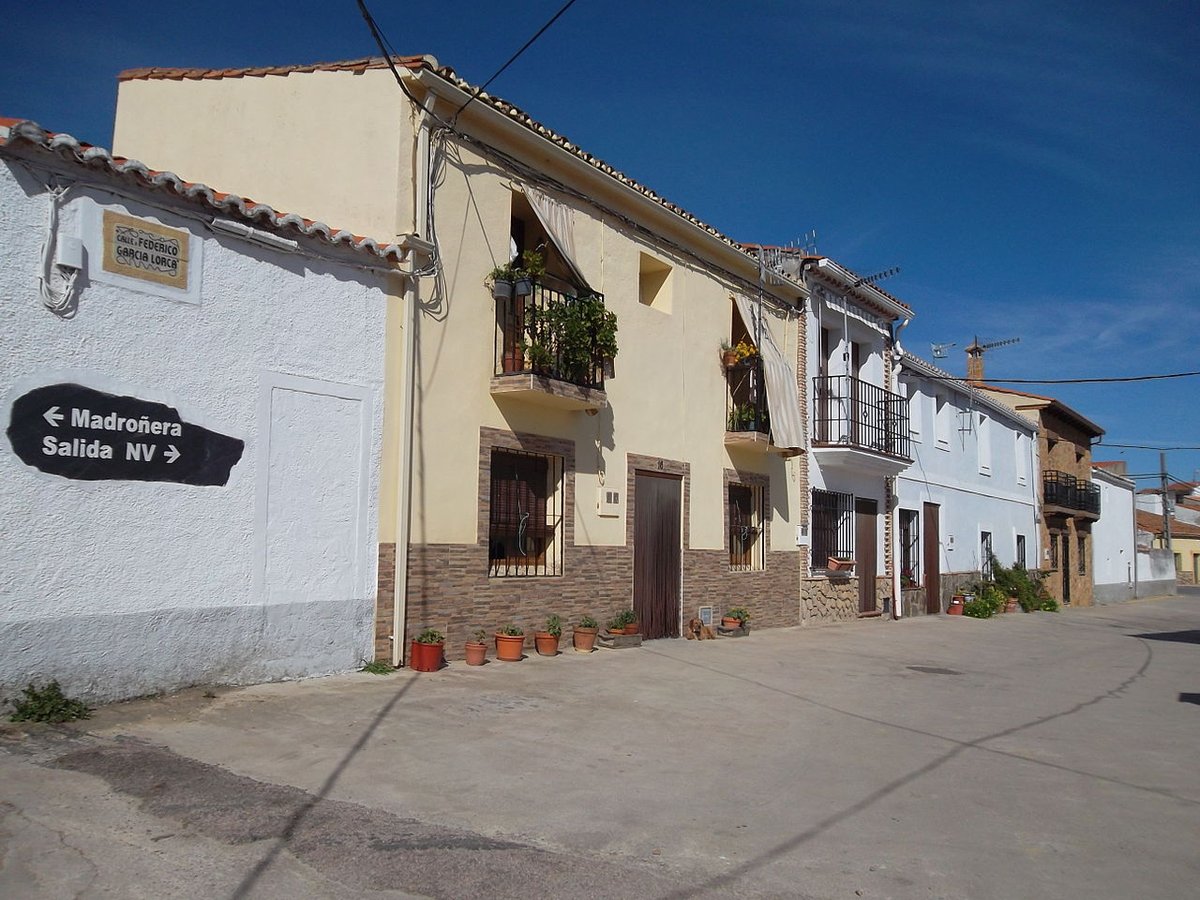
With just over a thousand residents, there are no grand setups designed for visitors. These are lived-in houses, cars parked wherever there is space, and tractors passing through mid-morning. That sense of normality, which has faded in many places, is still very much intact here.
The town centre follows the pattern seen across this part of Extremadura: streets that rise and dip without much order, whitewashed façades, curved clay roof tiles and windows protected by iron bars. Nothing looks newly arranged for a photograph, and that is part of the appeal.
Simple architecture, quiet character
In the main square stands the parish church of San Bartolomé, the building that draws the most attention in the village. It is not especially large or imposing, but it carries the solid presence of a place that has been at the heart of local life for centuries.
If it is open, it is worth stepping inside. The stonework and interior details offer a glimpse into the village’s past and how it has developed over time. This is not a grand national monument, but something far more embedded in daily life.
Walking through the streets, a few larger houses appear here and there. Some have stone doorways or discreet coats of arms. They are traces of periods when certain families held more influence in the area. They are not common, but once noticed, they begin to stand out.
Beyond the last houses, the landscape opens into dehesa. This is a traditional type of countryside in Extremadura, with holm oaks spaced widely apart, open pasture and livestock moving slowly across the land. At first glance it can seem simple, but spending a little time with it reveals a carefully balanced system where everything has its place.
Easy-going plans
Torrecillas de la Tiesa is not about a packed itinerary. Plans here tend to be straightforward: a walk through the village, a longer wander along the surrounding tracks, or an unhurried drive along local roads.
The area around the village has plenty of agricultural paths that can be explored on foot or by bike. The terrain is gently undulating, with a mix of holm oaks, olive groves and cultivated fields. With a bit of patience, it is easy to spot storks, kites or flocks moving from one plot of land to another.
It is also a good place to notice the rhythms of rural life. At certain times of day, the village can feel almost still. Then, without much warning, there is movement again as people return from work or gather in the square.
Food in local houses and bars follows the logic of the region. Dishes are filling and based on nearby produce. Migas, a traditional dish made from breadcrumbs, appear alongside cured meats, sheep or goat cheeses, and olive oil. There is nothing elaborate about it, but the flavours speak for themselves.
For those who enjoy road cycling, the routes connecting nearby villages in the comarca offer light traffic and wide views of the countryside. The climbs are gentle, though they can feel less so after a few kilometres.
Traditions that shape the year
The patron saint festivities dedicated to San Bartolomé usually take place in August. At that time, many people who live elsewhere return to the village for a few days. The atmosphere shifts noticeably, with more noise, more people in the streets and a strong sense that everyone knows each other.
Beyond these celebrations, customs linked closely to rural life remain present. The matanza del cerdo, the traditional winter slaughter of the pig, is still carried out in many households. It is not only about food preparation but also a moment for families to come together and share the work.
There are also romerías, local pilgrimages to hermitages in the surrounding countryside. These combine religious elements with something closer to a day out in the open air: shared meals, long conversations and children running freely around.
Getting there
Torrecillas de la Tiesa lies close to Trujillo, in the province of Cáceres. The usual approach is to reach that city first, either via the A‑5 motorway or the road that connects with Cáceres, and then continue a few more kilometres along a regional road.
The final stretch is already pure countryside. Holm oaks, livestock farms and long straight roads define the approach. When the first houses of the village come into view, there is little doubt about where you are: in the heart of the comarca of Trujillo, with no unnecessary embellishments and a pace shaped by those who live there.