Full Article
about Trujillo
Birthplace of conquistadors; a striking monumental ensemble with a castle and iconic main square.
Hide article Read full article
A town with one foot in the past
Tourism in Trujillo has a slightly peculiar feel to it. It brings to mind that relative who went off to the Americas and returned dressed in silk. There is a sense of grand history behind it, yet when you look more closely it is still a stone town set in the middle of the dehesa, the open pastureland typical of this part of Spain. That contrast is part of the appeal. The legacy of conquistadors sits alongside a pace of life that remains calm and unhurried.
Nothing here feels rushed. The past is present, but it does not overwhelm daily life. Instead, it settles into the rhythm of the place, visible in buildings, traditions and small details that only become obvious after a bit of time.
Plaza Mayor and the shadow of the Pizarro family
The Plaza Mayor is where most visits begin. It has a way of making people stop for a moment, not because it is the most beautiful square in Spain, but because it feels like a stage left set up after everyone has gone home. For a town of this size, the number of palaces is striking.
One of the most noticeable is the Palacio de la Conquista. The Pizarro coat of arms dominates its façade, and there is a balcony that looks as though it belongs in a historical film. Nearby stands the Palacio de San Carlos, which has a different character altogether, almost as if it belongs to another period.
At the centre of the square is the equestrian statue of Francisco Pizarro. People regularly gather around it for photos, while above them storks watch from their nests. They seem entirely used to the constant movement below.
The square reveals itself slowly. At first glance it feels straightforward, almost too easy to take in. Then time passes. Sitting down with a drink helps, and details begin to emerge. The colour of the stone shifts as the sun lowers. People drift in and out of the arcades. Bells mark the passing of time. Without quite realising it, a short stop turns into something longer.
The climb to the castle
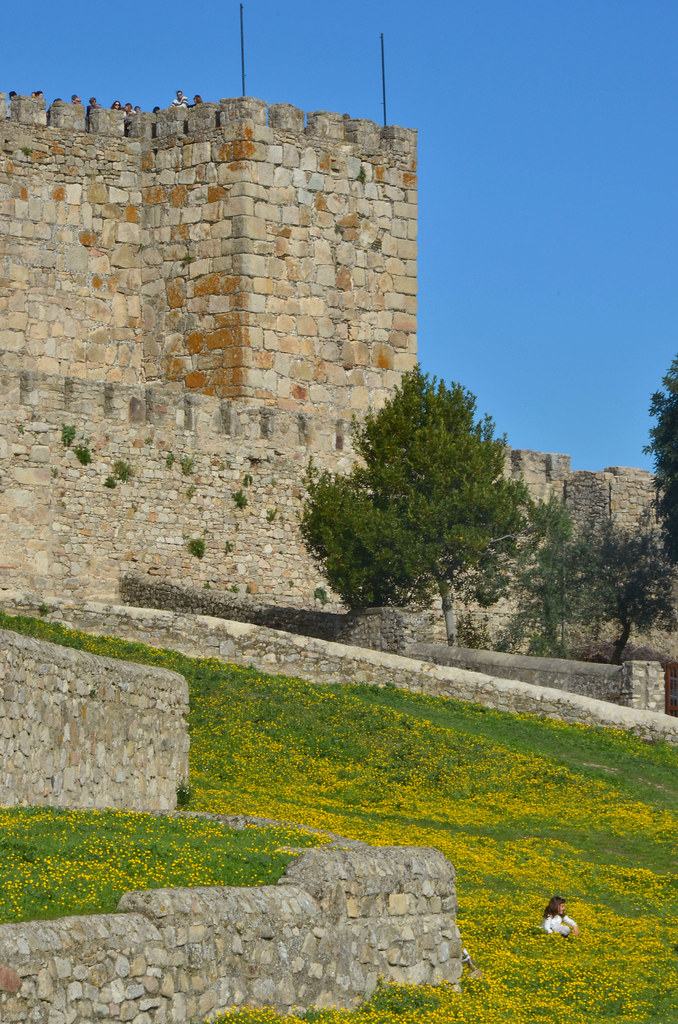
The castle stands on the hill known as Cabeza del Zorro. The name already hints at what to expect. It is not far from the square, just over a kilometre, but the route is demanding. The streets are steep, the ground is stone, and shade is scarce when the heat rises.
A steady pace makes all the difference, especially in summer. Extremadura in July is not forgiving.
At the top, the view opens out over the dehesa. Holm oaks dot the landscape, and open fields stretch into the distance. The setting appears calm, yet it extends for miles.
The castle itself is not especially large or complex. It is a straightforward fortress, built with the purpose of watching over the surrounding territory. There are battlements, interior spaces and several points where the landscape comes fully into view.
Nearby stands the sanctuary of the Virgen de la Victoria, closely tied to local traditions. During the September festivities, the image is brought down into the town for a few days before returning in procession. It is the kind of custom that has been repeated for so long that it simply continues without question.
Cheese and the local table
Food in Trujillo inevitably leads to cheese. It is a central part of the area’s identity. Sheep’s milk cheeses appear in different forms, from firm cured varieties to softer, creamier ones. Then there are the tortas, so soft inside that they are often eaten with a spoon. Opening one explains why many people choose to take them home.
In spring, a fair dedicated to cheese brings together producers from across the region. The town fills with stalls and a strong aroma that divides opinion. Some approach with enthusiasm, others keep a little distance.
Beyond cheese, menus reflect the cooking of Extremadura. Dishes such as migas and calderetas are common, along with cured meats. Zorongollo, a salad made with roasted peppers, tomato and garlic, appears frequently as a side. It sounds simple and it is, but it works.
When the town quietens down
Trujillo changes character in the evening. During the day, the Plaza Mayor and nearby streets are active. Visitors study maps, groups follow guides, and cameras are constantly in use.
Night brings a shift rather than a stop. Those who have come just for the day tend to leave, and the atmosphere settles. The town does not empty, it rearranges itself.
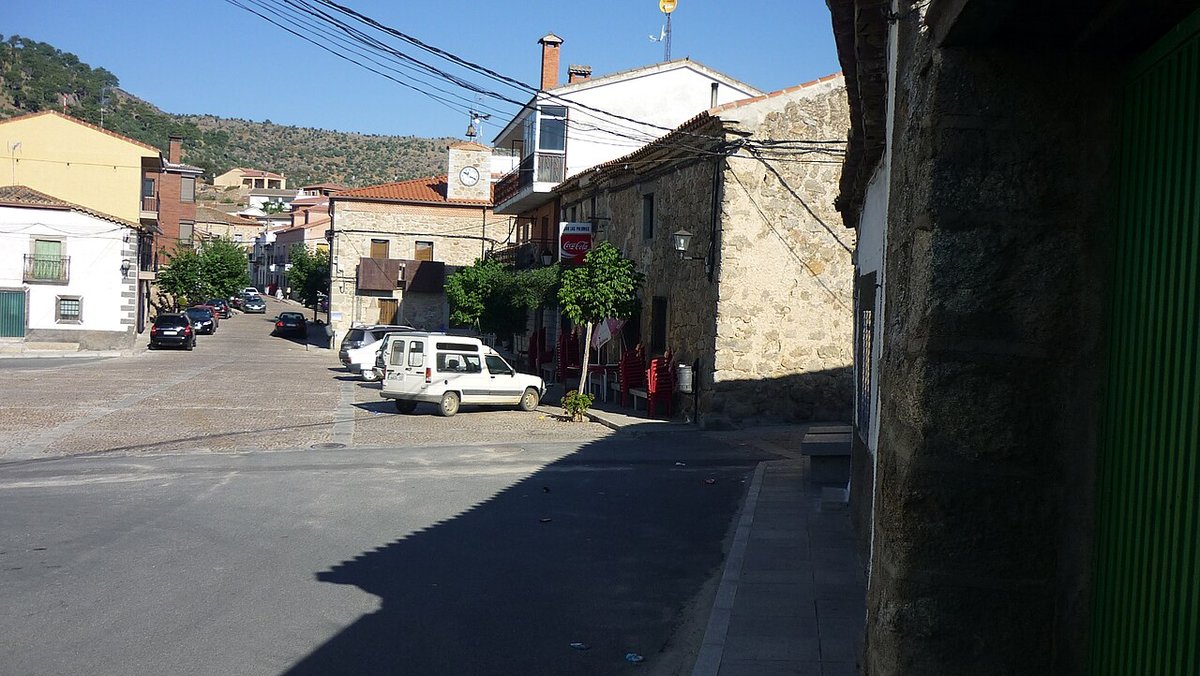
A walk after dinner shows a different side. Streets in the historic centre become almost empty. Streetlights cast light onto the stone walls. Sounds are limited to a television behind a window or the flap of storks’ wings.
The contrast with midday is clear. The focus moves from a place being visited to a place being lived in.
A straightforward view of Trujillo
It is worth being clear about expectations. Anyone searching for the most visually striking town in Extremadura may find others that impress more at first glance.
Trujillo works differently. Its strength lies in the weight of its history, visible in façades, coats of arms and the large houses built by families who made their fortunes far from here.
Time matters here. A slower visit makes a difference. Walk through the square, climb to the castle without rushing, and leave space to sit and watch how the town moves.
Local festivities bring yet another perspective. The Chíviri, celebrated on Easter Sunday, fills the square with music and people. It is a complete contrast to the quieter moments described earlier.
In the end, one image tends to stay: the Plaza Mayor at sunset, the stone changing colour as the day fades, and the sense that nothing in particular needs to happen for the place to hold your attention.