Full Article
about Aldeanueva del Camino
A town split down the middle by the Vía de la Plata into two separate jurisdictions; best known for its paprika industry.
Hide article Read full article
A place that appears when you least expect it
Some towns show up just when you thought the journey had already given you what it was going to give. You’re driving along the A‑66, turn off towards the Valle del Ambroz in northern Extremadura, and almost without noticing you find yourself entering Aldeanueva del Camino. The sort of place where the car seems to slow down of its own accord, more by instinct than because of any sign.
If you’re looking into tourism in Aldeanueva del Camino, it helps to know this from the start: it is not somewhere that clamours for attention. It feels more like a quiet invitation. If you’d like to stop, stop.
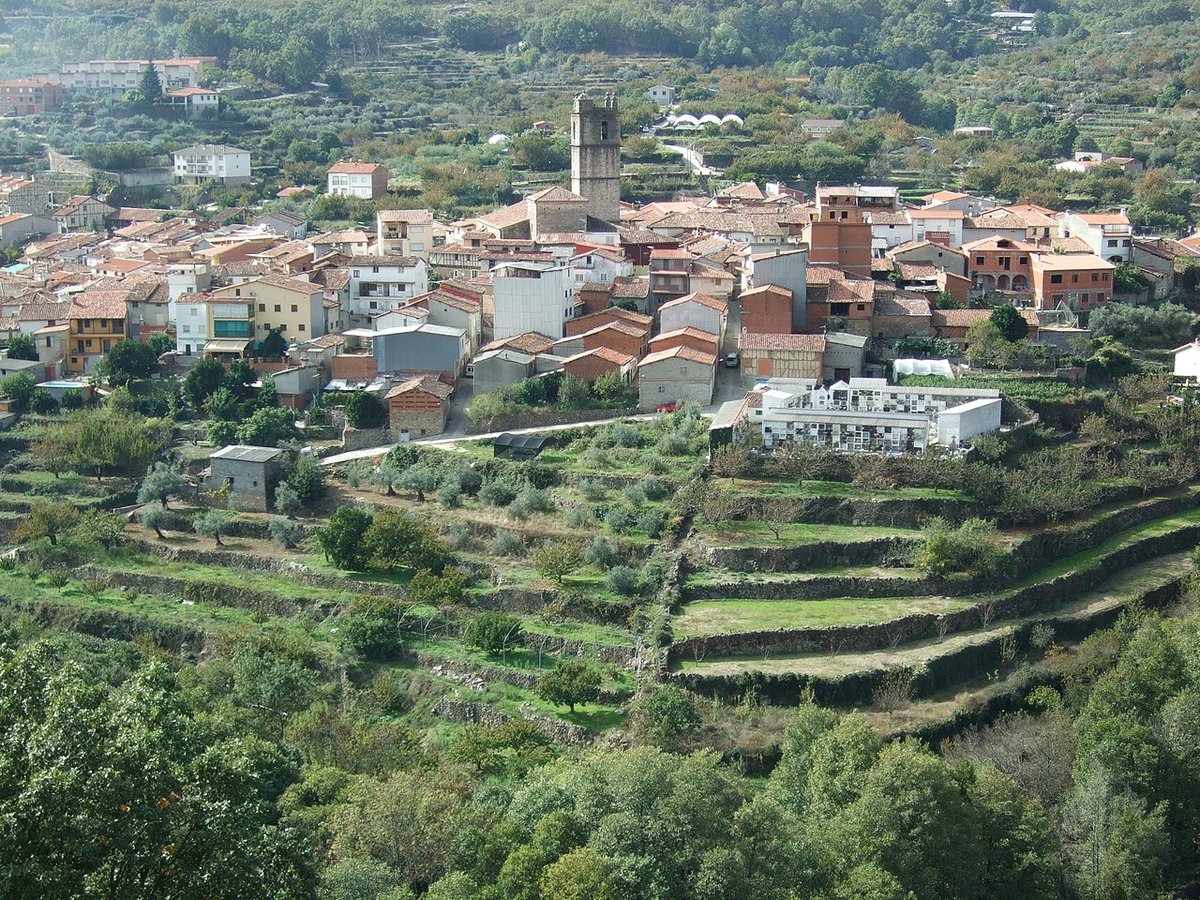
The village has around 700 inhabitants and sits at the point where the Ambroz Valley begins to open out towards the Castilian plateau. It is neither high mountain nor flat plain, but something in between. That in‑between quality shapes the landscape and the rhythm of daily life.
Born beside the road
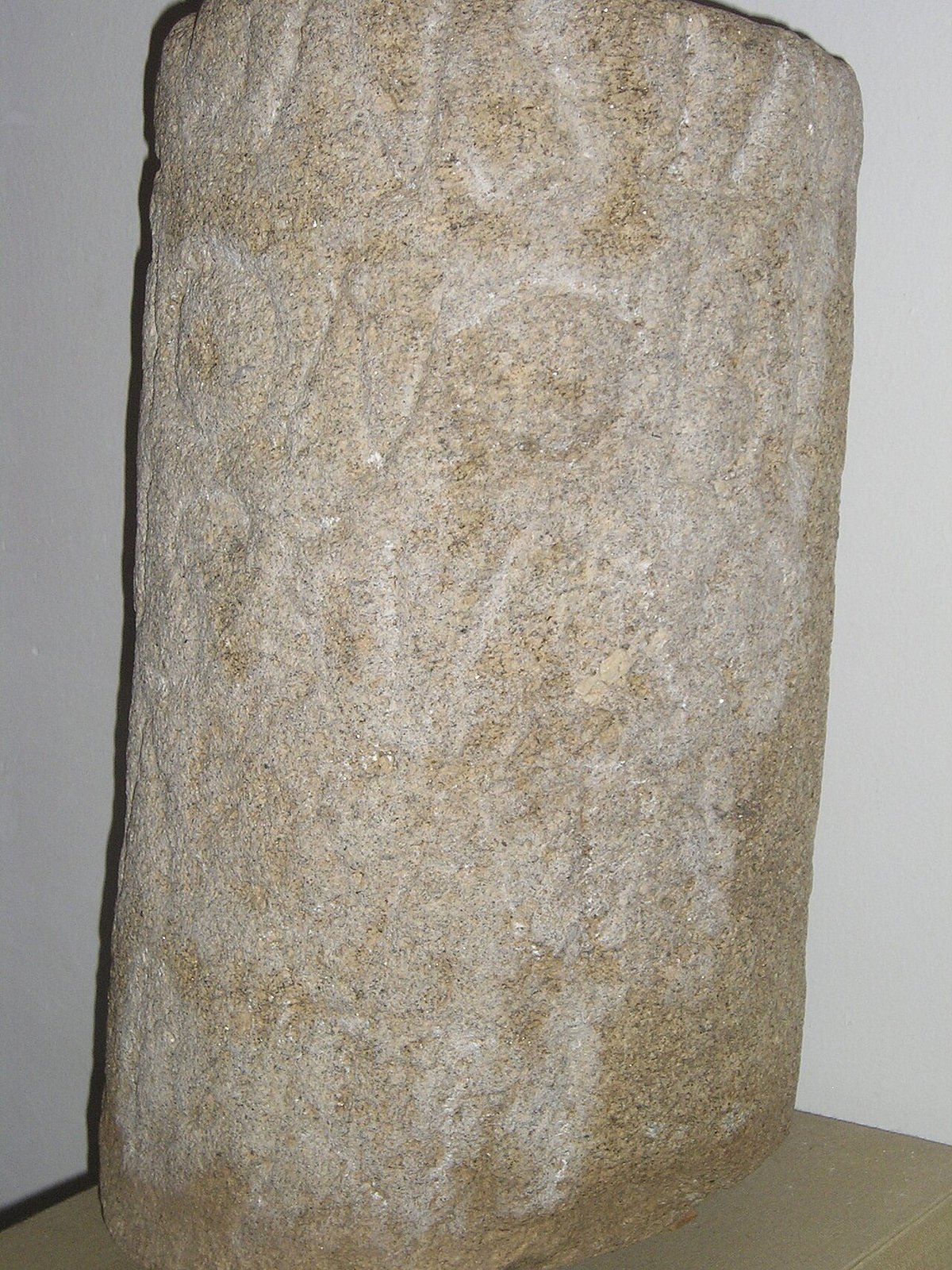
The name is no coincidence. Aldeanueva del Camino grew up alongside the routes that descended from the north into Extremadura. The historic Vía de la Plata, the ancient Roman road that crosses western Spain, passes very close by. For centuries this was, above all, a stopping point.
A walk through the old centre makes that clear. The streets are narrow, lined with stone houses and large gateways that once had to admit carts and animals. It does not feel like a monumental ensemble preserved as a backdrop. This is a village that continues to function much as it always has.
At the centre stands the church of San Juan Bautista. It is a sober building, without grand flourishes. The kind of parish church that has watched generations come and go and still fulfils its role without needing to draw much attention to itself. It anchors the quiet daily life of the village rather than dominating it.
The Ambroz landscape at your feet
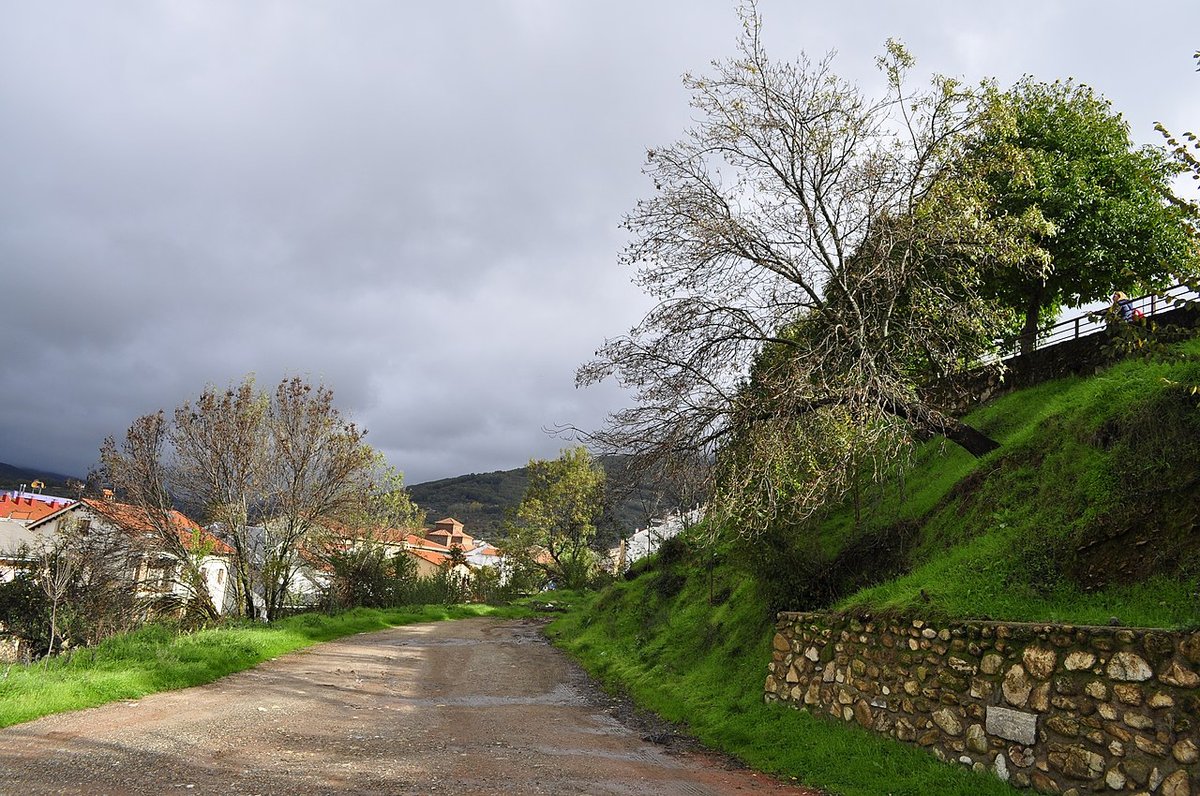
One of the practical advantages of Aldeanueva del Camino is how quickly the countryside begins. There is no need to get back in the car. A few minutes on foot and you are among chestnut trees, oaks and small vegetable plots.
The Valle del Ambroz has the feel of a worked landscape. Small holdings, paths linking fields and tracks that have been used for centuries form a network around the village. Some routes head towards Hervás, others towards La Garganta, while a few climb gently up towards the sierra.
There are no grand viewpoints with railings and explanatory panels. The usual experience here is simpler. Pause at a bend in the path, turn around and watch the valley gradually open out behind you.
Autumn brings a noticeable shift. The chestnut trees take centre stage and the ground ends up carpeted with leaves. Walks at that time of year come with the steady sound of boots pressing into dry foliage. The pace slows naturally, matching the landscape.
Cooking in step with the valley
Food in Aldeanueva del Camino follows the seasons of the Ambroz Valley. In summer, cherries appear, eaten locally almost as soon as they are picked. As the air cools, chestnuts arrive and the cooking becomes more substantial.
There are cocidos, traditional Spanish stews, and hearty dishes built around vegetables from local gardens. Iberian pork features prominently, as it so often does in Extremadura, finding its way to the table in one form or another. Nothing is particularly elaborate, but the flavours leave little doubt about where you are.
This is cuisine shaped by what the land provides and by the time of year. The link between field and plate remains visible.
Festivals that still belong to the village
The festivities of San Juan Bautista are usually held in summer. They keep a distinctly local feel: a procession, music and the return of residents who now live elsewhere but come back for those days. The atmosphere revolves around the community rather than visitors.
When autumn arrives, attention across the valley turns to the chestnut. Activities linked to the harvest and to seasonal cooking are organised in the area. Sometimes these include walks through the chestnut groves, at other times gatherings where the focus is simply on sitting down to eat and talk.
It is not a spectacle designed for large crowds. The sense remains that these events exist first for the people who live here.
Getting there and how long to stay
From Cáceres, the usual route is north along the A‑66, turning off at the Valle del Ambroz. By car, it is a straightforward journey.
Is it worth making the detour just for Aldeanueva del Camino? It makes most sense if you are already exploring the valley. This is not a place to spend hours ticking off monuments. It works better as a calm pause: a stroll through the streets, a short walk among chestnut trees, then back on the road.
Sometimes that is exactly what a trip calls for. A place that does not try to impress, only to offer a little time at its own pace. Aldeanueva del Camino does precisely that, sitting between valley and plateau, between movement and rest.