Full Article
about Baños de Montemayor
Historic spa town on the Vía de la Plata, known for its Roman-era baths and wooded setting.
Hide article Read full article
Baños de Montemayor, entre la calle y la caldera
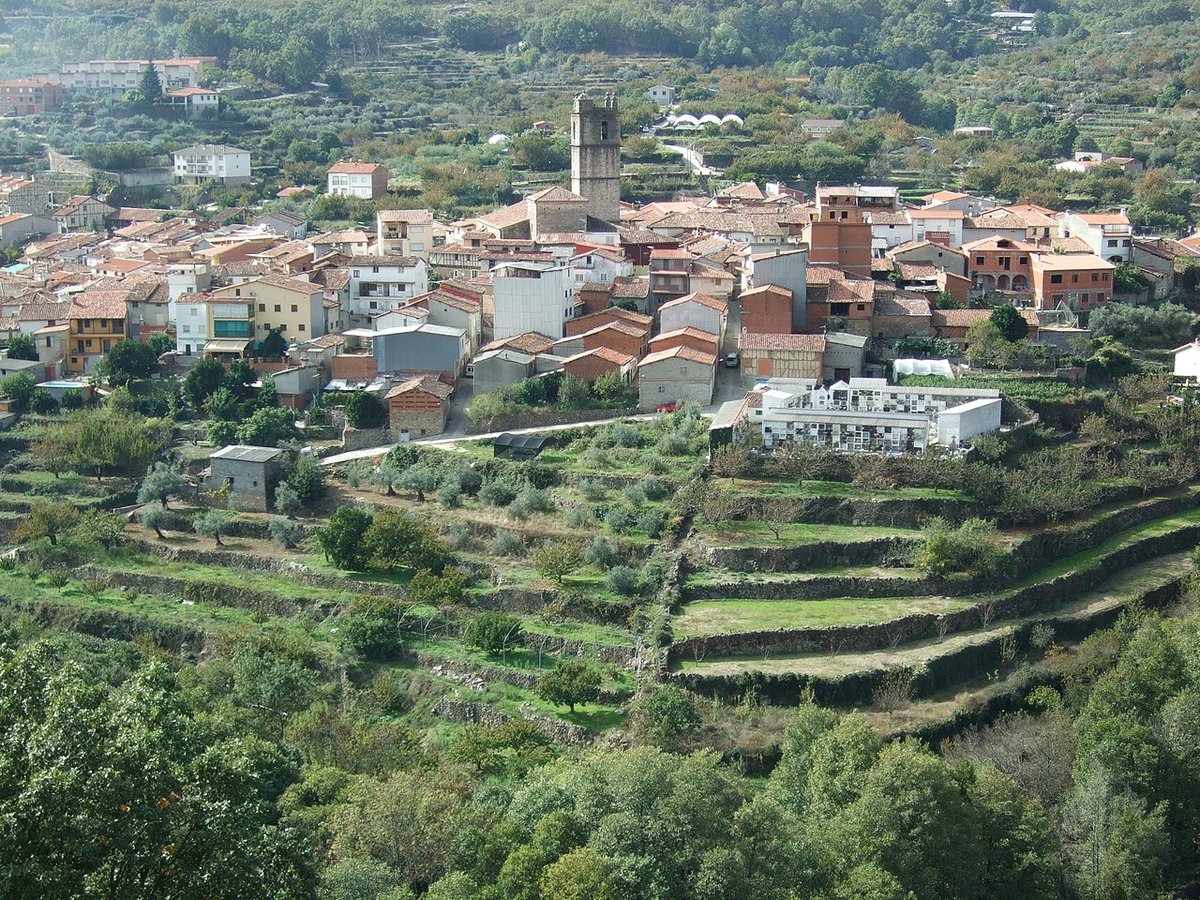
Baños de Montemayor tiene la estructura lineal de los pueblos que crecieron junto a una vía principal. Se alarga sobre la antigua calzada, con el balneario en un extremo y la sierra al fondo. Su historia está ligada al paso y a la pausa: aquí paraban los viajeros de la Vía de la Plata, y muchos se quedaban por el agua.
El municipio se sitúa en el límite norte del Valle del Ambroz, justo donde la sierra de Béjar se abre hacia Castilla. Los romanos ya señalaron este paso, y la traza del pueblo aún lo refleja. No es un lugar aislado; su razón de ser siempre ha estado conectada al movimiento.
El balneario, capas de uso
Las termas son el núcleo. El manantial brota a unos 43 ºC y en el edificio actual se conservan estructuras de conducción de agua que se atribuyen a la época romana. No son ruinas espectaculares, sino vestigios integrados en una instalación que ha funcionado de forma casi continua.
El ritual apenas ha cambiado: se viene por el agua. Lo que varía es el contexto. A mediados del siglo XX, el balneario era un centro social para las comarcas cercanas; hoy atrae a un público más diverso. Los fines de semana de verano suele haber cola para el baño público.
Iglesia de Santa María de la Asunción
La parroquia es del siglo XVI, de mampostería y proporciones modestas. Se parece más a las iglesias rurales de la zona que a los templos monumentales del sur de Extremadura.
El interior es sobrio, con muros gruesos y poca decoración. La luz entra por ventanas pequeñas. No es un lugar para visitar por su arte, sino para entender la escala de la comunidad que lo construyó: una población estable, pero siempre complementada por los forasteros que pasaban.
La huella de la Vía de la Plata
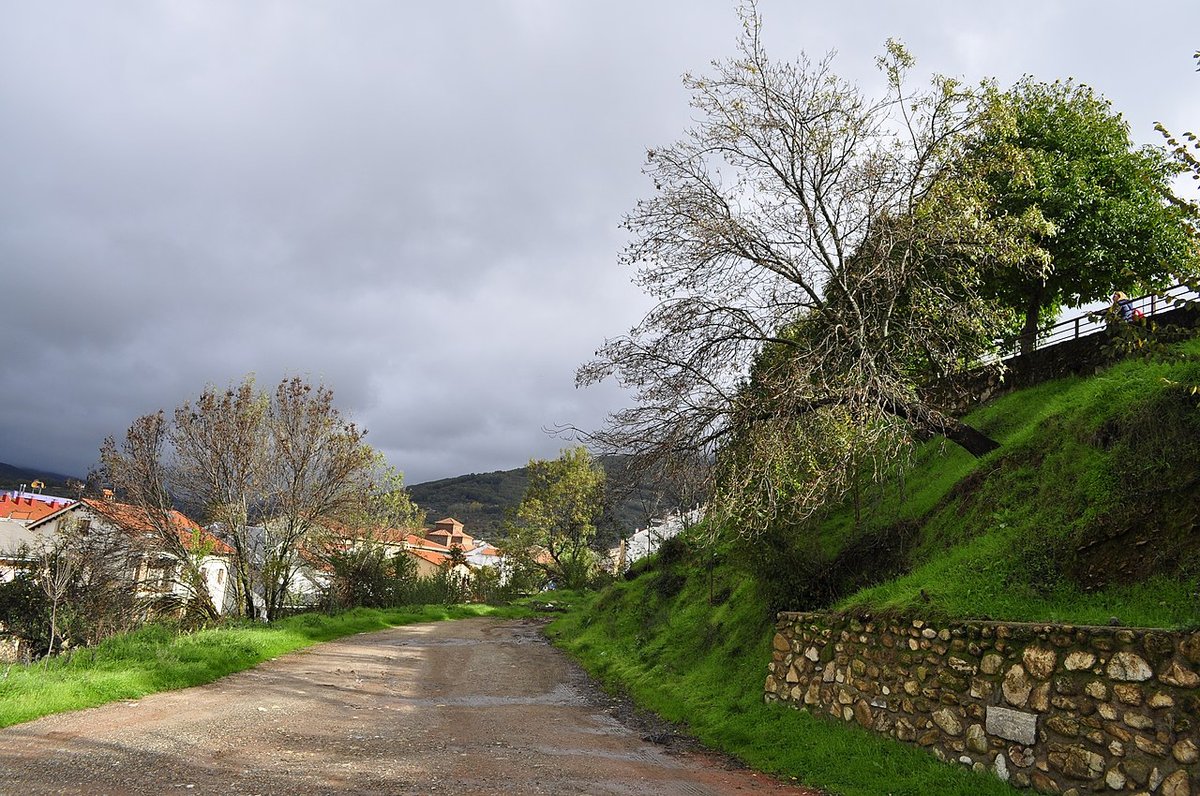
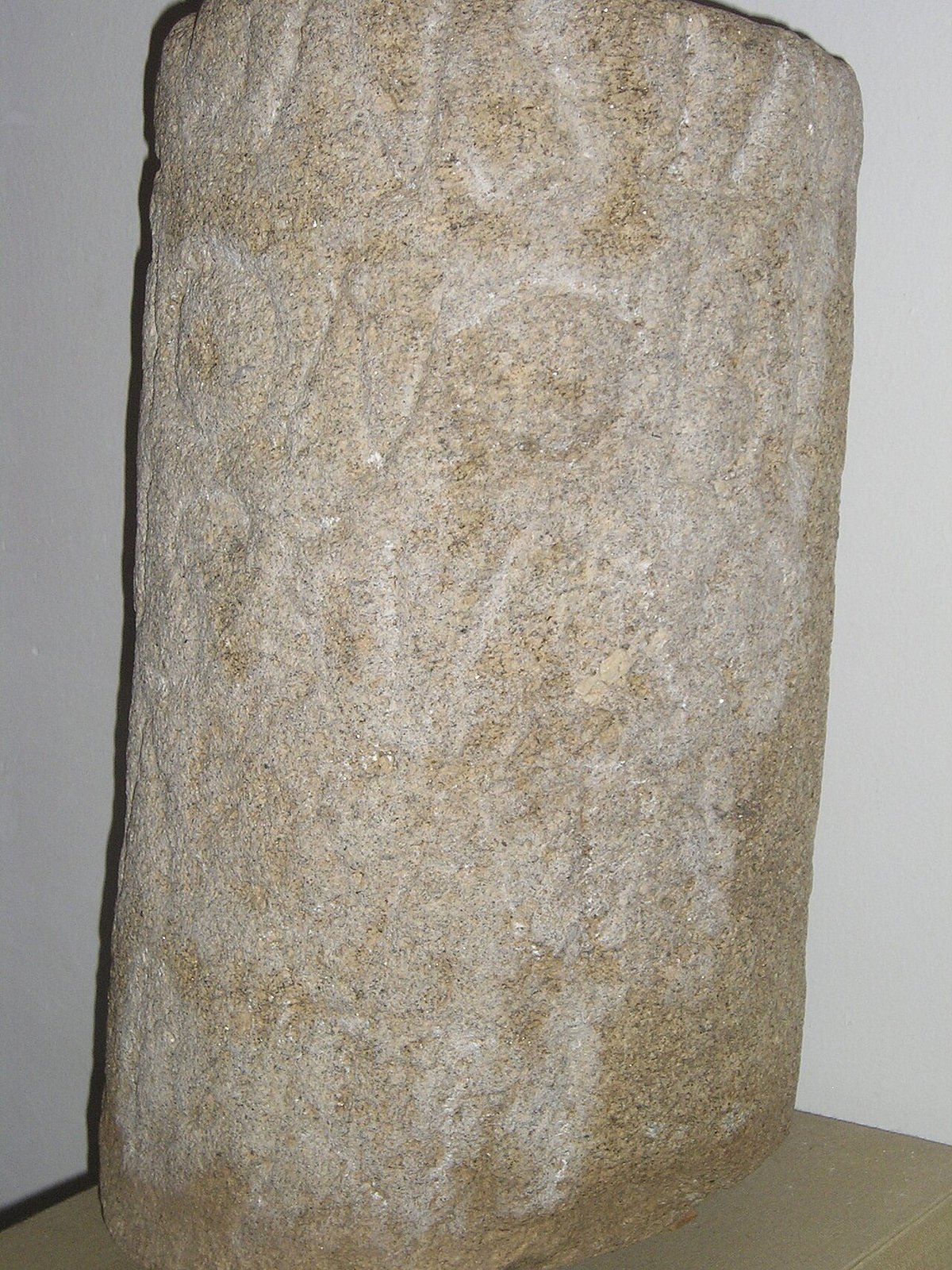
Por aquí pasaba la calzada romana que unía Mérida con Astorga. En las afueras del pueblo, hacia el norte, se puede caminar sobre un tramo empedrado original. No es muy largo —unos cientos de metros— y la hierba lo invade en partes, pero tiene el valor de lo tangible: pisas el mismo suelo que los carros.
Esta fue una mansio, una posada de la ruta. Eso explica que un núcleo tan pequeño tuviera una actividad constante durante siglos. El trazado de la carretera nacional aún sigue aproximadamente el mismo corredor.
Paseos por el valle
La orografía es accesible. Desde el pueblo salen varios senderos señalizados que en una hora te meten entre castaños y robles. Uno de los más frecuentados lleva hasta un mirador sobre el valle; el desnivel es suave.
En otoño, el paisaje se vuelve ocres y dorados. Es la temporada del magosto, una celebración compartida en todo el Ambroz donde se asan castañas recién recogidas. En los bares suelen tener entonces platos de temporada: guisos de cabrito, setas, y postres con castaña.
Cómo se vive ahora
El casco urbano se recorre en media hora. Las casas más antiguas son de piedra, con pocos voladizos. La calle principal tiene aún el aire de un camino.
El balneario marca el ritmo. Fuera de los periodos vacacionales y los fines de semana, el pueblo recupera una tranquilidad que parece más antigua. En invierno, el contraste entre el aire frío de la sierra y el vapor del agua termal es lo que define la atmósfera.
Si vienes por el Valle del Ambroz, Baños de Montemayor funciona como una parada lógica. No es un destino final, sino parte de un itinerario —igual que lo fue para los viajeros de la calzada.