Full Article
about Casas del Monte
Known for its natural pool and strawberry farming; set on the slope of the Montes de Traslasierra
Hide article Read full article
Getting Your Bearings
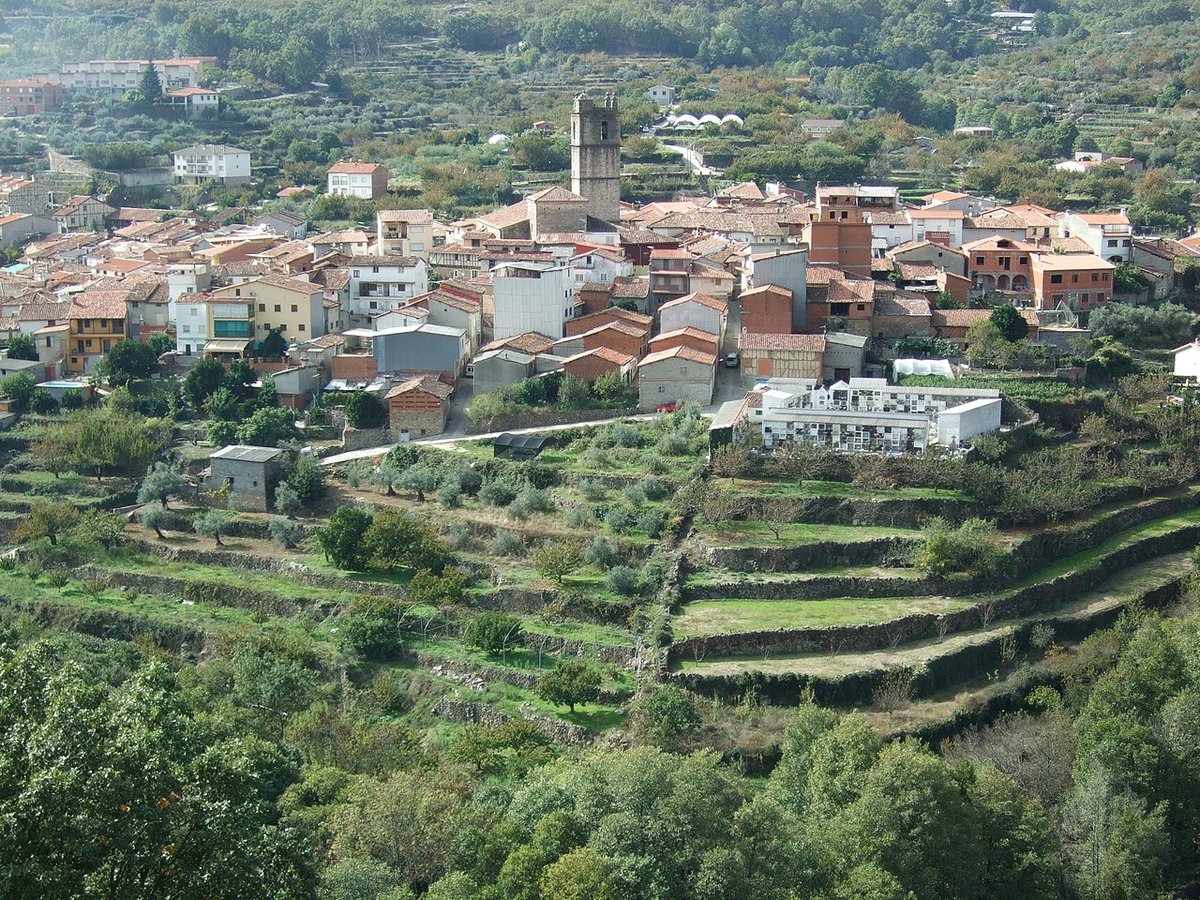
If you are coming for tourism in Casas del Monte, start with the car. The village is small and the streets in the centre are narrow, so it is usually easiest to leave the car in the lower part or near the square and continue on foot. You can walk around the whole centre in about half an hour without rushing.
This is not a place for large monuments. Casas del Monte is a mountain village and it follows that pattern: compact houses, short streets and gentle slopes arranged around the main square. The layout is simple and easy to understand as you move through it.
The Village Centre
The old centre covers only a few blocks. You will find stone streets, plain façades and some enclosed balconies with glass panels. The church of San Roque sits towards one end. It is built in granite and has a simple bell tower, typical of this part of Extremadura.
The usual approach here is to walk for a while and then move on. There are no major landmarks or hidden corners that hold your attention for long. What matters more is the feel of a small village rather than any particular sight.
Older houses are easy to spot. They tend to have thick walls, wooden balconies and solid doors with modest detailing. These are buildings designed to cope with the colder conditions of the surrounding mountains.
Water, Trees and the Valley
The area around Casas del Monte draws more attention than the centre itself. The hillsides are covered with chestnut trees, along with oak and holm oak. In autumn, it is common to see people collecting chestnuts on local plots of land, a familiar scene across the Ambroz Valley.
Nearby, several mountain streams run through the landscape. In Spanish they are known as gargantas, and when water levels are good they form natural pools where locals often bathe in summer. Conditions vary a lot depending on rainfall and the time of year, so it is worth asking locally before heading out to find them.
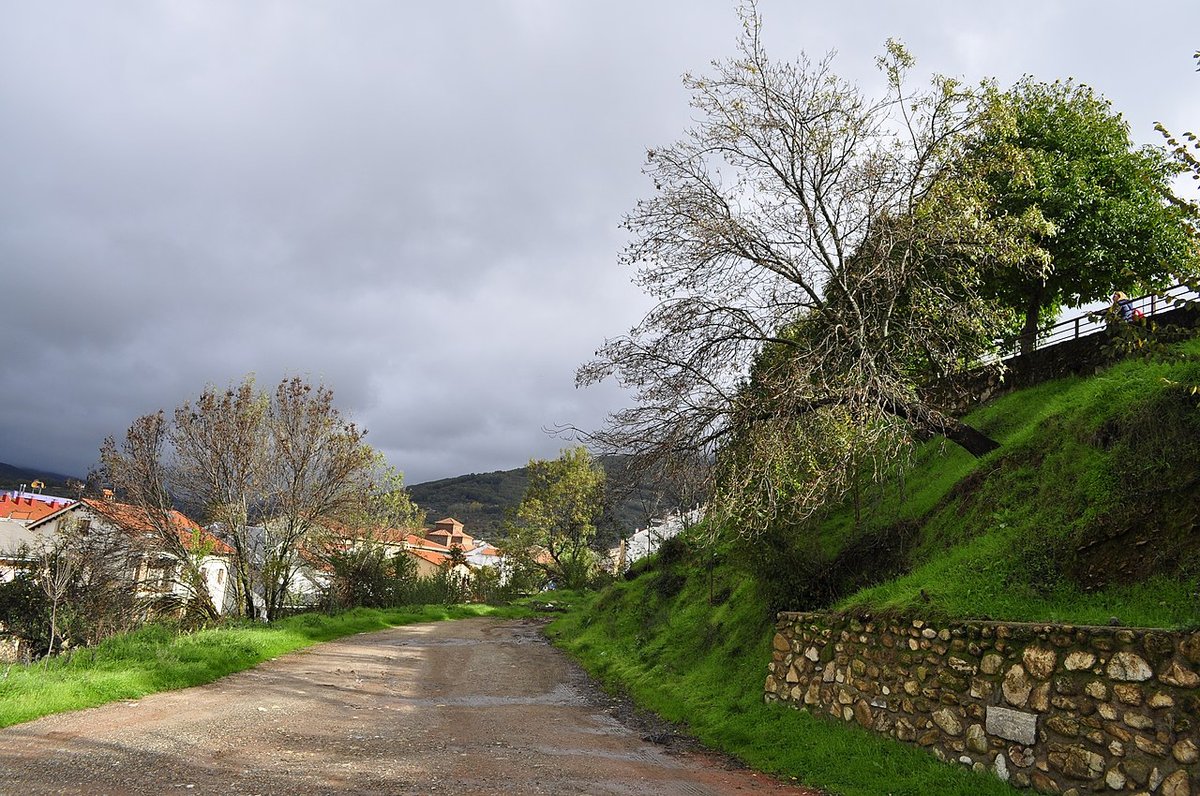
Paths lead from the village to different parts of the valley. Some climb up the slopes, others descend towards the streams. Many routes are signposted, though after periods of heavy rain or storms they can become muddy and harder to follow.
Countryside and Paths
As soon as you leave the village, agricultural tracks and footpaths begin among the chestnut trees. The terrain is not especially difficult, but there are sections with loose stones and short inclines that can catch you out if you are not paying attention.
Much of the land is privately owned. Collecting chestnuts or mushrooms is usually done with the permission of the landowner, and this is something people in the Ambroz Valley tend to respect. It is part of how the countryside is used and shared.
Walking here is straightforward in terms of distance and orientation. The main thing to keep in mind is the surface underfoot and the occasional slope. The setting remains consistent: trees, low hills and the quiet rhythm of rural land.
Local Life and Seasons
The main festivals in Casas del Monte are usually held in summer, with further activity in autumn when chestnut season arrives. The format is familiar across many villages in the region, with religious events, music in the square and gatherings among neighbours.
Outside these periods, life moves at a slow pace. The village has a small population, and this is especially noticeable during the week when there is little movement in the streets.
Before You Go
This is a place you see quickly. If the plan is just to walk around the centre, it can be done in under an hour.
It makes more sense to allow extra time to explore the surrounding countryside. The village works best as a starting point for short walks rather than as a destination packed with sights.
Avoid the hottest hours in summer. The slopes may look gentle on a map, but in the heat they take more effort than expected. Good footwear helps, especially on uneven or muddy paths. The overall plan here is simple: a walk, some time outdoors, and not much more.