Full Article
about Gargantilla
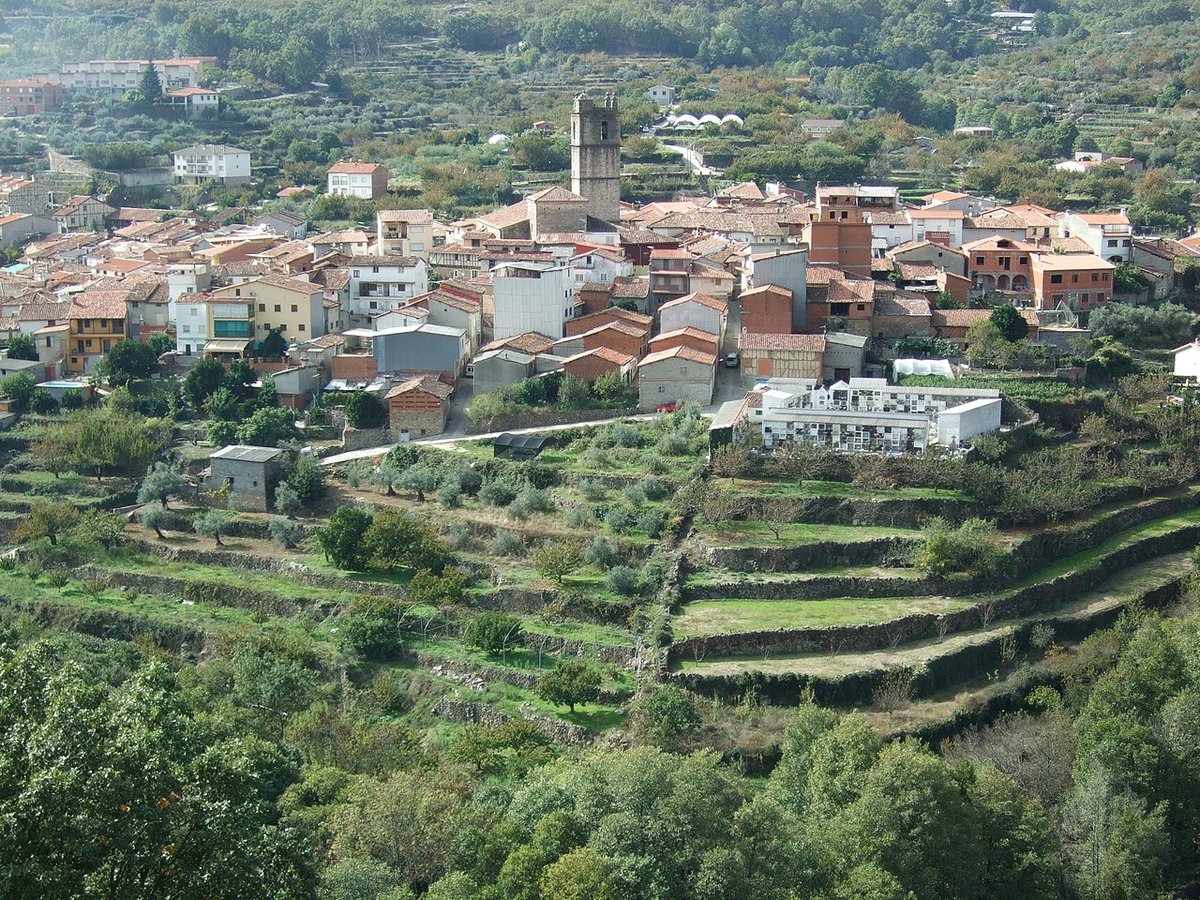
Small village among cherry and chestnut trees overlooking the Ambroz valley
Hide article Read full article
A small village in the Ambroz Valley
Gargantilla sits in the Valle del Ambroz, less than an hour from Plasencia if you follow the smaller roads. It is best reached by car, and once you arrive, it makes sense to leave the vehicle in the main square or along one of the wider streets at the entrance. Space is limited, and in summer it fills up quickly.
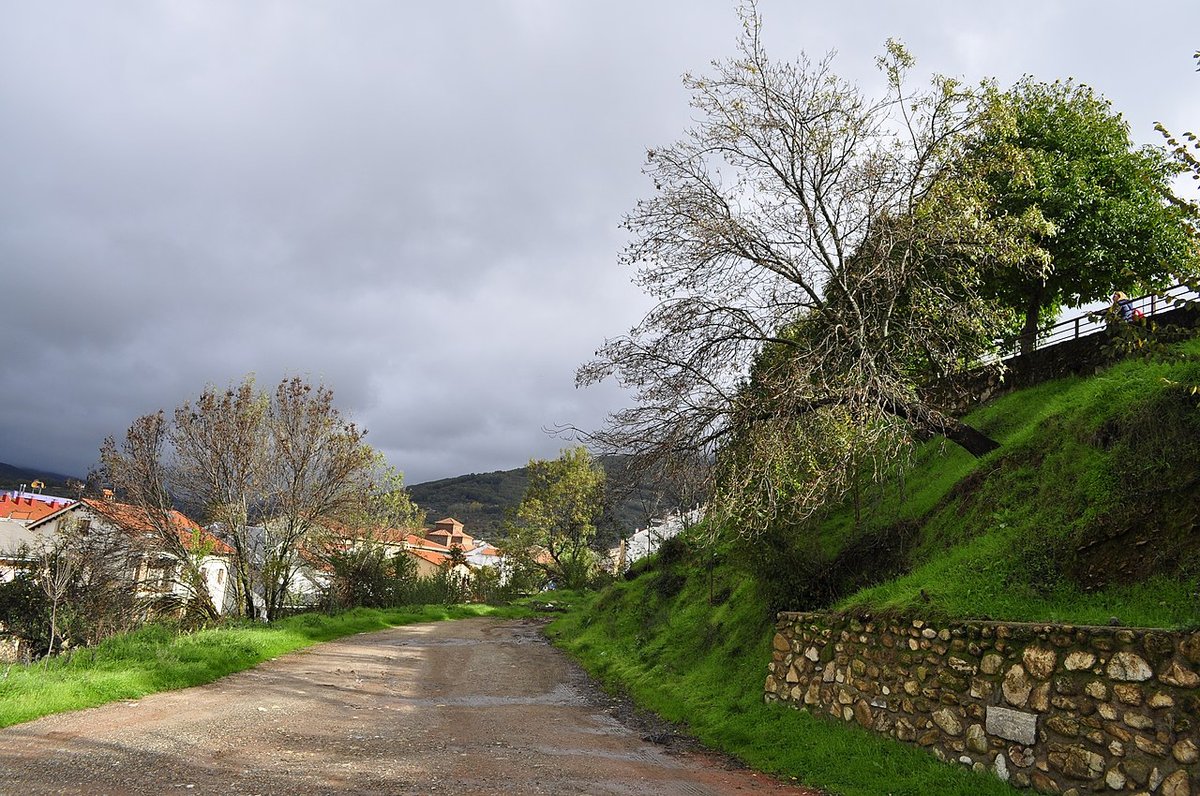
The village itself is compact and easy to explore on foot. Streets are narrow and often slope without much apparent order. The layout feels practical rather than planned for visitors. Gargantilla has grown gradually, shaped by the needs of the people who live here rather than by tourism.
The centre reflects that same simplicity. Granite houses dominate, many with wooden balconies, and there is little in the way of grand architecture. It feels lived-in and functional, with no attempt to present itself as a polished destination.
A walk through the village
There are no major monuments to draw a crowd. The church of San Blas is the main landmark, though it is small and quite plain. If it happens to be open, a short visit is enough to take it in.
Public washhouses can still be found in the village. They are modest and not especially striking, yet they offer a glimpse into how daily life worked here not so long ago. These practical spaces tell more about the place than any grand building might.
Most of what Gargantilla offers comes from wandering its streets at a slow pace. Stone doorways, small kitchen gardens pressed up against houses, and the occasional working corral appear as you move through the village. Nothing is arranged for display. Details reveal themselves naturally if you take the time to notice them.
Chestnut woods and the Garganta
The most interesting parts lie beyond the built-up area. Around Gargantilla, dense chestnut groves and oak woods spread across the landscape. In autumn, the colours shift noticeably, and people from across the valley head out to walk these paths.
The Garganta de Gargantilla, a mountain stream that descends from the sierra, cuts through this terrain. Along its course, it forms small pools and short drops of water. Reaching these spots requires a bit of walking from the main tracks. Signposting is not always reliable, so it is common to ask locally for directions or carry a simple map.
These natural areas define the experience far more than the village itself. The woods feel established and well used, shaped by long-standing routes rather than formal trail design.
Walking routes around the Ambroz
Close to the village runs the route known as the Ruta de los Castaños del Ambroz. Many people pass through the surrounding paths without entering the village itself, focusing instead on the network of trails that circle Gargantilla.
Some stretches are not clearly marked, though they follow paths that have been used for generations to reach the hills. Standard walking footwear is enough for these routes.
There are also small բարձր points along the way where the valley opens up into view. These are not formal viewpoints with built infrastructure. They tend to be clearings or natural pauses in the path where it makes sense to stop for a moment.
Seasons and changing landscape
The landscape shifts noticeably throughout the year. Each season brings a different atmosphere to the same paths and woods.
In autumn, low mist often settles among the chestnut trees in the morning. Winter sometimes brings snow to the peaks of the surrounding sierra, visible from the valley below. Spring introduces blossom, with some cherry trees and other fruit trees flowering near the kitchen gardens.
Wildlife is present if you pay attention. Birds of prey can be seen circling above the valley, while woodpeckers are active within the wooded areas.
Food and local produce
The food in this area follows the traditions of northern Extremadura. Dishes are filling and straightforward, with little emphasis on presentation. Patatas revolconas with paprika are common, as are mushrooms when they are in season. Goat meat and stewed meats also feature regularly.
Chestnuts play an important role during autumn and winter, appearing in various forms. Cheese made in small local operations is also typical of the area.
Local life and seasonal rhythms
Life in Gargantilla follows a steady rhythm shaped by the seasons and local traditions. At the beginning of February, the village celebrates San Blas with a simple festival. A procession takes place, followed by a gathering of neighbours.
Autumn brings activity in the chestnut groves. Groups can still be seen collecting chestnuts in the nearby woods. This is not organised as an event for visitors, but part of ongoing work or family custom.
August changes the pace of the village. Many residents who live elsewhere during the year return, and the streets become more active, especially in the evenings.
A place to pause, then head out
Gargantilla does not revolve around monuments or a large historic centre. It works better as a starting point for walking through the chestnut groves of the Ambroz Valley and exploring the Garganta de Gargantilla.
A short walk through the village is enough to understand its character. After that, the focus naturally shifts դեպի the surrounding countryside. That is where the experience becomes more rewarding.