Full Article
about Hervás
Capital of the Ambroz valley, home to one of Spain’s best-preserved Jewish quarters.
Hide article Read full article
A place you choose to reach
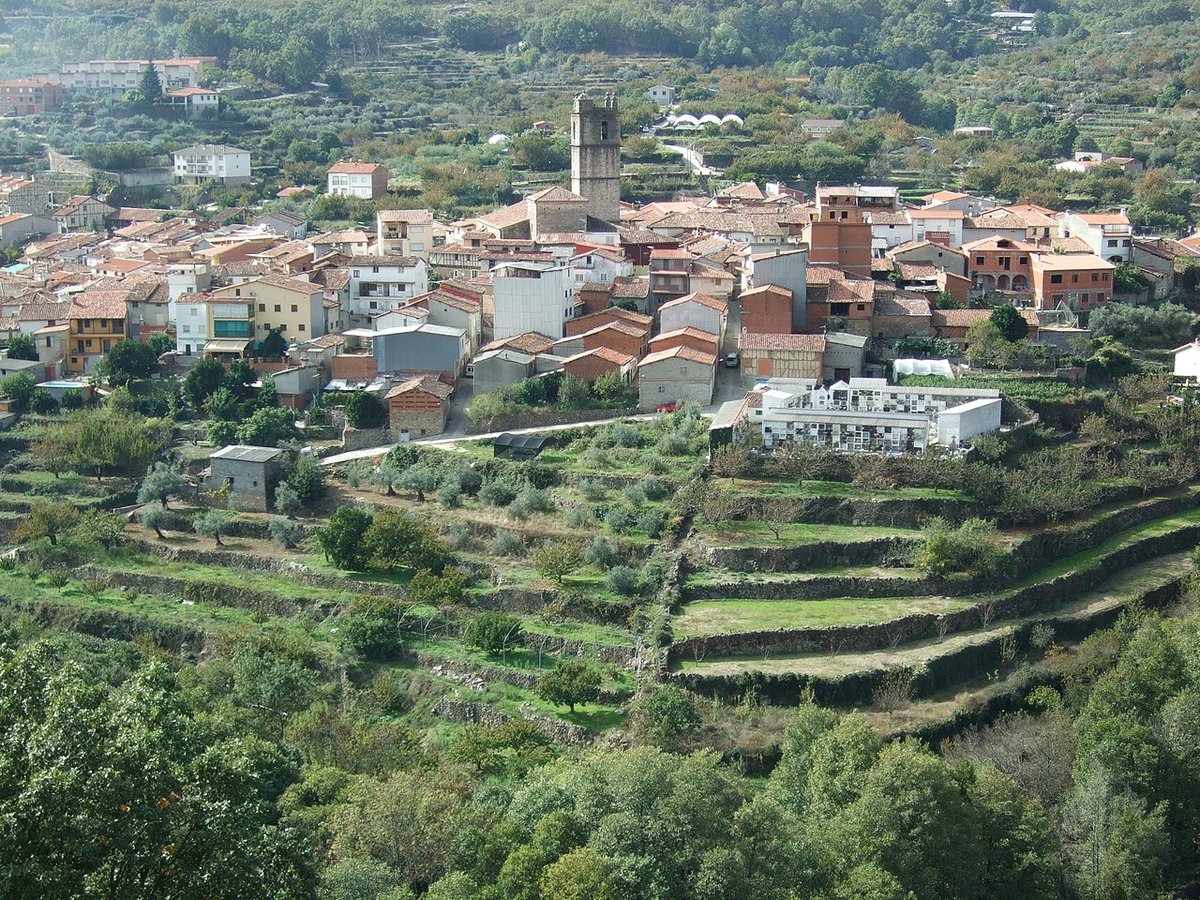
Hervás feels like the kind of place you end up in after leaving a main road to refuel and stepping into a village bar where everyone knows each other. You walk in and notice those quick glances that say, “you’re not from here”. It is not hostility, just curiosity. With around 4,000 residents and a location slightly removed from major routes, that reaction makes sense. People do not arrive here by accident. They come because they want to.
That sense of intention shapes the visit. Hervás does not try to grab attention with big statements or carefully staged scenes. It moves at its own pace, and it expects you to do the same.
The Jewish quarter you don’t expect
The Jewish quarter is the place that sets the tone straight away. It is not only about age, but about how you move through it. Some streets feel like the corridor of a night train: long, narrow, with houses so close together that you could almost touch both sides at once.
Callejón del Rabilero captures that perfectly. Stretch out your arms and you nearly brush both walls. Right there, a small plaque marks the site where the old synagogue once stood. There are no dramatic reconstructions or elaborate displays. It is closer to being shown an old photograph and told, “this used to be here”. You are given a clue and left to piece the story together.
That same approach carries into the Fiesta de los Conversos. The town dresses in period costume and stages its own historical theatre, but the atmosphere leans more towards a neighbourhood celebration than a polished medieval set. People join in with genuine enthusiasm, in the same spirit as a relative turning up to a carnival party in a simple costume. No one is trying to convince you it is something else. The point is to enjoy it.
Eating without overthinking it
Chanfaina might sound like the name of a heavy metal band, but it is actually a robust local dish. Rice cooked with pig’s blood and spices, filling in the way a long Sunday family meal tends to be. You finish it with that familiar feeling that dinner will not be necessary later.
Migas belong to a different category altogether. If you have tried them in Extremadura, you will recognise the idea: hearty, rich, often served with grapes. The grapes burst in your mouth and cut through the richness in the same way a squeeze of lemon sharpens fried fish.
Then there is quesado dulce, which brings a calmer note to the meal. It sits somewhere between a flan and a sponge cake, simple and satisfying. It often appears wrapped in foil, without ceremony, like leftovers handed to you at the end of a long family gathering.
The Ambroz Valley and getting a little lost
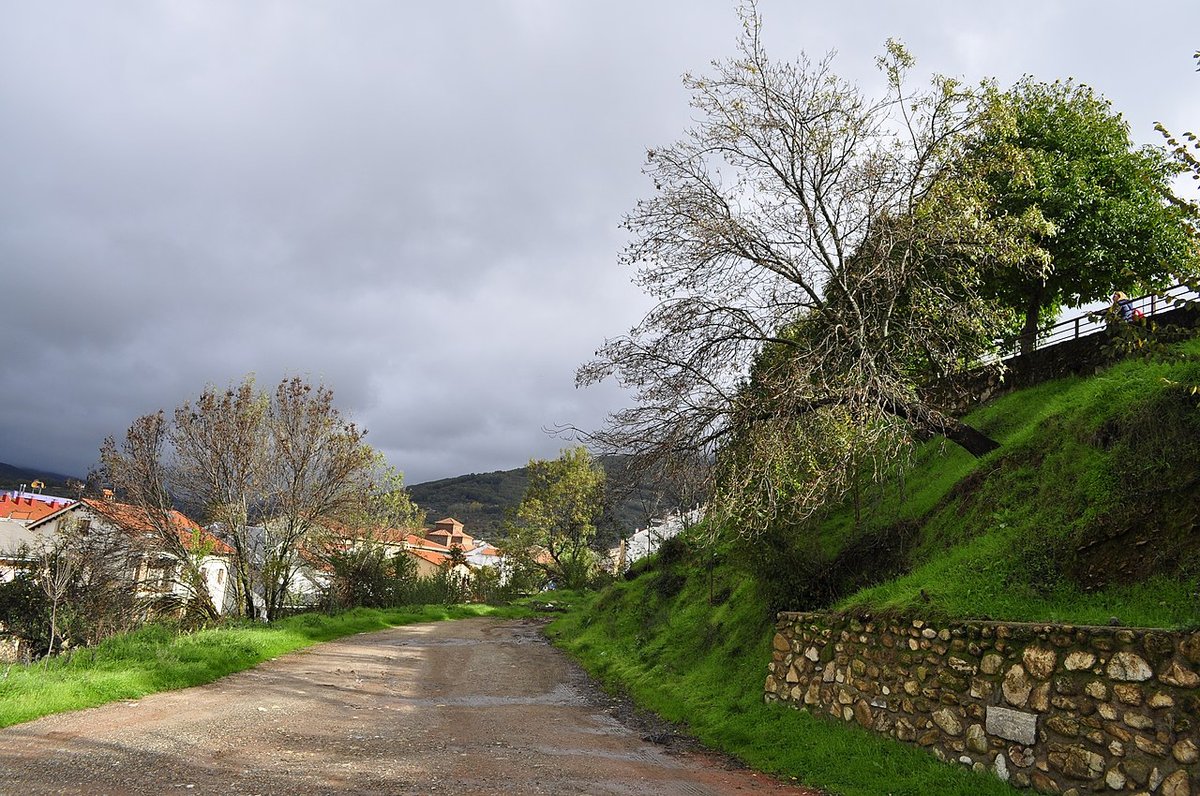
The Valle del Ambroz surrounds Hervás like a large bowl filled with woodland. Step out of the town and you quickly find paths that climb, dip and disappear into trees.
The route of the mills is one of the easiest to follow. It runs alongside the river, leading you past old mills. Some are partly in ruins, others still in use. The feeling is a bit like opening an old drawer and finding objects from different periods mixed together.
The Chorrera trail tends to draw the most attention. At the end, there is a waterfall of around twenty metres. In winter it comes down with force, loud enough to hear from a distance. In summer it can shrink to a thin thread, like a tap that has not been fully turned off. Even then, the walk holds its appeal. The pine forest carries the scent of resin and damp earth, a smell that recalls stepping into a space filled with freshly cut wood.
When to go without overcomplicating it
Spring usually suits the valley well. April and May bring mild temperatures and cherry trees in bloom. It is not a vast spectacle like in other nearby areas, but the slopes pick up soft white patches, as if lightly dusted.
Summer is when the Fiesta de los Conversos takes place, and the town becomes noticeably busier. Walking through the Jewish quarter during those days can feel like trying to cross a crowded aisle once an event is already underway.
Winter changes the mood completely. Fog settles into the valley and the town becomes partially hidden. Chimneys send up smoke, and the streets feel quieter. It has that long January afternoon atmosphere, when everything encourages you to stay inside and reach for something warm.
The details guides often miss
The Pozo de la Nieve tends to surprise people because of its simplicity. Centuries ago, it was used to store ice. Today it works as a small ethnographic space. There are no elaborate installations. Visiting it feels like being handed the key to an old storage room and told to take a look inside.
In the main square, there is a cherry tree that many locals consider to be over a hundred years old. It does not come with a large sign or a long explanation. It is simply there, like any other tree. If no one points it out, you might walk straight past. That detail reflects how many things work in Hervás: what matters is present, but it is not announced loudly.
A quick take, from one person to another
Is Hervás worth the detour? Yes, as long as expectations stay grounded. It is not a carefully arranged postcard scene. It is closer to a friend who shows up with a wrinkled shirt and then keeps you listening for an hour with their stories.
A weekend is enough. Wander through the Jewish quarter at an easy pace, sit down for a substantial meal, head out onto one of the valley paths, and leave with the sense of having spent time in a place that continues to run on its own terms.