Full Article
about Casas del Castañar
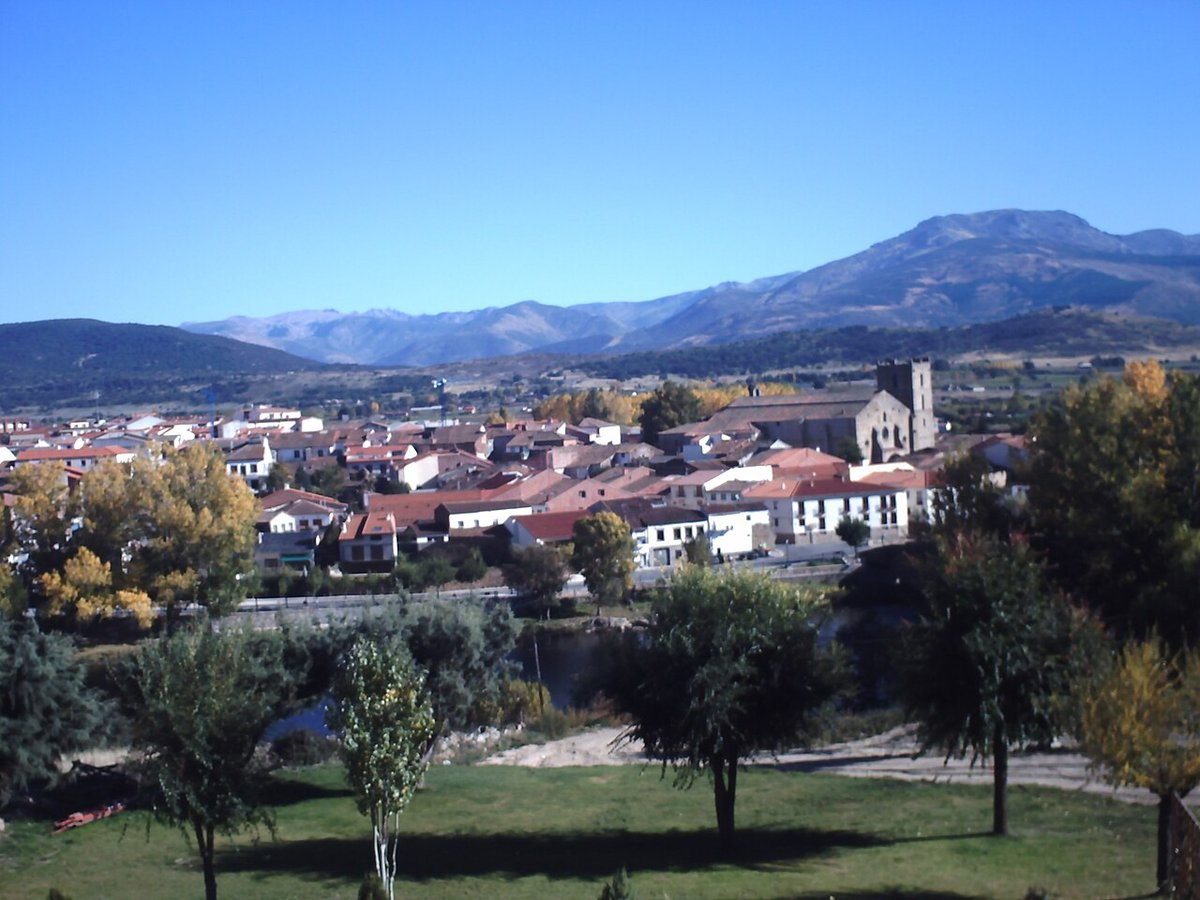
Jerte village ringed by centuries-old chestnuts and cherry trees; the landscape shifts with every season.
Hide article Read full article
A village that appears without warning
Casas del Castañar does not build up to its arrival. The road CC‑168 climbs a short incline and, almost abruptly, the village is there. No oversized signs or expansive car parks mark the entrance. Two streets cross, a few houses gather along the slope, and the smell of wood smoke signals that you have reached your destination.
The scale feels modest from the outset. The village is small, with homes that seem anchored to the hillside as if to resist the wind. Stone walls, narrow streets and a quiet atmosphere define the first impression. It is the kind of place where everything appears close together, yet nothing feels arranged for display.
Drawn downhill by chestnut trees
The origins of Casas del Castañar follow a practical logic. The earlier settlement stood in Asperilla, a couple of kilometres higher up the slope. Over time, the pull of the chestnut trees proved stronger than the attachment to that older location. These trees offered shade in summer, chestnuts in autumn and wood when needed, so the population gradually moved closer to them.
Asperilla has not disappeared completely from memory. Locals still refer to it, much like a place that holds the beginnings of a story. Today, Casas del Castañar sits at around 675 metres above sea level, surrounded by mature chestnut trees that give the impression of having outlasted most other things in the landscape.
Several of these trees are officially recognised as Árboles Singulares. Among them are El Condelobo, the chestnut tree at Fuente de las Escobachas and the one at Los Raelengos. They are not placed for easy viewing. Anyone who wants to see them needs to walk into the surrounding countryside, where they continue to grow at their own pace.
Streets that smell of smoke and fruit
Silence stands out, though it is never complete. It carries scents with it. At times there is wood smoke, at others the smell of bread, and often fruit left to dry.
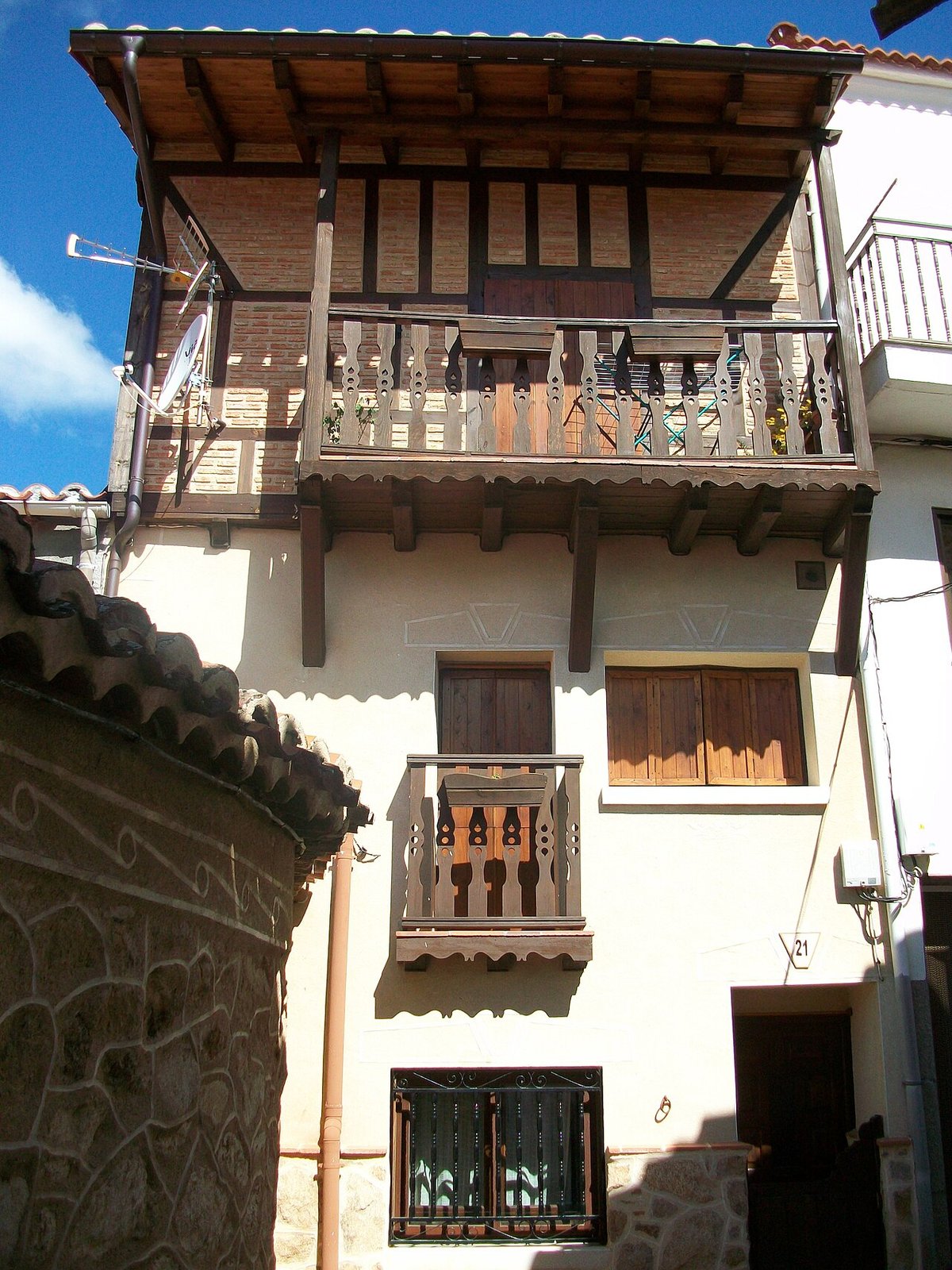
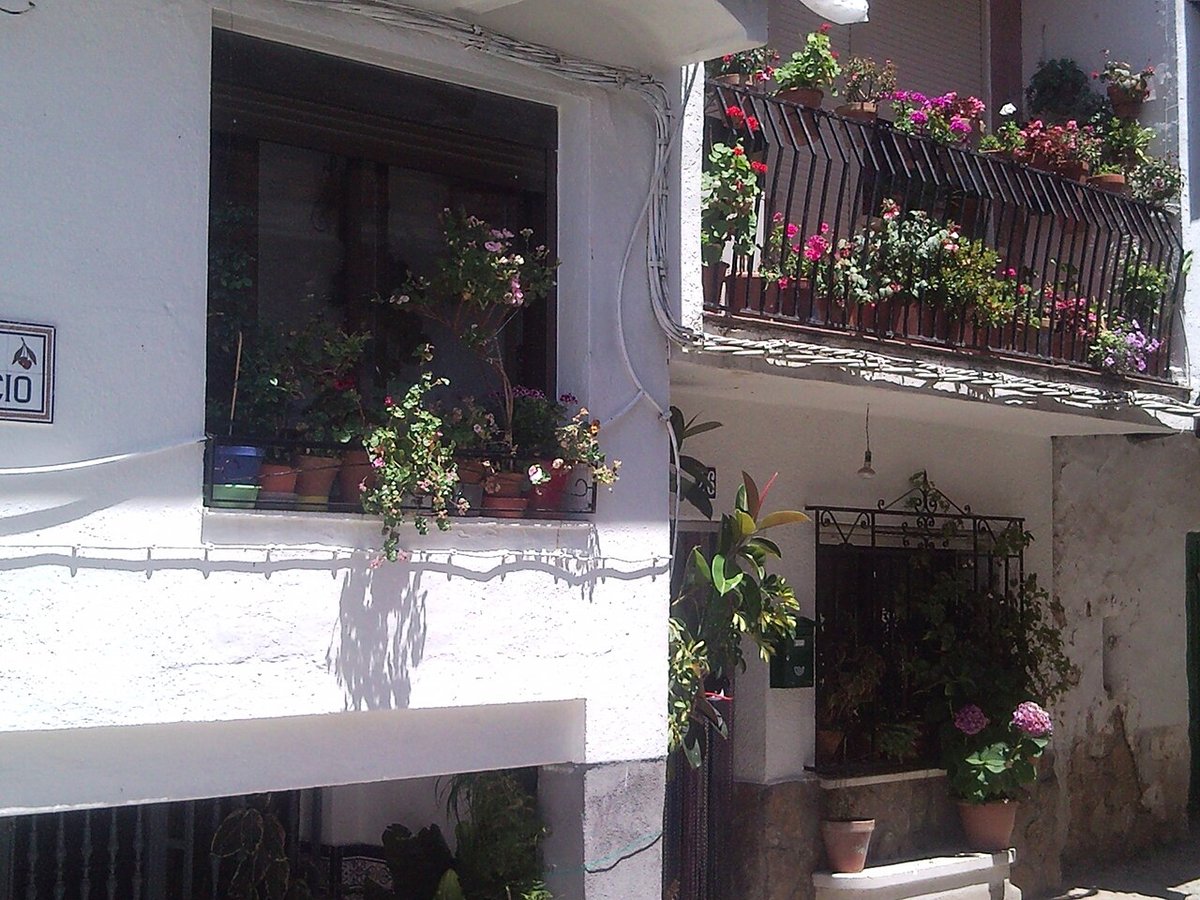
The streets climb steeply, and along them appear the solanas, upper floors with railings where produce is laid out in the sun. Peppers, figs and peaches hang in rows, adding colour to the façades. The effect is practical rather than decorative, yet it shapes the look of the village.
Houses tend to have small doors and thick walls. Inside, kitchens still act as the centre of daily life in some homes. The smell of frying garlic and food cooking over a fire drifts outwards. The pace feels different here, slower and less structured.
Visitors do not go unnoticed. A glance from a doorway often makes it clear who belongs and who does not. Even so, people passing through are not unusual. The Jerte Valley receives its share of curious travellers, and this village is part of that wider landscape.
Paths beyond the last house
There are no organised tours moving through the streets. The routes that matter begin where the last houses end.
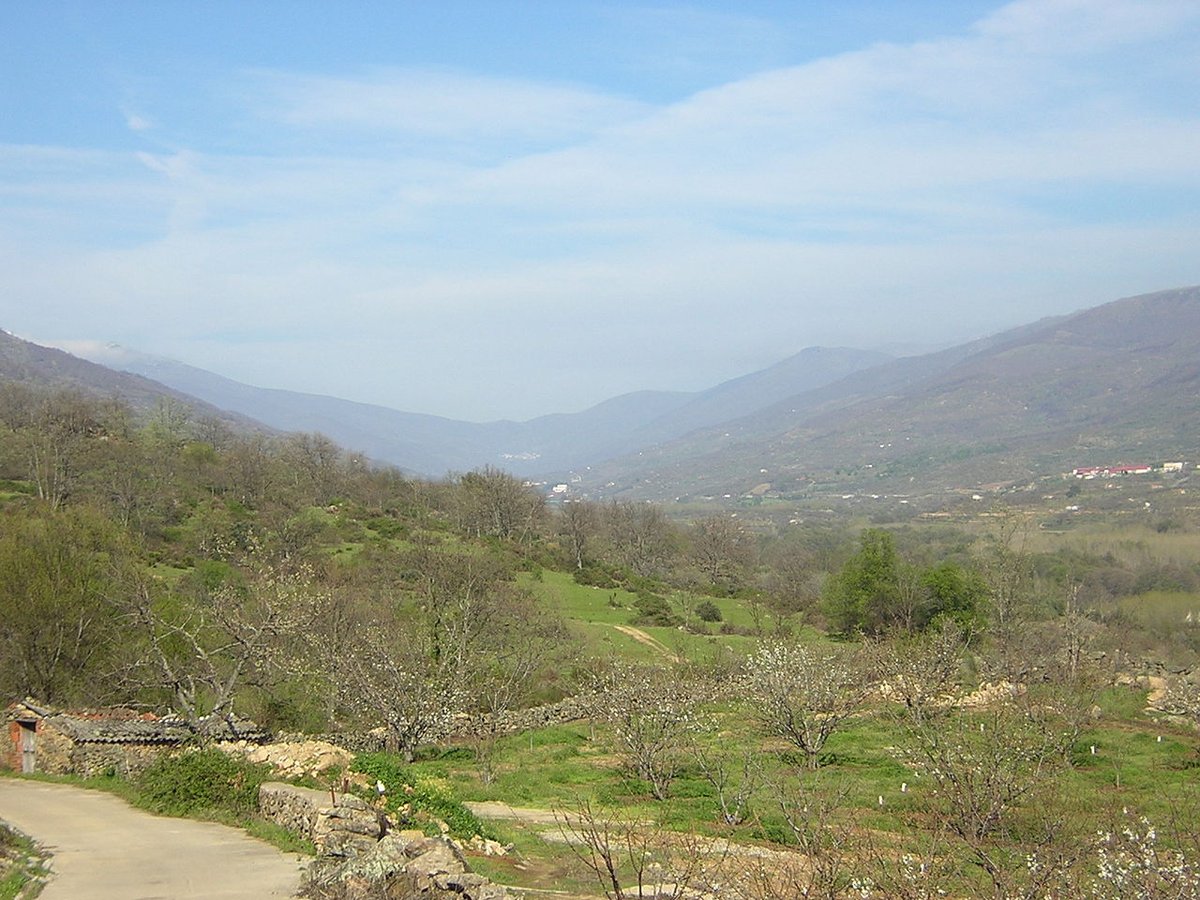
One of the best known is the PR‑CC‑24 trail, which climbs towards the Era de San Bernabé. This space once served for threshing grain. Now it works as a natural viewpoint over the Jerte Valley. On a clear day, the view stretches across a patchwork of terraces and cherry trees, and it is easy to linger by the low walls that frame the area.
Shorter walks connect some of the oldest chestnut trees. The route known as the “ruta de los castaños milenarios” moves from one tree to another, without any strict alignment. They appear gradually, after a bend in the path or at the edge of a meadow, each one standing apart.
Walking here requires little more than time and patience. The rhythm is unhurried, and the terrain encourages a steady pace rather than a rushed visit.
Stone figures and quiet landmarks
The Iglesia de San Juan Bautista dates back to the 16th century. In a village like this, that simply means it has always been part of the scene. The building is white and unadorned, positioned on higher ground.
Attention often shifts to the atrium rather than the interior. Carved stone animals appear in certain corners. A donkey here, another figure elsewhere. Their purpose is not clearly explained, which adds a slightly enigmatic quality. They have remained in place for centuries, overlooking the square without drawing too much attention.
Just outside the village stands the Ermita del Cristo del Humilladero, built in the 18th century. It is small and typically opens during specific occasions or local festivities.
When the valley turns white
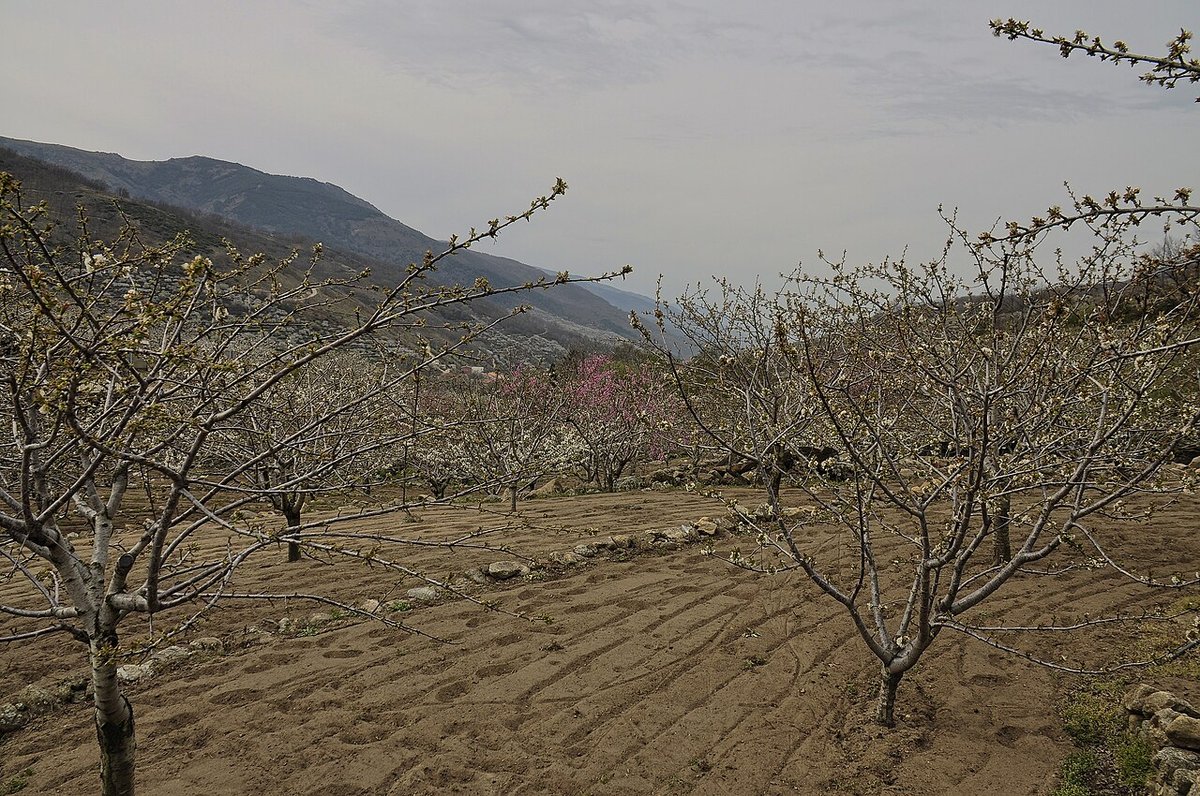
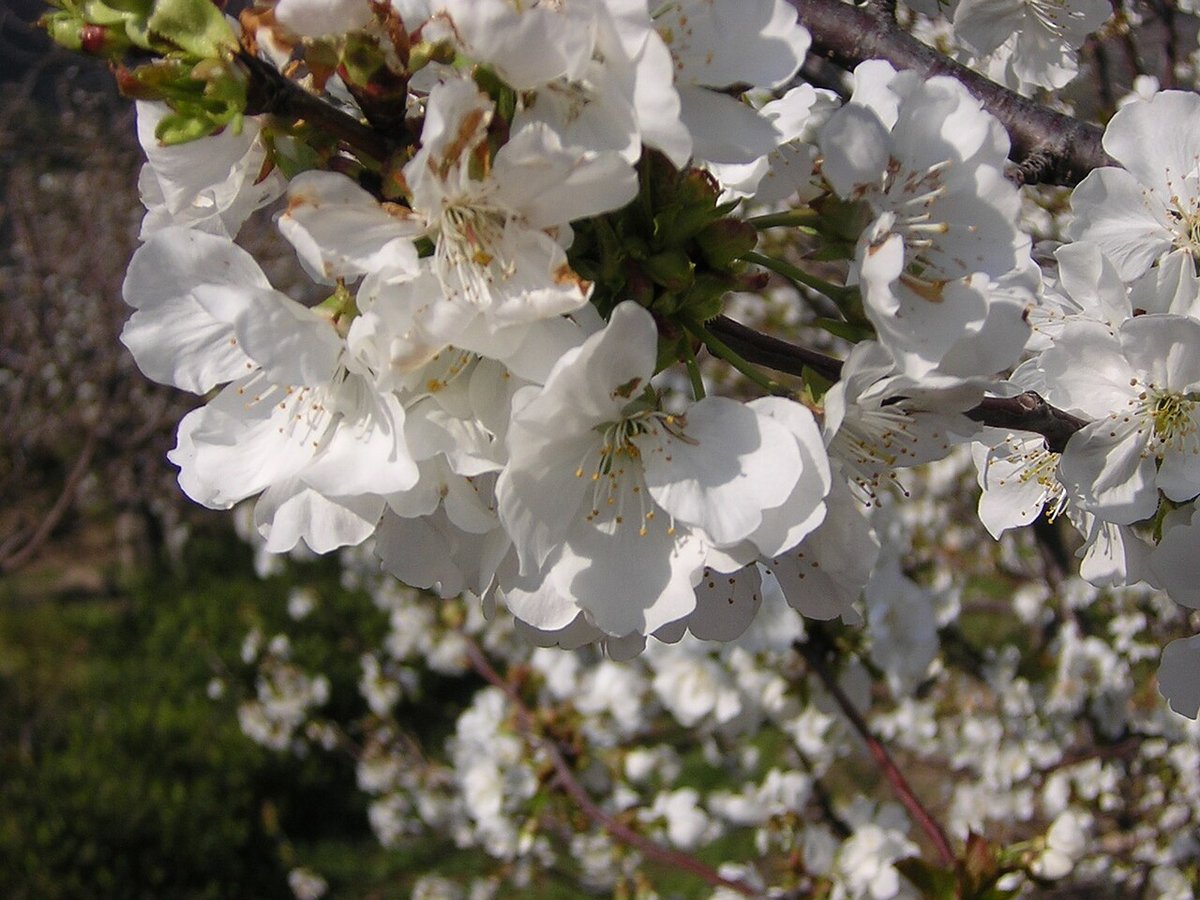
The Jerte Valley changes noticeably during the cherry blossom season. Traffic increases and the roads become more active as visitors arrive to see the trees in bloom. The landscape takes on a pale, almost uniform tone, as if covered by a broad white layer.
Casas del Castañar does not sit at the centre of this seasonal attention. That relative quiet can be part of its appeal. A visit often involves leaving the car at the entrance, walking through the streets and pausing at natural viewpoints around the village.
Summer brings local festivities, as in many nearby places. During those days, the square fills with more people than usual. Music, family gatherings and the return of residents who live elsewhere create a brief shift in atmosphere. It feels more like a reunion than a large event.
Autumn offers another perspective. Chestnut trees begin to drop their spiny husks onto the ground, and the surrounding hills carry the scent of damp leaves. Temperatures fall quickly towards the evening, so an extra layer becomes useful.
A walk to places such as El Condelobo gives time to look closely at these long-standing trees. Standing beside one of them invites a pause, a moment to consider how long both the trees and the village have shared this hillside. From there, the path leads back down towards Casas del Castañar, where the same quiet streets wait at the end of the walk.