Full Article
about Piornal
The highest village in Extremadura; known for the Jarramplas festival and its protected façades.
Hide article Read full article
A Village That Starts With a Climb
Tourism in Piornal begins with a simple issue: the car. The village sits high above the Jerte Valley, and its streets are narrow. Arrive by mid-morning and you may find yourself circling. There is usually some space near the entrance or on a nearby open patch of ground, but not always.
The final stretch up from the valley is a winding road. In rain or ice it is worth taking slowly. There is little room for overtaking, and it is not unusual to come across animals or tractors on the way up. The sense of height becomes clear as the road climbs and the valley drops away behind you.
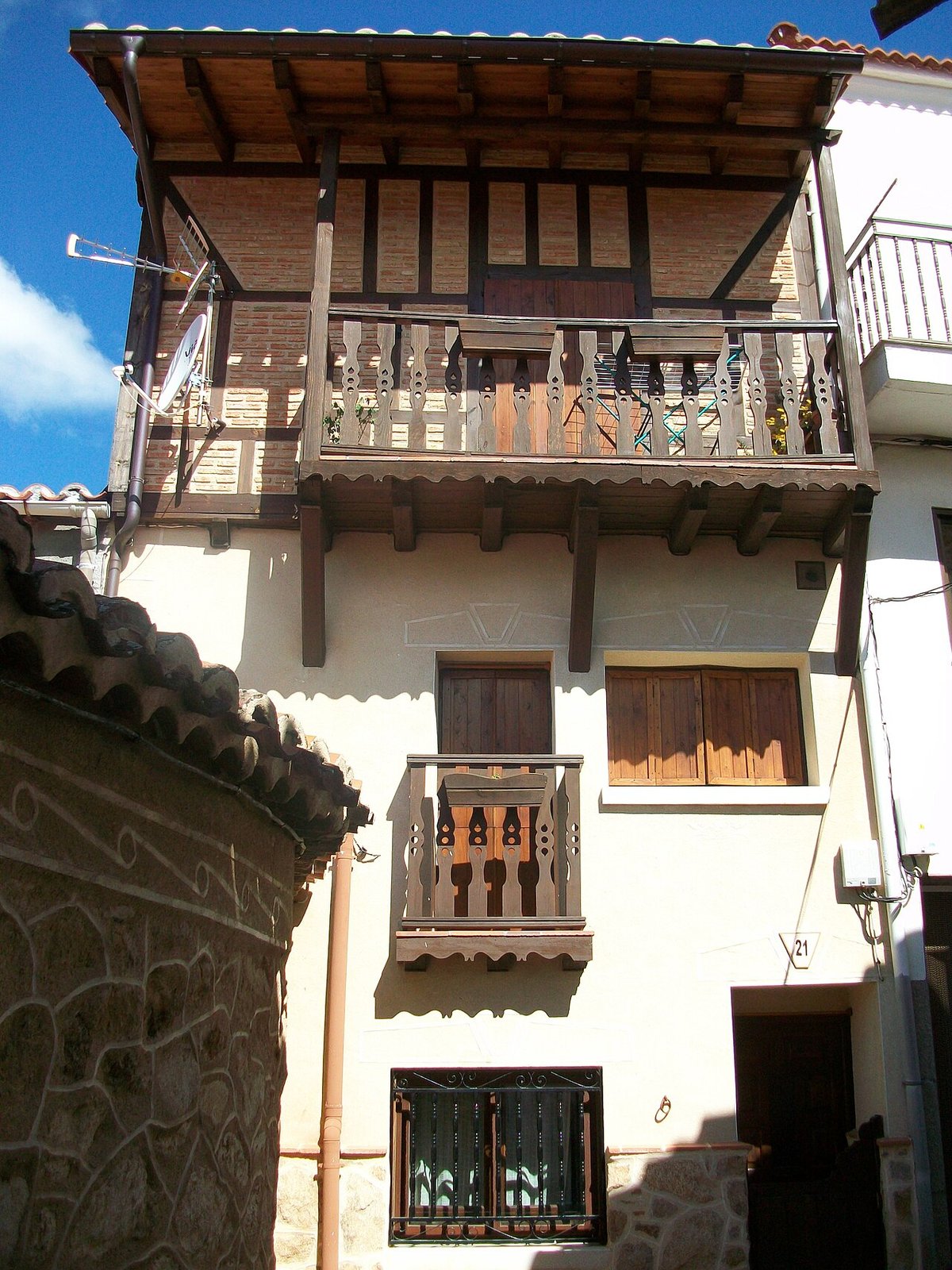
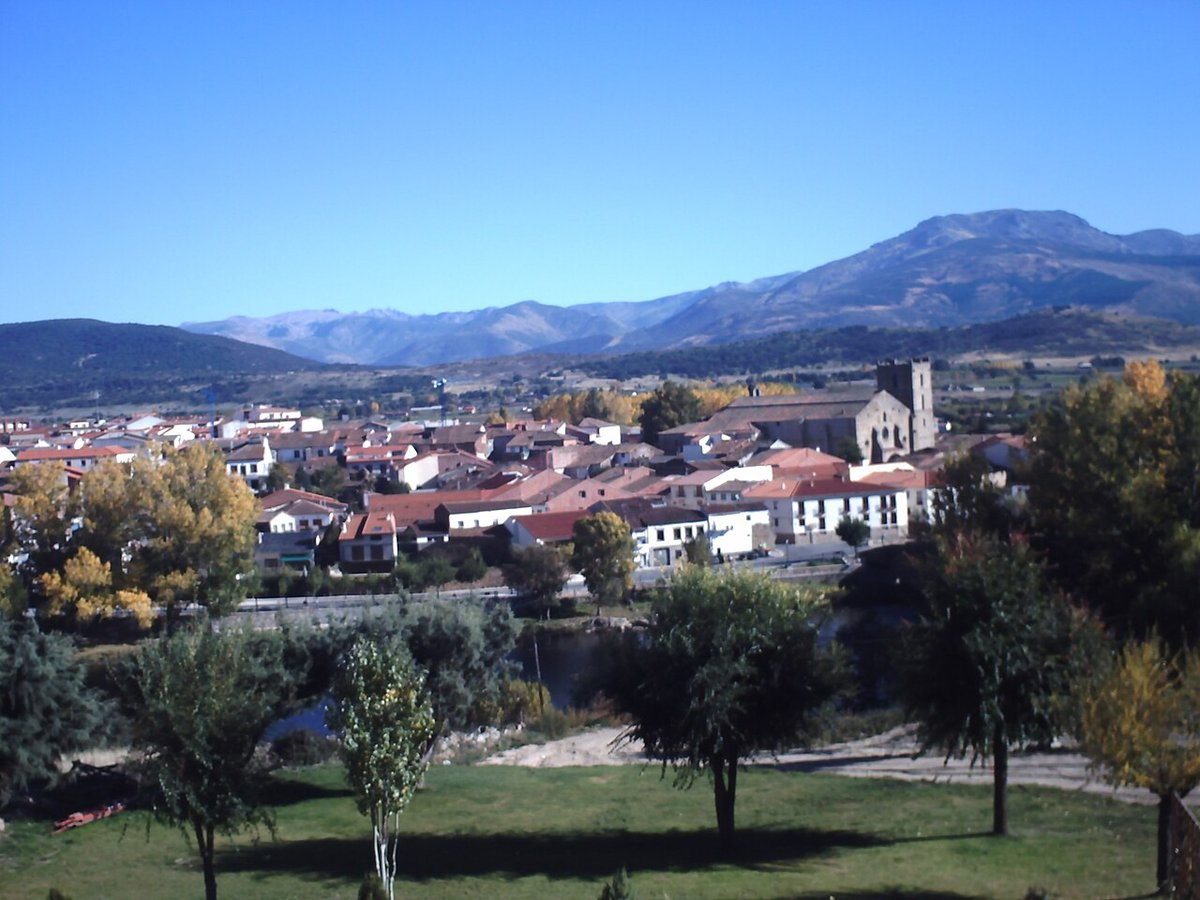
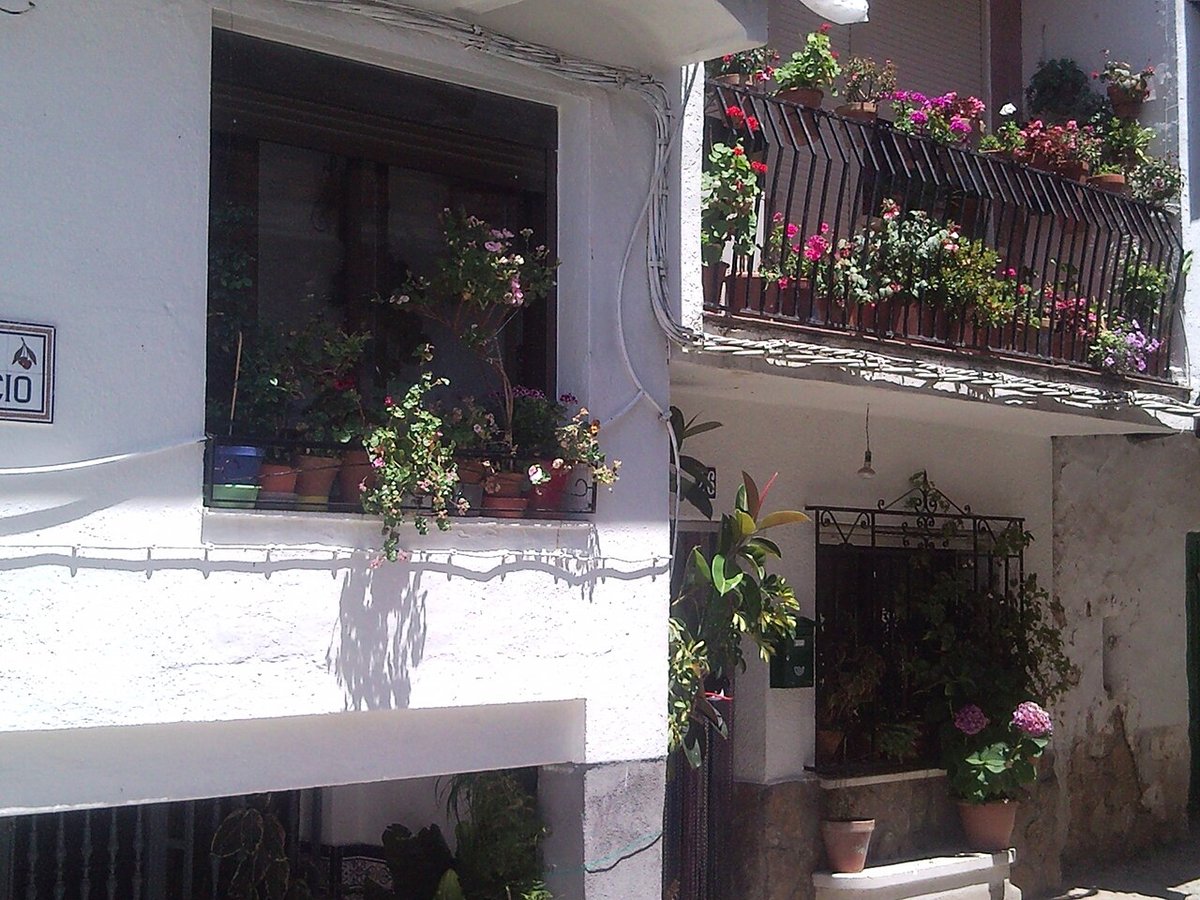
Once parked, the centre can be covered quickly. Stone streets, plenty of granite and houses built with cold weather in mind define the place. Some have been restored; others look much as they did decades ago. Life here has not tried to reinvent itself for visitors.
The Iglesia de San Juan Bautista stands on the main square. Dating from the 16th century, it has a simple layout and a restrained interior. It works more as a reference point than as a monument that demands long attention. In a village this size, the square and the church naturally become the meeting point.
Above the Jerte Valley
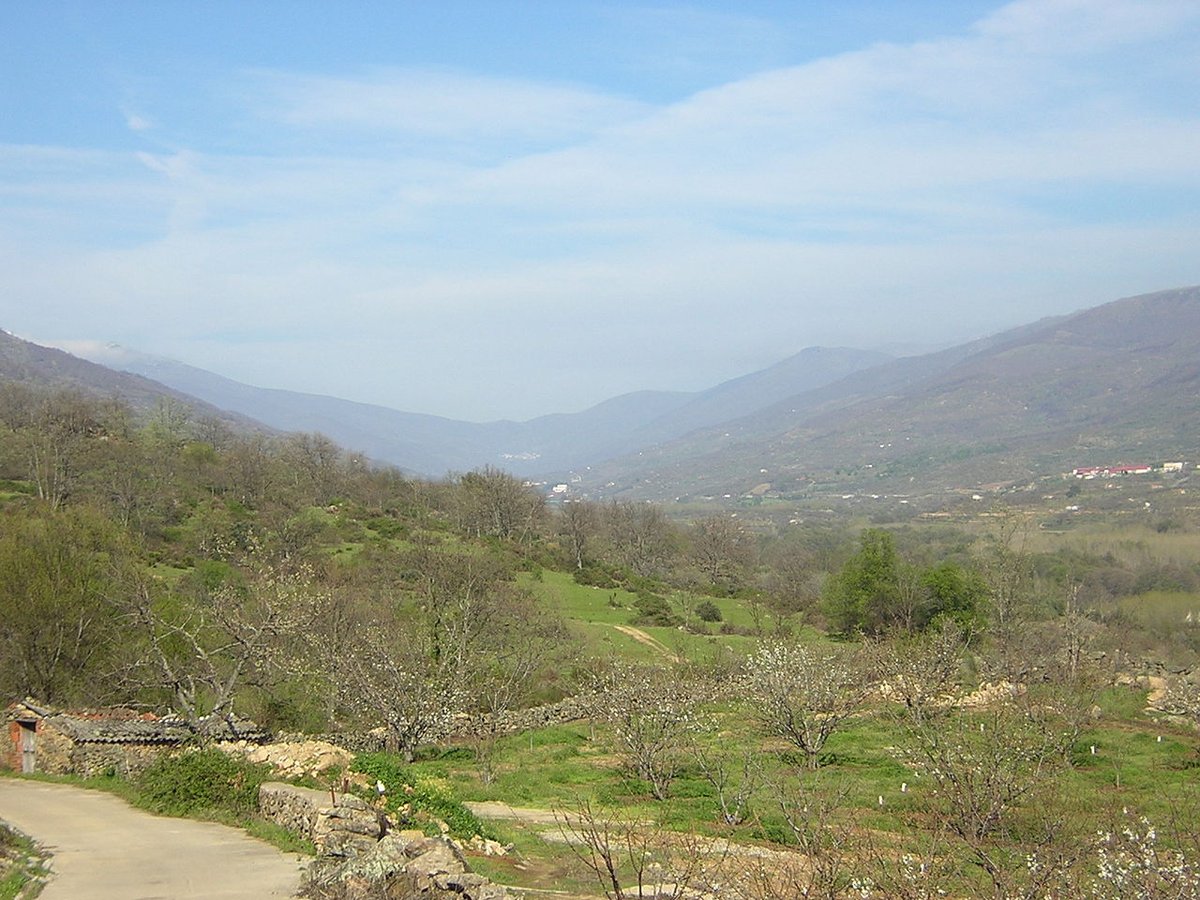
Piornal’s position above the Valle del Jerte changes the landscape completely. Down in the valley floor, cherry trees dominate. Up here, they are far less visible. Instead there are oaks, chestnut trees and extensive stretches of hillside. The terrain is uneven, cut through by gorges that descend steeply towards the valley.
Close to the village there are short paths and tracks used by locals for a walk or to head into the hills. They are not major hiking routes, more part of daily life. One of the better-known waterfalls in the area is La Chorrera de los Litueros. The path includes sections of loose stone and slopes. Nothing extreme, but proper footwear makes a difference. Smooth-soled trainers are not a good idea on this kind of ground, where loose earth and rock are common.
In open areas it is common to look up and see birds of prey circling. Vultures are the most frequent sight, taking advantage of the rising currents of air from the valley below. At times other large birds can be seen doing the same. The height and exposure give the sky a constant presence.
It is worth being clear about one point. The most famous gorges of the Jerte are not right here. To see them, you need to drive down towards other villages in the valley. Piornal offers its own elevated perspective, rather than direct access to the best-known bathing spots.
Food, Seasons and Everyday Life
Food in Piornal follows the logic of the sierra. Goat’s cheeses, cured meats and substantial dishes appear regularly on the table. When the cold sets in, migas become common. This traditional dish, made from breadcrumbs cooked with ingredients such as garlic and pork products, is typical of rural central Spain and designed to sustain people through low temperatures. In season, game also features.
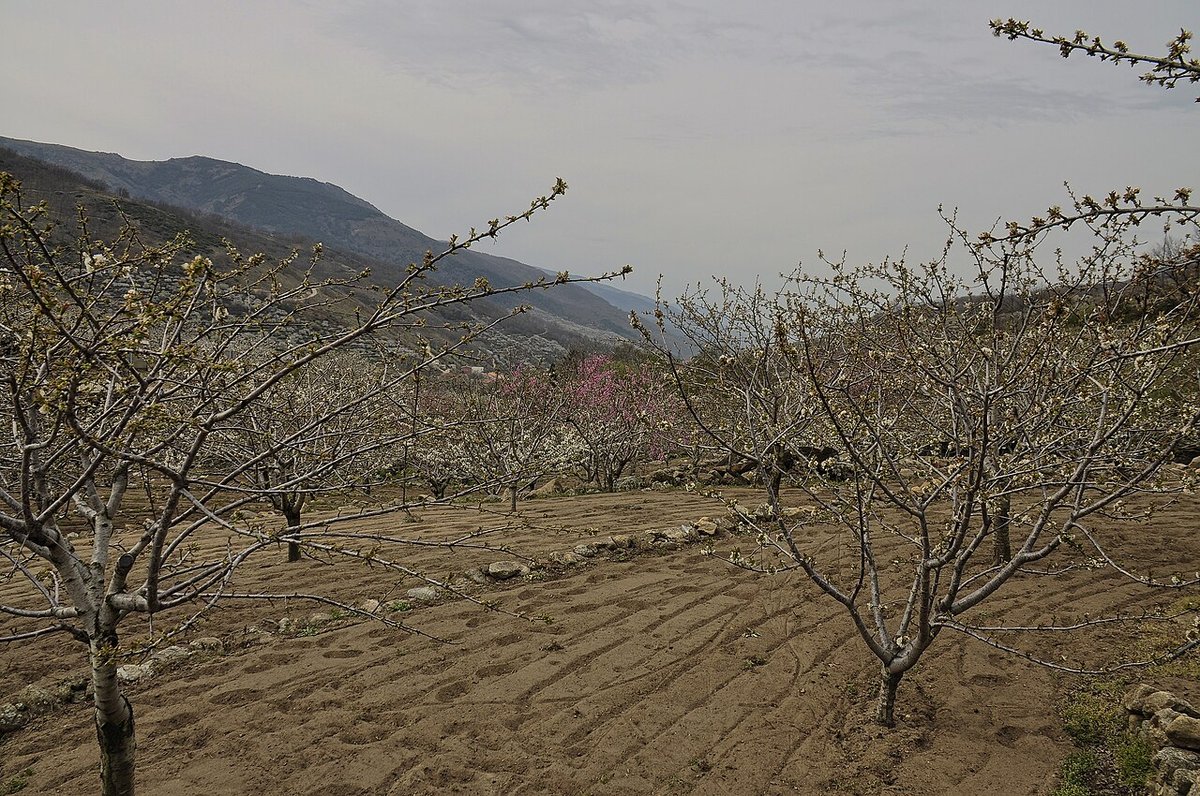
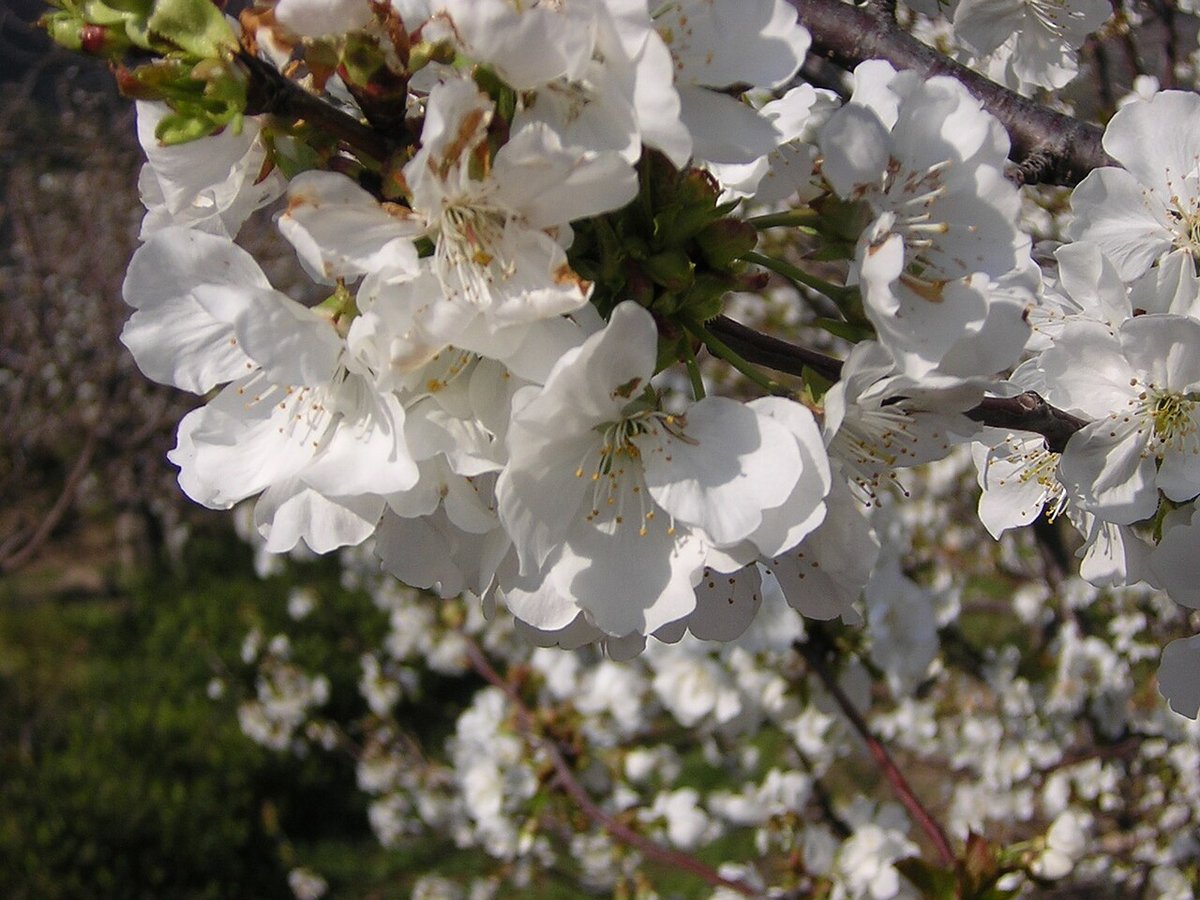
Cherries set the calendar across the whole of the Jerte. In Piornal their presence is less visible than in the villages on the valley floor, where orchards surround the streets. Even so, when harvest time arrives there is a noticeable increase in activity throughout the region.
Local festivals follow the rhythm found in many mountain villages. At the end of June, celebrations dedicated to San Juan Bautista take place. Summer generally brings more movement, as people who live elsewhere return for a time. Autumn shifts attention towards chestnuts and the hills, when the surrounding countryside once again shapes daily routines.
The altitude is always part of the equation. Even in summer, evenings cool down quickly. Anyone planning to stay out late will want an extra layer. The air feels different here than it does below in the valley.
Views From the Edge
On the edges of the village there are several points from which the entire Valle del Jerte can be seen. On clear days the view stretches far into the distance. When there is haze or mist, the valley floor almost disappears.
These viewpoints explain Piornal’s appeal more than any single building. The sensation is not of being inside the valley but above it, looking down at its orchards and roads. Weather conditions shape the experience. A clean, bright day reveals the scale of the landscape. On a hazier one, the horizon contracts and the scene becomes more muted.
Because the centre is small and can be explored quickly, many visitors treat Piornal as a stop before continuing elsewhere. An early arrival makes this easier. By mid-morning the central area has more movement and parking becomes harder. The practical approach is to come early, walk through the streets, take in the views and then decide whether to head down into the valley or remain a little longer in the sierra.
Getting There and Getting Around
From Cáceres, the usual route is to head towards Plasencia and then continue along the N‑110 following the valley. Before reaching the Puerto de Tornavacas, a turning leads up to Piornal. The last kilometres are on a narrow, winding road. Overtaking opportunities are limited.
The drive is part of the experience. It underlines Piornal’s isolation and height, and it also explains some of the practicalities once you arrive. Space is limited, streets were not designed for heavy traffic and daily life continues regardless of visitors.
Piornal does not present a long list of major sights. What it offers is altitude, granite streets, a 16th‑century church on its square and a direct relationship with the surrounding hills. The Jerte Valley may be better known, particularly for its cherries and gorges, but from up here the perspective shifts. The village looks outward over the valley rather than competing with it.
For those prepared for narrow roads, cooler evenings and uneven ground underfoot, Piornal provides a brief but distinct stop in Extremadura. Arrive early, wear suitable shoes and allow the height to set the tone.