Full Article
about La Haba
Municipality near Don Benito, surrounded by cattle-grazing dehesa and Roman archaeological remains.
Ocultar artículo Leer artículo completo
The tractors start at dawn. By the time swallows begin stitching the sky above Plaza Mayor, the rice paddies outside La Haba are already glinting like broken mirrors. This is work, not theatre—yet the sight still stops visitors in their tracks. Most are simply nipping off the EX-390 for coffee, stretching legs between Mérida and Trujillo, and they stumble on a landscape that feels half-Portuguese, half-oriental, wholly unexpected this far west.
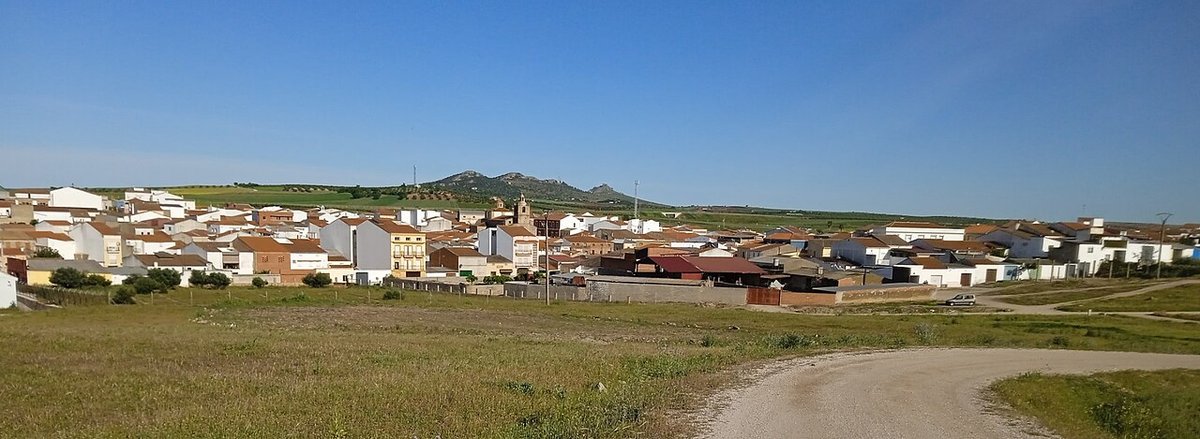
La Haba sits in the Vegas Altas, the “high meadows” of the Guadiana, 55 km east of Badajoz. The name harks back to broad-bean plots long replaced by water-seeded rice that turns the horizon silver each spring. Barely 1,500 souls live in the village itself; add scattered farmhouses and the figure climbs to just under 5,000. Enough to keep a Sunday market buzzing, not enough to keep anything open after lunch.
A Plaza Without Postcards
There is no souvenir rack in La Haba. The nearest thing to tourist tat is a rack of sun-faded overalls in the agricultural co-op. Instead, the centre offers the pleasures of a working Spanish square: stone benches warmed by winter sun, a bar that still calls itself a “cafetería” without irony, and the low murmur of men debating irrigation rotas. The Iglesia de Nuestra Señora de la Asunción peers over the rooftops like a watchful elder. Step inside and you’ll find no baroque excess, just whitewashed walls, a 16th-century baptismal font and the faint smell of beeswax. The door is usually unlocked until one o’clock; after that God, like everyone else, observes the siesta.
Walk two minutes in any direction and streets fray into country lanes. Storks nest on telegraph poles, and the smell changes from coffee grounds to damp earth. Turn left at the abandoned forge and you’re on a camino real once used by muleteers heading for Portugal; the granite setts are worn smooth as billiard cloth. Keep walking and the paddies start, rectangular ponds edged by reeds and the occasional heron posing like a garden ornament.
Rice, Ham and Market-Day Etiquette
Sunday is the only day that feels busy. Trucks from neighbouring villages roll in before nine, tailgates down to display jamón ibérico legs the colour of antique violins. A British couple recently paid €18 for a kilo of hand-carved jamón and considered it highway robbery in reverse—London prices for meat that saw acorns only. The cheese stall offers torta de La Serena, a sheep-milk round so soft it’s sold in a cardboard collar; spread it on bread with a touch of quince paste and you’ll understand why Extremadurans barely bother with butter.
The market packs up fast. By 1 pm stallholders are wrapping knives in newspaper and sweeping crumbs into carrier bags. If you arrive hungry at two, the bar on the square will still serve you a tosta de tomate y jamón, but the kitchen clicks off at the stroke of the half-hour. Everything else—pharmacy, bakery, even the petrol pump—follows suit until five. Plan accordingly, or you’ll spend the afternoon circling the plaza like a lost delivery van.
Where the Fields Become Sky
The real attraction lies outside the village. A lattice of farm tracks leads between paddies that shift colour with the agricultural calendar: chrome in March when flood-water reflects sky, emerald by June as shoots thicken, gold in September when combines lumber through. You can walk a neat 5 km loop north-west towards the Arroyo de la Calabazuela; the path is flat, unsigned and shared with the occasional tractor. Bring binoculars—egrets, glossy ibis and, during migration, squadrons of white storks use the flooded fields as a motorway service station.
Cyclists like the EX-390 itself, a road so straight locals joke it was laid by a Roman with a spirit level. Traffic is thin, shoulders generous, and the reward for a 20 km spin eastwards is the hill-top castle of Zorita, coffee €1.20 if you pronounce the “z” like a Spanish “th” and not like “Zorro”.
What to Eat When It’s Not Sunday
Weekday menus are short, seasonal and stubbornly local. Order “arroz a la habanera” and you’ll get rice simmered with pork rib and pimentón, nothing to do with Havana. Pimientos de Padrón arrive blistered and salted, a gentle game of Russian roulette for those who hit the one spicy capsule in ten. To drink, try a clara con limón—half lager, half lemonade, essentially a shandy that costs €1.80 and makes 35-degree heat feel merely ridiculous.
Sweet-toothed visitors should time their arrival for All Saints’ Day when every household bakes “huesos de santo”, marzipan fingers that mimic saintly bones. The bakery sells out by 11 am; after that you’ll need godparents in the village or a polite knock on the right door.
The Practical Bits No-One Mentions
There is no cash machine. None. The nearest ATMs are in Zorita (ten minutes by car) or Guareña (fifteen). Cards are accepted at the supermarket, but the bar, bakery and market stalls deal only in coins. Petrol is available at a single Repsol pump on the south-east exit; it closes at 9 pm and won’t reopen for early flights to Madrid. Accommodation is scarce—three modest guesthouses and a handful of village houses to rent. Book ahead; hosts don’t appreciate doorbells at siesta hour.
English is rarely spoken, yet locals remain patient with phrase-book Spanish. Download the offline Spanish dictionary in Google Translate; phone signal is reliable but data can stall between rice fields. If you must ask directions, request the “arrozales” (ah-roth-THA-less) and everyone points the same way.
When to Come, When to Skip
March–May and mid-September to October offer temperatures that won’t melt your walking boots. In April the paddies mirror sunrise like liquid mercury; by October storks wheel overhead and the smell of straw drifts across the square. July and August belong to tractors at dawn and thermometers above 40 °C. The village fiesta around 15 August provides night-time music and a procession, but also inflated prices for spare rooms in a 30-km radius. Winter is quiet, occasionally bleak, though birdlife peaks and you’ll have the plaza to yourself.
A Stop, Not a Stay
La Haba reveals its charms quickly: an hour for coffee and a circuit of the square, another hour to reach the first lagoon-like paddy and back. Treat it as a palate cleanser between Roman Mérida and conquistador Trujillo, or as a lunch halt on the long haul from Seville to Salamanca. Come expecting monuments and you’ll leave underwhelmed; come curious about rice, ham and the Spanish art of doing very little in the shade, and the village repays the detour. Just remember to fill the tank—and your wallet—before the siesta descends.