Full Article
about Valdetorres
Agricultural municipality near the Guadiana River, noted for its church and irrigated surroundings.
Ocultar artículo Leer artículo completo
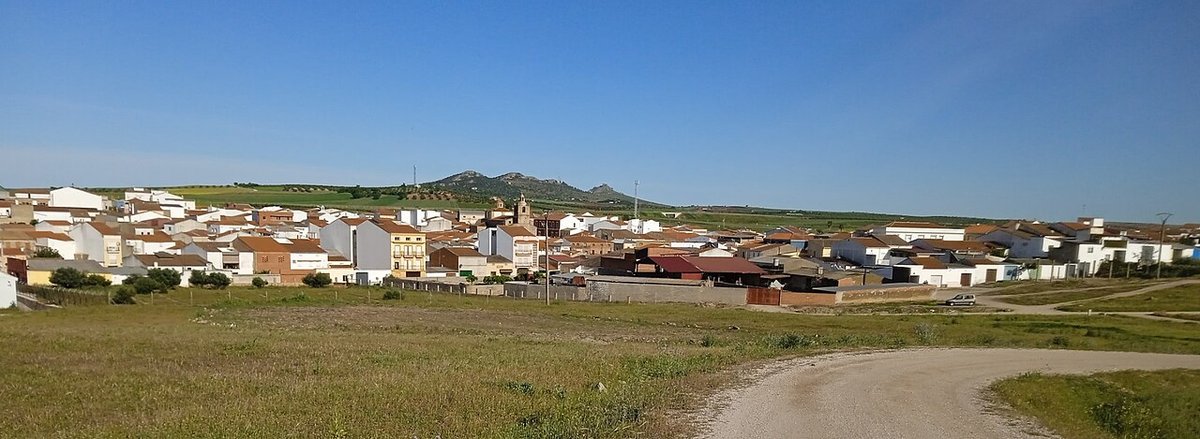
The irrigation pivots start turning at 05:30, long before the bar lights flick on. From the single traffic roundabout you can hear the mechanical hiss carried across flat fields that stretch, ruler-straight, to every horizon. This is Valdetorres, a town of 5,000 that sits only 239 m above sea-level yet feels higher: the surrounding Vegas Altas are so level that the whitewashed campanile of Nuestra Señora de la Asunción appears to float like a ship’s mast on a green ocean of rice, maize and tomato plots.
That illusion of altitude is useful. Come July, when midday temperatures regularly top 40 °C, the slight rise on which the old houses cluster catches whatever breeze the Guadiana River can push inland. In January the same flatness works against it: cold air pools, frost lingers on the steel tractor sheds, and the town can feel several degrees cooler than nearby Mérida sixty kilometres away. Pack layers if visiting between November and March; Extremaduran cold is sharper than the latitude suggests.
Most travellers arrive on the EX-390, a road so unbending that lorry drivers use it to test cruise control. There is no railway; the nearest bus stop is on the Madrid–Mérida line at Don Benito, twenty-five minutes away by taxi (€35 pre-booked, €40 hailed). Having a car matters if you intend to explore the vegas, yet the historic core itself is a twenty-minute stroll end to end. Park by the 1950s market hall—always half empty—and walk.
A grid drawn by water, not planners
Unlike hill towns that spilled chaotically down slopes, Valdetorres grew to the rhythm of irrigation channels. The main streets—Calle Virgen de la Asunción, Calle Real—run parallel to the old acequias, which is why the town feels so geometric after the medieval lanes of Cáceres or Trujillo. Stone bridges are unnecessary here; instead you step over modest concrete sluice gates still painted with fading Franco-era ministry logos.
The parish church, started in the late 1400s, is wider than it is long because the congregation was expected to stand: farmers arrived muddy from the fields and the bishop preferred them not to linger. Look up inside and you will notice the timber roof beams are peppered with small terracotta plugs—each one marks where a family paid for its own pew in the 1890s, a minor rebellion against standing norms. The tower houses only one bell large enough to carry across the crops; the others were melted down in 1938 to make railway parts. Ask the sacristan (keys kept in the bakery opposite) and he will show you the hairline crack caused when the remaining bell was hurriedly re-hung.
Outside, Plaza de España functions less as a square than as an outdoor living room. Metal chairs are chained to plane trees so no one steals them, yet everyone knows which chair belongs to whom. Children race three-wheeled scooters while grandparents debate tomato prices; by 22:00 the scooters are replaced with gin bottles and the debate switches to football. The arcades are shallow because merchants once needed to gauge sunset by eye—no one trusted the town clock, which still loses seven minutes a day.
Eating what the pivot irrigates
If you have eaten tomatoes in a London tapas bar between February and April, odds are they left Valdetorres in a refrigerated lorry the previous night. The local cooperative supplies 12 % of the UK’s winter tomato market, yet in town the same fruit turns up simply: pan de pueblo toasted, rubbed with garlic, topped with grated tomato, olive oil and a pinch of coarse salt. Order it in Bar Manolo (opens 06:00 for field workers; closes 15:00 sharp) and it costs €2.20 with coffee.
Meat follows the agricultural calendar. In late spring, year-old lambs that have grazed the stubble are turned into cordero segureño, roasted whole in wood-fired bread ovens on the outskirts. Restaurants only advertise it on handwritten paper taped to the door—if the paper is gone, so is the lamb. Cabrito (kid goat) appears after the September grape harvest; both dishes arrive as sharing plates, no garnish beyond roast potatoes and the cooking juices. Vegetarians face slim pickings: ask for "migas de pastor sin panceta" and you will get fried breadcrumbs with grapes, decent but hardly balanced.
Water determines dessert. Rice pudding is baked slowly overnight in the residual heat of the bread ovens, acquiring a caramelised skin that locals prize more than the creamy centre. Bakeries sell it in terracotta ramekins for €3; return the dish or they keep your €1 deposit. Arroz con leche tastes better here than in Madrid restaurants precisely because the grains are irrigated varieties bred for paella—starchier, more forgiving.
Borrowing a bike, dodging a sprinkler
The tourist office (Calle Real 23, opens Tuesday and Thursday mornings only) will lend you a town bike for free if you leave ID. A thirty-kilometre loop heads south along the Guadiana’s floodbank, passing heron hides built by local schoolchildren from scrap pallets. The outward leg is easy; coming back the prevailing wind can reduce speed to walking pace—start early to avoid both the breeze and the midday irrigation curtains that switch on automatically and drench the path.
Between August and October rice fields are flooded ankle-deep, reflecting sky and turning the landscape into a mirror that breaks whenever an egret lands. Photographers gather for sunrise, yet the same water attracts mosquitoes: repellent is non-negotiable. Winter walks are quieter but muddy; the clay soil sticks to boots like wet cement and the town’s only pressure hose is behind the municipal garage—permission required from the janitor whose siesta lasts from 13:00 to 16:00.
Fiestas that run on tractor fuel
The mid-August feria begins with a procession of farm machinery: John Deeres polished for the occasion crawl through the streets, stereos blasting flamenco remixes at 120 dB. Each driver tosses hard-boiled sweets to children; by the time the last combine reaches the fairground the gutter is ankle-deep in wrappers. Evening entertainment is surprisingly high-budget—last year the town spent €40,000 on a Malaga cover band—because tomato profits underwrite the council budget. Book accommodation early: the single three-star hotel sells out six months ahead, and nearest alternatives are fifteen kilometres away in Villanueva. Many visitors sleep in motorhomes parked by the sports pavilion; the town provides free grey-water disposal as encouragement.
September’s harvest fiesta is smaller, aimed at locals. Visitors are welcome but there is no programme in English; events are announced by someone driving round with a loudhailer at 08:00. If you hear "concurso de desgranado" it means a sweet-corn-throwing contest—turn up in old clothes. First prize is a ham; runners-up get a crate of beer.
What the brochures leave out
Come July the mosquito-borne West Nile virus circulates in the rice belt; cases are rare but the town hall posts nightly alerts on its website. Wear long sleeves at dusk and keep DEET handy. Tap water is safe but carries a mineral after-taste; locals drink bottled, available at every corner shop for 45 cents a litre.
There is no cash machine inside the historic centre; the sole ATM stands beside a petrol station on the ring road and runs out of money on Fridays when field workers are paid. Bring euros or expect a twenty-minute walk under a sun that gives no quarter.
Finally, accept the silence. After the irrigation rigs shut down at sunset there is no traffic hum, no distant motorway, only the occasional guard-dog warning off a fox. For visitors accustomed to the baseline thrum of British towns the quiet can feel unnerving—then addictive. Bring a book, not headphones; the town’s soundtrack is the page you turn while waiting for rice pudding skin to cool.