Full Article
about Alagón del Río
A young, dynamic settlement on the fertile floodplain of the Alagón river; planned architecture and green spaces.
Hide article Read full article
First impressions of the Vegas del Alagón
Early in the day, while a trace of moisture still hangs in the air, Alagón del Río introduces itself with a soft, steady sound. It comes from just beyond the village: water moving slowly along the banks of the Alagón. The road approaches through open country, where farmland stretches out with scattered holm oaks. Then the houses appear quite suddenly, low and aligned, their pale façades reflecting the flat light typical of these fertile plains.
Alagón del Río sits in the comarca of Vegas del Alagón at around 260 metres above sea level. The land feels wide and agricultural, and the view often travels a long way without interruption. Fields of cereal dominate, broken by occasional rows of olive trees and patches of dehesa, the traditional pastureland dotted with oaks that shifts in colour as the seasons change. On clear days, which are common here, the horizon stays clean and uninterrupted, with no major relief to block it.
A small village of straight streets
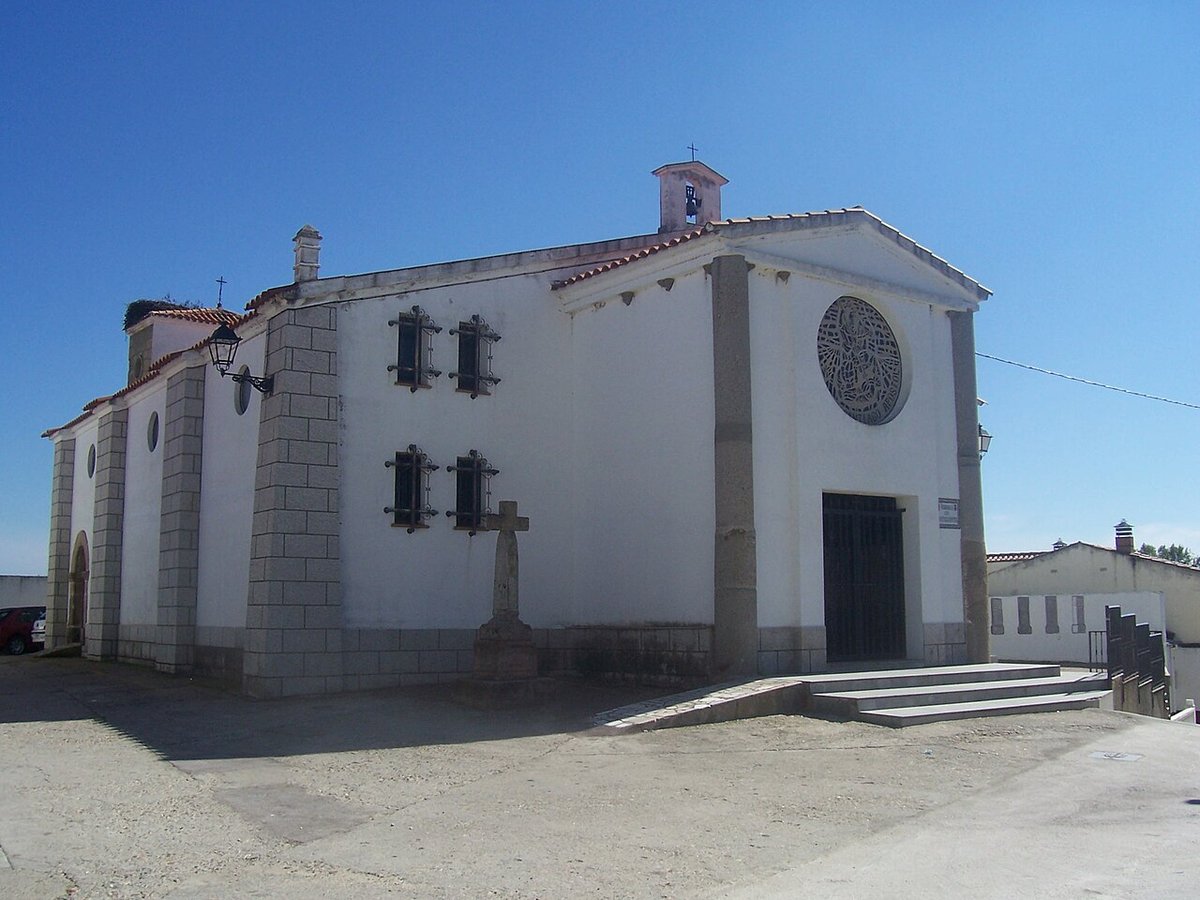
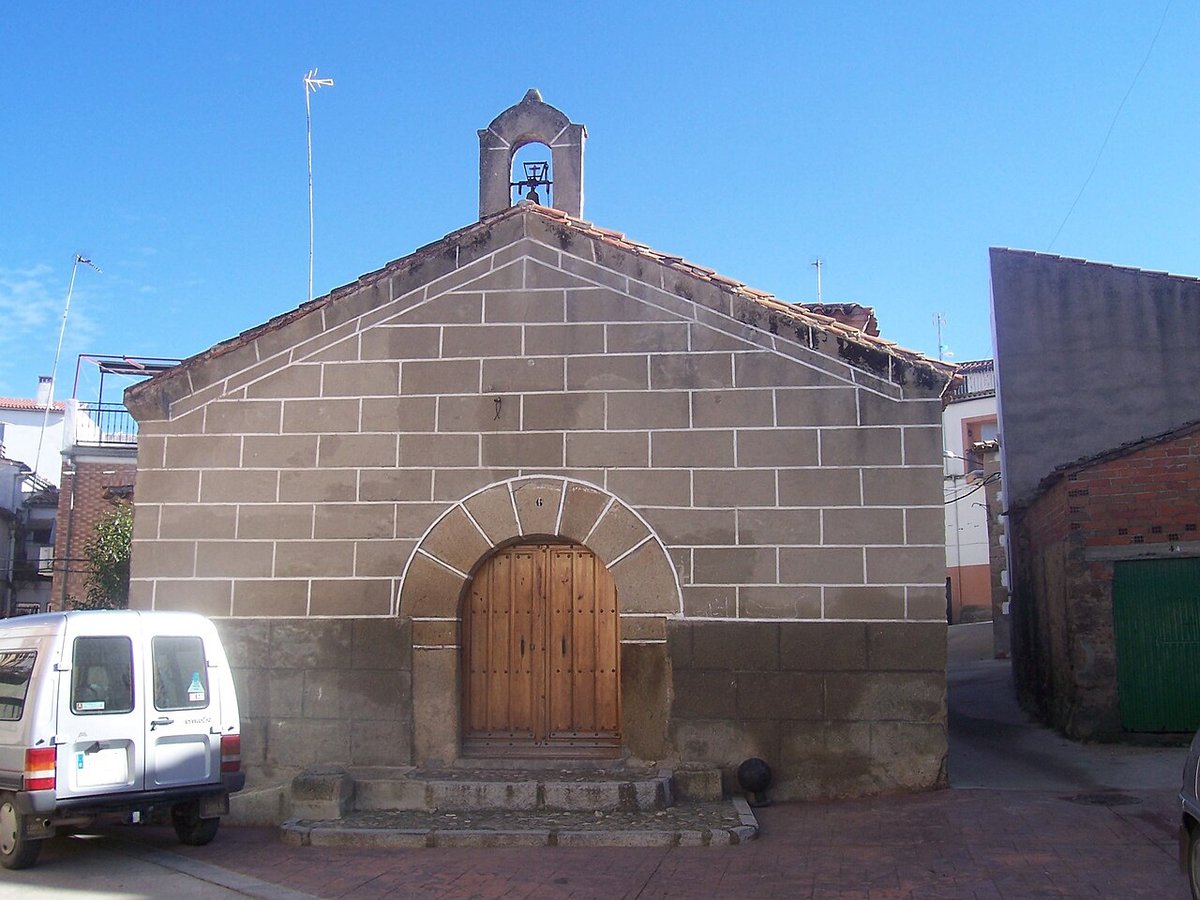
The centre revolves around the church of San Juan Bautista. Its bell tower is simple, more a point of reference than a statement, and it helps to orient yourself when arriving on foot from any direction. The layout is straightforward. Streets run straight and are easy to follow without checking a map. In ten or fifteen minutes, it is possible to walk across the entire village.
The houses keep a consistent scale. Most have one or two storeys, smooth façades and iron window grilles. Many include interior patios, where a fig tree or a lemon tree sometimes appears above the walls. At certain doorways, low benches remain in place. In the late afternoon, when the heat begins to ease, neighbours sit outside and talk.
Mid-morning quiet is very real here. A single car may pass slowly, or a metal shutter might rattle open. Otherwise, the stillness holds.
Paths towards the Alagón river
The Alagón river runs close to the village and shapes much of the surrounding landscape. It is not always visible from the streets, but a short walk out towards the fields is enough to notice the change. The air becomes more humid, and vegetation thickens along the edges.
Spring usually brings higher water levels. The banks turn green, and the river feels more present in the landscape. In summer, the level drops and smooth stones emerge, where birds pause. With a little patience, herons can often be spotted, or a quick splash might be heard from something moving through the reeds.
There are no marked routes or tourist signposts. Instead, there are wide dirt tracks used by locals to reach their land or to walk in the evening. They are easy to follow and offer a simple way to approach the vegas, the fertile lowlands shaped by the river.
Small sounds accompany the walk. Dry grass brushes against itself, a partridge bursts into flight without warning, and somewhere in the distance a tractor continues its work.
Agriculture and everyday rhythm
Life in Alagón del Río remains closely tied to the land. Around the village, cereal fields alternate with small vegetable plots and areas of dehesa where old holm oaks still stand with broad crowns. The seasons leave clear traces. In autumn, the smell shifts towards damp earth, fallen leaves and the faint smoke from pruning.
Occasionally, an open patio lets out the scent of cured meats or freshly baked bread. These are not staged scenes or attractions designed for visitors. They belong to daily life, part of a routine that continues at its own pace.
There are no large monuments or spaces arranged as highlights. Interest lies in smaller details. An irrigation channel runs beside a path. A group of sheep moves slowly across stubble. A long conversation unfolds in the shade of the square. These moments define the place more than any landmark.
When to come and how to experience it
Spring is often the most rewarding time to see the area at its most active. The river carries more water, and the fields turn green. Summer brings strong heat in the middle of the day, so it makes sense to move early or wait until evening.
Parking in the village is generally straightforward, and everything can be explored on foot in a short time. The pace here suits a slower approach. A walk through the streets leads naturally out towards the surrounding tracks, and that is where the character of Alagón del Río becomes clearest. Open land, a wide horizon, and a rhythm shaped by agriculture define the experience.