Full Article
about Casas de Don Gómez
A farming village on the Alagón plain; quiet and surrounded by crops
Hide article Read full article
A village that keeps its own time
Some places feel like kitchen clocks no one has adjusted in years. They still mark the time, just in their own way, without hurry. Casas de Don Gómez has something of that. You arrive along a local road, leave the car wherever there is space, and within minutes the rhythm of the place becomes clear.
Set in the Vegas del Alagón, Casas de Don Gómez has fewer than four hundred residents. It shows. There is no sense of a tourist destination here, nothing arranged for visitors. It feels more like a place where things have carried on unchanged simply because there has never been a reason to alter them.
The streets are simple, some still dirt, others worn asphalt. Houses are built from masonry, many whitewashed, with yards behind and small plots of land around them. Anyone who has spent time in a grandparent’s village, or that of a friend, will recognise the scene: doors left ajar, a radio playing somewhere inside, a dog lifting its head as you pass.
All around stretches the fertile plain of the river Alagón. Poplars line parts of it, fields are divided into plots, and paths wind between crops. It is not a dramatic landscape, but it works quietly as a source of food. Tomatoes in summer, peppers, pumpkins, whatever the season allows. Like opening the fridge of someone who grows their own produce: there is not a huge variety, but what is there is real.
Small stories in a place without rush
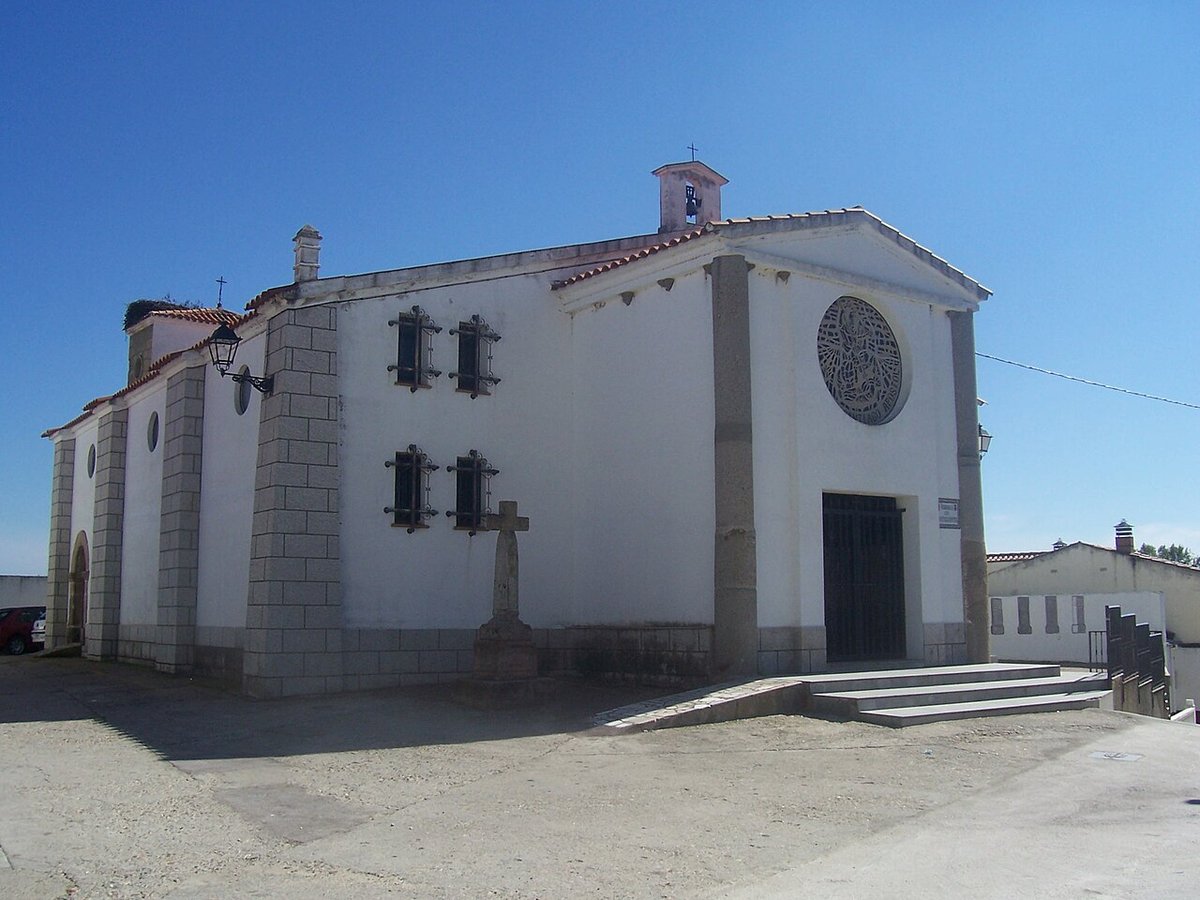
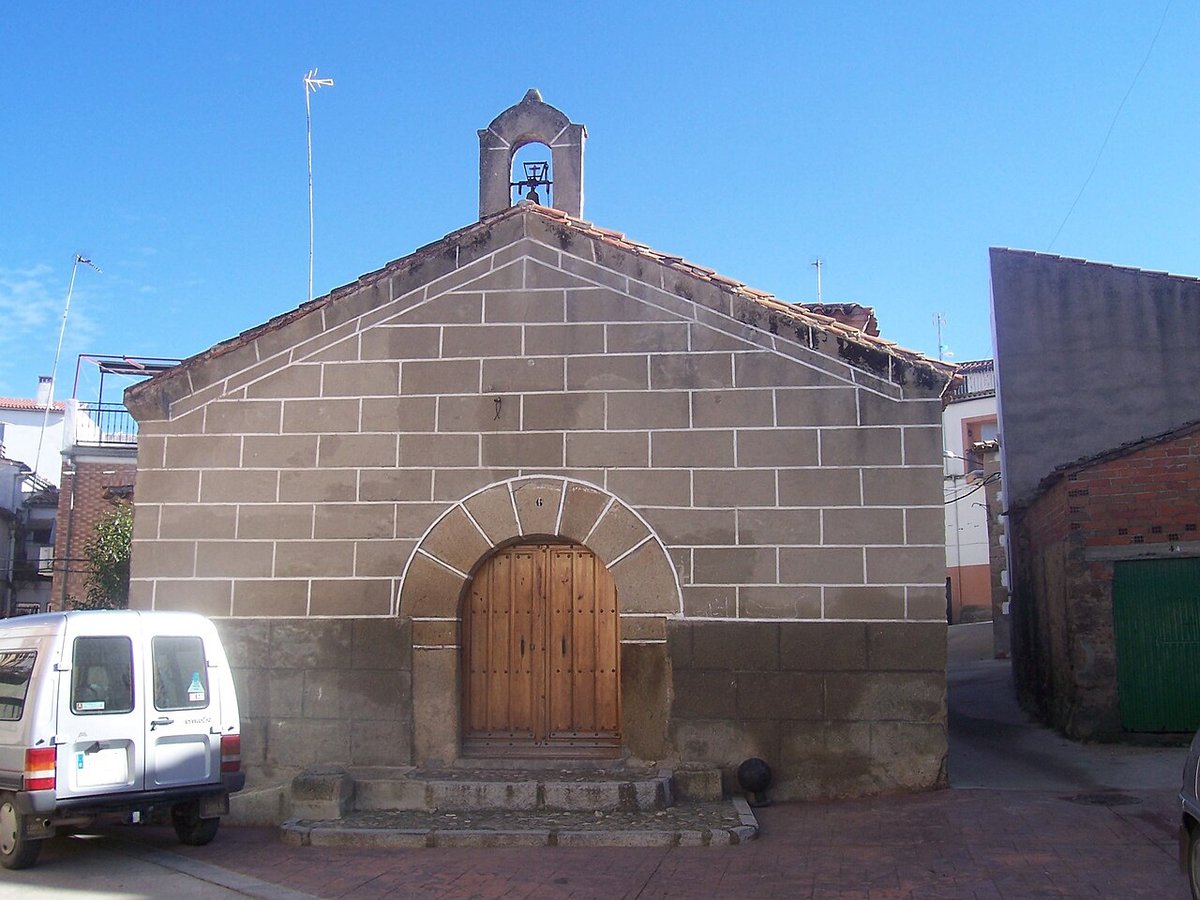
At the centre stands the church of Santa María de los Ángeles. It is easy to find, partly because the village is small and most routes lead past it sooner or later. The building is simple, made of granite stone, with a bell set above the roofline. It is not monumental. It feels closer to a rural chapel, practical and understated, built for everyday use rather than display.
The surrounding houses mix brick, lime and iron bars on the windows. Some have small balconies, others open onto courtyards where fig trees or grapevines provide dense shade in summer. Walking through the streets reveals ordinary scenes: someone watering plants, a cat crossing the road, tools resting against a wall. Small details that, together, explain how life is lived here.
There is also the occasional public washhouse. Today it looks almost like a museum piece, though not so long ago it served as a social meeting point. It was the rural equivalent of waiting in a queue at the supermarket, a place where conversations unfolded and news travelled.
The Alagón river nearby
A short distance away flows the Alagón. It is not the kind of river that draws attention from afar, but it does what it needs to do. In summer, some people come with a fishing rod, more for passing the time than anything else. In winter, the mood shifts. Bare branches, running water and a noticeable quiet take over.
Along the banks are small clusters of trees where it is possible to spot water birds if you stay still for a while. There are no large viewing platforms or marked routes. It is closer to sitting on a park bench and gradually noticing what usually goes unseen.
The surrounding land also features old holm oaks and patches of scrub. These are clear signs of how the land has been used over time. Sheep can still be seen now and then, moving slowly across the fields, as if both landscape and animals have been repeating the same pattern for generations.
Getting around without overthinking it
Casas de Don Gómez is best understood on foot. It really is that simple. A short walk takes in the main streets and gives a clear sense of the place.
There is no need to plan anything in detail. It feels more like an after-lunch stroll than a structured route. Walking down towards the paths that lead into the plain, returning to the village centre, pausing to look at an older façade, that is the kind of visit that suits the place.
For those who enjoy photography, early morning light works well. It falls gently over the cereal fields, creating the soft tones typical of these fertile plains before the heat builds.
When the plain changes
Spring brings movement to the landscape. Flowers appear along the edges of paths and some wild fruit trees begin to mark the shift in season. It is not a striking display, but there is a sense that everything has been freshly washed.
Autumn introduces more copper tones across the vega, just before common local crops such as maize or beet are harvested. It is a calm time for walking.
Summer is different. The heat settles heavily from midday onwards. Any walk is better done early in the day. In winter, the days are shorter and the village becomes even quieter.
What to expect, and what not to
It helps to arrive with a clear idea. Casas de Don Gómez does not function like villages prepared to receive visitors every weekend. Services are limited, and there is no tourist infrastructure designed for a full day out.
It is, quite simply, a place where people live. A place where it is still easy to see who works the land, who tends animals, and who has spent a lifetime looking out over the same fields.
If you spend a few hours here, walk along Calle Mayor