Full Article
about Coria
Ancient Roman and episcopal city with intact walls and a cathedral overlooking the Alagón river
Hide article Read full article
A town with its own sense of humour
Some places feel like a quiet joke history never quite explained. Coria is one of them. It has a medieval bridge with no river, a pork dish called “en cueros” (literally “naked”), and even its nickname comes from a court jester. If someone mentions the “bobos de Coria”, it is not an insult. The phrase traces back to Juan de Calabazas, a jester to Philip IV who is said to have been born here.
That sets the tone. Coria does not try too hard to impress, yet it leaves you with stories that stick.
The bridge that lost its river
Arriving via the EX‑390, the first thing that stands out is the wall enclosing the old town. It is the kind of entrance that naturally slows you down. You expect another historic centre, neatly preserved, familiar in layout. Then the bridge appears.
It is long, built of stone, with many arches, traditionally said to be sixteen, and completely dry. The river Alagón changed course centuries ago after a major flood, leaving the structure stranded in open land. It looks like a stage after the main actor has disappeared.
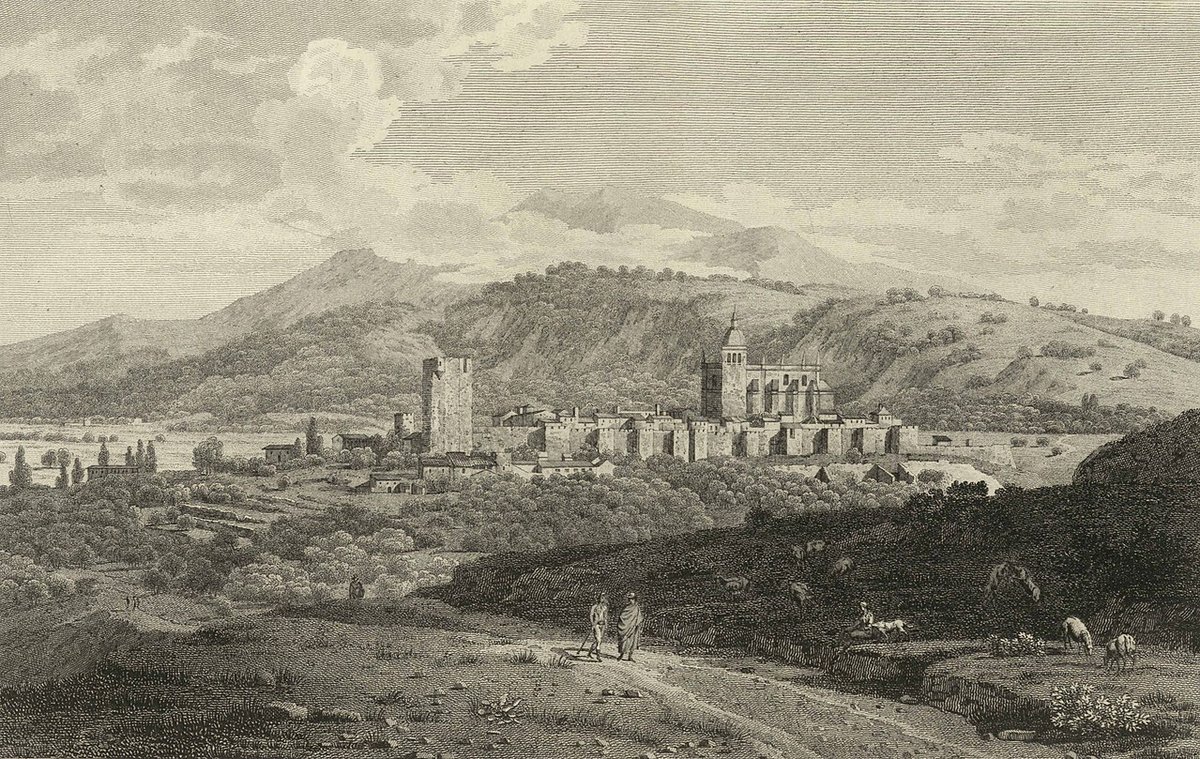
Today it works almost like an improvised viewpoint. A walk along the walled enclosure, which runs for roughly a kilometre and a half, reveals how the old town gathers around the cathedral. The streets rise and fall without much apparent logic, houses packed close together, all watched over by the tower.
That tower is wide and solid. Locals call it “la rechoncha”, meaning something like “the chubby one”. Standing in front of it, the nickname makes perfect sense.
From Vettones to Caurium
Coria has been inhabited for a very long time. Before the Romans, the Vettones were already settled here. Later came the Roman city of Caurium, followed by the Muslim period under the name Medina Cauria. In the 12th century, the Christian conquest reshaped the town once again.
These layers are visible inside the cathedral. Construction began in the late 15th century and continued over generations, which was common for buildings of this scale. Inside, archaeological remains and Roman mosaics found in the area are preserved. They hint at what lies beneath the current stonework.
The tower seen today is not exactly the original one. The Lisbon earthquake of the 18th century affected much of the western Iberian Peninsula, and Coria suffered damage too. The tower was rebuilt, which explains its robust, almost oversized appearance.
When pork takes centre stage
Food in Coria leans heavily towards pork, with little attempt to disguise it. The best-known tapa is “coria en cueros”: pieces of pork mask or snout fried until crisp. It is greasy, no question, but the kind that disappears from the plate quickly.
There is also a quieter, sweeter side. At the Franciscan convent of Madre de Dios, traditional pastries are made and usually sold on site. Expect classic flavours, with almond and sugar doing most of the work.
Across the wider area, Torta del Casar is a regular presence. This creamy sheep’s cheese is so soft it is often eaten with a spoon. It is neither light nor subtle, but it forms part of Extremadura’s culinary identity and appears on many tables.
In nearby villages, another dish sometimes shows up: mojo de peces. It is a fish stew with peppers and spices, quite hearty in style. It is not always available, but when it is, it tends to catch attention.
Sanjuanes: a different pace
Around the time of San Juan, Coria shifts completely. The Sanjuanes festivities revolve around bulls and have been celebrated for generations. For several days, there are bull runs and related events within the old town, and the streets fill with people.
It is not a quiet festival or one designed for distant observation. The atmosphere is intense, loud and strongly local. Some visitors find it striking, others take longer to adjust. Either way, it offers a clear sense of how traditions are lived here.
At other times of year, the town organises tapas routes and food-related events connected to the “en cueros” dish, although the exact timing can vary.
A straightforward day out
Coria works well as a one-day visit. It is not the kind of place that demands several days unless the plan is to take things very slowly.
A good starting point is the walled enclosure and the cathedral. The walk along the walls is not especially long, though the Extremadura sun can make it feel longer if you go at midday in summer.
Afterwards, the area around the Alagón offers space to stretch your legs. There are paths that follow the river, and some extend towards the sanctuary of Argeme or link with longer routes across the region. How far you go depends on how much walking you feel like doing.
The former Cárcel Real building now houses a small municipal museum. It is not large, but it helps round out the visit by giving context to the town’s past.
The short version
Coria feels slightly unusual in the best way. A bridge without water, a tower with a nickname, a history that shows through in fragments rather than grand statements. It is easy to explore, easy to understand, and just different enough to stay in mind after you leave.