Full Article
about Guijo de Galisteo
Municipality made up of several hamlets with traditional architecture and dehesa surroundings.
Hide article Read full article
An afternoon that settles over the square
At around five in the afternoon, when the heat begins to ease, the main square of Guijo de Galisteo seems to pause. The light drops low and yellow between whitewashed façades, catches on iron window grilles and lingers on the stone of the doorways. A car passes slowly, someone crosses the square speaking quietly.
With just over 1,400 residents, this village in the north of Cáceres moves at a pace that doesn’t need dressing up. Streets are short, conversations take their time, and now and then a shutter rattles open somewhere nearby.
The church and the streets that circle it
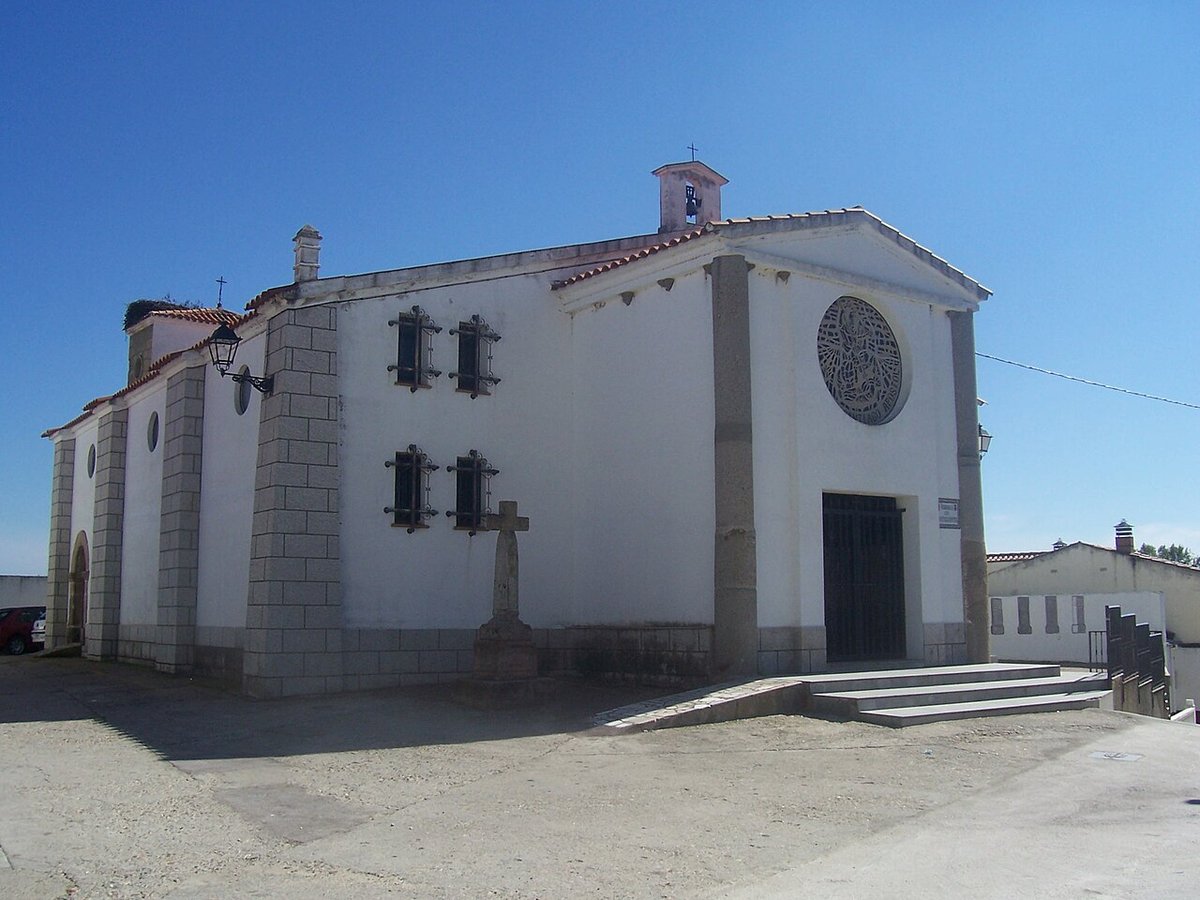
The parish church of San Juan Bautista is the main reference point. It is usually dated to the 16th century, and its square tower is visible from almost anywhere in the village, helping with orientation when wandering through the streets that branch out from the square.
Inside, the building is restrained. Pale walls, an altarpiece without excess, and a handful of old religious images that have been there longer than most people can remember. At certain hours, when light filters through the high windows, the interior falls into half-shadow and the silence feels heavier than usual.
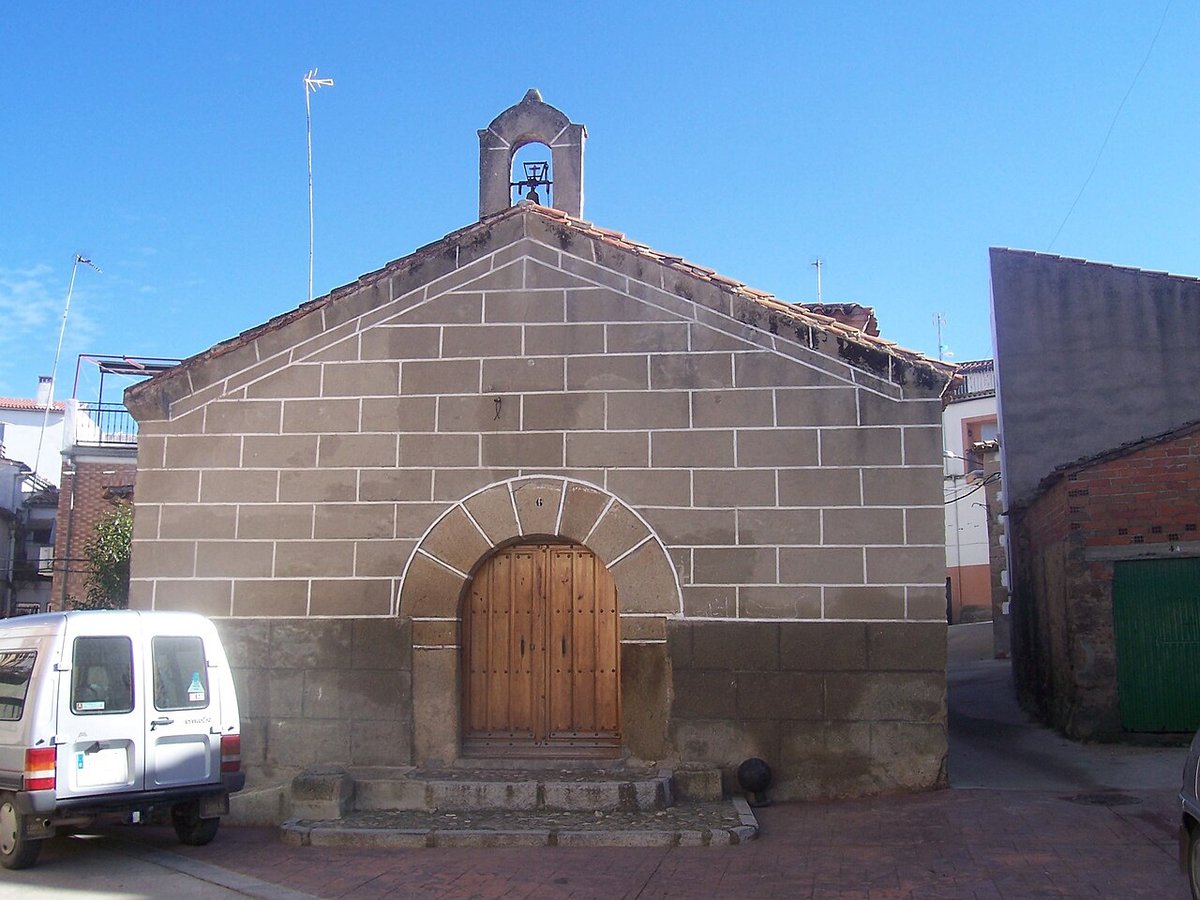
Around the church stand several older houses with carved coats of arms above their doors. They do not immediately draw attention, but a closer look reveals worn stone frames, balconies with thick ironwork and dark wooden doors that have endured many summers and winters.
These are lived-in homes rather than places arranged for display. Some balconies still hold plant pots, and washing lines stretch across interior courtyards.
Where the village gives way to open land
It takes only a few minutes on foot for the village to thin out and the open countryside of the Vegas del Alagón to begin. The land here is flat and expansive. Long plots stretch out beside straight, pale dirt tracks, with the occasional tree offering shade in the late afternoon.
During the agricultural season, tractors move steadily through fields of cereal or maize. At other times, the landscape grows almost still, with low grass shifting in the wind and the dry scent of earth rising when the sun is strong.
The Alagón river lies relatively close, and in some areas the moisture in the ground can be felt in the air, especially at dawn.
For those who feel like walking, several rural paths lead out from the village into farmland and dehesas, the traditional pastureland dotted with trees typical of this part of Spain. These are not always marked routes, but they are used daily by local residents and are generally easy to follow. One of the customary walks heads towards the dehesa boyal, the communal grazing land.
Food shaped by the land
Life here remains closely tied to the countryside, and that carries through to the table. In local bars, the dishes are the kind eaten as part of everyday life: migas with paprika, slow-cooked lamb or beef stews, and cured meats produced in the area.
Sweets appear depending on the season. In winter, perrunillas, a traditional biscuit, are common. During celebrations or family gatherings, it is still possible to find flores fritas, delicate fried pastries, or similar homemade treats.
There is no dining scene designed to attract visitors from outside. Cooking follows what has always been prepared, without adaptation or display.
Festivals and the rhythm of the year
The main festivities revolve around San Juan Bautista. At that time, the pace of the village shifts noticeably, with processions, gatherings in the streets and families returning even if they now live elsewhere.
In August, many residents who work in other cities come back. Nights stretch longer, music can be heard in the square, and the village feels slightly larger than usual.
Holy Week, or Semana Santa, is observed more quietly than in other parts of Extremadura. Processions tend to be simple, with a more subdued atmosphere.
In autumn, the traditional matanza del cerdo, the home-based slaughter and preparation of pork, continues within families. It is no longer something public or visible to passers-by, but it remains present in many households and in the cured meats that appear during winter.
A short walk through the centre
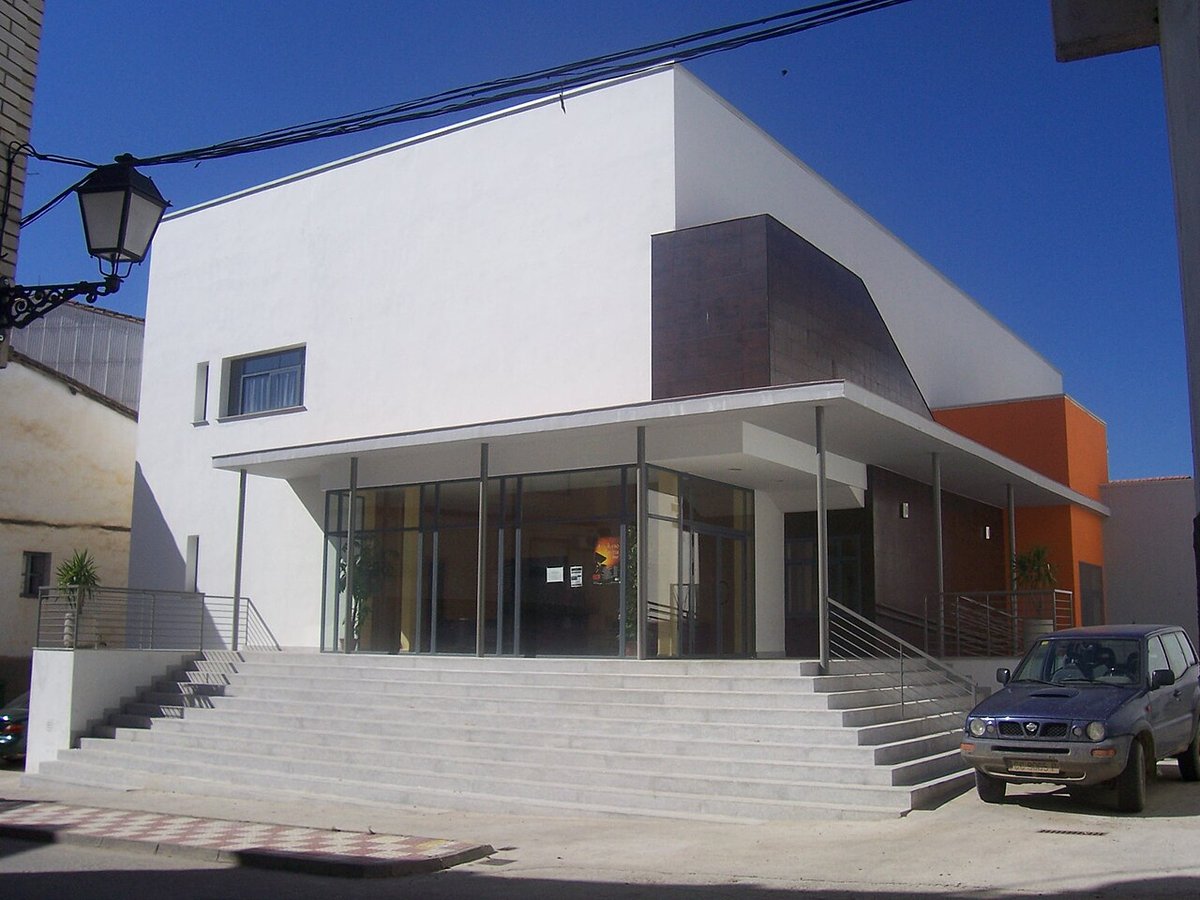
With limited time, a simple wander through the centre is enough. Several narrow streets lead out from the square, revealing older houses, a few municipal stone buildings and corners where the whitewash of façades stands out sharply against the clear summer sky.
In less than an hour, most of the village can be covered on foot. From there, if the mood takes you, the best option is to follow one of the paths leading out into the countryside and leave the village behind.
When to come
Spring and autumn are usually the most comfortable times to walk around Guijo de Galisteo. The surrounding fields change colour, and temperatures make it easy to move at an unhurried pace.
Summer brings intense heat during the middle of the day, so it makes more sense to be out early or later in the afternoon. In winter, night falls quickly and street activity drops off.