Full Article
about Huélaga
Quiet, family-oriented village on the floodplain.
Hide article Read full article
A Different Rhythm in Huélaga
There are places where time seems to follow its own pattern. Not slower, just slightly out of sync with everything else. That feeling appears on arriving in Huélaga, a small village in the Vegas del Alagón, in the province of Cáceres.
With just over 200 residents, Huélaga is closely tied to the land. There are no big attractions or headline sights. You arrive, park, take a few steps, and quickly understand what kind of place this is.
It does not try to impress. It simply carries on as it always has.
A Village That Keeps Things Simple
The first thing that stands out in Huélaga is the quiet. Not the kind of silence you find in tourist spots out of season, but the everyday quiet of a place where people are busy with their own routines.
The streets are straightforward. Some are paved, others still earth. Whitewashed walls line the way, with wooden gates and the occasional tractor moving slowly past. Birds provide most of the background noise.
With around 203 inhabitants, the village functions much like others in this part of Extremadura. Agriculture is central, neighbours know each other by name, and many houses have stayed within the same families for generations.
Nothing feels arranged for visitors. What you see is simply daily life.
The Heart of the Village
Huélaga’s centre is compact and easy to grasp. A few streets form the core, especially calle Mayor and calle de la Iglesia, where most of the activity is concentrated. There is no need for a map. Within ten minutes, the layout makes sense.
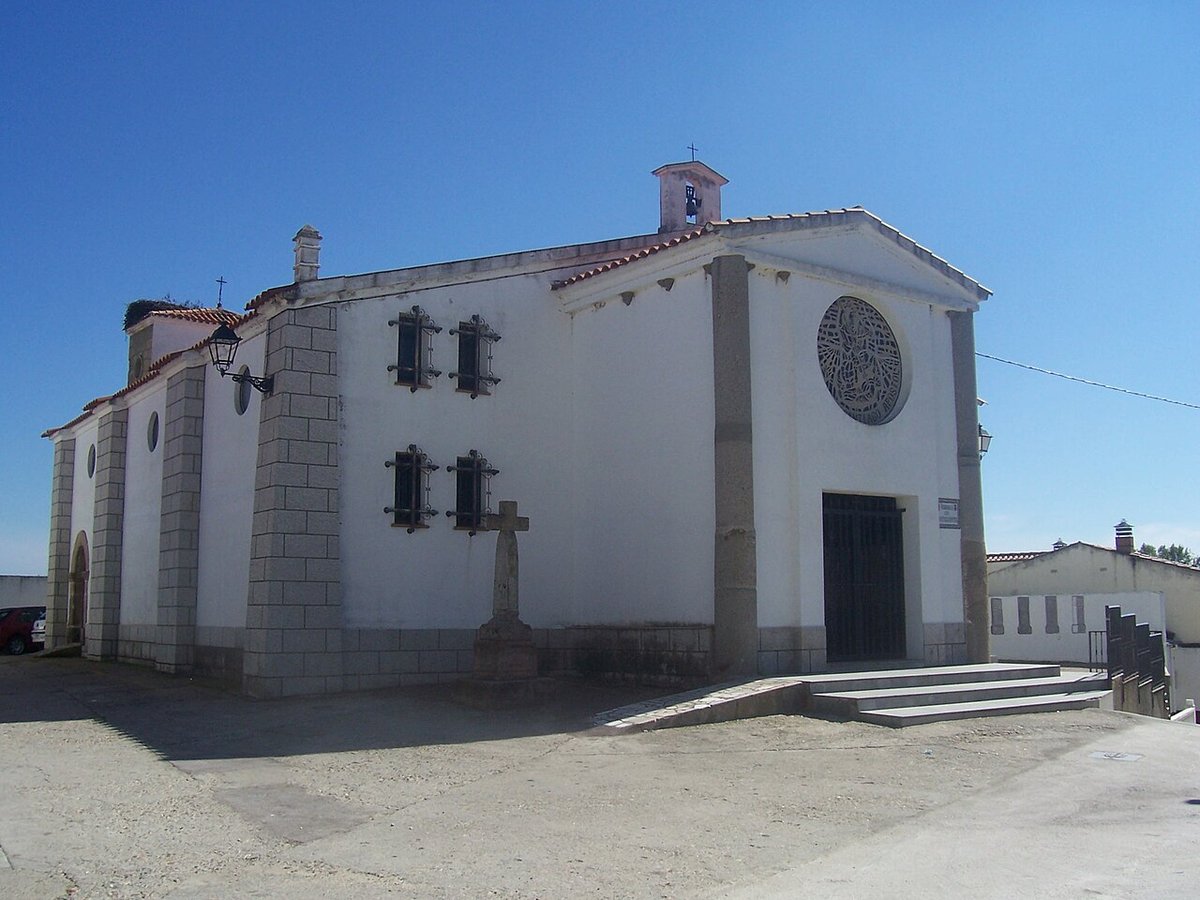
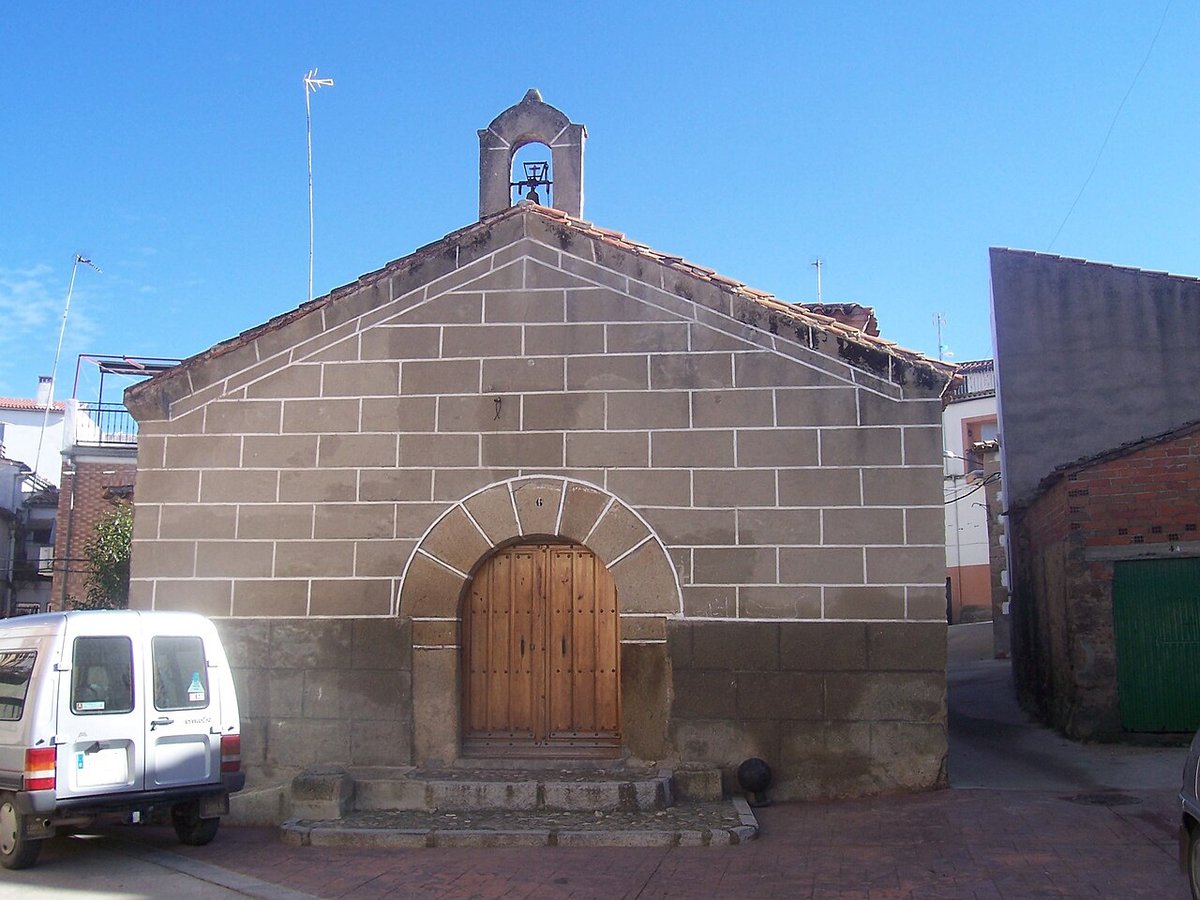
At the centre stands the parish church, dedicated to the Assumption. It is a modest building, with a simple façade and a small bell tower. Decoration is minimal. It feels built to last rather than to attract attention.
From here, paths lead out towards the edges of the village. The transition is quick. Corrals, vegetable plots and olive groves begin almost immediately, marking the shift from village to countryside.
The Landscape of the Vegas del Alagón
Beyond Huélaga, the land takes over. This is the Vegas del Alagón, an agricultural area defined by open fields and long horizons. Olive trees dominate, alongside cereal crops and scattered almond trees.
The terrain feels wide and exposed, with the expansive skies typical of Extremadura. In summer, that sky seems even larger, intensified by the dry heat. Spring brings a strong green across the fields, while later months shift the landscape into more muted, sunburnt tones.
Walking paths extend out from the village into this setting. They are simple dirt tracks used for farming, but they also offer space for slow walks. Along the way, it is common to spot birds such as hoopoes and bee-eaters, species that thrive among the olive groves.
These paths do not lead to marked viewpoints or attractions. They simply continue through the farmland, reflecting the working nature of the landscape.
Food and Everyday Life
In a place like Huélaga, food does not need much explanation. Cooking is rooted in what is available locally and in long-standing traditions.
Dishes such as migas and gazpachos are part of everyday cuisine. Migas is a rustic dish made from breadcrumbs, often associated with rural cooking, while gazpachos in Extremadura differ from the more widely known cold tomato soup and can be heartier. Fried sweets also appear during celebrations or family gatherings.
Many households still maintain small vegetable gardens. Tomatoes, peppers and the occasional fig tree are common. These are not special features here, just part of daily life.
The fiestas patronales, or patron saint festivals, usually take place in summer. This is when people who have moved away return to the village. The celebrations include a religious procession, music in the evenings and people gathering in the square, talking late into the night.
It is all fairly simple, but closely tied to the rhythm of the community.
When to Visit
Spring and autumn tend to be the most comfortable times to visit. Temperatures are milder, and the countryside shows more colour.
Summer brings intense heat, especially from mid-morning onwards. If walking around the surrounding paths, it makes sense to start early in the day.
Winter has its own appeal. On clear days, the light reflecting off the white façades creates a distinct atmosphere across the village.
One practical detail is worth noting. After several days of rain, the agricultural tracks can turn very muddy. It is simply part of the terrain and how the land behaves.
Huélaga does not try to be anything other than what it is. A small village in the Vegas del Alagón, continuing its routines much as it always has. You arrive, take a walk, spend some time in the open air, and quickly get a sense of how life works here. Sometimes that offers more than any major landmark.