Full Article
about Montehermoso
Birthplace of the Gorra de Montehermoso and Extremaduran folklore; a modern town with living traditions
Hide article Read full article
When the drums sound: San Blas and the Negritos
In Montehermoso, the year has a clear starting point: 3 February. Before sunrise, the first drumbeats echo through the streets. This is the day of the Negritos de San Blas, a custom that still shapes the identity of the town.
Groups of men move through the centre dressed in sackcloth tunics, their faces darkened with soot. They carry drums and zambombas, creating a steady rhythm that spreads from one street to the next. The scene feels ritualistic, although its exact origin is uncertain. Local accounts describe it simply as something old, handed down without interruption across generations.
There is no single agreed explanation for how the Negritos began. What matters here is continuity. The tradition has remained part of the town’s calendar, returning each year with the same early-morning intensity.
The dehesa and an older landscape
Montehermoso stands at around 394 metres above sea level, on the edge of the Vegas del Alagón. From this slightly elevated position, the land slopes down towards the valley. That setting helps explain the close link between the town and its surroundings.
The dehesa boyal extends across more than two thousand hectares and forms part of everyday life. It was declared a protected area in 2014, though its importance goes back much further. For generations, this land functioned as common ground. People brought livestock here, collected firewood, and relied on it for small-scale resources tied to household economies. In winter, the smell of burning holm oak often drifts into the streets.
This same landscape holds traces of much earlier communities. Near Montehermoso runs the Ruta de los Dólmenes, where several prehistoric burial mounds can be found. The Gran Dolmen stands out, reaching close to twenty metres in diameter and still preserving its central chamber. These structures are simple in form, built by groups who occupied this area thousands of years before the present-day settlement existed.
The contrast is striking but quiet: a living agricultural landscape layered over with evidence of distant prehistory.
From dependent village to defined community
For centuries, Montehermoso formed part of the Señorío de Galisteo. In 1658, Philip IV granted it the title of Condado. The change was mainly administrative rather than physical. The town retained its low houses and narrow streets, shaped by agricultural life.
Mid-18th century records offer a snapshot of its scale. The Catastro de Ensenada noted around 550 houses and just over two thousand inhabitants in 1752. Today, the population exceeds five thousand. Despite that growth, many rural practices remain visible.
Local food reflects that continuity. Chanfaina is one of the best-known dishes, made with rice, pig’s blood and spices. It is closely linked to traditional pig slaughter carried out in domestic settings. Another enduring element of local culture is the traditional Montehermoso cap. These are woven in bright colours and decorated with small mirrors, making them instantly recognisable. The cap even appeared beyond Extremadura, including at the Seville World Expo in 1992.
These details point to a place where change has occurred, though without erasing older habits or expressions.
Festivals that shape the year
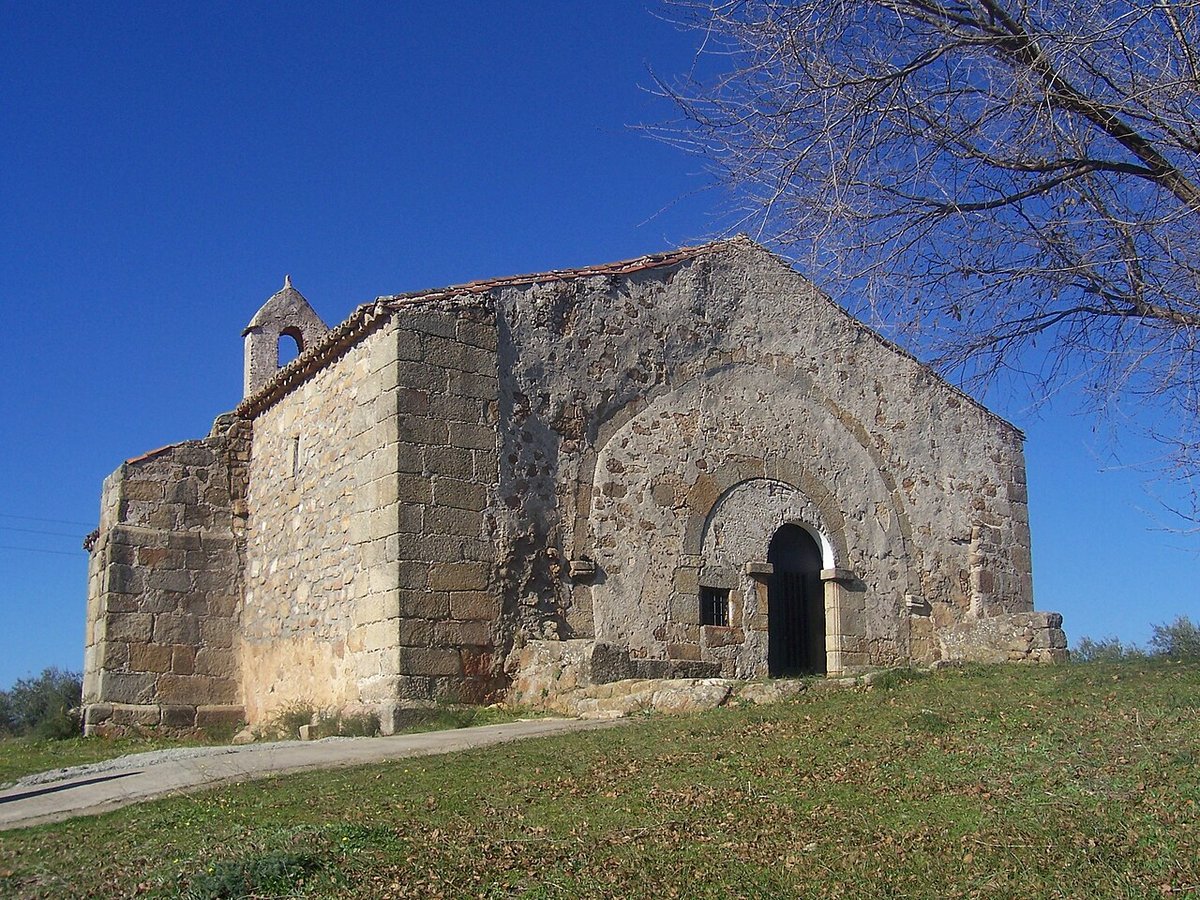
The Negritos de San Blas mark the beginning of the festive cycle, but they are only one part of a wider calendar. Later in the year comes the romería of the Virgen de Valdefuentes. The sanctuary, of medieval origin, lies some distance from the town. Many people make their way there on foot or in carts, maintaining a sense of collective movement towards the site.
Nearby are the grutas de las Potras, linked by tradition to the appearance of the Virgin. The connection between landscape and belief remains central here, with places in the countryside carrying stories that continue to be retold.
In August, the fiestas of San Bartolomé bring a different atmosphere. Over several days, the pace of the town shifts. Those who live elsewhere return, streets fill with peñas, and shared meals become part of daily life. Among the dishes prepared during these celebrations is caldereta de cordero, a lamb stew commonly associated with gatherings of this kind.
Each of these events marks a moment in the year, giving structure to time and reinforcing ties between residents and their surroundings.
A park of monuments and paths into the dehesa
On the outskirts of Montehermoso, a more recent addition offers a different way of engaging with the region. At the start of this century, a park was created featuring small-scale reproductions of several monuments from across Extremadura. Within the same space, there are references to buildings found in Cáceres, Trujillo, Mérida and Zafra.
The park is often used for school visits, serving as an परिच introduction to the architectural heritage of the region. It also acts as a starting point for one of the most commonly used routes into the dehesa boyal.
From here, a path leads towards the puente de Simón Ruano, a stone bridge traditionally dated to the 16th century. It crosses the river Alagón along a calm stretch. The route passes through areas of holm oak and quejigo. Livestock can often be seen grazing in the open clearings, reinforcing the sense that this is still a working landscape rather than a purely scenic one.
The walk connects several elements at once: the built environment, the river, and the long-standing use of the land.
Getting there and moving around
Montehermoso lies roughly half an hour from Cáceres by regional road. The town itself is easy to explore on foot, with distances remaining manageable within the urban area.
Spring tends to show the dehesa at its greenest. Within the town, orange trees still appear in some streets and squares, adding a familiar detail to the setting.
For those interested in popular culture, two elements stand out clearly. The traditional cap remains a strong visual symbol, while the winter celebrations around San Blas provide a direct connection to long-standing customs. Together, they offer a way of understanding how Montehermoso has maintained a distinct identity within the wider area of the Vegas del Alagón.