Full Article
about Pedroso de Acim
Tiny village with a historic Franciscan convent isolated on the hill
Hide article Read full article
A Place That Moves Differently
Some villages feel designed for a quick stop before moving on. Others, like Pedroso de Acim, quietly change your timing. You arrive almost by chance, park, take a few steps, and realise things move a little more slowly here. Tourism in Pedroso de Acim is not about museums or major landmarks. It is about looking around and understanding how a small village in the Vegas del Alagón actually works.
What stands out first is the quiet. Not the silence of somewhere abandoned, but the kind that comes from a place where everything happens at its own pace. A car passes now and then, a door opens somewhere nearby, and that is about it.
Streets Built for Living
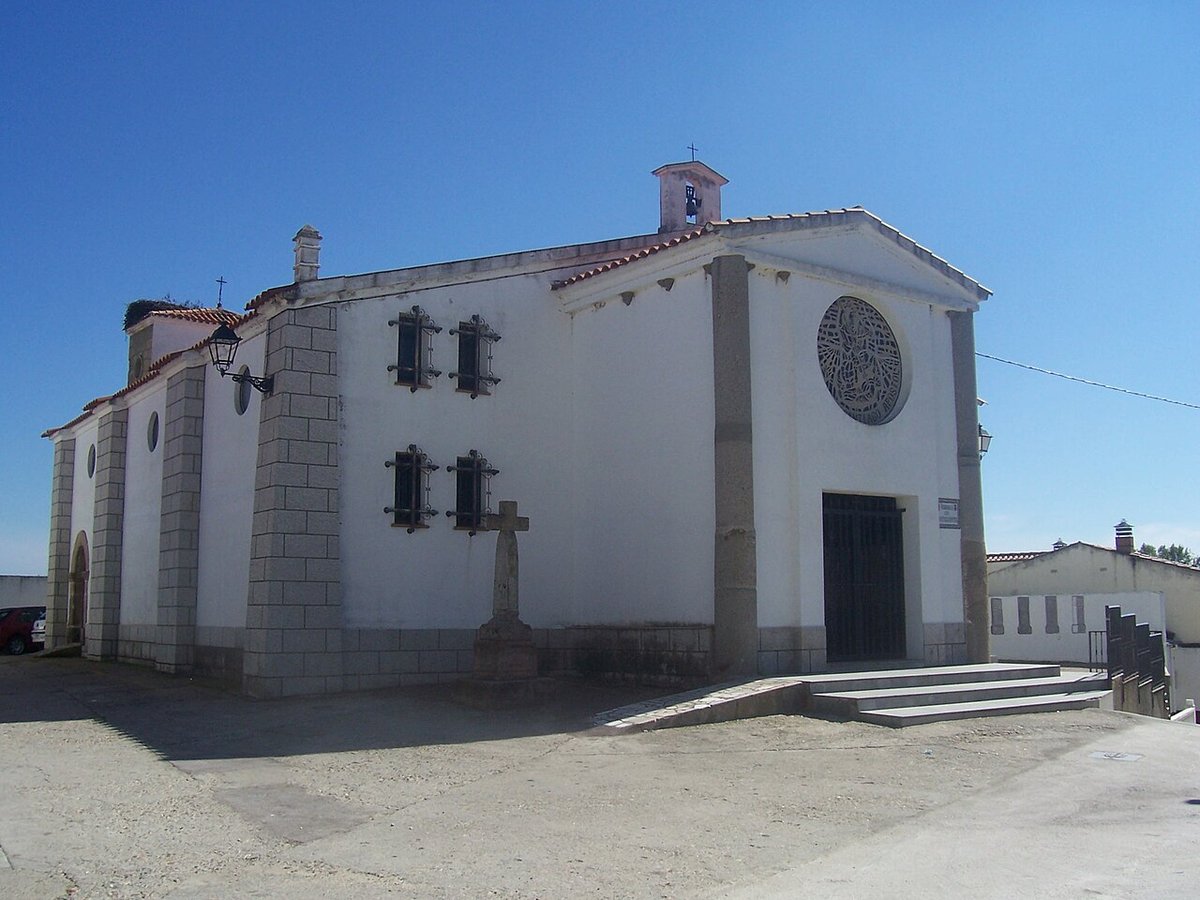
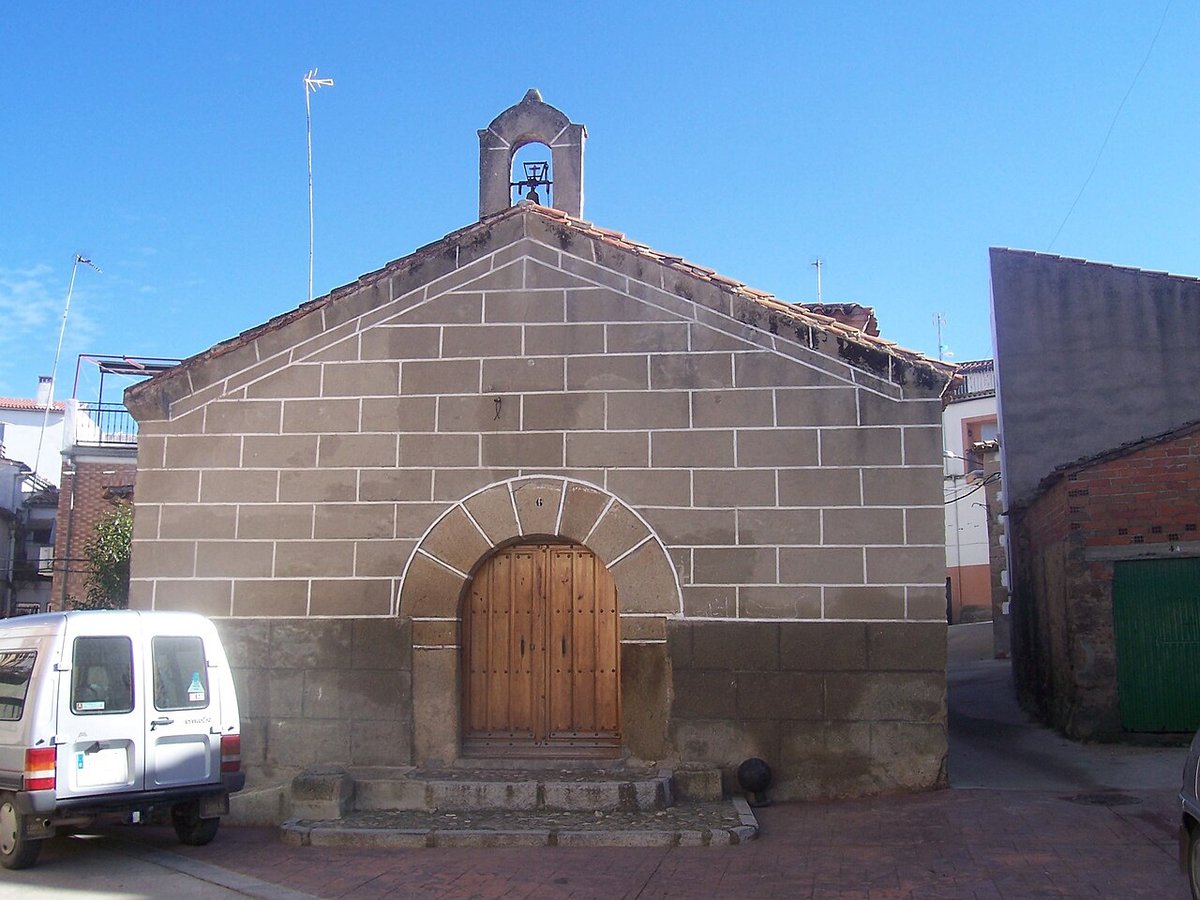
The centre of the village revolves around the church of San Pedro. It does not dominate the landscape or tower over a wide valley, but it gives you a point of reference. Wherever you are in the village, you end up orienting yourself by it.
Around it sit the kinds of houses typical of this part of Extremadura. Thick walls, plenty of stone, and façades that have been altered over time as repairs became necessary. Some still keep wrought-iron balconies and large gates, a reminder that these homes were built not just for living but also for storing tools, animals or grain.
The streets are short and fairly straight. They are not laid out for long Sunday strolls, but for practicality. Moving from house to yard, from yard to vegetable plot, from plot to open land. Walking through them feels less like visiting a place arranged for visitors and more like stepping into a village that continues to function as it always has.
Beyond the Village: The Dehesa
Step just outside the built-up area and the defining landscape appears: the dehesa. This traditional land use system, common in western Spain, combines scattered holm oaks with open pasture. In Pedroso de Acim, the trees are spaced out, the ground is open, and dirt tracks connect different plots of land.
There are no marked walking routes, no panels explaining the surroundings, and no prepared viewpoints. What you do find are agricultural tracks that can be followed at an easy pace. The terrain is generally gentle, with few steep slopes and a wide sense of open horizon.
Small details become the focus here. Birds often gather along fence lines or perch on electricity poles. Storks, kites and other birds of prey glide slowly overhead. It does not require much effort. Just stop for a moment and look up.
Everyday Life and Local Rhythm
Life in Pedroso de Acim still follows the rhythm of the countryside. There is no expectation of a packed calendar of events every weekend.
Some celebrations are tied to the church, such as Corpus in June, when parts of the streets are decorated. Corpus Christi is a traditional Catholic festival, and in many Spanish villages it involves creating temporary displays along the streets for processions.
Other customs happen more quietly, often behind closed doors. Family gatherings during the time of the matanza, the traditional slaughter and preparation of pork products, remain part of local life. Ovens are lit on certain dates, and some residents continue to make cured meats and cheeses in the same way they always have.
For visitors, what feels most striking is that none of this is staged. These are not performances put on for outsiders. They are simply part of daily life, continuing without much need for explanation.
A Short Visit That Stays With You
Pedroso de Acim can be explored quickly. In about an hour, it is possible to walk through most of the village centre.
Starting near the church of San Pedro makes sense, then drifting down the surrounding streets while paying attention to small details. Old doors, carefully worked metal grilles, and sections of stone wall visible beneath newer plaster all hint at the village’s past. These details often say more than any signboard could.
Afterwards, it is worth stepping out towards the surrounding tracks. There is no need to go far. Within five or ten minutes on foot, the open landscape of the dehesa comes into view.
If timing is flexible, early morning or late afternoon tend to feel different. There is more animal activity, and the light falls more gently across the fields.
What to Keep in Mind
This is a very small village. Expectations matter. Anyone arriving with a long list of sights in mind may feel that everything is over quickly.
The best way to approach Pedroso de Acim is as a calm توقف within a wider route through the area. A short walk, a look at the landscape, and then continuing the journey.
Spring and autumn are usually pleasant times to pass through. The countryside is greener, and the heat is less intense than in the height of summer. Winter brings a drier, colder atmosphere, which also has its own appeal if the aim is to see the village as it is for much of the year.
Getting There and Practical Notes
Pedroso de Acim lies in the comarca of the Vegas del Alagón, to the north of Cáceres. It is reached via secondary roads that connect with the N-630 and other regional routes, so journeys typically involve combining several stretches depending on the starting point.
The final kilometres are best taken slowly. These are quiet roads, the kind that suit an unhurried drive.
Within the village itself, tourist infrastructure is very limited. It is more common to stay in larger nearby towns and visit Pedroso de Acim as a short stop during the day.
For those interested in seeing how small villages really function, without added layers or presentation, this place fits that idea closely. It does not try to impress. It simply continues at its own pace.