Full Article
about Pescueza
Village known for its 'Festivalino' and fight against depopulation
Hide article Read full article
Where Pescueza Sits in Extremadura
To understand tourism in Pescueza, it helps to begin with its setting. This small municipality belongs to the comarca of the Vegas del Alagón, in the north-west of the province of Cáceres. It stands in a landscape that shifts between cereal fields, scattered olive groves and patches of dehesa, the characteristic open pastureland of western Spain dotted with holm oaks.
The village has around 150 inhabitants and lies at roughly 300 metres above sea level, on relatively flat ground. Its compact layout reflects agricultural priorities rather than urban planning. Houses cluster closely together, streets are short, and there are quick exits leading straight out to the surrounding farmland. The structure of the village makes sense when seen through the lens of daily work in the fields.
The Church and the Heart of the Village
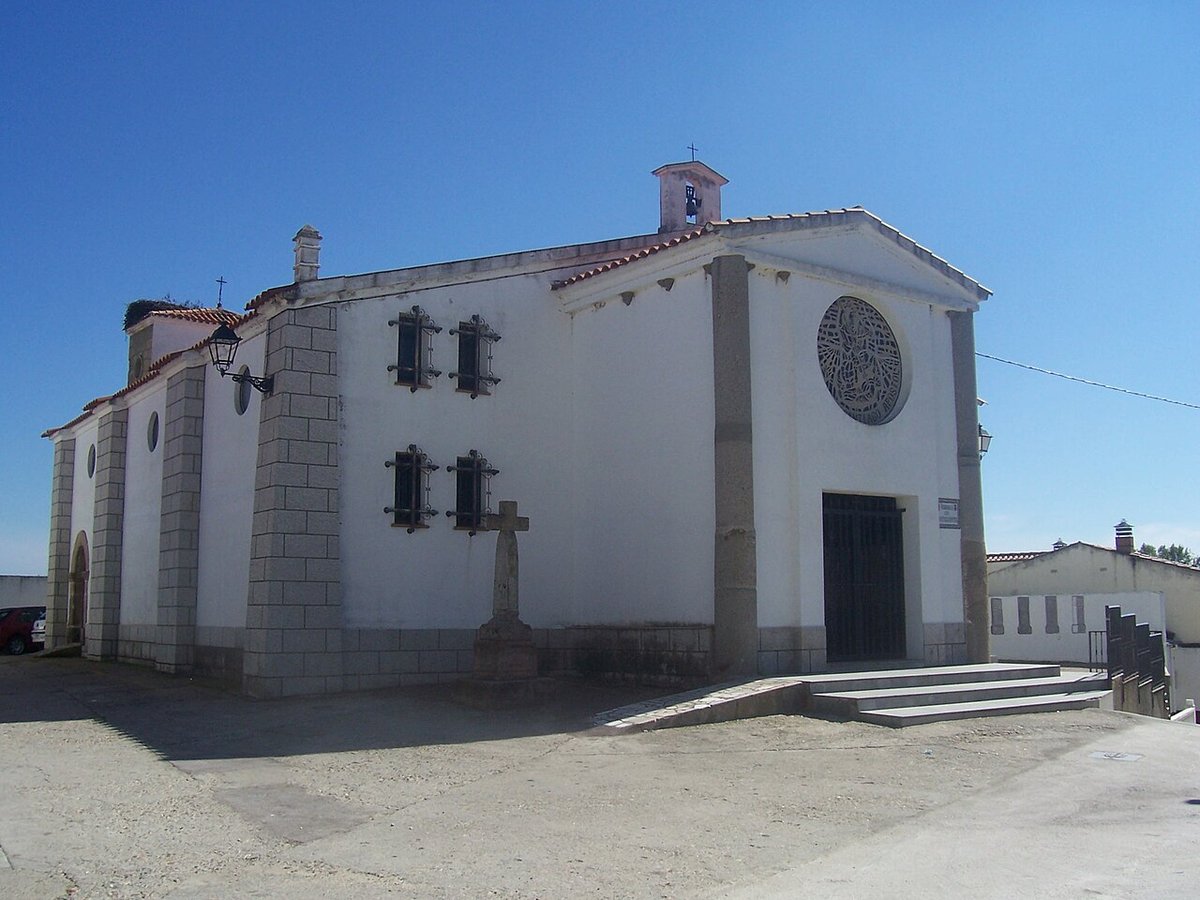
At the centre of Pescueza stands the Iglesia de la Asunción de Nuestra Señora. The building probably dates back to the 16th century, although later alterations have changed parts of its appearance. Its construction is simple, much like many churches in the Alagón valley. Inside, however, there is a Baroque altarpiece of a popular style that adds a note of ornament to an otherwise restrained interior.
The church matters less for its size than for its position. Several of the main streets are organised around it, and from the nearby square it is easy to see how the village expanded outwards from this point. The temple and its surroundings form the social and spatial core of Pescueza, a reference point for both daily life and local celebrations.
Walking through this central area gives a clear sense of scale. Distances are short, façades are close together, and everything feels tied to the rhythm of a small agricultural community.
Vernacular Architecture and Agricultural Life
Much of the traditional housing in Pescueza is built with adobe, masonry and brick elements. These are practical materials, widely used in rural Extremadura. Many houses include interior courtyards and rear corrals designed to shelter animals, store tools or support small family vegetable plots.
Certain features still stand out. Some homes retain tall brick chimneys as well as wooden galleries or corridors. These details are not decorative flourishes. They respond to practical needs such as ventilation, drying produce and creating shade during the hottest months of the year. Architecture here reflects climate and work patterns more than aesthetic ambition.
This built environment speaks of a way of life that has continued for generations. The arrangement of spaces within each property, from courtyard to corral, reveals how closely domestic life has been linked to farming tasks and seasonal cycles. Even where modern materials have appeared, the underlying logic remains visible.
The Open Landscape of the Vegas del Alagón
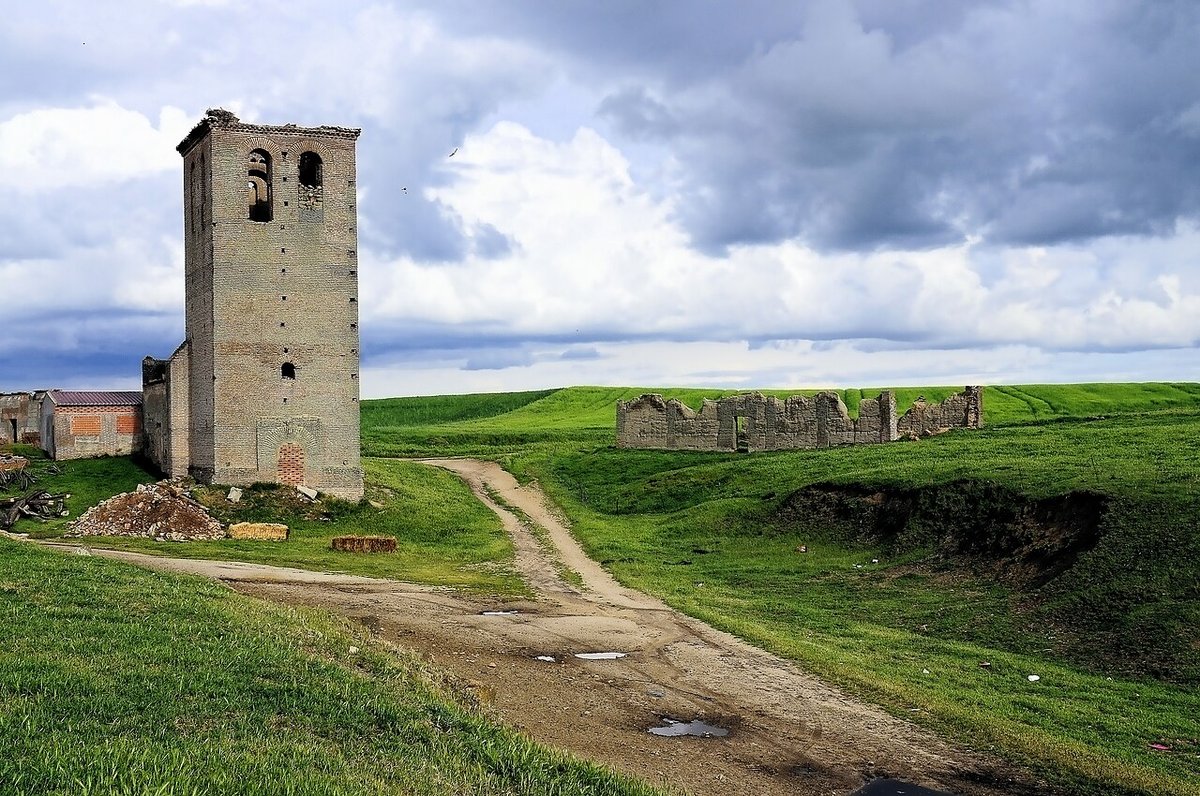
Step beyond the last houses and the landscape opens up quickly. Around Pescueza there are broad cereal plots, olive groves set at intervals, and dehesas populated by holm oaks. The terrain is generally easy to cross, whether on foot or by bicycle, along agricultural tracks that connect farms and neighbouring villages.
This is a working landscape rather than a designed one. Its appeal lies in its scale and clarity. Fields stretch out under wide skies, and the horizon often feels close at hand. The relative flatness makes it straightforward to explore, although after periods of rain some paths can become muddy, which is common in farming areas.
Wildlife is part of the scene. In winter and during migration periods, cranes can often be seen in nearby fields. Their presence is common across many areas of northern Extremadura. Storks are also frequent, and birds of prey sometimes take advantage of thermal currents above the plains. The mix of open farmland and scattered trees provides suitable conditions for these species.
Night brings a different experience. The limited artificial lighting in and around Pescueza allows for very clear skies. Visitors arriving from cities often notice the difference immediately. The darkness feels complete, and the stars stand out sharply.
Festivities and the Local Calendar
The main celebration in Pescueza revolves around the feast of the Asunción in August. During these days there are usually processions, family gatherings and activities in the streets. As in many small villages, the social element carries as much weight as the religious one. The festival becomes a moment for reunions and shared meals, with the church once again at the centre of events.
Semana Santa, or Holy Week, is observed in a more discreet manner. The tone is quieter, in keeping with the size of the community. Traditions persist, though often on a smaller scale than in larger towns.
In winter, some households still maintain the tradition of the matanza del cerdo. This is the domestic slaughter of a pig, a long-standing rural practice that remains important for family economies and local cooking. Beyond its practical purpose, it also has a social dimension, bringing relatives together around a task that marks the colder months.
These moments in the calendar offer insight into how Pescueza functions as a community. Religious observances, seasonal work and social gatherings intertwine, reinforcing ties between neighbours.
Practical Notes for Visiting
Pescueza is small enough to explore entirely on foot. A slow walk through the streets around the church provides a good introduction to the village’s structure. From there, heading out along the surrounding tracks helps place the settlement within its agricultural setting.
Conditions on rural paths can change after rainfall, and mud is not unusual in cultivated areas. Anyone planning to walk or cycle in the surrounding countryside would be wise to check locally on the state of the tracks before setting out.
Tourism in Pescueza is closely linked to understanding its scale and context. There are no grand monuments or dramatic contrasts. Instead, the interest lies in how a compact village of around 150 people continues to relate to its fields, its church and the open expanses of the Vegas del Alagón.