Full Article
about Berzocana
Religious heart of the Villuercas, home to the relics of San Fulgencio and Santa Florentina; unique geological setting
Hide article Read full article
A village shaped by the land
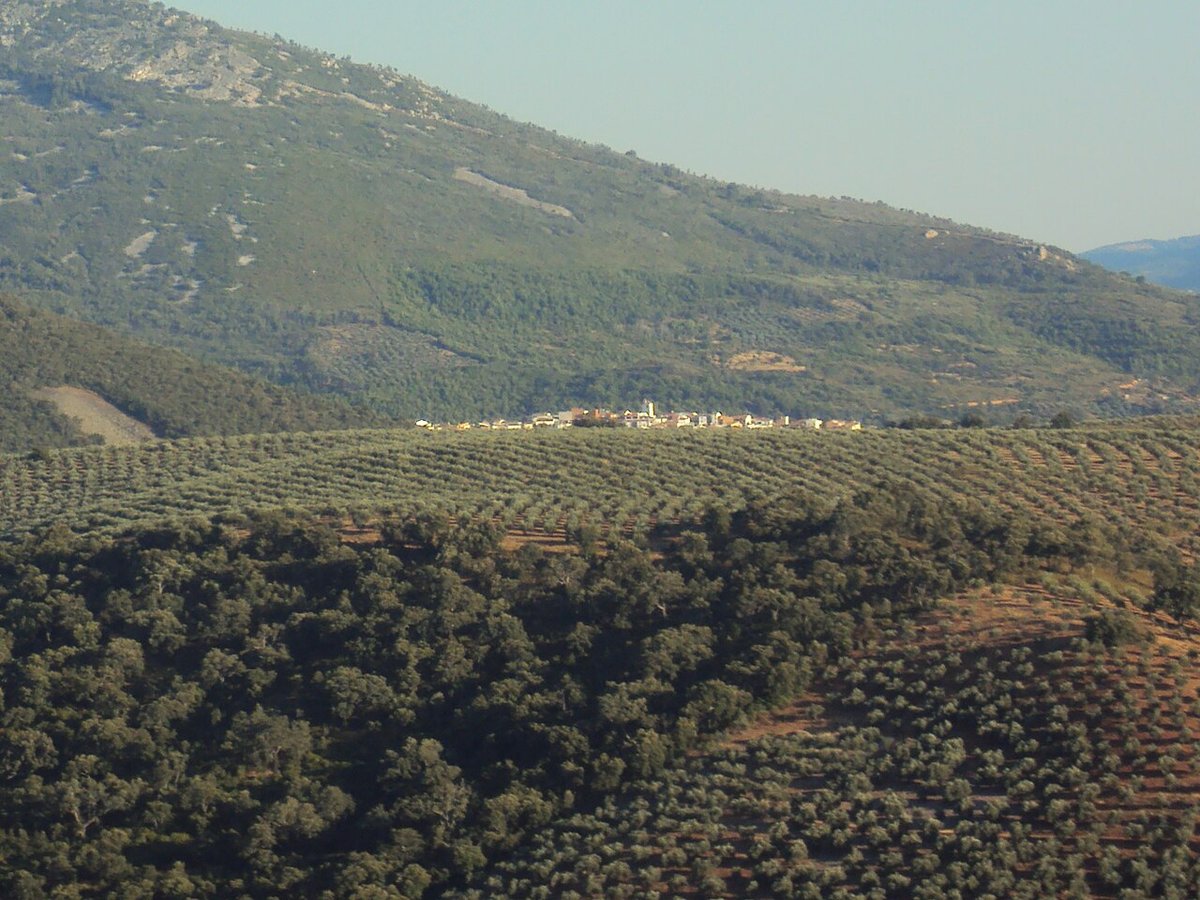
Any look at tourism in Berzocana starts with the ground it stands on. The village sits on the western slope of the Sierra de las Villuercas, where quartzite ridges create a sharply defined landscape. This is not a random location. The terrain has shaped both the layout of the settlement and the way people have worked the land over time. Today, fewer than four hundred people live here.
Berzocana developed around a fairly typical rural economy for this part of Extremadura. Small plots of land, livestock and use of surrounding woodland formed the basis of daily life. Holm oaks and cork oaks cover much of the area. In autumn, chestnuts and wild mushrooms appear, and beekeeping has also had a role, as in many villages across the Villuercas‑Ibores‑Jara region.
Streets that follow the slope
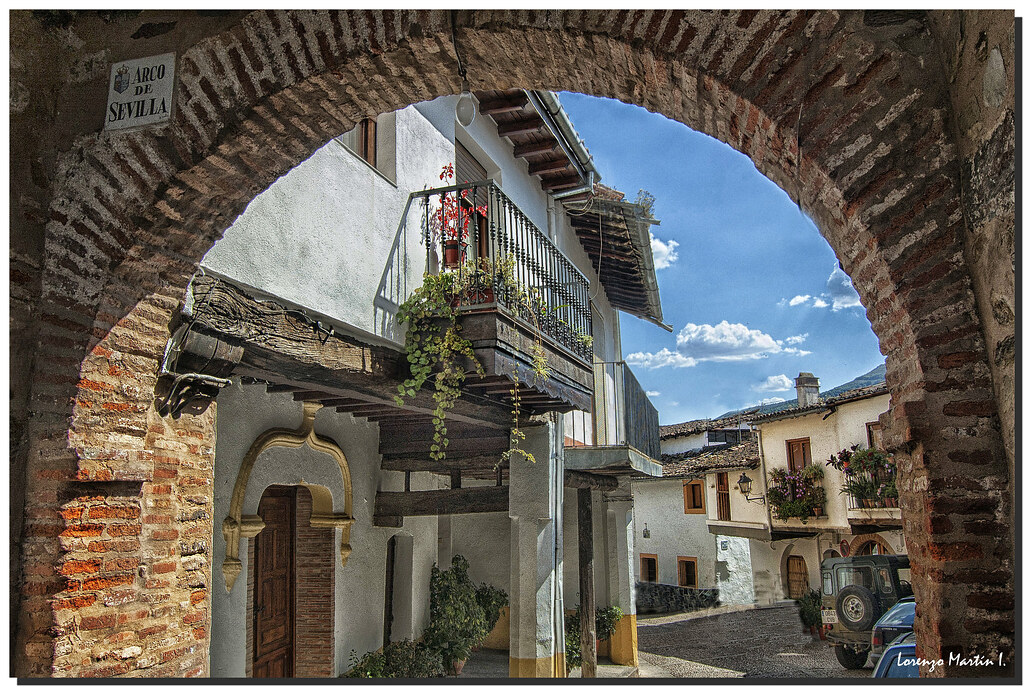
The village centre reflects this close relationship with the terrain. Narrow streets run along gentle inclines, adapting to the natural shape of the hillside. Houses are built with a mix of stone masonry, iron balconies and solid stone doorways. Some façades still display coats of arms. These usually point to families of some standing in the early modern period, when control over land and livestock defined local hierarchy.
Walking through the village reveals how everything fits the contours of the land. Streets open gradually towards views of the surrounding sierras, and the sense of elevation is never far away. Even short distances involve subtle changes in height, giving the place a quiet but constant sense of movement.
San Andrés and the village skyline
The parish church of San Andrés occupies the most visible point in Berzocana. Built on a sixteenth century structure and altered in later periods, it stands above the rooftops and acts as a clear visual reference when approaching by road. The tower rises prominently, anchoring the village against the backdrop of the hills.
Inside, there is a Baroque altarpiece. It is modest compared with others found in Extremadura, but it suits the scale of the village. The building reflects both continuity and adaptation over time, with layers of construction that match the long, steady rhythm of local history.
The landscape of Las Villuercas
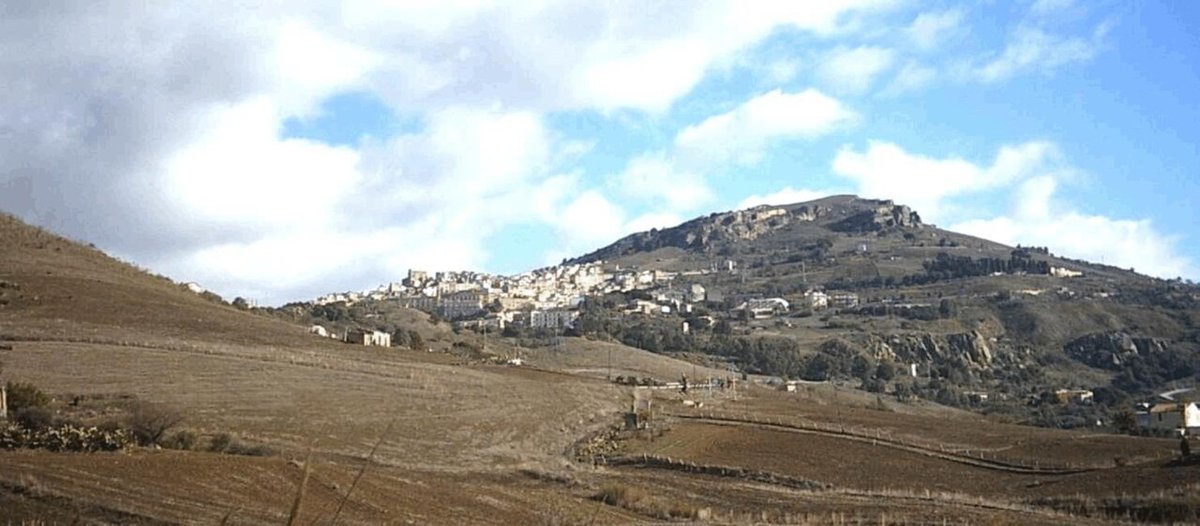
The surrounding landscape is key to understanding Berzocana. The Sierra de las Villuercas forms a series of parallel mountain ranges that are easily recognisable from higher ground. These ridges are made of quartzite and have been shaped by erosion over millions of years. Between them lie softer valleys where streams run and small areas of cultivation appear.
This contrast between rugged crests and gentler lowlands defines the wider comarca. It also explains how settlement and agriculture have been organised. The harsher terrain remains largely covered in woodland, while the valleys offer space for small-scale farming.
From the village itself, paths lead out into this environment. Many follow old routes once used for agriculture or livestock. The slopes can change quickly and the ground is often stony, so it is worth checking conditions before setting out. Large birds of prey are commonly seen circling above the hillsides. In autumn, in denser wooded areas, the sound of deer during the rutting season can sometimes be heard early in the morning.
Traditions through the year
The local calendar revolves mainly around San Andrés at the end of November. These are days centred on religious observance and gatherings among residents. There is also a shift in August, when summer festivities take place and the population temporarily increases as people return for a few weeks.
Autumn brings the chestnut harvest. This activity still has a practical, domestic character rather than becoming a large public event. It remains tied to everyday life rather than tourism.
A place to take slowly
Berzocana can be explored on foot in about an hour, though it rewards a slower pace. Attention naturally falls on the details of façades, the slight bends in the streets and the way the village opens towards the surrounding hills. From some of the higher points, the broken relief that defines the entire region becomes especially clear.
There are few services specifically aimed at visitors. This reflects the reality of the place. It is a small and quiet municipality, where tourism has not reshaped daily life. People tend to come here for the landscape of Las Villuercas and for the fragments of history still visible in its buildings.
Getting there
The most common route from Cáceres follows the A‑5 motorway towards the area of Navalmoral de la Mata, before continuing along secondary roads that wind into the sierra. The final stretch involves gentle curves and light traffic. Planning ahead is advisable, particularly at weekends or during public holidays.