Full Article
about Bohonal de Ibor
Gateway to Los Ibores, with Roman remains submerged in the reservoir amid Mediterranean forest.
Hide article Read full article
Getting there and getting around
If you are thinking about visiting Bohonal de Ibor, start with the practical side: come by car. The village sits around 90 kilometres from Cáceres, reached by quiet secondary roads. The journey usually takes about an hour and a half. As far as is known, there is no regular public transport.
Once you arrive, getting around is simple. The village is small and easy to walk. Parking is rarely an issue outside of festival dates. The usual approach is to leave the car on a wider street near the entrance and continue on foot.
A village of simple lines
Bohonal de Ibor has only a handful of streets, most of them fairly straight. Within ten minutes you have a clear sense of how it all fits together.
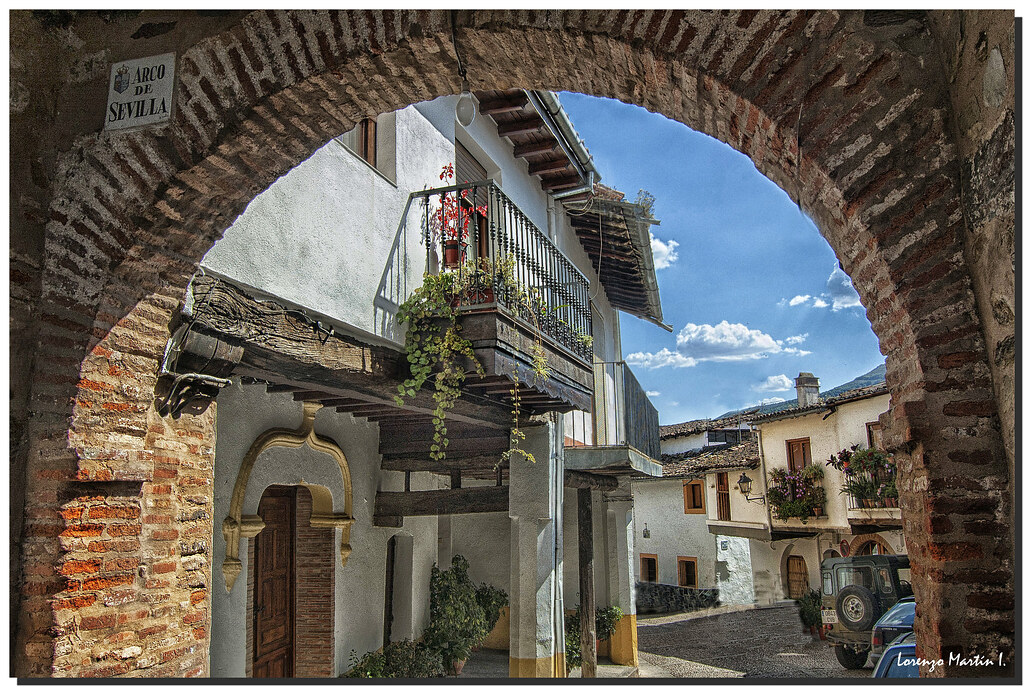
The houses follow the style seen across this part of Extremadura: stonework, whitewashed façades and tiled roofs. There are no major historic buildings to seek out. What stands out instead are smaller details. Old wooden doors, enclosed courtyards, sections of stone wall that have survived several rounds of alteration.
At the centre sits the church of Santa Ana. It has stone walls alongside more recent additions. It works more as a reference point when finding your way than as a monument to visit in its own right.
Daily life moves at a calm pace. Agriculture still shapes how time is organised, and that rhythm is easy to notice as you walk through the streets.
The landscape beyond the houses
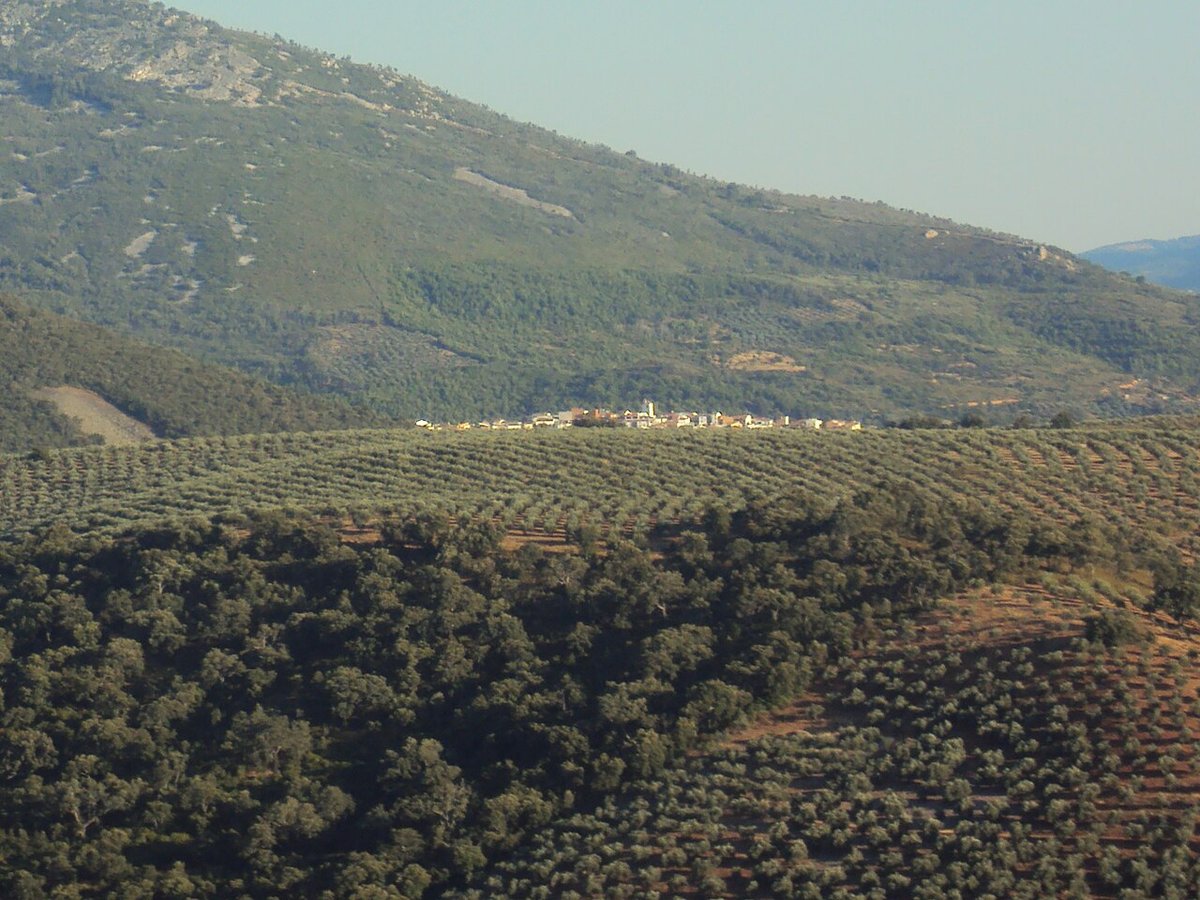
Step outside the built-up area and the scenery changes quickly. The dehesas begin almost immediately. These are open grazing landscapes typical of western Spain, with scattered holm oaks, low stone boundaries and dirt tracks crossing private land.
Livestock is a constant presence. Iberian pigs can often be seen foraging beneath the oaks, and cattle graze in open fields. It is a landscape closely tied to traditional farming in Extremadura.
In some areas there are also patches of oak woodland. They are not large forests, more like fragments that have remained where the terrain has allowed. In autumn, if there has been enough rain, these areas bring noticeable colour changes to the surroundings.
The river Ibor runs nearby. Its flow varies depending on the season, but the valley it has shaped is evident in both the vegetation and the contours of the land.
Walking the tracks
This is not a place for marked long-distance trails or developed hiking infrastructure. Walking here means using agricultural tracks, firebreak paths or the routes locals take between plots of land.
Care is needed with gates and boundaries. Much of the surrounding terrain is private, and it is expected that visitors respect closures and property limits.
For those interested in birdlife, the dehesa offers plenty to watch. Birds of prey circle above the oaks, while smaller species move through the scrub. Early in the day tends to be the most active time.
Traditions through the year
The main local celebrations are dedicated to Santa Ana and take place in summer. They involve short processions through the streets and a distinctly local atmosphere.
In spring, there are still religious events connected to the agricultural cycle, including blessings for the crops. These traditions continue because farming remains an important part of life here.
Easter, or Semana Santa, is observed in a simple and local way, with participation mainly from residents.
Autumn brings attention back to the Iberian pig, along with mushroom gathering when the season has been wet. In many cases this is for personal use rather than commercial activity.
A brief stop in Villuercas‑Ibores‑Jara
Bohonal de Ibor is best understood as a short, quiet stop if you are travelling through the wider comarca of Villuercas‑Ibores‑Jara. It is not a place of major landmarks or organised plans.
A short walk, a look at the dehesa landscape, and then continuing your route is a reasonable way to approach it. The visit is brief, and there is no need to pretend otherwise.