Full Article
about Carrascalejo
Small village on the Toledo border, ringed by holm oaks and rockrose; quiet and hunting.
Hide article Read full article
Getting there and when to go
Carrascalejo sits about 85 kilometres from Cáceres, reached via the EX‑102 road towards Guadalupe. The drive crosses the Villuercas‑Ibores‑Jara region and includes plenty of bends, so it is worth allowing extra time. On arrival, it is common to leave the car at the edge of the village and continue on foot. The streets are short and there is not much distance to cover.
Summer visits are best started early in the day, as the heat becomes intense around midday. Spring and autumn tend to be easier, with milder temperatures and more activity in the surrounding countryside. In autumn, many people head into the nearby hills to collect wild mushrooms. It is a widespread habit in the area, though it requires proper knowledge of what is safe to pick.
A village with few distractions
Carrascalejo is small and does not revolve around major sights. The church marks the centre of the village. It is a simple structure, built with brick and with little decoration, and it can be seen quickly.
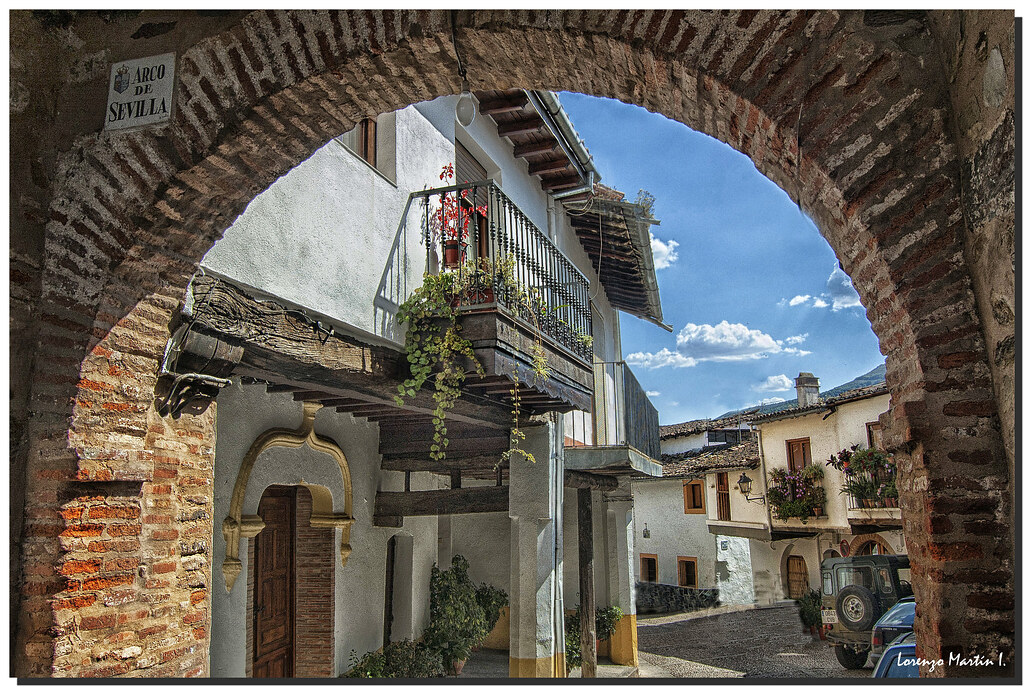
The houses follow the typical pattern of this part of Extremadura: whitewashed façades, Arabic roof tiles and enclosed patios secured by gates or iron grilles. There are no museums or interpretation centres. This is an agricultural village, and that character is clear.
With just over two hundred residents, daily life moves at a slow pace. A short walk along the main streets is enough to get a sense of the place and how it functions.
The landscape beyond the streets
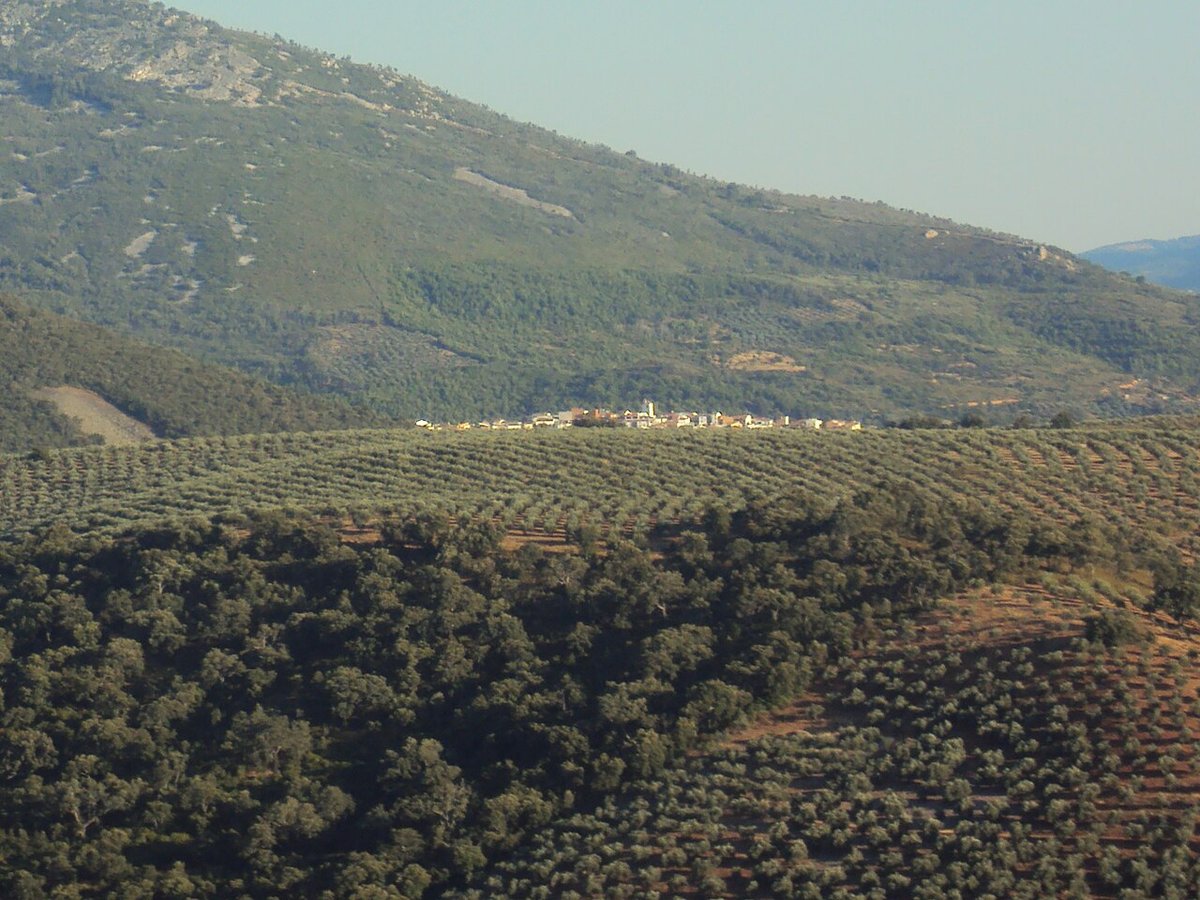
The more interesting aspects of Carrascalejo lie outside the built-up area. The surroundings are dominated by dehesa, a traditional type of managed countryside found across western Spain. Here it appears as open land dotted with holm oaks and cork oaks, typical of this region of Extremadura.
Moving quietly through these areas, it is common to notice signs of wildlife. There are traces of small game, and birds of prey make use of the air currents above the open clearings. With binoculars, it is often possible to pick out vultures, kites or, depending on the season, a harrier.
The terrain also includes scattered volcanic rock formations. They do not form large cliffs or dramatic features, but they do interrupt the otherwise even rhythm of the dehesa landscape and add some variation.
Tracks and short walks
Several dirt tracks begin in Carrascalejo itself. These are used for walking or for slow drives through the surrounding countryside. They are not long, marked routes or specially prepared trails. Instead, they are agricultural and livestock paths that have been used for practical purposes over time.
They work well for a quiet walk among holm oaks and rockrose shrubs, with the option to return to the village after an hour or two. It is a simple way to experience the landscape without needing to plan anything complicated.
Local traditions and rhythms
The main festivities usually take place in summer, when many residents who live elsewhere during the year return to the village. The programme follows a familiar pattern for small places in Spain: religious events, gatherings in the main square and activities organised by the locals themselves.
During Semana Santa, the Holy Week before Easter, there are also processions. These are modest and very local in character, reflecting the scale of the community.
Autumn tends to revolve around the countryside. Conversations often focus on how the season has gone, on livestock, and, when the time comes, on mushrooms. Foraging is common across the wider area, though always approached with caution.
A brief stop in the region
Carrascalejo is not a place designed for a full day of sightseeing. It works better as a pause if you are travelling through the Villuercas‑Ibores‑Jara region. A short walk through the village and a stretch of the legs in the surrounding countryside is usually enough before continuing the journey, where most of the region’s points of interest are found.