Full Article
about Deleitosa
Famous for Eugene Smith’s photo essay 'Spanish Village'; a charming village in the Ibores.
Hide article Read full article
A place that moves at its own pace
Some villages give the feeling that everything happens slowly. Deleitosa is one of them. It has none of the rush or checklist tourism found elsewhere. Instead, it invites unhurried walks and quiet attention to small details that might go unnoticed in busier places.
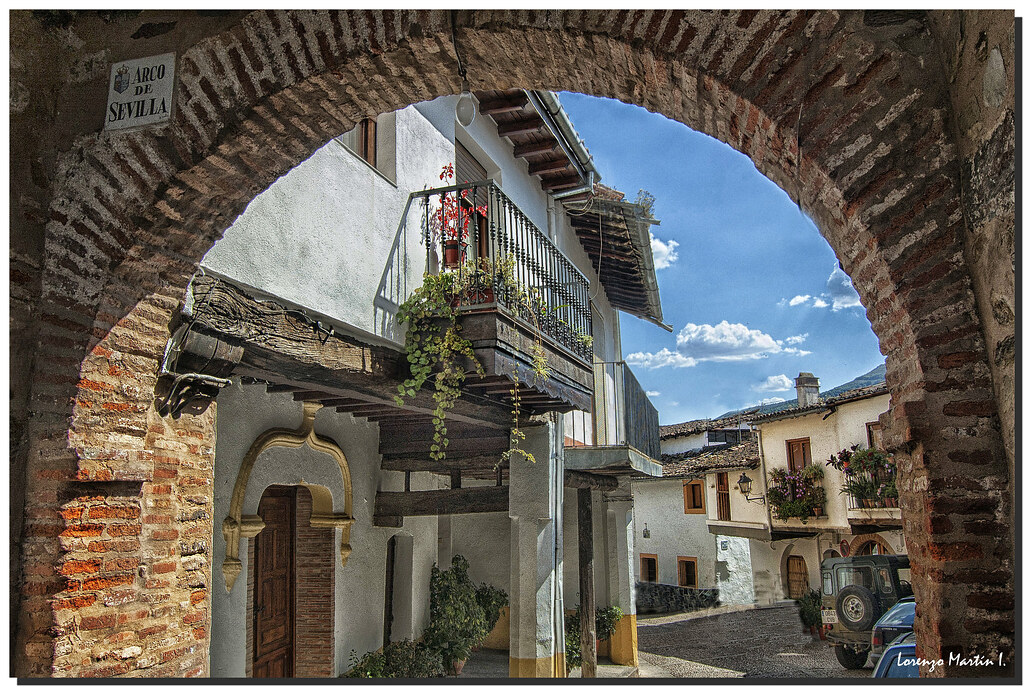
The first impression comes quickly on entering the town centre. Streets are narrow and often sloping, lined with masonry houses and iron window grilles that look as though they have been there for generations. Nothing feels staged or arranged for visitors. This is a place that continues its everyday rhythm without much change.
Through the old streets
The centre is compact. A handful of streets, including Calle Mayor and Calle Nueva, spread out around the main square where the church stands. This square acts as a natural meeting point. People greet each other, cars pause briefly, and the sound of bells marks the passing hours.
The parish church, dedicated to the Inmaculada Concepción, is generally dated to the 16th century, although it has been altered over time. Its exterior is fairly restrained and does not draw attention from afar, yet it is worth stepping inside if it is open. The interior follows the same understated tone: wooden altarpieces, side chapels and the sense of a village church that has evolved gradually across the years.
Walking without a fixed route works well here. Streets such as Calle del Rincón or the climb up Cuesta del Carmen reveal small details that hint at earlier ways of life. Some houses have been restored in recent years, but traces of the past remain visible. Stone lintels, wrought iron balconies and large wooden doors appear here and there. These elements reflect a time when daily life revolved around the countryside and agricultural work.
The landscape beyond the village
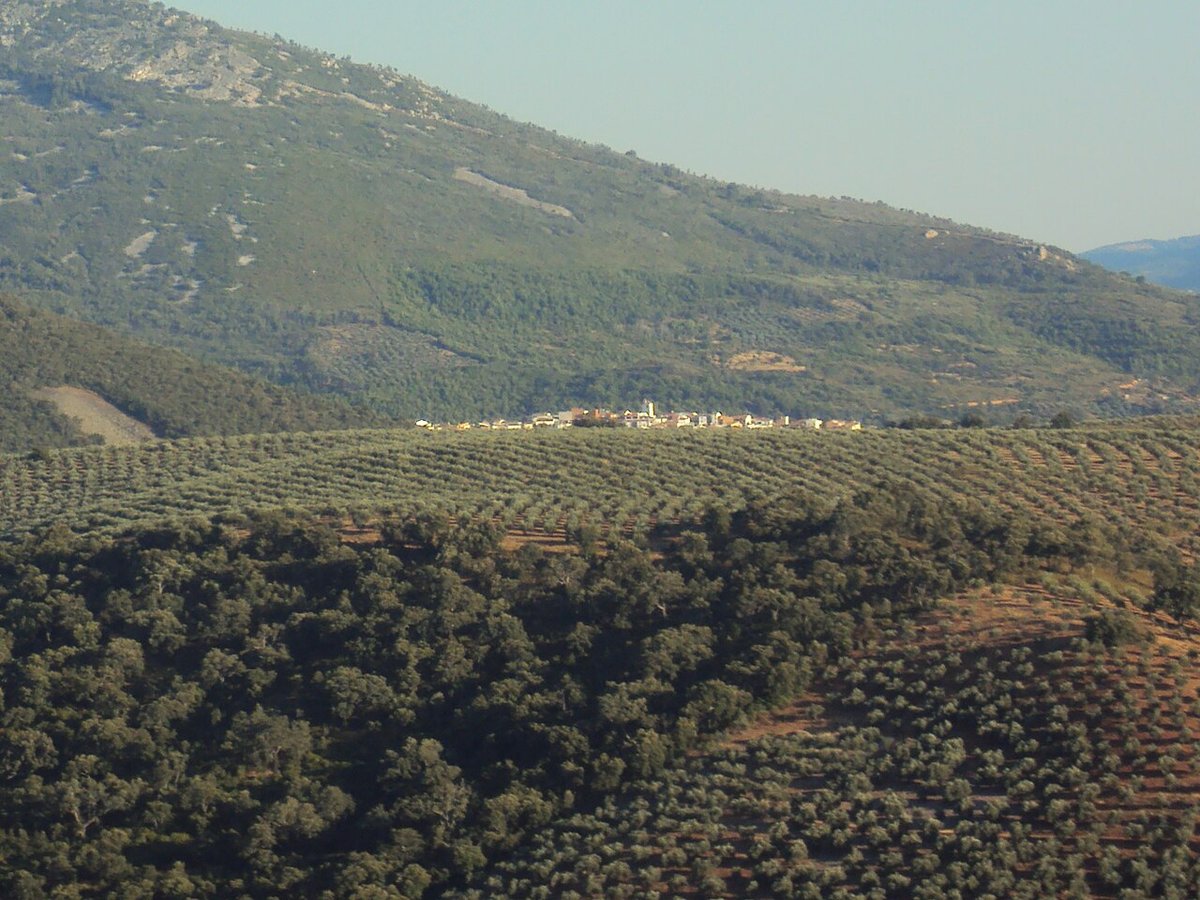
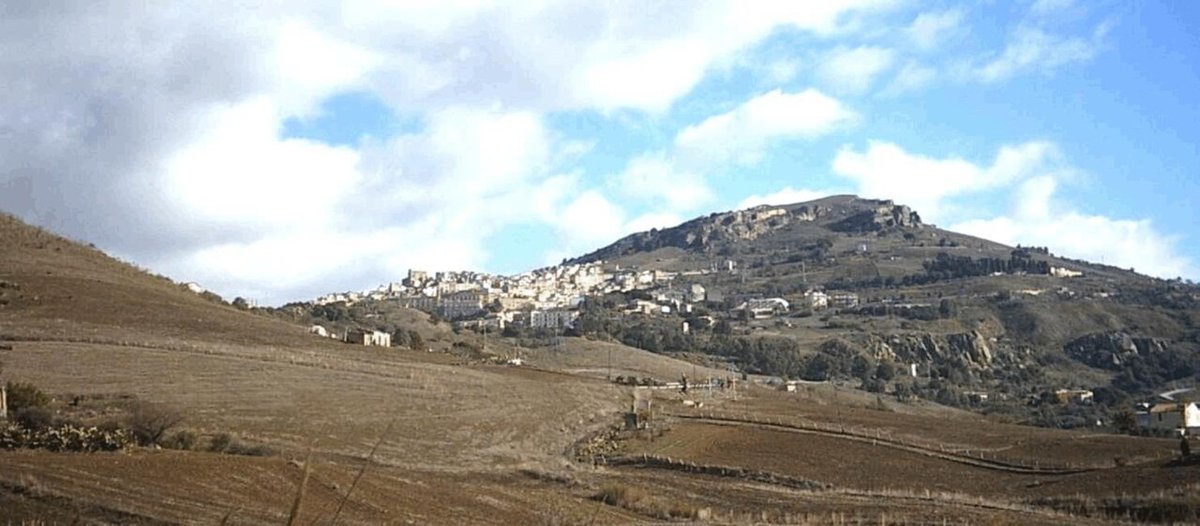
A short walk from the built-up area brings a quick change in scenery. Holm oaks and cork oaks begin to appear, along with plots of land enclosed by low stone walls. This is the characteristic landscape of the Villuercas-Ibores-Jara region: open dehesa, grazing livestock and paths that have linked farms for decades, if not longer.
Several tracks and rural paths surround Deleitosa. Local people have long used them to reach fields and grazing areas. Some routes pass through land where sheep or cattle graze, while others climb slightly and offer views over the rolling terrain around the village.
Carrying water is important if planning a walk, especially in summer. There are stretches with very little shade, and the sun can feel stronger than expected. Distances can also seem longer under the heat, even if they look manageable on a map.
At certain times of year, birds can often be seen circling above the fields. Anyone with a bit of patience, and perhaps binoculars, can spend a good while simply watching the sky.
Food shaped by the land
Food in Deleitosa reflects the traditions of inland Extremadura. Dishes are hearty and closely tied to what the surrounding land provides.
Migas, made with fried breadcrumbs and often served with chorizo or bacon, are a common sight, particularly in cooler weather. Another dish that appears in conversation is gazpacho de pastor. Unlike the lighter Andalusian version, this one is thicker and can be eaten more like a winter dish with substance.
Iberian pork plays a central role in the local diet. It is typical to find homemade cured meats or pork prepared in traditional ways. In years with good rainfall, mushrooms grow in the nearby hills and often end up in home cooking.
Night skies and local celebrations
Step a little way outside the village at night and the sky becomes one of the main attractions. With very little surrounding light, the stars are clearly visible. It is the kind of place where looking up can hold attention for quite some time.
The local calendar becomes more active in summer. Many residents who live elsewhere return for a few days, and the village feels livelier than usual. The square fills with people, and there are dances, activities and family gatherings.
December brings celebrations linked to the Inmaculada Concepción, with strong participation from the community. Autumn, as in many parts of this region, is associated with the traditional matanza, the process of preparing pork products that still takes place in some households.
A short visit, simply done
Deleitosa does not require a full day to understand its character. A simple plan works well: park near the centre, take a relaxed walk along Calle Mayor and the surrounding streets, stop by the church, then head out on foot towards the edges of the village to see the dehesa landscape.
A couple of hours is enough to form a clear impression.
One practical detail makes a difference. Summer walks call for water and some protection from the sun. Locals take this for granted, but visitors often realise its importance halfway through a walk. The landscape remains appealing, though the heat can make distances feel longer than expected.