Full Article
about Garvín
Small village in the Jara of Cáceres; perfect for unplugging amid nature.
Hide article Read full article
A slow start beneath the hills
The sun takes its time reaching Garvín. The low hills around the village hold on to the shade a little longer, so early in the morning the streets still carry the smell of cold earth. A door opens, someone sweeps their doorway, and the sound of stiff bristles scraping granite travels along the whole street. For anyone arriving early, this is how tourism in Garvín begins: quietly, at an unhurried pace, with the sense that the place is only just waking up.
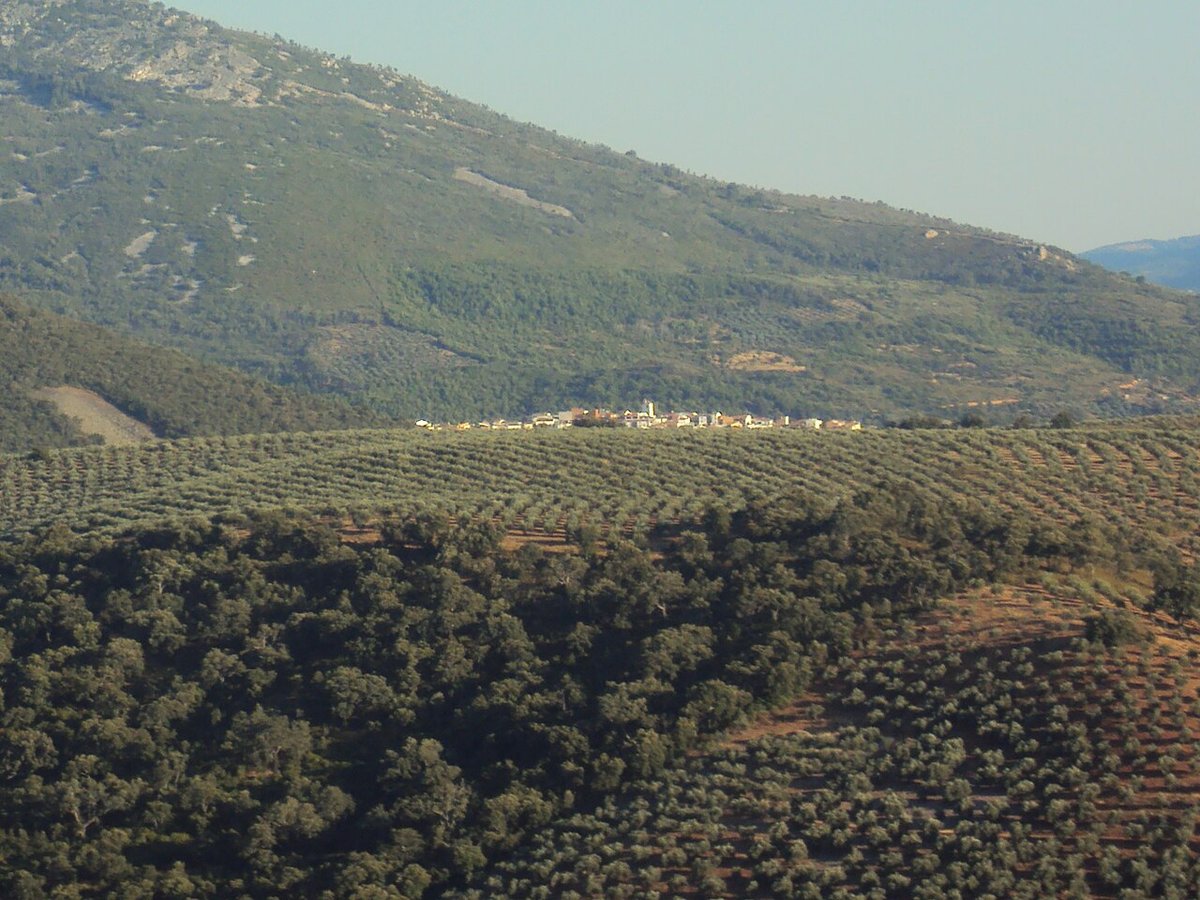
Garvín has just over a hundred residents. It sits in the Villuercas‑Ibores‑Jara area, within the geopark recognised by UNESCO. The landscape sets the tone here. Gentle hills, quartzite ridges and a chain of low mountains shift in colour with the seasons.
A compact village shaped by its surroundings
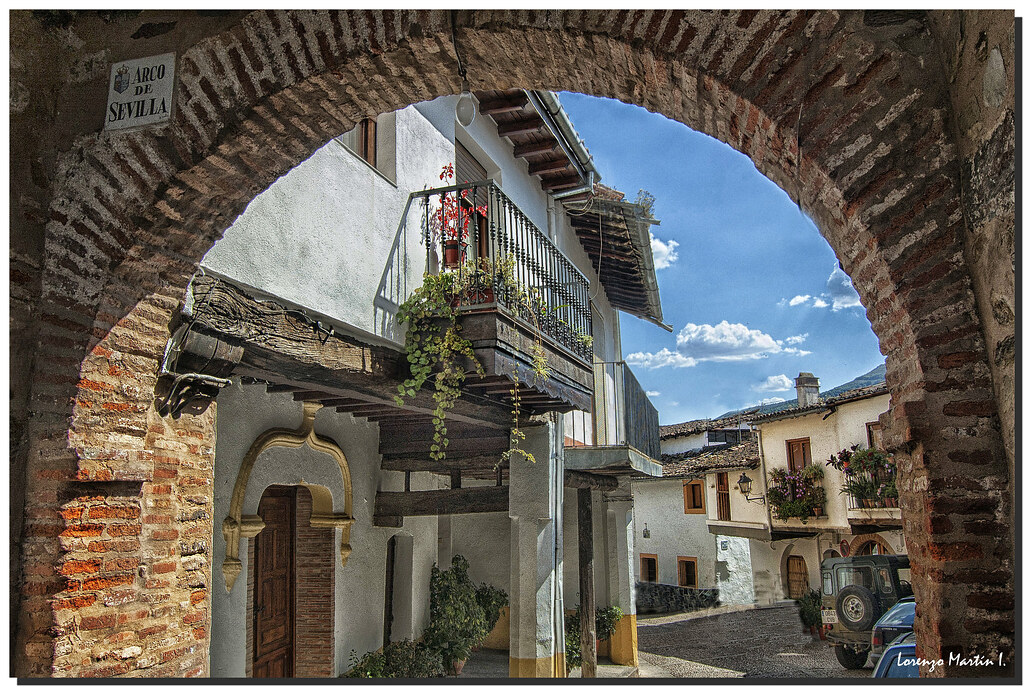
The village centre is tight-knit. Short streets, the occasional incline, and houses pressed close together as protection from the wind. Whitewashed façades reflect the strong midday light. In winter, that same light softens and glides over the walls without glare.
The church of Nuestra Señora de la Asunción blends into the fabric of the village rather than dominating it. It appears suddenly as you turn a corner. The stone at the entrance has been worn smooth by hands and time. Inside, there is usually a dimness, even on bright days.
There is no need for a map in Garvín. You can cross it in ten minutes from one side to the other. What matters lies in the small details: an exterior stone staircase, a small vegetable plot behind a low wall, pots lined up along a window.
The dehesa beyond the last houses
Step beyond the edge of the village and the scenery changes quickly. The dehesa begins. This traditional landscape of scattered holm oaks, low grass and open ground stretches out around Garvín. Dirt tracks wind between old fences and patches of pasture.
There are no marked walking routes like in other parts of the geopark. These paths have long been used by locals to reach nearby plots of land or to move livestock. Some sections are easy to follow, others fade into the grass.
Anyone keen to walk here should allow plenty of time and daylight. In summer, the heat builds from midday onwards. In winter, after several days of rain, some paths become heavy underfoot and cling to your shoes.
Open skies and quiet observation
In the clearings of the dehesa, birds of prey are a common sight. Kites are often seen gliding, and at certain times of year there may be harriers. There are no hides or information panels, just open sky and a notable stillness.
Mid-morning is often the best moment to look up, when the air begins to warm and the birds use rising currents to gain height. Binoculars can help, though often it is enough simply to watch.
The dominant sound here is not birdsong but the wind brushing through the holm oaks.
Food, seasons and village rhythms
Local cooking remains closely tied to the land. Migas, made from stale bread, appear alongside home-cured sausages and goat’s cheese that is common on many tables. These are dishes designed for long days outdoors.
In August, the village celebrates festivities dedicated to Nuestra Señora de la Asunción. During these days, the rhythm changes. Family members who live elsewhere return, and the streets feel busier.
In autumn, the matanza still takes place in some households, though less often than before. This traditional slaughter and preparation of pork has long been part of the seasonal cycle that shaped winter life.
When to come and what to expect
Garvín can be explored quickly. Two or three hours are enough to walk its streets, step out into the surrounding landscape and take in the views from a nearby hillside.
Spring and early autumn tend to be the most comfortable times to visit. The light is clear and the countryside keeps some of its green tones. Summer can bring strong heat once you leave the shade of the village. In winter, cold winds descend from the surrounding hills.
Access is via secondary roads that cross the region. There are bends and narrow stretches, so it makes sense to allow extra time for the journey. There are no large tourist services or infrastructure geared towards big numbers of visitors.
Garvín is simply a very small village where life moves slowly. Those who arrive in a hurry often leave just as quickly. Those who stay a little longer begin to notice different things: the smell of sun-warmed holm oaks, the echo of footsteps in empty streets, and the feeling that time is measured differently here.