Full Article
about Logrosán
Mining town with a fascinating geological past and a greenway.
Hide article Read full article
A compact town with a clear focus
Logrosán is easy to cover on foot. If the plan is simply to look around the town, allow less than an hour of walking. Parking in the centre is not always straightforward, as many streets are narrow and paved with granite. It is usually more practical to leave the car on a wider street and continue on foot.
The visit can feel limited if mining is not of interest, as much of Logrosán’s identity is tied to that past. For many travellers, it works better as part of a wider route through the Villuercas‑Ibores‑Jara area rather than as a standalone destination.
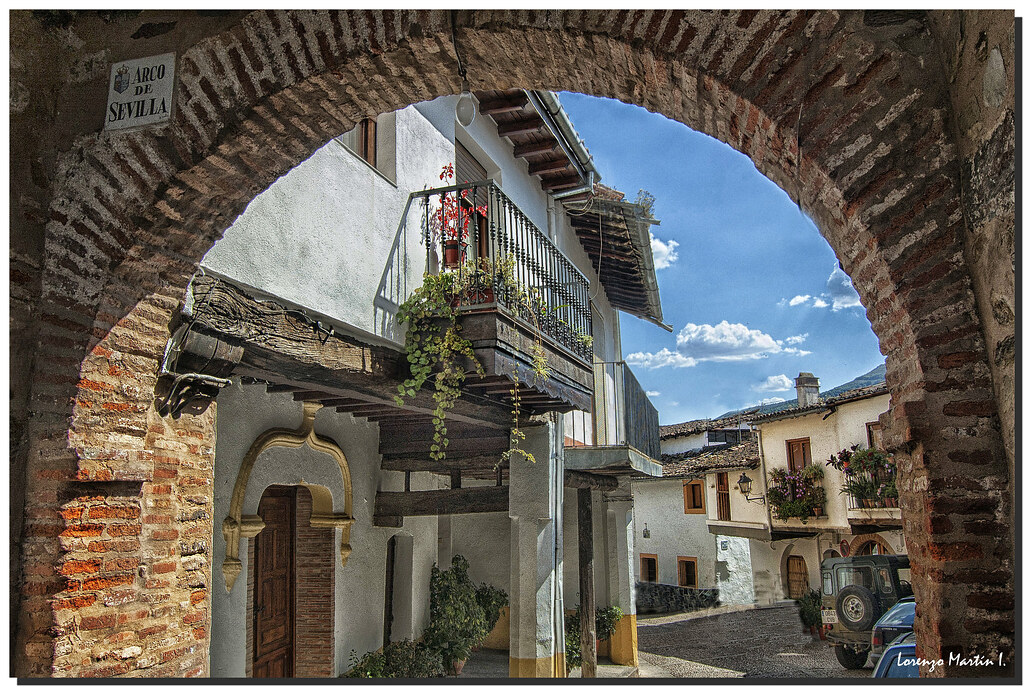
The town itself is simple in appearance. Streets are laid with granite, houses are solid, and façades are largely unadorned. There is a quiet consistency to the place rather than a concentration of standout sights.
The centre and its landmarks
At the heart of Logrosán is the parish church of Nuestra Señora de los Remedios, which occupies the main square and shapes much of the town’s layout. From the outside, it is restrained in style. Inside, there are a few modest altarpieces and an image that has long been the focus of local devotion.
The surrounding streets reflect the same understated character. Granite paving is a constant presence, and the overall feel is functional rather than decorative. It is the sort of place where a short walk gives a fairly complete picture of daily life and the built environment.
For a clearer sense of what has sustained the town over time, the Museo de la Minería brings in an essential layer of context.
Understanding the mining heritage
The Museo de la Minería offers a summary of Logrosán’s mining past. Inside, there is old machinery, explanatory panels, and various materials linked to underground extraction. It is not a large or highly elaborate museum, but it serves its purpose well: explaining where a significant part of the local economy came from over several decades.
A few kilometres from the town lies the Mina de Santa Marta. On some occasions, visits are organised to old galleries where the working conditions underground are explained. It is worth checking in advance before going, as it is not always open and usually operates by reservation.
Together, the museum and the mine provide a clearer understanding of why Logrosán developed as it did. Without that context, the town can seem quiet and minimal; with it, the place takes on more meaning.
If time is short
A brief visit can still be worthwhile. A walk through the centre, a look inside the church if it is open, and a stop at the Museo de la Minería are enough to form a basic impression of Logrosán.
With a little more time, heading out to the Mina de Santa Marta helps round out that picture, especially for anyone interested in industrial or social history. Even then, the overall visit remains relatively short. Two or three hours are usually enough to explore the town at a relaxed pace and include the museum.
Logrosán functions best as a stop along a broader route through the region. Nearby areas within Villuercas‑Ibores‑Jara offer more varied landscapes and additional places to visit, which helps balance the brevity of the town itself.
Seasons, traditions and practical notes
Spring and autumn are generally the most comfortable times to walk around the area. In summer, the heat can be intense around midday, so it makes more sense to be out early or later in the afternoon. Rain changes the experience in a different way, as the granite paving becomes slippery and nearby paths can quickly turn muddy.
Local traditions add occasional bursts of activity to an otherwise quiet setting. In August, the festival of Nuestra Señora de los Remedios usually takes place. These are livelier days, with religious events and popular activities that bring more people into the streets.
Semana Santa, or Holy Week, is marked in a more restrained manner. Processions pass through the centre, maintaining a sober tone that fits the town’s general character.
In autumn, activities linked to chestnuts appear, reflecting their importance in the surrounding hills during the season. These events connect the town to its natural environment, even though the urban area itself is quite flat.
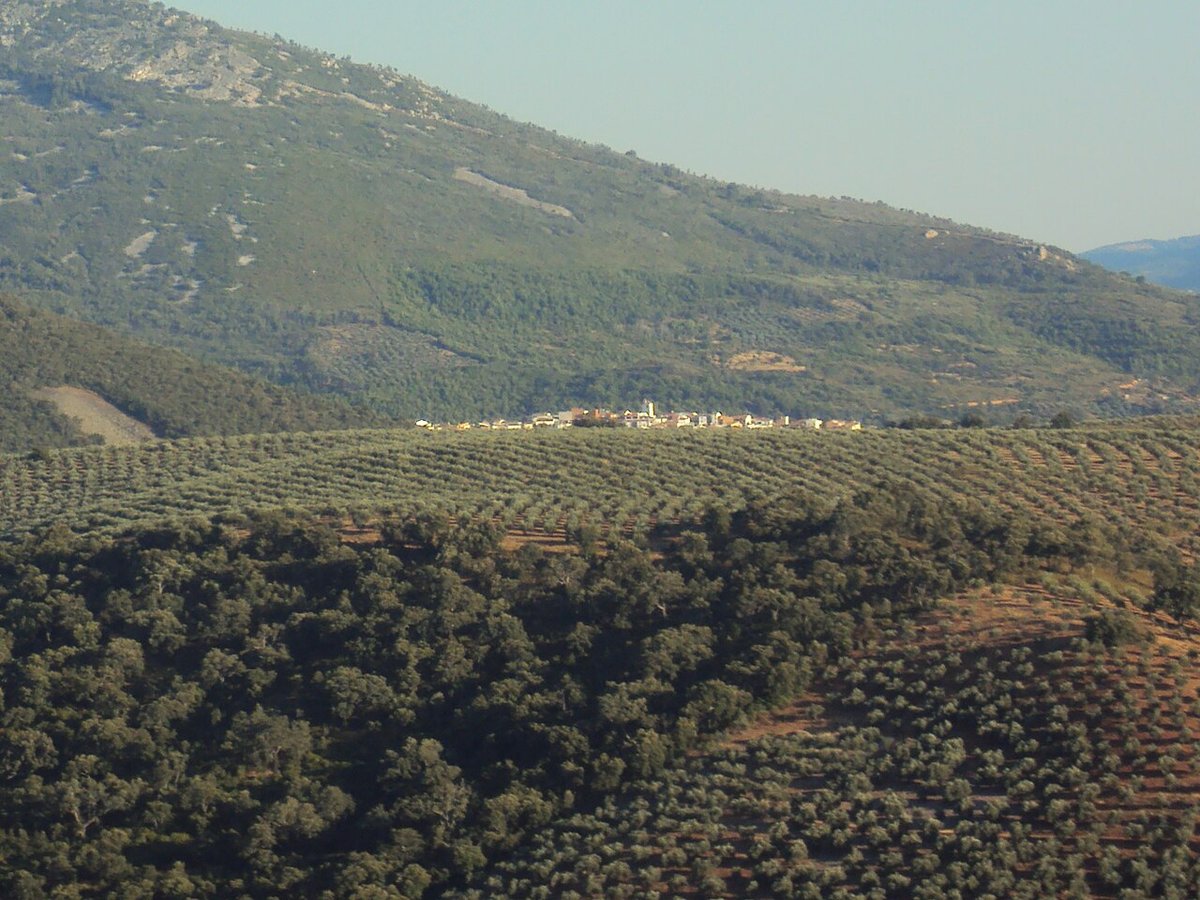
Although there are higher mountain ranges nearby, Logrosán sits on relatively level ground. To explore more rugged terrain or former mining areas, it is necessary to travel a few kilometres outside the town.
Getting there and moving around
Logrosán is about 90 kilometres from Cáceres, reached via the EX‑102. The road is in good condition, though it includes a fair number of bends in certain sections.
Within the town, comfortable footwear is enough. The granite underfoot is noticeable if wearing thin soles, especially on longer walks. When parking, it is worth leaving extra space on narrow streets, as manoeuvring can be more complicated than it first appears.
In practical terms, Logrosán is straightforward to visit and easy to understand. Its scale keeps things simple, and its mining background provides the main thread running through everything.