Full Article
about Mesas de Ibor
Small town on the Ibor River with a Roman bridge
Hide article Read full article
A detour that leads somewhere different
You know when you’re driving through Las Villuercas, the road is quiet, and you see a sign for a village you’ve never heard of? You take the turn on a whim, just to see. That’s Mesas de Ibor. A few bends later, it appears. Not much more than a cluster of houses and the kind of silence that makes your car engine sound loud. About 150 people live here, and you feel that number immediately.
It sits in this comarca where the landscape calls the shots. We’re talking hard hills, proper goat country, with tracks that make you glad you didn’t bring the low-slung city car. Don’t come looking for a pretty plaza mayor or a castle. You come to Mesas de Ibor to see what a working village in Extremadura actually looks like when it’s not trying to impress anyone.
You are literally in a geopark
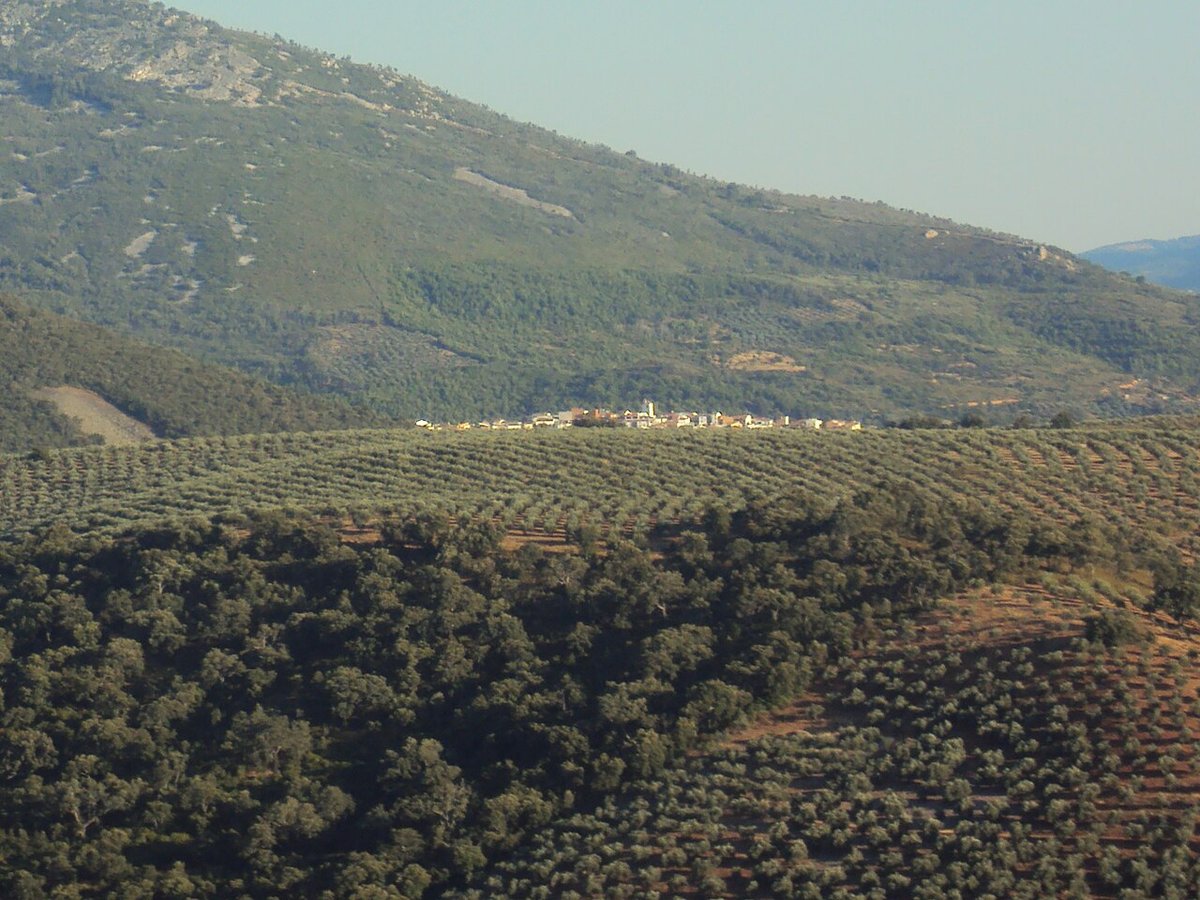
The Villuercas-Ibores-Jara Geopark isn't just a sign on the road here; it's the whole stage. The rock is the main character. Go for a walk and you'll see it: folded layers of stone, quartzite ridges that look like giant spines, and ravines that feel ancient. It's not subtle.
Even if rocks aren't your thing, the vibe is distinct. Those long mountain ranges create these narrow valleys filled with holm oaks and scrub. It forces a slower pace. Your eyes start noticing shapes in the land instead of looking for the next shop or bar.
The church and what passes for a centre
The village centres on the church of Virgen de la Asunción. Let's be clear: it's not going to blow your mind architecturally. It's built from local stone, has a simple, sturdy shape, and looks like it's been fixed up over the years with whatever was to hand.
If it's open, pop in. It's small, cool inside, with arches worn smooth by time. It feels used, not curated. Around it is a modest square and a few short streets. You can walk every single one in about ten minutes without breaking a sweat.
Houses that show their work
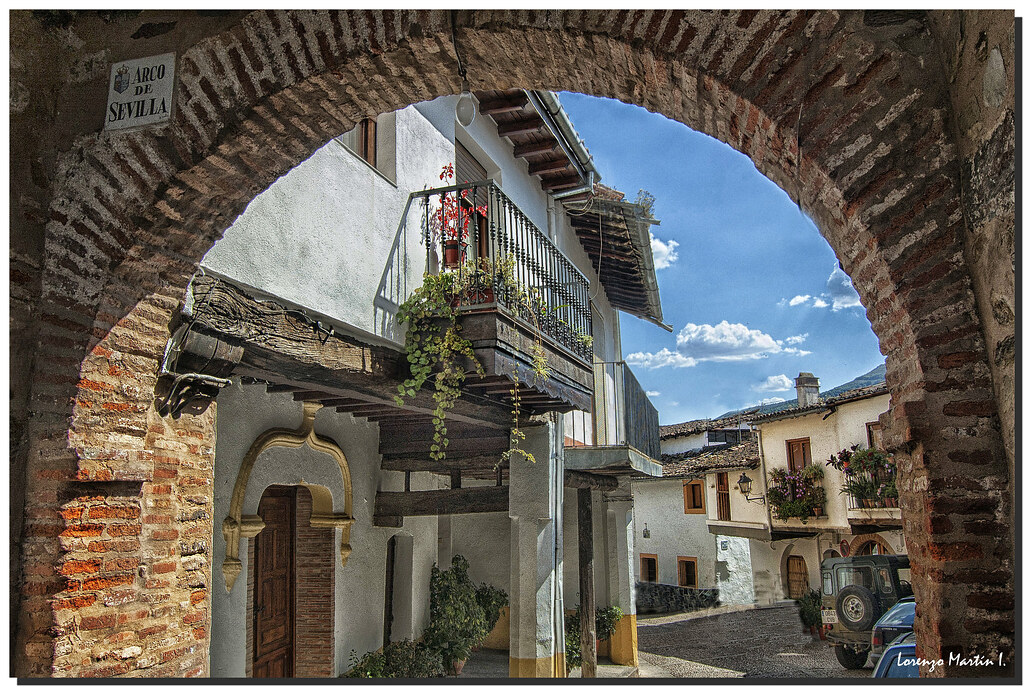
Walking here is about spotting the practical details. Lots of houses are built the old way: rough masonry walls, stone lintels over the doors, those classic curved tile roofs.
Some doorways are weirdly wide—built for mules and carts, not for SUVs. Look for bodegas dug into the rock beneath houses and little storage sheds attached to them. It all points to how life worked here: farming, goats, making your own wine… being self-sufficient out of necessity.
This isn't a historic centre preserved in amber. It's just houses doing their job, shaped by need rather than aesthetics.
The good stuff starts where the pavement ends
For me, the point of coming is to get out past the last house. A few dirt tracks lead straight from the village edge into the dehesa and scrubland.
These aren't official "hiking trails" with perfect signposting; they're old livestock paths that walkers now use. You're walking under holm oaks on stony ground with long stretches of quiet so deep you hear your own footsteps. Look up and there's often a buzzard circling; listen close and there's rustling in the bushes.
It suits slow ambles more than epic hikes. It’s about observation, not ticking off kilometres.
When to swing by (and why)
Come in spring or autumn if you can stand a choice—the light is softer, temperatures are human-friendly, and the landscape has more colour contrast. Summer? It gets fiercely hot by midday. Winter brings a wind through those valleys that cuts right through you.
Honestly, don't plan a whole trip around Mesas de Ibor alone. Treat it as part of a wider drive through Las Villuercas. Stop for an hour or two. Walk its streets, stretch your legs on one of those tracks, get back in the car. That’s how it works best. It gives you an honest look at this kind of Extremadura: tough terrain, quiet living, and life very much on the land's own terms