Full Article
about Navezuelas
In the heart of the Villuercas; source of the Almonte river and rugged nature
Ocultar artículo Leer artículo completo
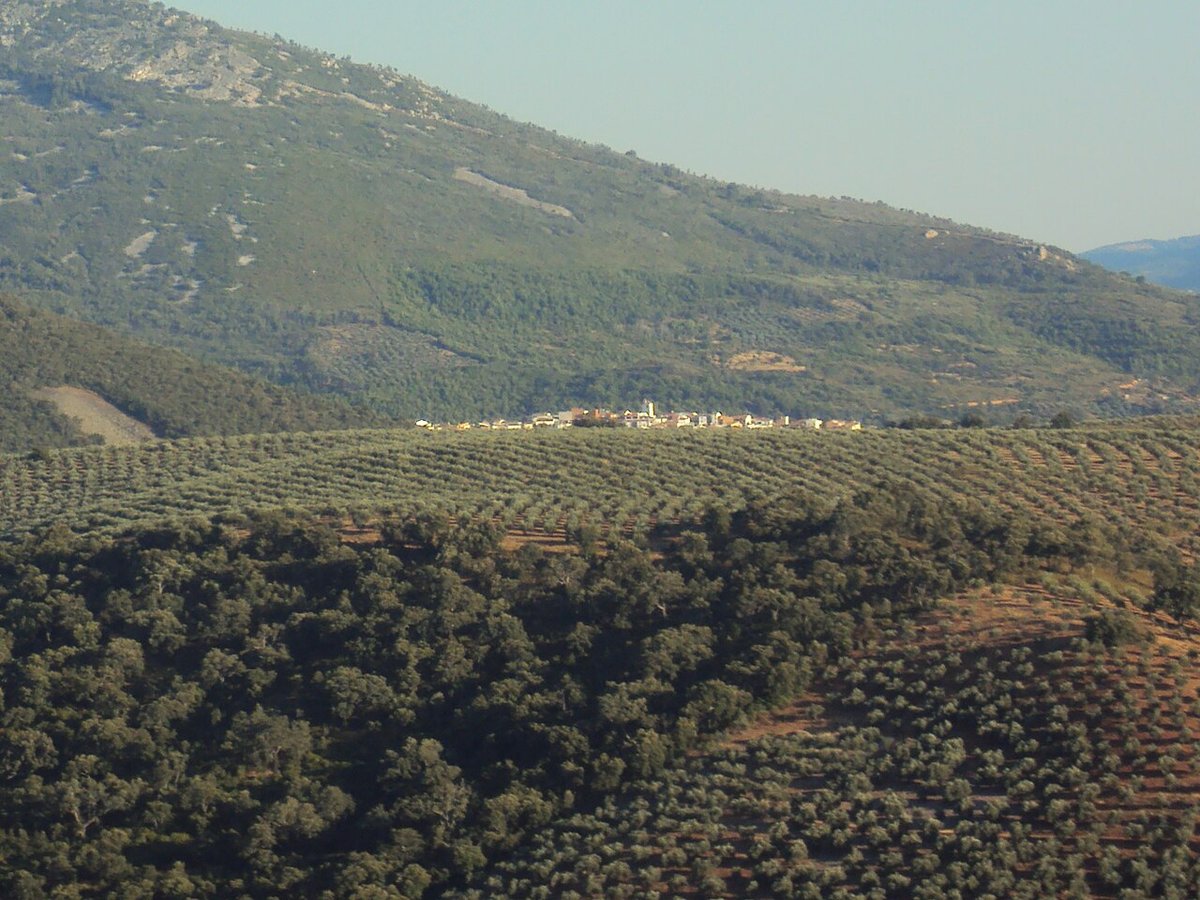
The morning bell rings at 850 metres above sea level. In Navezuelas, that means the air arrives thin and cool even in May, carrying the scent of thyme and the sound of someone sweeping their threshold with a straw broom. Six hundred souls live here, scattered across granite houses that grip the slope like limpets. Below, the plain of Extremadura dissolves into heat haze; behind, the Villuercas ridge climbs to 1 600 m and keeps climbing until it becomes the Gredos further east. The village is less a destination than a balcony: step out of the bar, turn your back on the espresso machine, and you are already in serious mountain country.
Stone, Slope and Silence
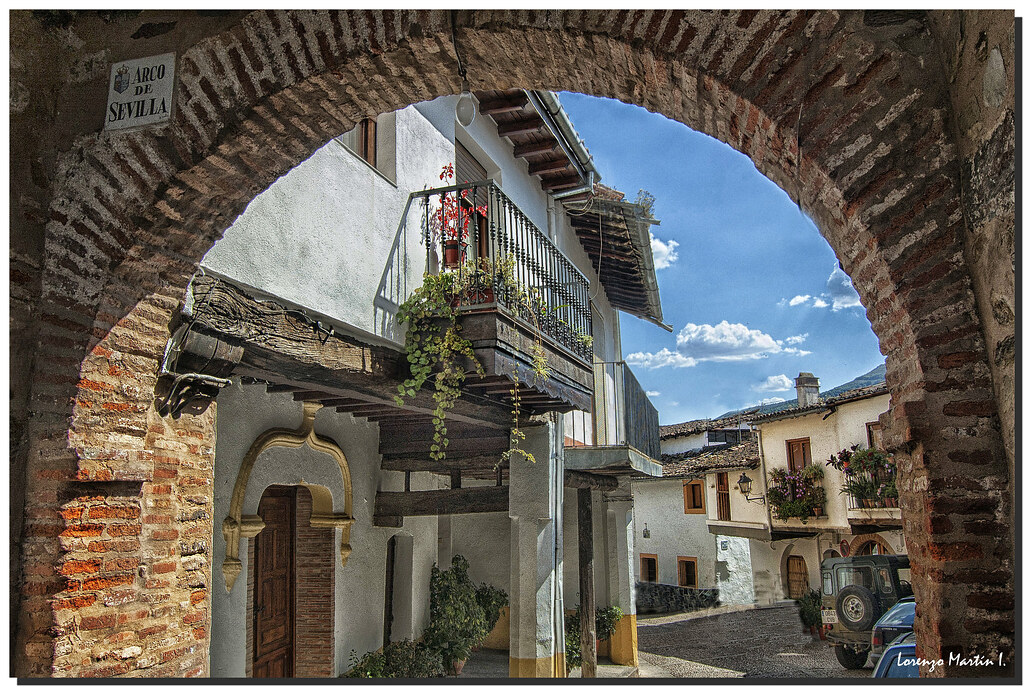
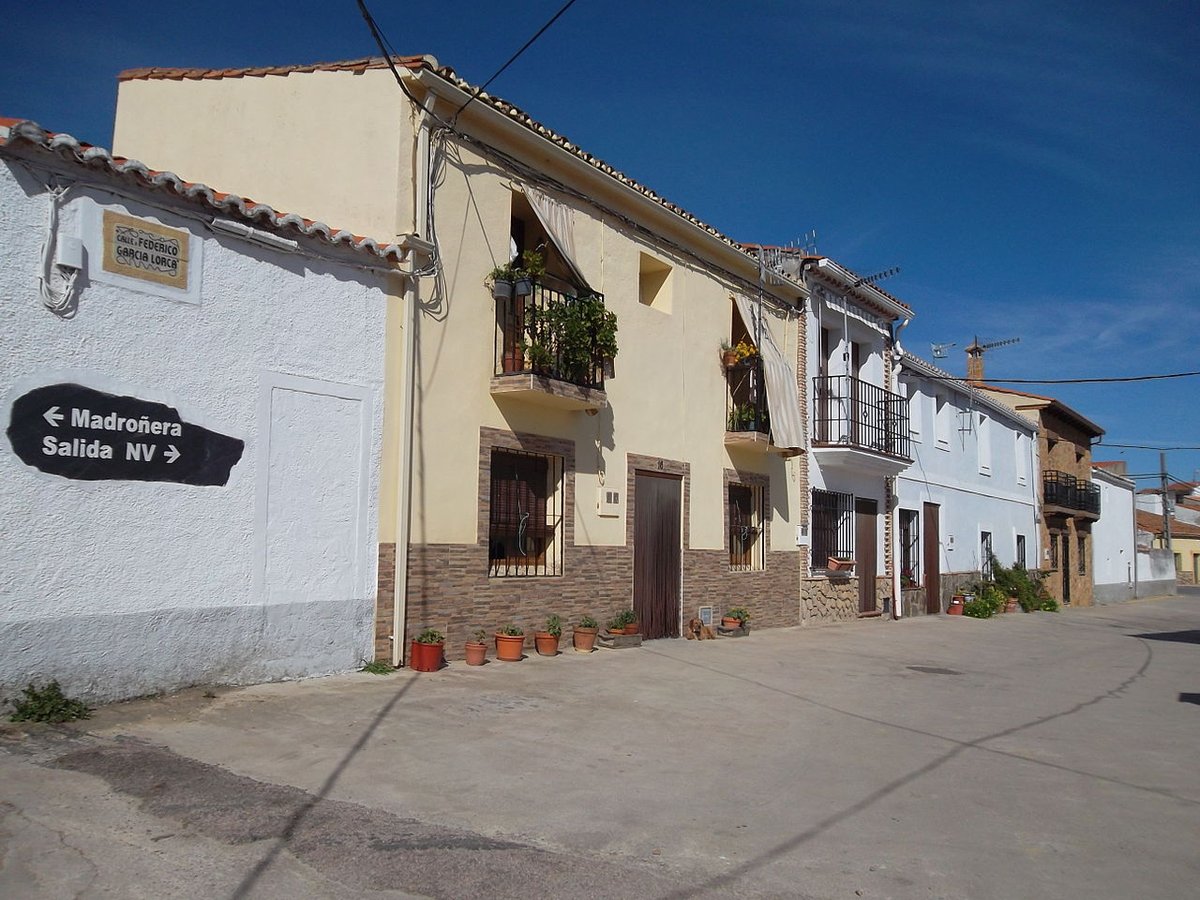
There is no monumental core to tick off, no castle gate or Renaissance plaza. Instead, a lattice of lanes rises and drops, just wide enough for a donkey and now, reluctantly, a Fiat Panda. Walls are patched together from whatever the hill provided: chestnut beams, chunks of quartz, the odd Roman tile recycled from a field further down. The parish church of San Juan Bautista stands at the top, its square tower a handy reference point when every street looks identical after the second beer. Inside, the air smells of candle wax and damp stone; outside, elderly men occupy the single bench as if it were leased property, trading crop forecasts in slow Extremaduran Spanish that even Madrilenos struggle to follow.
Walk twenty minutes past the last street lamp and the human soundtrack stops. Oak dehesas give way to dense Mediterranean scrub—rockrose, lavender, juniper—where wild boar root overnight and Iberian pigs still fatten on acorns. In October the undergrowth pulses with mushrooms: penny bun, saffron milk-cap, a handful that no sane mycologist would touch. Locals carry them in wicker baskets and inspect each specimen as though reading a bank note. If you lack that expertise, stick to the chestnut woods on the north-facing slopes; the trees were planted under Franco’s reforestation drive and now provide firewood, walking shade and, every second weekend in November, a free roast in the village square.
When the Weather Writes the Diary
Altitude flattens the extremes of the Spanish interior but it also rewrites the rules without warning. In April you can eat breakfast under a plum tree in full blossom and, by teatime, watch sleet sweep across the pasture. July afternoons hit 34 °C, yet after midnight you will be glad of the wool jumper you nearly left in London. Winter brings proper frost: water pipes freeze, the track to the nearest supermarket turns to porridge, and the weekly bus from Guadalupe simply doesn’t bother if the thermometer drops below zero. Spring and autumn are the reliable seasons—daytime 18–22 °C, cool enough for walking, warm enough to sit outside with a glass of the local red. Plan around them and you avoid both the empty, slightly melancholy pause of January and the August influx of second-home owners whose 4x4s block the narrow lanes while they argue over wheelie-bin rota.
Walking Without Waymarks
Official maps of the Villuercas-Ibores-Jara Geopark show a spider-web of trails, but on the ground the paint blisters and fades. That is not necessarily a complaint. Start from the concrete trough on the eastern edge of Navezuelas—locals call it el pilón—and follow the dirt road that services the weather station. After 2 km the tarmac gives up; keep climbing and you reach a saddle at 1 100 m where the view flips from granite to slate, a geological boundary that once fooled miners into digging for tin that was never there. Turn north-east and a faint path corkscrews down to the abandoned hamlet of Robledillo, population two goats and one determined fig tree. The round trip is 12 km, takes four hours, and you will meet nobody except, perhaps, a shepherd on a quad bike who waves without slowing.
If that sounds too casual, download the GPX file for the Ruta de los Castañares before leaving home. Phone coverage is patchy once you drop off the main crest, and the only pub en route opens at the owner’s whim. Carry a litre of water per person; streams marked on the map are usually dry by June. Finally, remember that every fence belongs to somebody. Extremaduran farmers are famously hospitable—offer a buenos días and they will probably direct you to the best viewpoint—but they also keep dogs that earn their supper. Close every gate you open, even if you have to back-track ten metres through mud.
Where to Sleep, What to Eat, How to Pay for It
Accommodation within the village limits amounts to three guest rooms above the butcher’s shop and a small rural hotel in a converted grain store. Both are spotless, inexpensive—expect €55 a night including breakfast—and booked solid at Easter. The hotel does a four-course evening menu for €18: soup thick enough to stand a spoon in, wild-boar stew, local cheese, and a glass of Villuercas-Ibores red that punches above its €3 price tag. Vegetarians get a baked aubergine which tastes mainly of wood smoke, a reminder that here meat is seasoning and default. If you need a wider choice, drive 25 minutes to Logrosán where two competing asadores will serve you roast lamb until you plead for mercy.
Shops are similarly scarce. The Supermercado Núñez opens 9–13:00, 17–20:00 and stocks UHT milk, tinned tuna, and a surprisingly cosmopolitan rack of Riojas. For fruit and vegetables you wait for the mobile van that toots its horn every Tuesday and Friday outside the pharmacy. Bread arrives earlier, around ten, and sells out by half past. Bring cash: the card machine broke in 2019 and no one has rushed to replace it.
Getting There, Getting Out
From the UK the usual route is Stansted to Seville, pick up a hire car, and head north on the A-66. After 90 minutes you leave the motorway at Torremocha, swap to the EX-208, and prepare for 45 minutes of curves. The final 8 km from Logrosán climb 400 m through a sandstone gorge where Spanish drivers treat the centre line as decorative. In winter the surface can ice over; if the radio mentions nevada, consider staying the night in the valley rather than discovering whether your rental’s tyres have ever met a snow-chain.
Public transport exists, barely. Monday and Thursday a bus leaves Cáceres at 15:00, reaches Guadalupe at 16:30, and continues to Navezuelas by 17:15. The return departs 7:00 next morning, which gives you fourteen hours to appreciate rural nightlife—or sixteen if the driver oversleeps. Miss it and a taxi from Guadalupe costs €35, assuming you can persuade the solitary operator to make the uphill run after dark.
Worth the Detour?
Navezuelas will never feature on a postcard carousel. It has no castle, no Michelin stars, no craft brewery with Edison bulbs. What it offers instead is immediacy: within five minutes of locking your door you can be among holm oaks that have never heard a chainsaw, following a ridge where the only sound is your own pulse. Stay a night and you learn the rhythm—how the village wakes with the sun, closes at siesta, and flickers back to life when the temperature drops just enough for neighbours to claim the street. Stay two, and you stop planning. Someone hands you a slice of torta del casar runny enough to spoon, the bar owner pours a shot of licor de bellota on the house, and you realise the place has done what the sierra does best: slowed the clock without asking permission.