Full Article
about Burguillos del Cerro
Historic town declared a Cultural Heritage site; dominated by a powerful Templar castle and an old quarter filled with stately homes.
Hide article Read full article
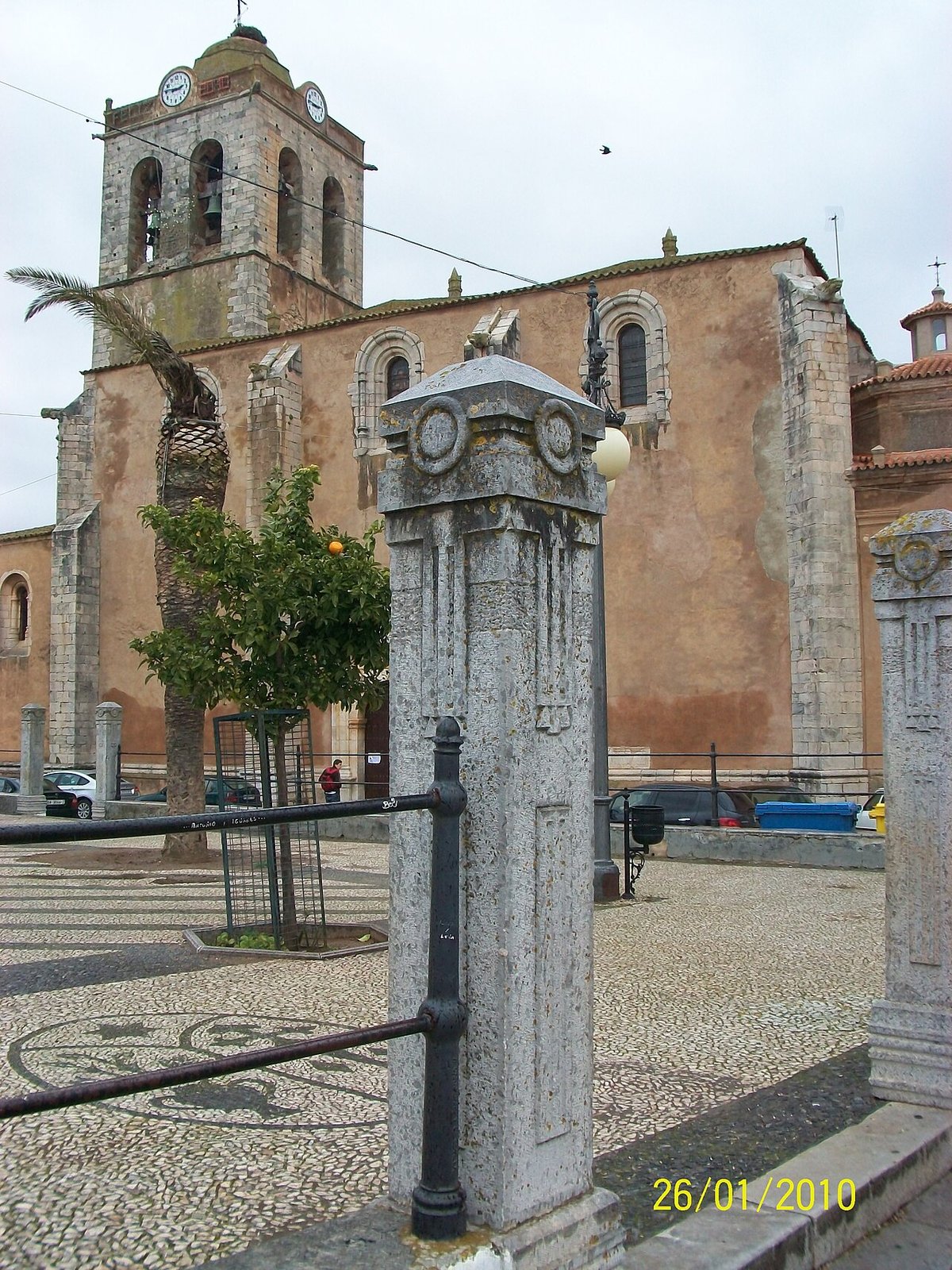
The church bells strike twelve while the water of the Pilar Grande still feels cold on the fingers. In the square, an older woman mutters that at this hour, washing your eyes will cure them. Few people seem to pay much attention, yet she keeps repeating it. It is Friday, the streets are quiet, and the air carries the smell of freshly turned soil from a nearby plot.
From the castle, the dehesa stretches out in dark green waves as far as the eye can see. Holm oaks and cork oaks surround Burguillos del Cerro, a town of just under three thousand inhabitants where the streets rise and fall without much logic. From above, red-tiled roofs come into view, along with narrow cobbled lanes that wind down towards the square, and, dominating everything, the keep standing sharply against the sky.
When asparagus shapes the season
April usually brings asparagus. Along the edges of paths, wild green stalks appear, slender with slightly purple tips. The white ones, thicker, are boiled in salted water and dressed with local olive oil.
During these weeks, gatherings and small events take place around asparagus, and the mood reaches the square. Wicker baskets are set down, hands demonstrate how to peel them without breaking the tips, and conversations drift back and forth. The smell blends damp earth, freshly cut grass and asparagus sizzling in a nearby kitchen. Revuelto, a scrambled dish, is eaten hot with bread from the day, wherever a seat can be found, while children cross the square from one side to the other.
The castle above the hill
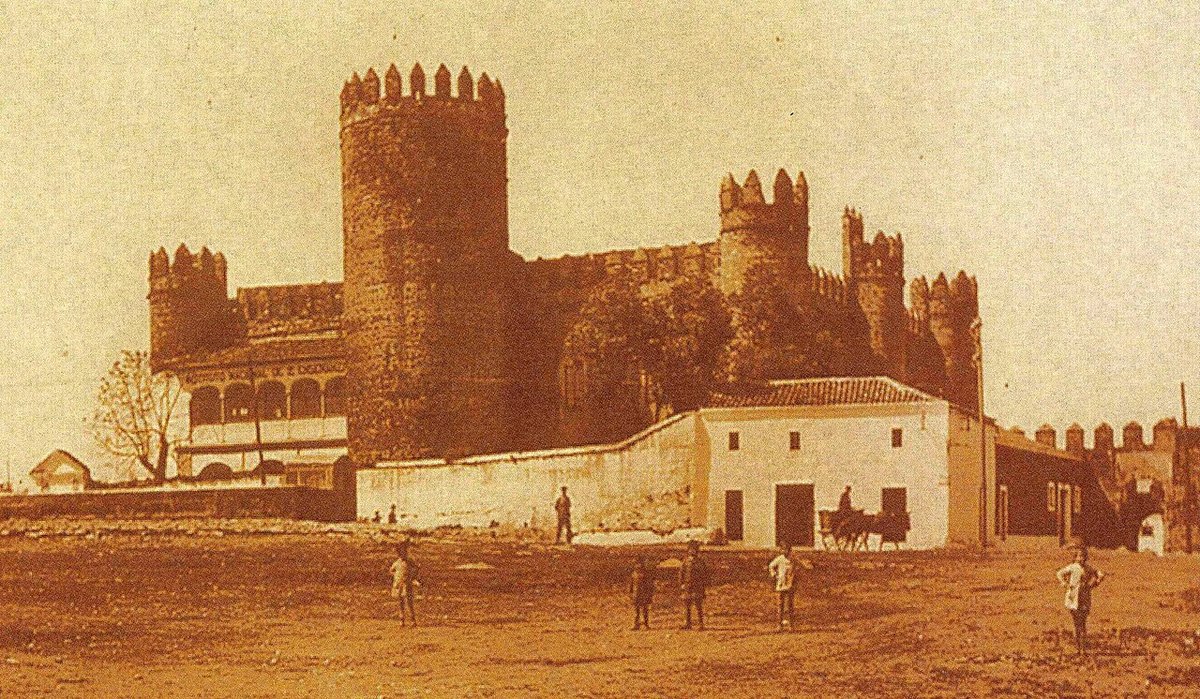
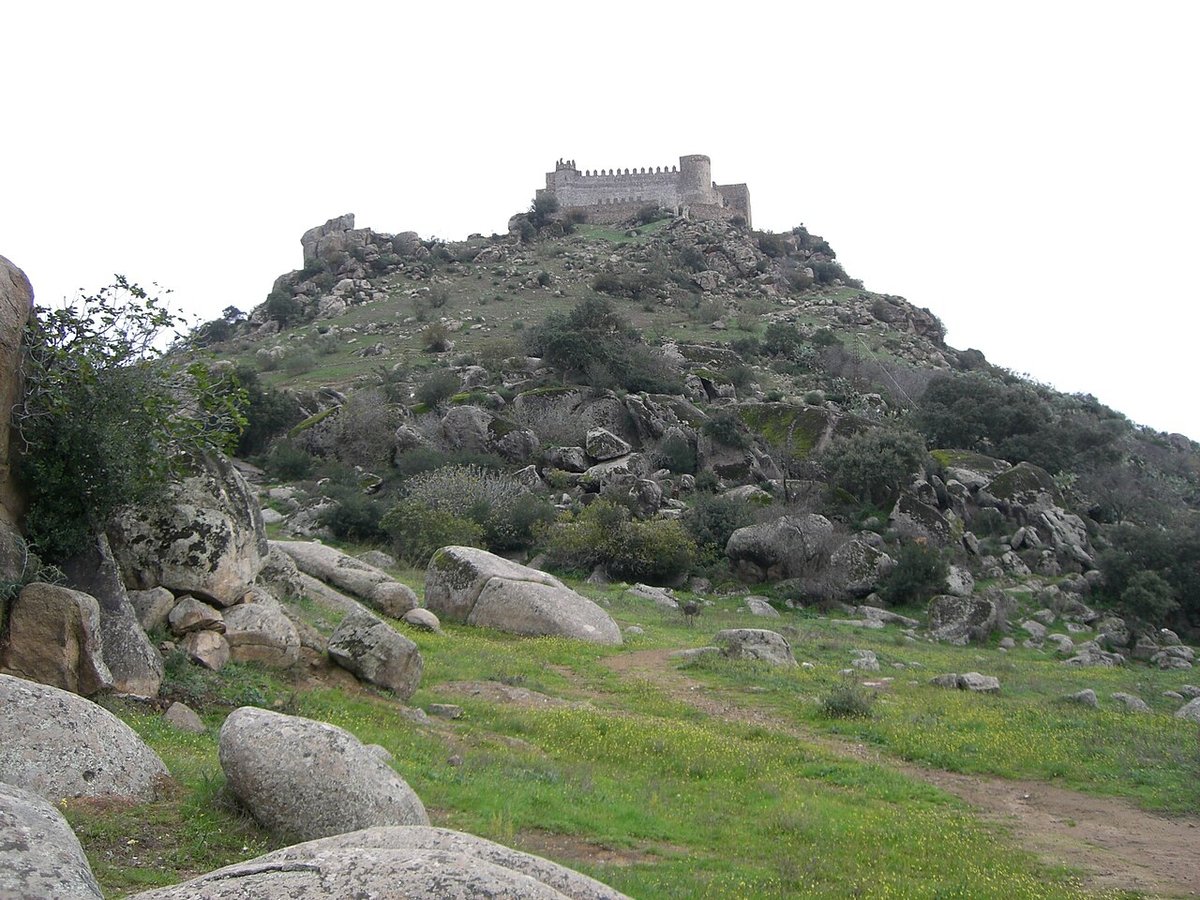
The castle of Burguillos del Cerro does not feel staged. The stone is rough, and the hill it stands on is genuinely steep, so the climb makes itself known in the legs.
The current fortress took shape in the medieval period and was, for a time, linked to the Order of the Temple, a detail still remembered when people speak about it. Entry is through a simple arch, and once inside, the staircases are narrow and remain cool even in summer.
At the top, there is usually wind. From the battlements, the whole town is visible: chimneys, inner courtyards barely glimpsed from the street, and beyond, the dehesa opening out towards the south. By mid-afternoon, the light falls sideways across the walls, and the stone turns a golden colour that lasts only a few minutes.
In summer, the climb is better done early in the day or as the sun begins to drop. There is little shade on the hill.
Crosses at the corners
In Burguillos, it is easy to notice the iron crosses that appear at certain corners or tucked into small spaces in the old quarter. Some are rusted, others hold flowers, sometimes fresh, sometimes plastic, shifting slightly in the wind.
Locally, it is said that from time to time a new cross is raised to replace the previous one, a tradition many residents link to earlier centuries. The most recent installation is still remembered in the town and, according to older voices, many decades will pass before the next.
Whatever their exact origin, these crosses form part of the everyday landscape of the historic centre.
Holy Thursday scented with rosemary
Before dawn, Holy Thursday has a distinct smell in Burguillos del Cerro: crushed rosemary and warm candle wax.
Some processions begin while it is still dark. The streets fall silent, whitewashed walls reflecting the light of candles. Religious floats move slowly, accompanied by residents who have followed the same route for years.
It is a moment that feels very different from the rest of the year. There is no hurry, and almost everything happens in lowered voices.
Reaching Burguillos and choosing the moment
Burguillos del Cerro lies in the south of the province of Badajoz, in the Zafra-Río Bodión area. It is reached by local roads that pass through dehesas and small olive groves. At sunset it is not unusual to see animals crossing, so driving with care is advisable.
Spring is often a good time to walk in the surrounding countryside. The fields are green and the air still carries a freshness. Even so, temperatures drop more than expected at night, so a light jacket is useful.
In August, the rhythm shifts. Part of the town leaves for a few days and the afternoons grow quieter, although the summer festivities, usually around San Lorenzo, fill the streets with music for several nights.
For a slower view of the town, a weekday visit works well. Head up to the castle towards the end of the afternoon, then make your way down to the Pilar Grande. At that hour the water remains cold, and there is often someone who lingers for a short chat before heading home. The story about washing your eyes at twelve may come up again. Here, those small beliefs continue to circulate as if time moved a little more slowly.