Full Article
about La Lapa
Small town with charm near Zafra; known for its mountain setting and quiet.
Hide article Read full article
A small village shaped by the land
La Lapa, in the Zafra–Río Bodión area, is one of those places in southern Badajoz that makes more sense when seen alongside its surroundings. Tourism here is tied closely to that idea: a small settlement, now with around 300 inhabitants, whose daily life has long revolved around farming and livestock.
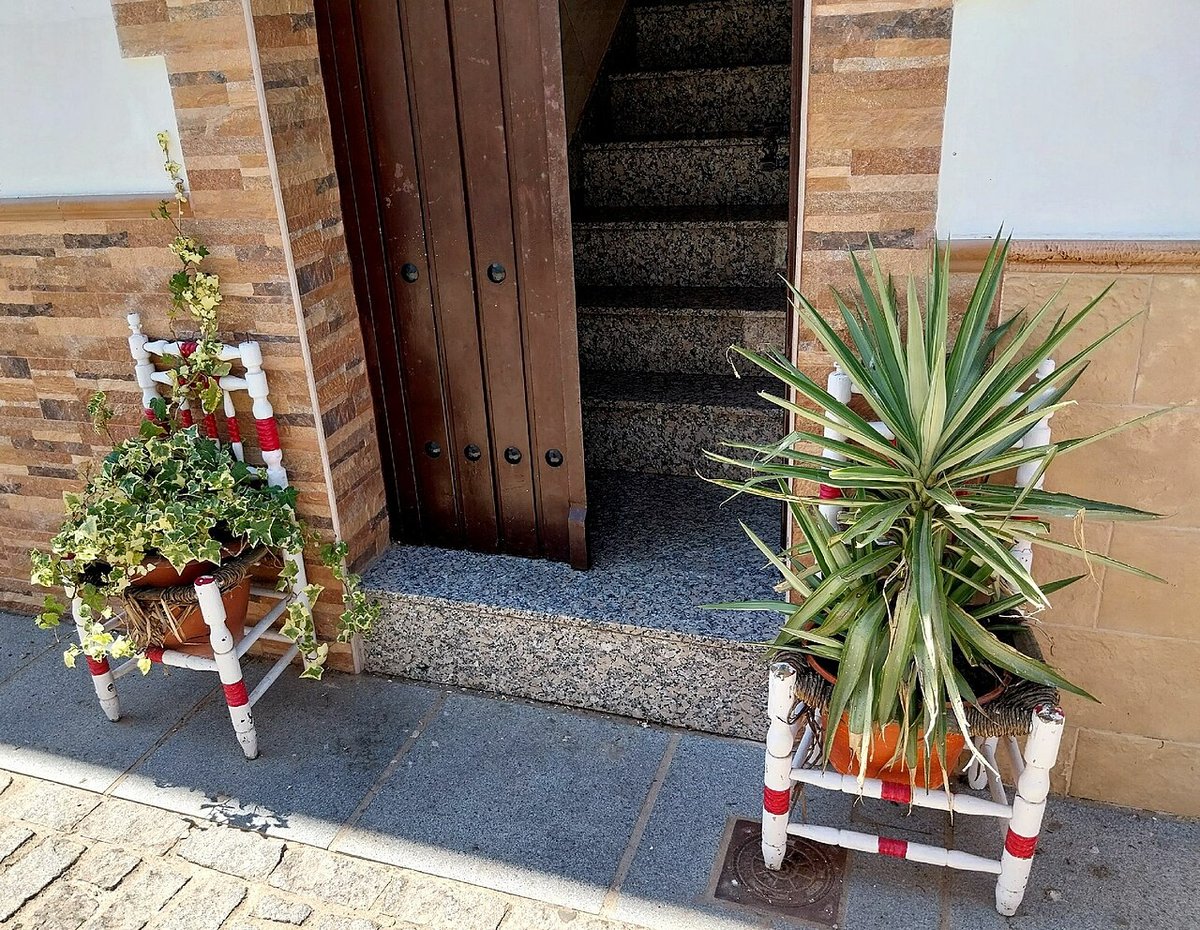
The layout is simple and easy to follow. Houses cluster around a central square, with a handful of streets branching out towards the edges of the village. Whitewashed façades, plain walls and the occasional wrought-iron grille create a consistent look that mirrors the nearby dehesa landscape. The dehesa, a type of open woodland typical of western Spain, is characterised by scattered holm oaks and pasture, and it plays a central role in shaping both the economy and the visual identity of the area.
There is no sense of the village being arranged for visitors. What appears is the result of everyday use, gradual changes and practical needs. La Lapa is, above all, a working agricultural community.
San Onofre and the village heart
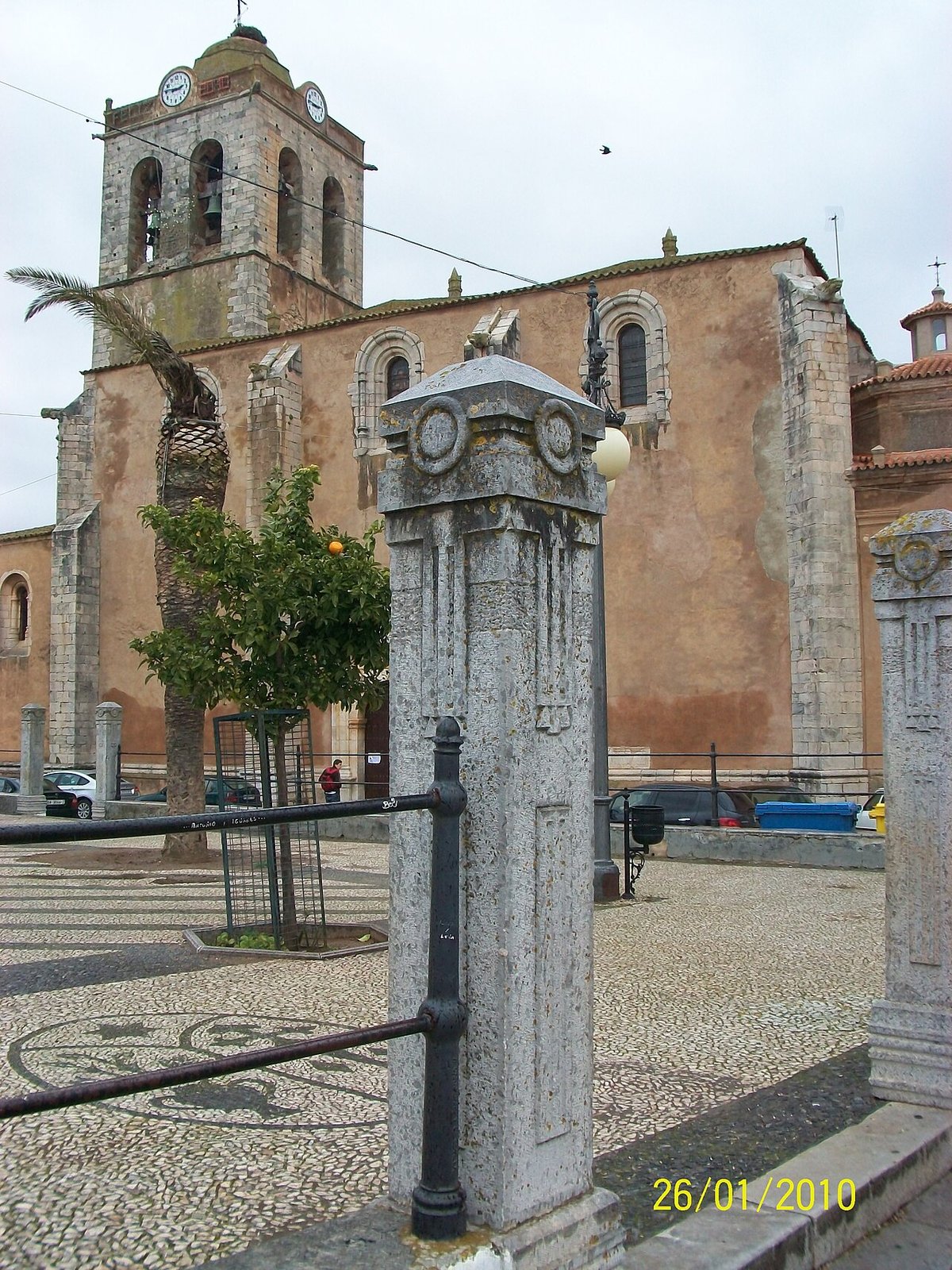
The most recognisable building is the parish church of San Onofre, set on the main square. Its current structure is usually dated to around the 16th century, although later alterations mean that what stands today is not from a single period. Like many rural churches in this part of Extremadura, it has a restrained, functional appearance.
Inside, there is a modest Baroque altarpiece. It does not stand out for its size, but it fits naturally within the space. The church’s importance lies as much in its position as in its features. The square around it acts as a point of reference, the place from which the main streets unfold and where visitors tend to orient themselves on arrival.
The square itself reflects the scale of the village. It is neither grand nor decorative, but it anchors daily life. From here, everything feels close at hand.
Everyday architecture and quiet streets
La Lapa’s urban area is small and can be explored without effort. The houses follow a traditional pattern common across this part of Extremadura: one or two storeys, whitewashed fronts and spaces linked to agricultural work. These are homes designed with function in mind, shaped by generations who depended on the land.
Some streets still show features connected to that way of life. Wide gateways, for example, were built to allow animals or carts to pass through. They remain as traces of a time when livestock played a more visible role within the village itself.
There is little sign of deliberate beautification aimed at tourism. Instead, the streets reflect gradual adaptation, with each household making its own changes over time. This gives the village a sense of continuity rather than polish. Walking through it means observing how practical needs have guided its form, rather than any attempt to create a curated image.
The landscape beyond the last houses
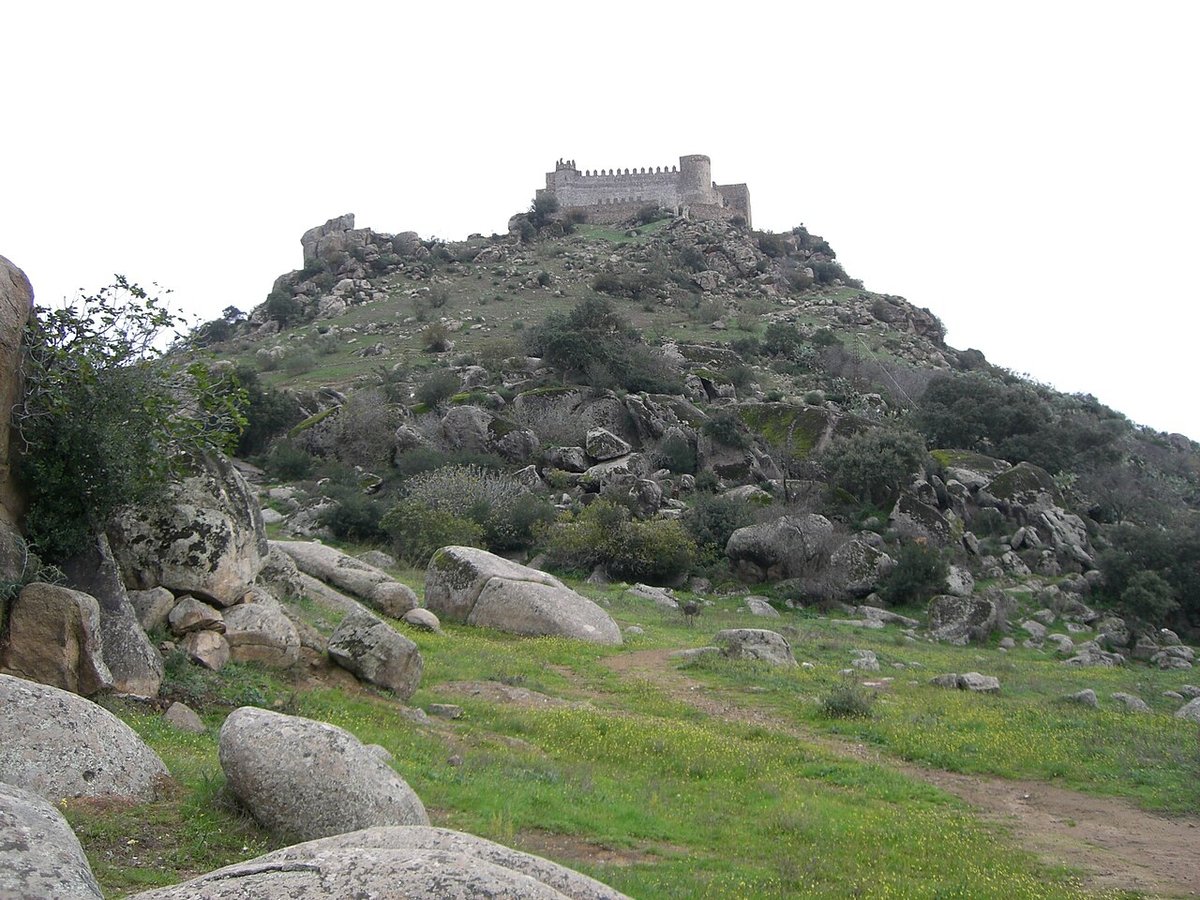
Once past the final row of buildings, agricultural tracks begin almost immediately. These paths lead into a landscape typical of the southern part of the province: dry farmland combined with stretches of dehesa dotted with holm oaks. The terrain is gentle, with low rises and open plots of land.
These tracks are used daily for farm work, but they can also be followed on foot or by bicycle for a quiet outing. Movement through this landscape is slow and unobstructed, shaped by the openness of the terrain rather than marked routes or viewpoints.
At certain times of day, the countryside becomes more active. Early morning and late afternoon are when work in the fields is most noticeable, and it is also when birdlife associated with the dehesa is easier to spot among the trees. The setting remains understated, but it offers a clear sense of how closely the village and its surroundings are linked.
When to visit and how long to stay
Spring and autumn are generally the most comfortable seasons for walking in the area. Summer brings high temperatures, so it makes sense to plan any outdoor activity early in the day and leave the middle hours for rest.
The village itself does not require much time to explore. A walk through the square, the church and the surrounding streets can be done in about an hour. For many, La Lapa works best as a short stop within a wider route through the region, often combined with visits to larger nearby towns.
Reaching the village is simplest by car. From Badajoz, the usual approach is via the A-66 towards the Zafra area, followed by local roads. Public transport options are limited, which is common in small municipalities across this part of Extremadura.
La Lapa is best understood on its own terms. It is not a place centred on monuments or organised activities. Instead, it offers the steady rhythm of a village that continues to function as it always has, closely tied to the land around it.