Full Article
about Los Santos de Maimona
White town with a striking parish church; a hub for transport and for cultural and musical tradition.
Hide article Read full article
A place that reveals itself slowly
Tourism in Los Santos de Maimona has a way of stretching out a short visit. From the road, it looks like another whitewashed town in the south of Badajoz, one of many that pass by the car window without much fuss. The impression shifts once you step into the centre and slow your pace. Details begin to surface: traces of the Order of Santiago, streets that run straighter than expected, and a local nickname that still pops up now and then, “El Piropo Blanco”.
This is not a place that tries to impress at first glance. It asks for a bit of time and curiosity, and then starts to make sense in its own understated way.
A town shaped by planning
Los Santos de Maimona stands out because it did not grow in the usual gradual way around an ancient core. Its origins are more deliberate.
After the Reconquista, the Order of Santiago organised the settlement here in the 13th century. That meant the town was planned rather than assembled piece by piece. People did not simply build wherever they could. There was an idea behind how everything should fit together. That approach still shows today. Walk through parts of the centre and something feels slightly unusual for a historic town: fairly straight streets, clear intersections, a sense of order that is not always typical in places of similar age.
The Town Hall, the Ayuntamiento, connects directly to that period under the Order of Santiago. For centuries it served as the headquarters of the encomienda, the administrative unit that managed land, harvests and much of daily life in the area. That role hints at the town’s past importance. It was not an isolated settlement but a place with real weight in its surroundings.
White façades and small discoveries
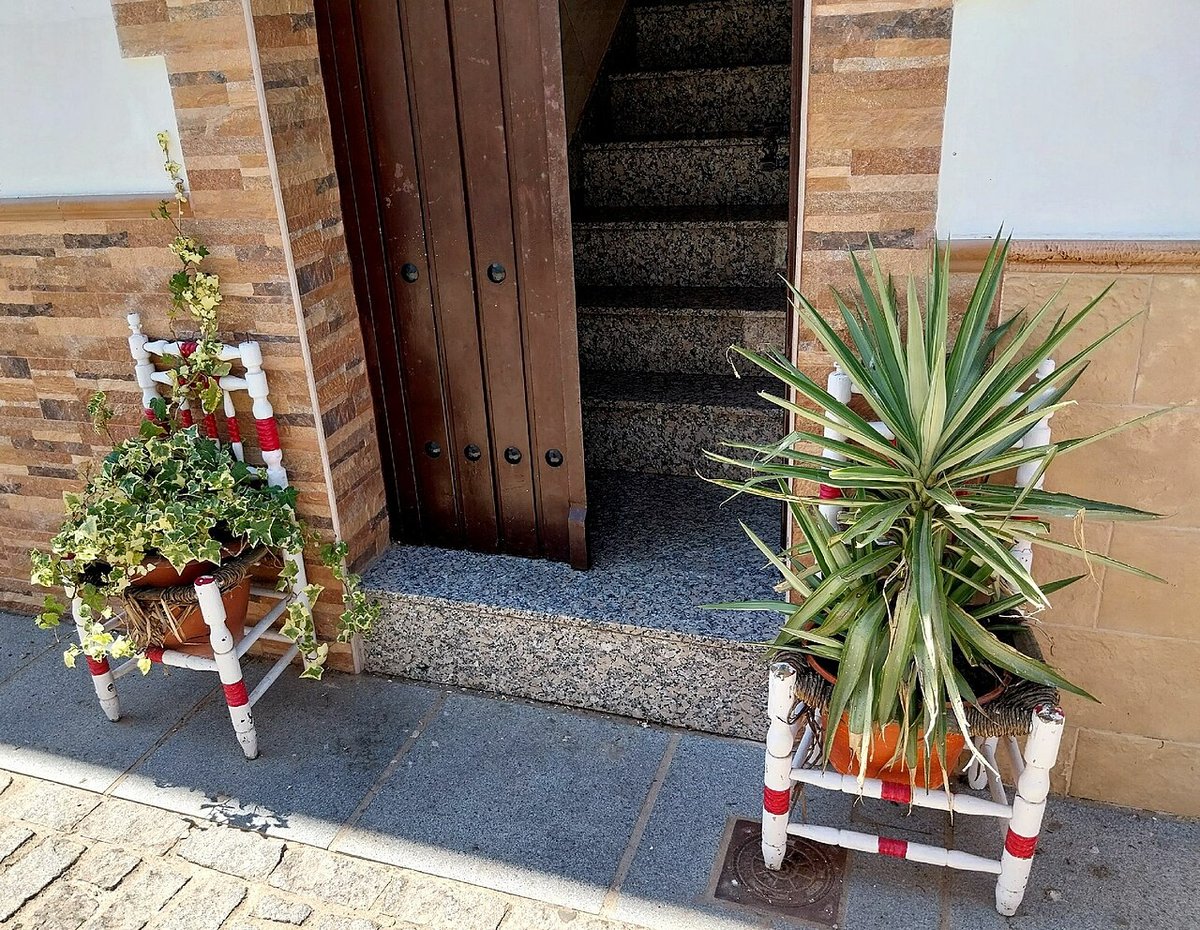
The nickname “El Piropo Blanco” is usually linked to the whitewashed façades that dominate the town centre. These are not decorative choices made for visitors. They reflect a traditional way of building and maintaining homes across this part of Extremadura.
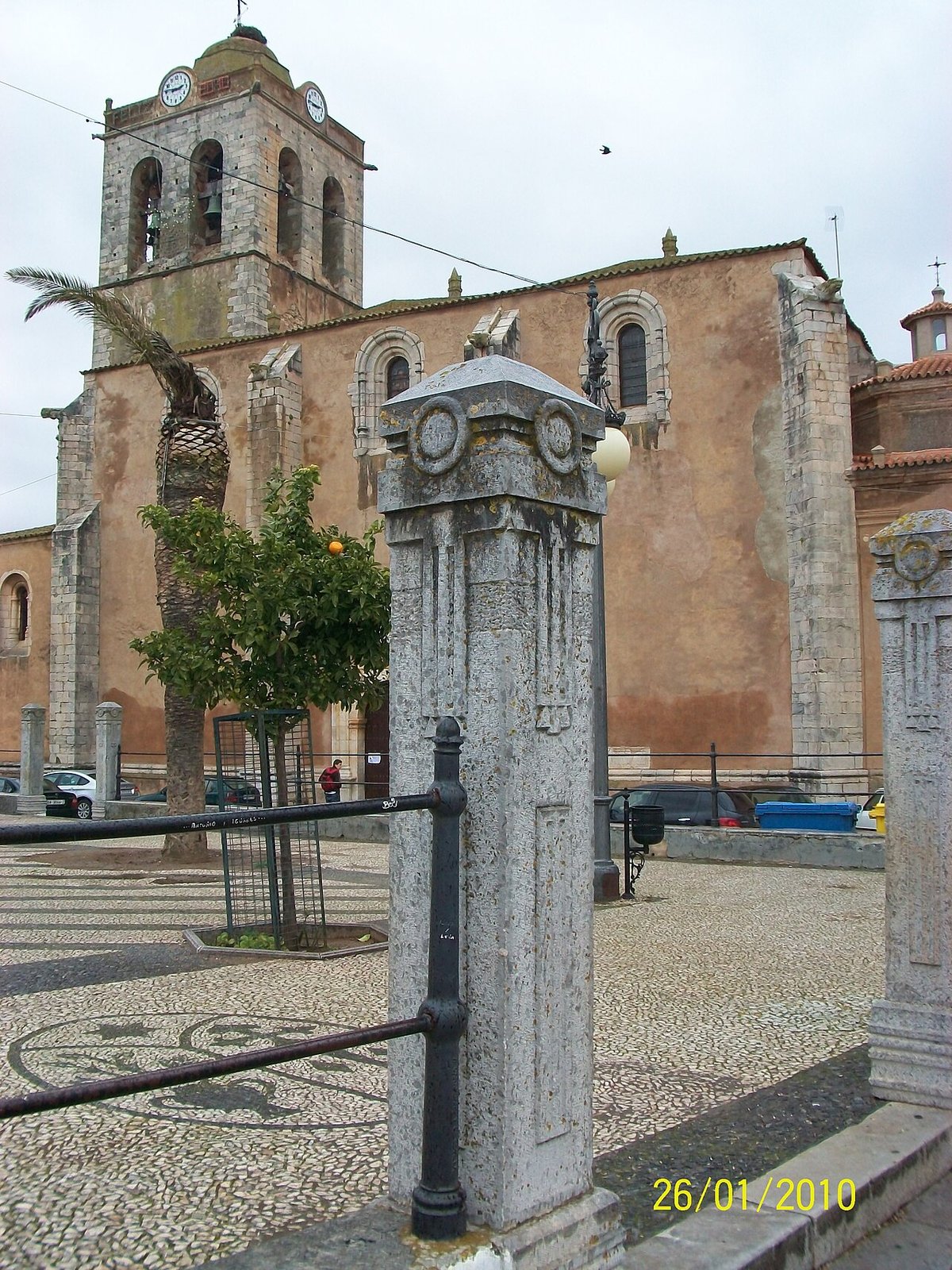
A walk through the streets brings up small points of interest without much effort. One of the best known is the Pilar de Vistahermosa, a historic watering trough with an octagonal shape. It often appears in conversations about local heritage. For a long time it served both animals and residents, which can feel surprising when you see it today in a quieter setting.
Features like this give character to a simple stroll. Old fountains, stone pillars, houses with traditional doorways all appear as you move around. There is no need for a fixed route or checklist. The town works best when explored without a strict plan, letting these elements appear naturally along the way.
Food rooted in the area
Cooking in Los Santos de Maimona stays close to what has always been available locally. The dishes are not elaborate, but they are filling and familiar.
Migas extremeñas are a regular presence at gatherings and family meals. They are made with stale bread, garlic and paprika, with whatever happens to accompany them that day. The result looks simple, yet it is the kind of dish that keeps you going for hours.
Gazpacho extremeño also turns up often, though it differs from the more widely known Andalusian version. Here it tends to be thicker and eaten with a spoon, closely tied to produce from local gardens.
September brings a noticeable shift in atmosphere with the grape harvest, the vendimia. The streets become busier and there is a sense of movement that reflects the continued importance of wine traditions in the area.
The nearby sierra
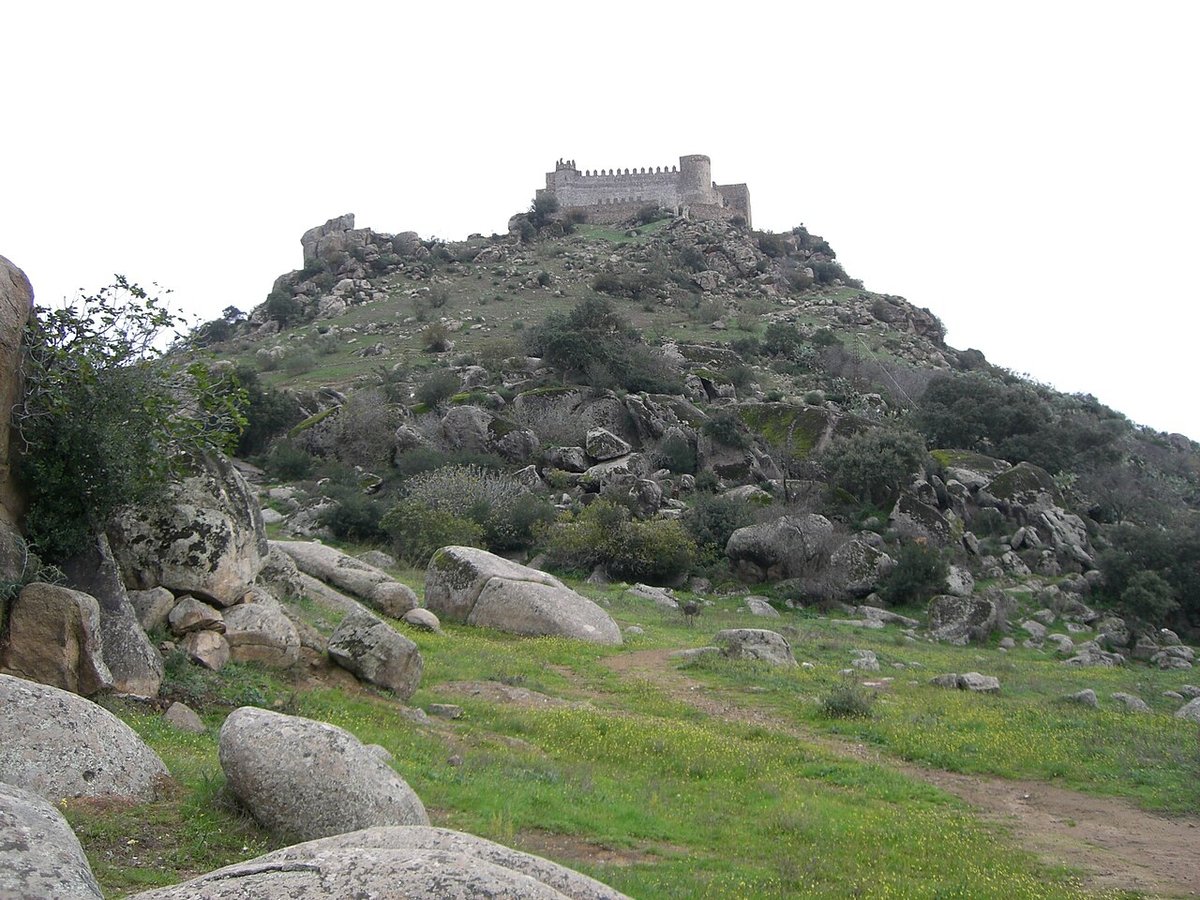
Very close to the town lies the Sierra de San Cristóbal. It acts almost like a back garden for Los Santos de Maimona. The landscape is not dramatic or especially high, but it offers a place where people go to walk or clear their heads.
The view from higher ground helps put everything into context. The white urban area sits in the middle of open land, with olive groves around it and agricultural tracks stretching into the distance. It is a simple scene, yet it explains a lot about how the town fits into its surroundings.
The Vía de la Plata, one of the historic routes of the Camino de Santiago, passes through this area. Encounters with pilgrims heading north from the south are not unusual, which adds a quiet sense of movement to the landscape.
A place shaped by change
Local history includes periods of instability, especially during the 19th and 20th centuries. Political changes and short-lived administrations were not uncommon. Some accounts describe stretches when mayors changed at an almost absurd pace.
Despite that background, the present-day atmosphere feels calm. Los Santos de Maimona does not push itself forward or try to stand out loudly. It allows visitors to move at their own rhythm, to look around and form their own impressions without much interference.
Take it as it comes
The best way to approach the town is without a tight schedule. Start near the centre, walk for a while, and pause in a shaded square to watch the day unfold.
After that, a short trip towards the Sierra de San Cristóbal offers a different perspective. From a bit of distance, the cluster of white buildings becomes more coherent, and the nickname “El Piropo Blanco” starts to make more sense. It may not sound especially striking at first, but seen from above, it fits the place rather well.